Catholic Art: 12 Masterpieces of Sacred Painting
Catholic art is one of the great achievements of Western culture. For nearly two thousand years, painters have turned the beliefs of the Catholic Church into images of extraordinary beauty: the face of Christ, the tenderness of the Virgin Mary, the courage of the saints, and the central mysteries of the faith. These works were never made only to be admired. They were made to teach, to move, and to draw the viewer toward prayer.
This guide gathers twelve masterpieces that shaped the whole tradition, from a sixth-century icon on Mount Sinai to a Roman altarpiece of the Sacred Heart. Together they trace the story of sacred painting across the Byzantine world, the Renaissance, and the Baroque. For a wider view you can also read our overview of the most famous Christian paintings and our gallery of famous Jesus paintings. If you would like to bring these masterpieces into your own home, explore our collection of Catholic art prints and canvas reproductions.
What makes a painting Catholic art?
Catholic art is visual art made by or for the Catholic Church. It includes icons, frescoes, altarpieces, and devotional paintings, along with sculpture and stained glass. What unites these works is their purpose. They were created to adorn churches, to illustrate Scripture, and to support the prayer of the faithful. That is why Catholic painting returns again and again to the same subjects: the life of Christ, the Virgin Mary, the saints, the angels, and the sacraments. The styles change across the centuries, but the intention stays the same, to make holy things visible.
1. Christ Pantocrator (6th century)
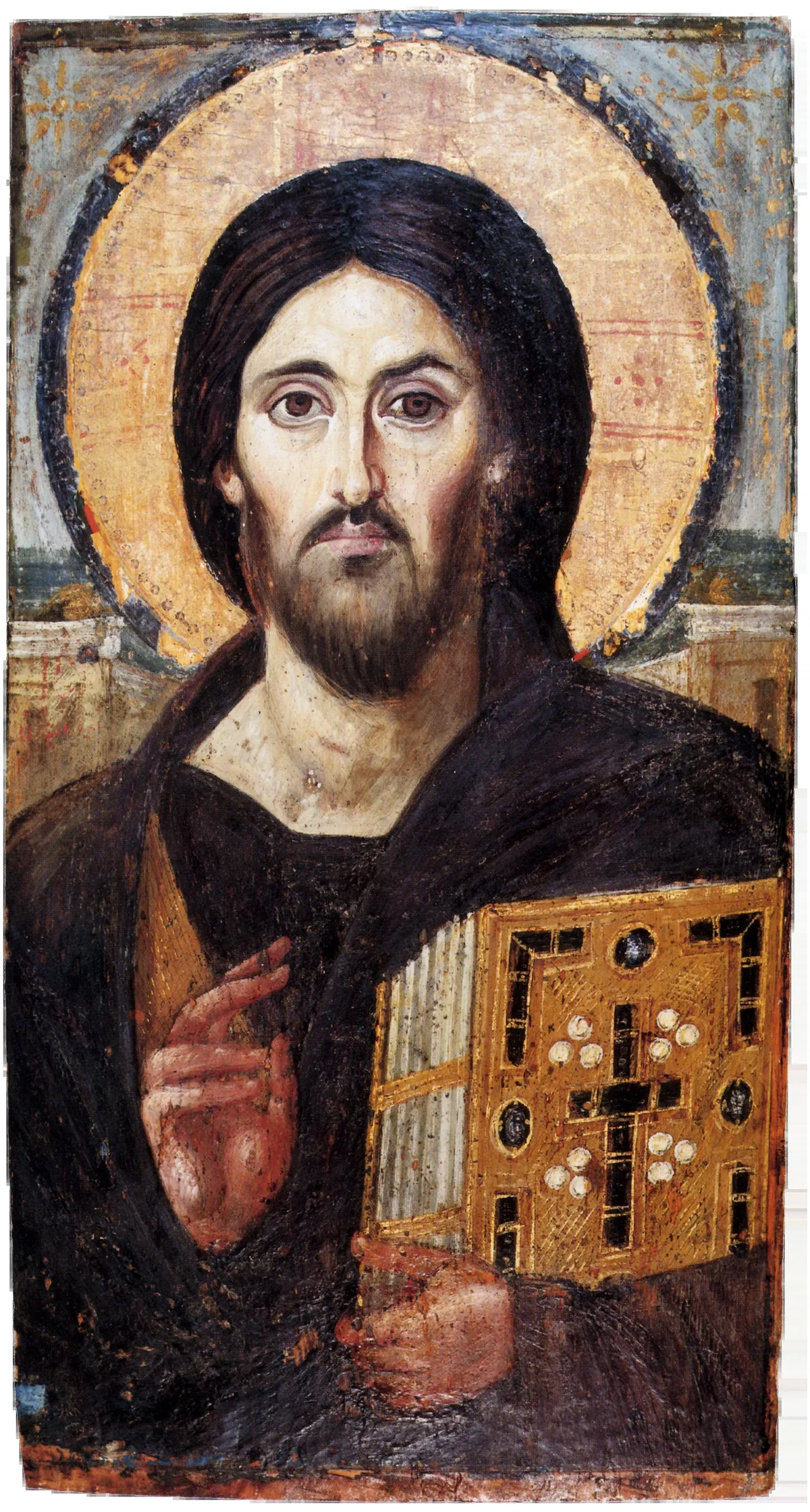
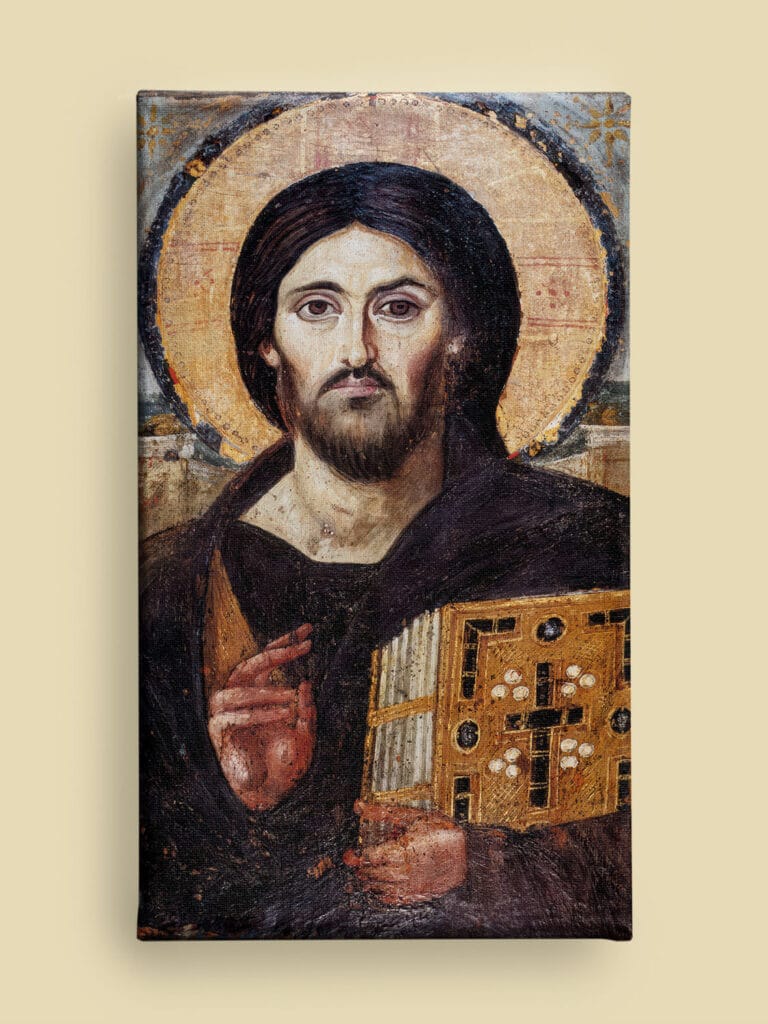
The oldest work in this guide is also one of the most powerful. The Christ Pantocrator of Saint Catherine’s Monastery, painted in encaustic on a wooden panel, is the earliest surviving icon of Christ as ruler of all. The two sides of his face are subtly different, one calm and merciful, the other graver, as if mercy and judgment meet in a single gaze. This image set the pattern for how both the Eastern and Western Church would picture Christ for centuries. You can read more in our article on the Christ Pantocrator of Sinai and our gallery of Byzantine Jesus paintings.
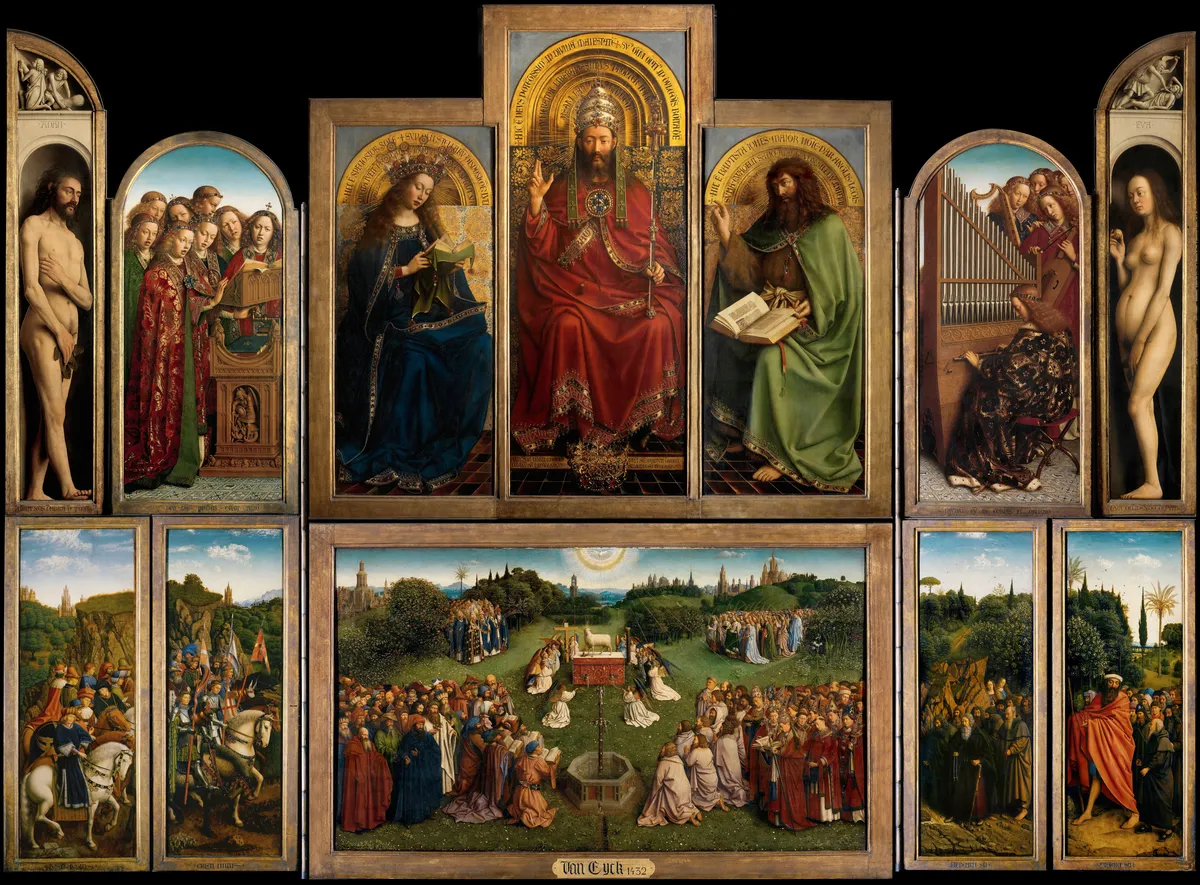
2. The Ghent Altarpiece (1432)
Painted by Hubert and Jan van Eyck, the Ghent Altarpiece is a turning point in the history of art. Its central panel shows the Adoration of the Mystic Lamb, the Lamb of God standing on an altar as crowds of saints, prophets, and pilgrims gather around. The van Eycks used the new medium of oil paint to render every jewel, blade of grass, and reflection with astonishing precision. It remains the masterpiece of Northern Renaissance sacred art.
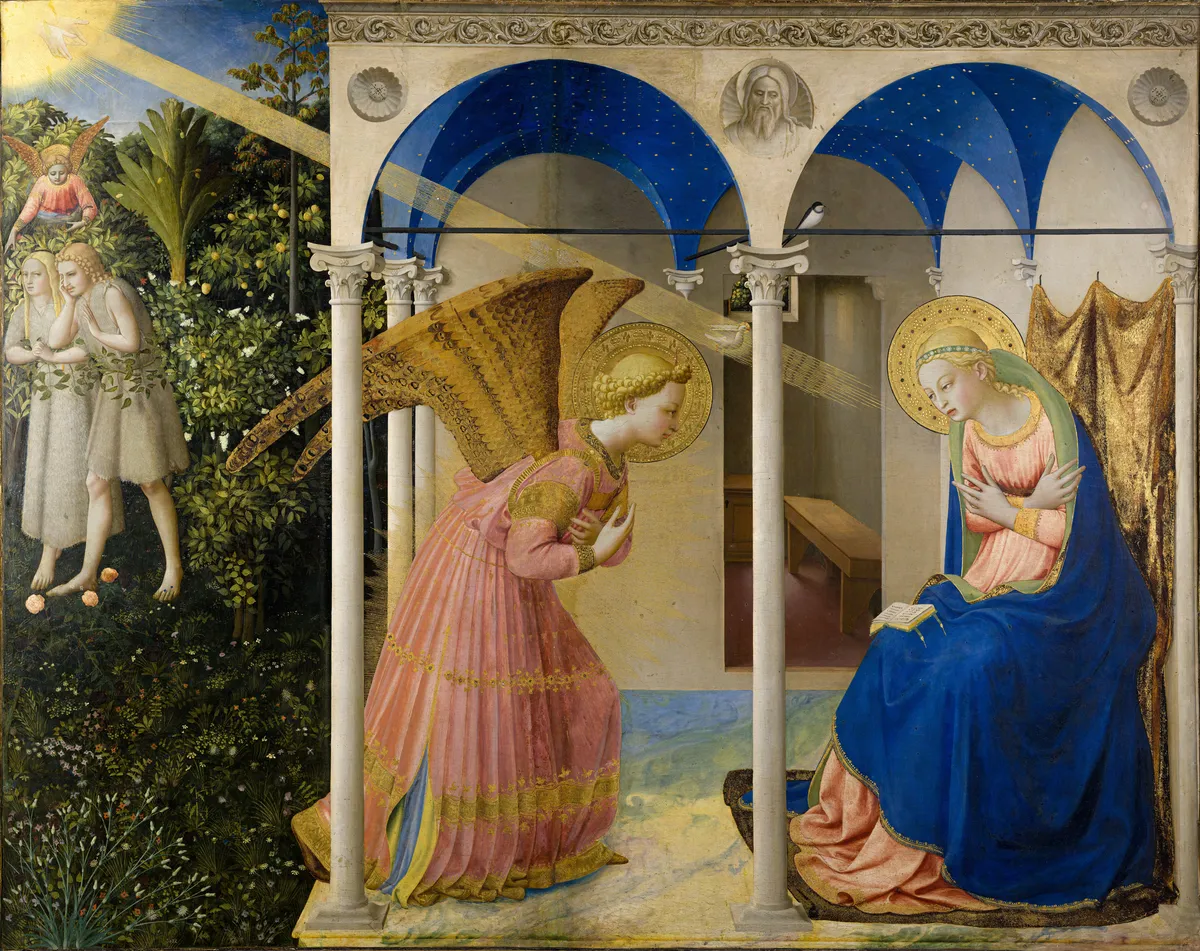
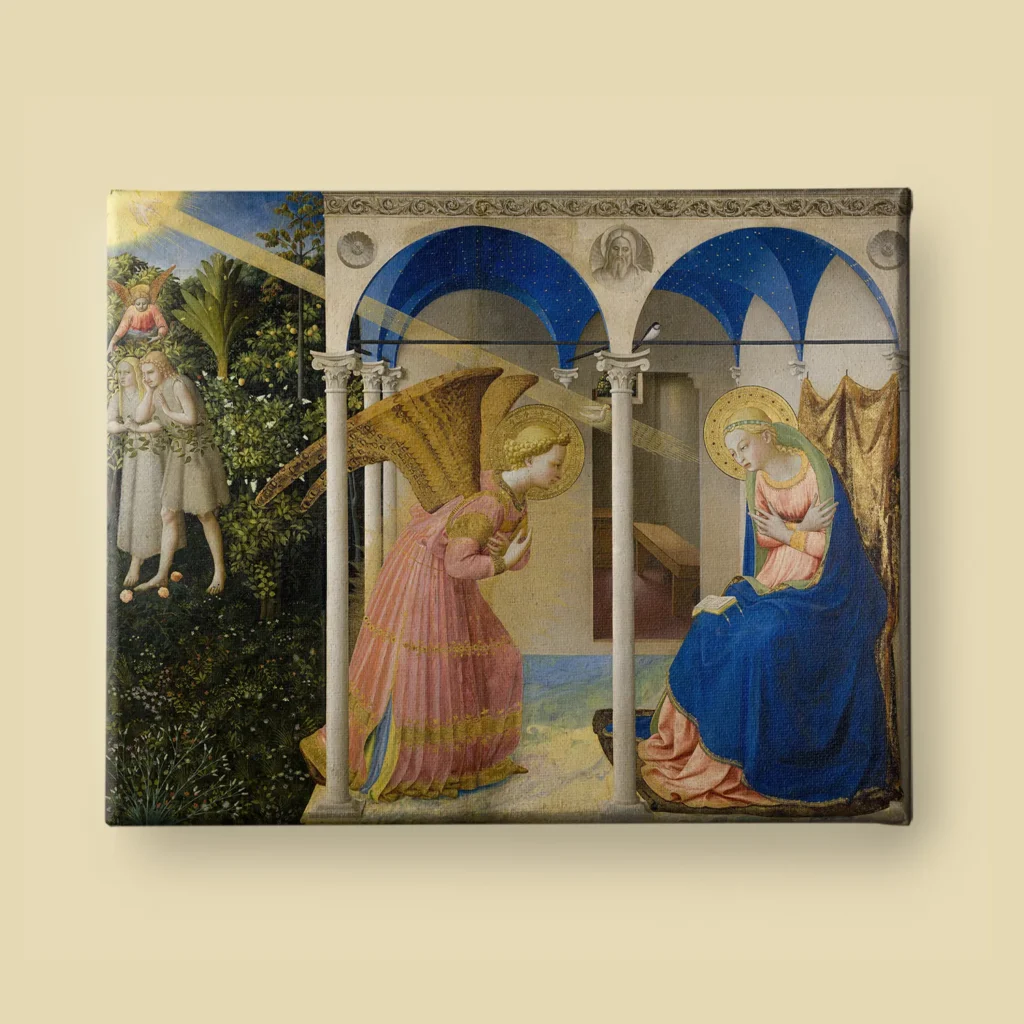
3. The Annunciation by Fra Angelico (c. 1426)
Few painters have joined skill and devotion as completely as the Dominican friar Fra Angelico. In this panel, now in the Prado, the angel Gabriel bows before the Virgin Mary beneath a delicate loggia, while in the garden to the left Adam and Eve are driven from paradise. The contrast is the whole meaning of the scene: the moment that begins the redemption of the fall. The colors are clear, the gold is luminous, and the mood is one of quiet awe. Our gallery of famous Annunciation paintings follows this subject across the centuries.
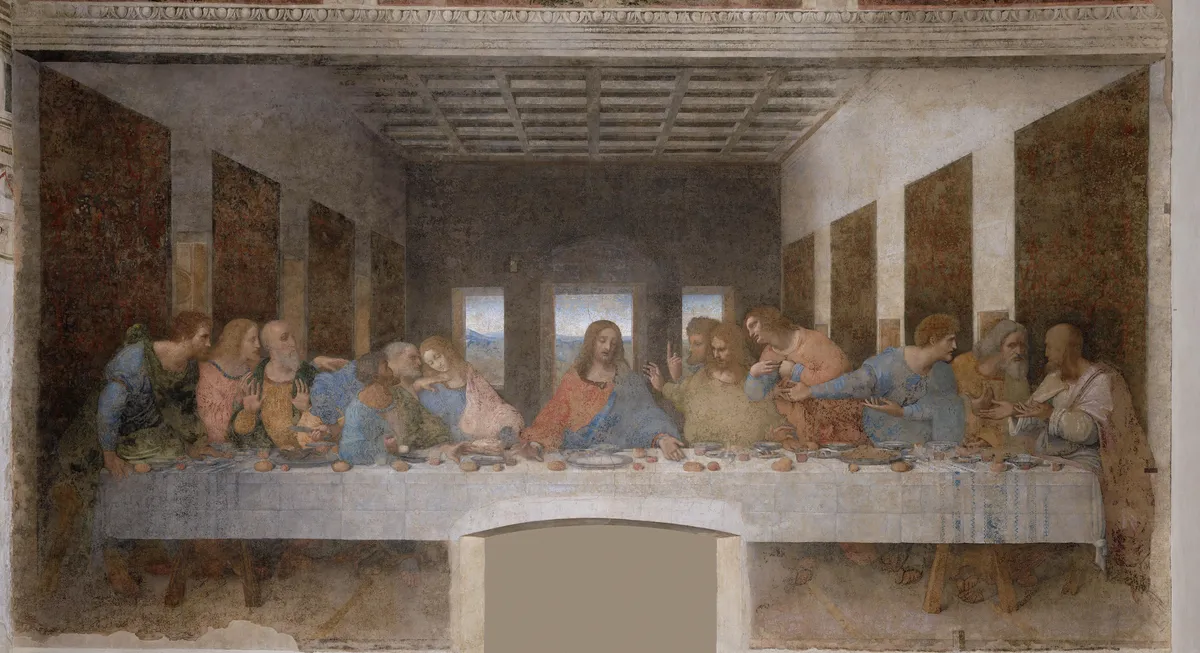
4. The Last Supper by Leonardo da Vinci (1495-1498)
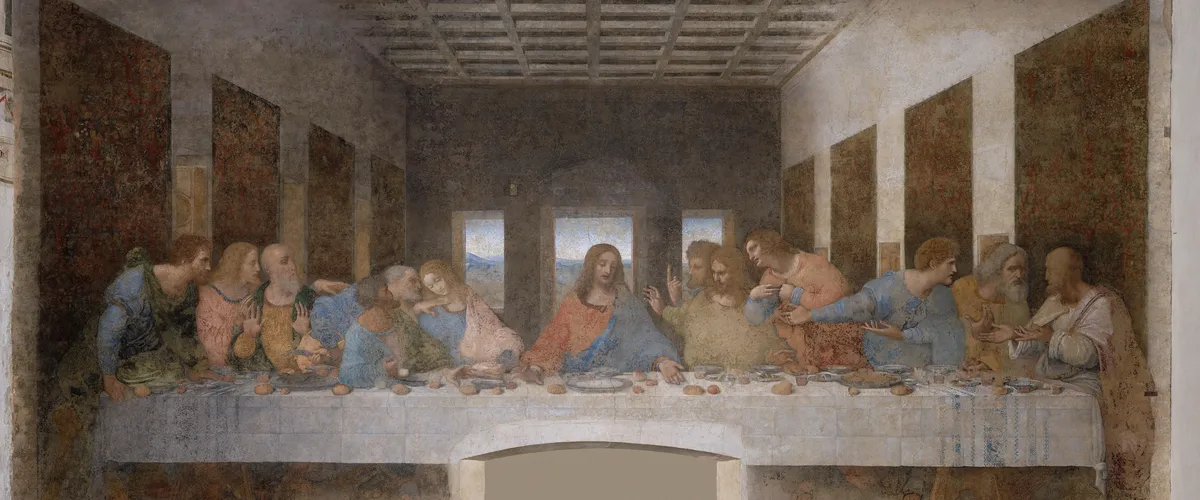
Painted on the wall of a Milanese refectory, Leonardo da Vinci‘s Last Supper captures the instant after Christ says that one of the apostles will betray him. The twelve react in waves of shock and protest, while Christ sits calm at the center, his figure framed by the open window behind. The work shows the institution of the Eucharist and remains the most studied meal in art. Compare it with other versions in our gallery of famous Last Supper paintings.

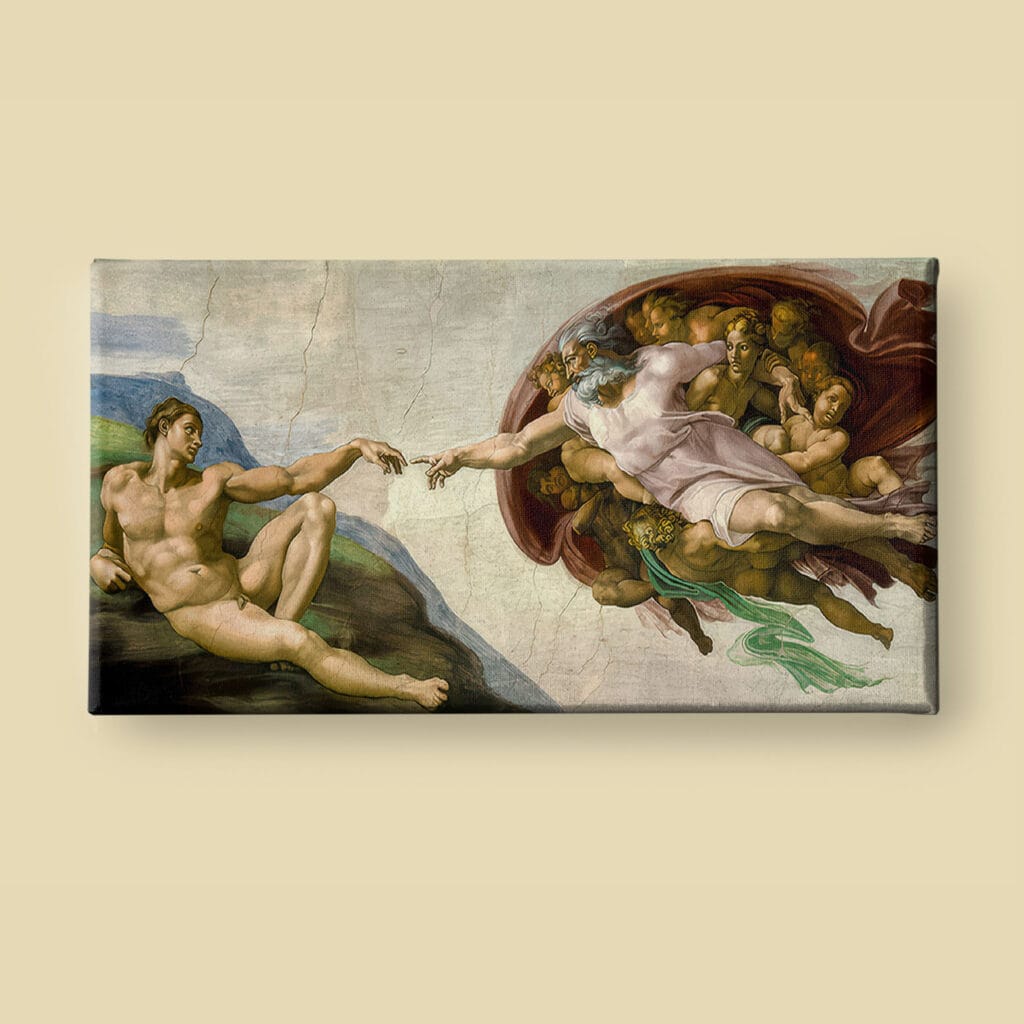
5. The Creation of Adam by Michelangelo (c. 1512)
On the ceiling of the Sistine Chapel, Michelangelo painted the moment God gives life to the first man. God, carried forward by angels, stretches out his hand toward Adam, whose own arm rises slowly to meet it. The small gap between their fingers holds the whole drama of creation. It is the most famous image of the entire ceiling and one of the defining works of the High Renaissance. We look at it in detail in our article on the Creation of Adam.

6. The Isenheim Altarpiece by Grünewald (c. 1512-1516)
Painted for a hospital chapel that cared for the dying, Matthias Grünewald‘s Isenheim Altarpiece shows the Crucifixion with unflinching honesty. Christ’s body is broken and covered in wounds, while John the Baptist points toward him beside the Lamb. For the sick who prayed before it, the image promised that God had shared in human suffering. It is one of the most moving Crucifixion paintings ever made.

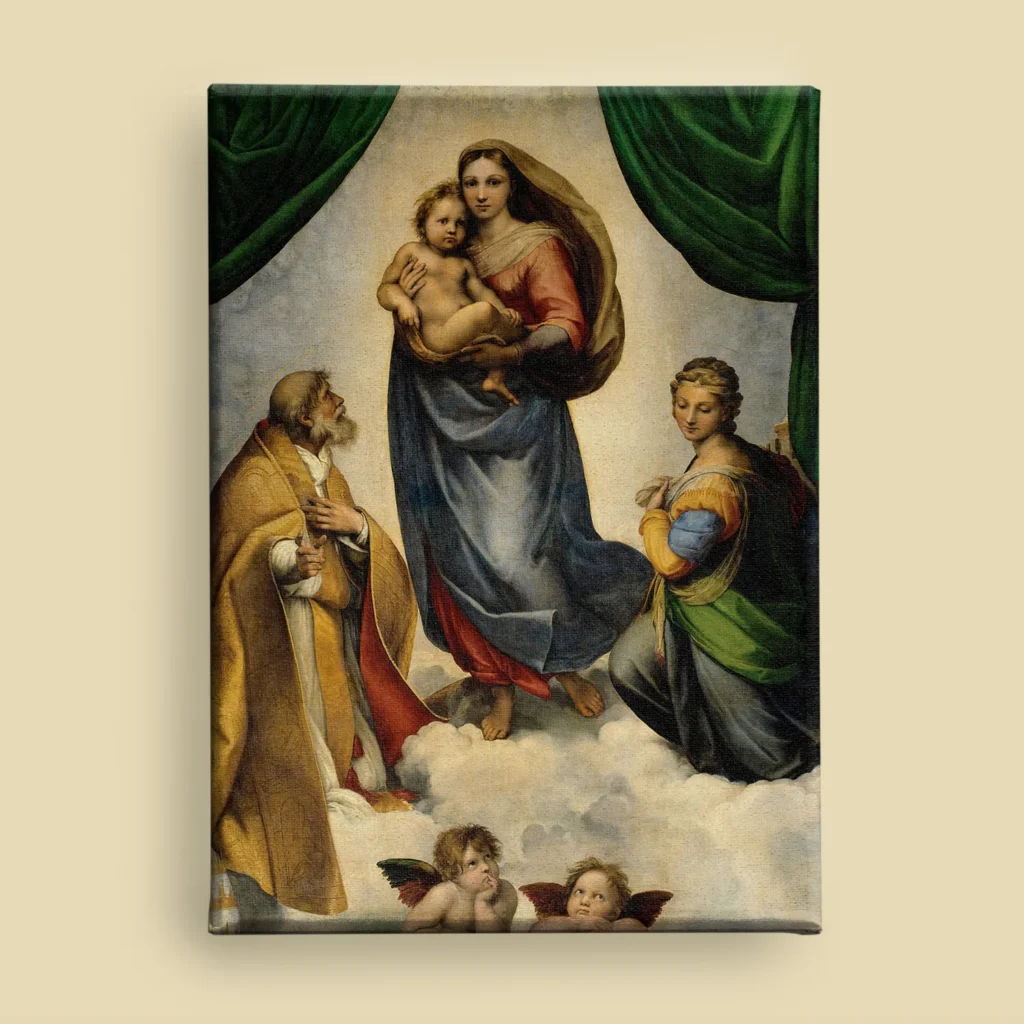
7. The Sistine Madonna by Raphael (1513-1514)
Raphael‘s Sistine Madonna shows the Virgin and Child stepping forward through parted curtains, with Saint Sixtus and Saint Barbara kneeling at the sides. Mary seems to walk on the clouds toward the viewer, carrying her son into the world. The two small cherubs leaning on the ledge below have become some of the most reproduced figures in all of Catholic art. Read more in our article on the Sistine Madonna and our selection of Raphael Madonna paintings.

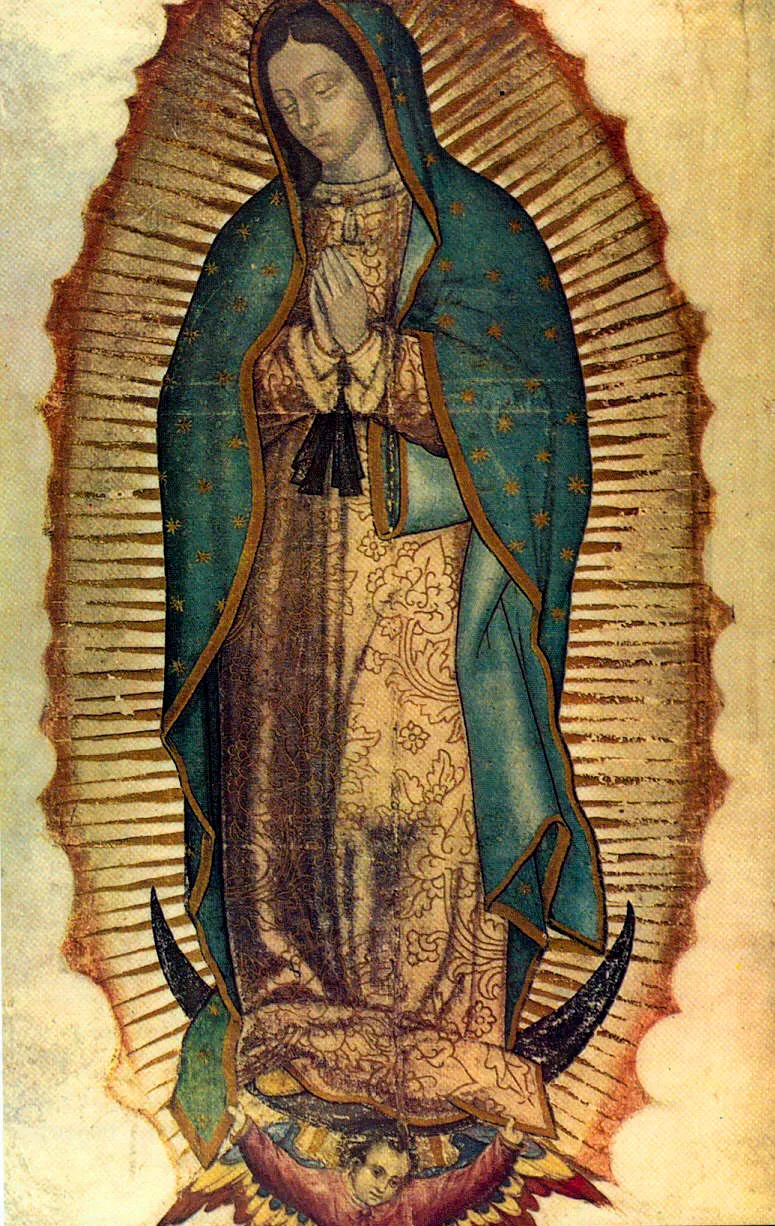
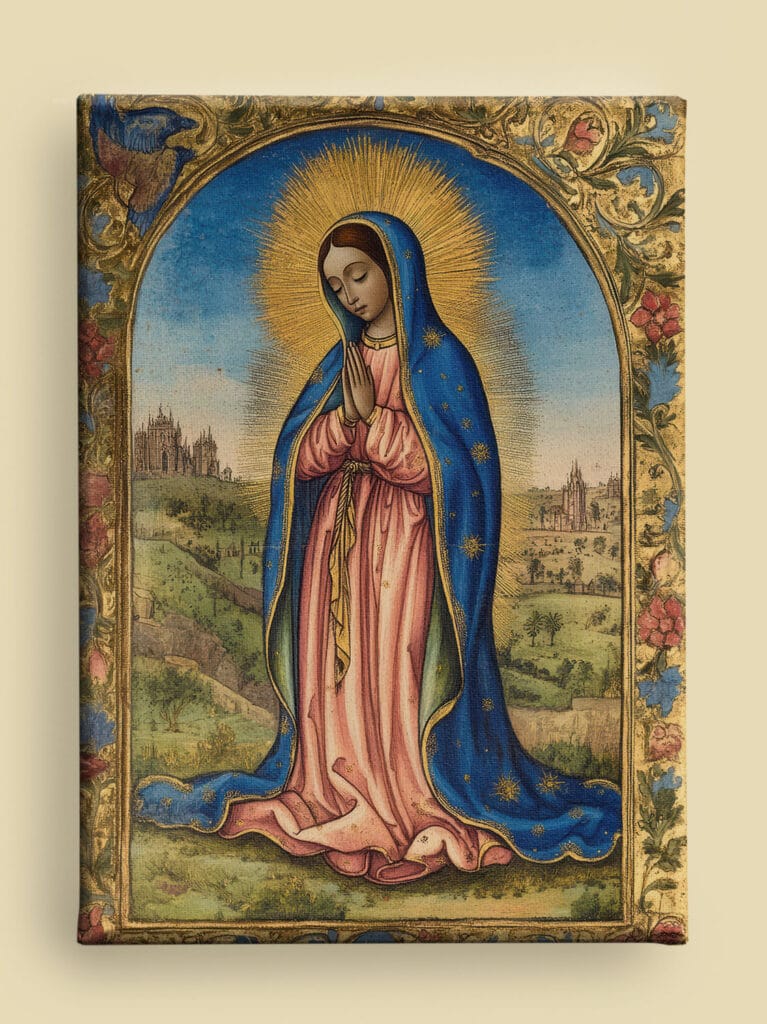
8. Our Lady of Guadalupe (1531)
No image has shaped Catholic devotion in the Americas like Our Lady of Guadalupe. According to tradition, the figure of the Virgin appeared on the cloak of Saint Juan Diego in 1531, and the faithful venerate it as not made by human hands. Mary stands on the moon, clothed with the sun, in the form described in the Book of Revelation. Whatever art historians conclude about its origins, its influence on faith and culture is beyond doubt. We tell the full story in our article on the Virgin of Guadalupe.
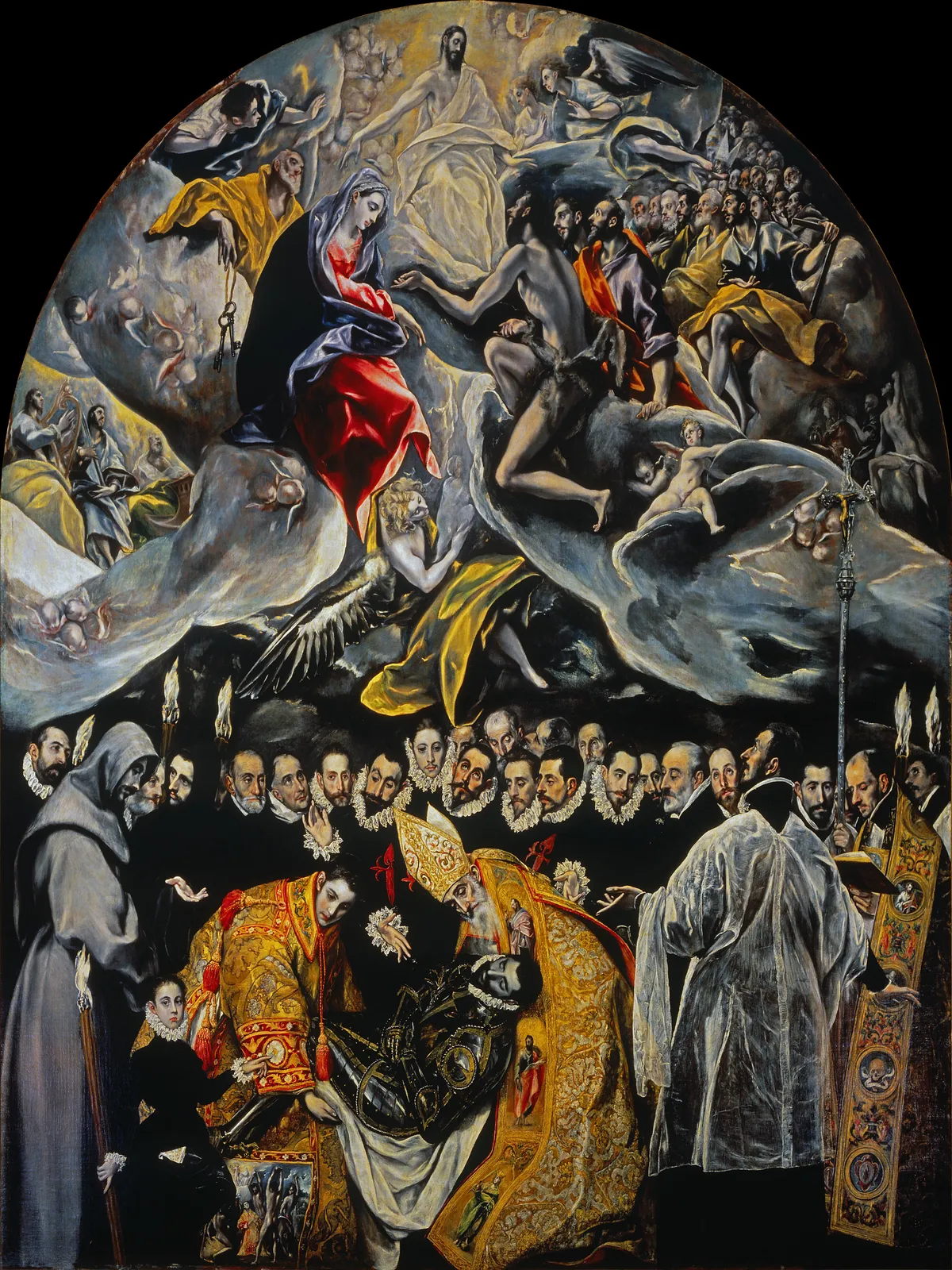
9. The Burial of the Count of Orgaz by El Greco (1586)
Painted for a parish church in Toledo, El Greco‘s Burial of the Count of Orgaz joins two worlds in one canvas. Below, Saints Stephen and Augustine lower the body of the count in front of solemn mourners. Above, his soul rises into a swirling heaven of elongated figures and silver light. The painting is a masterpiece of Spanish sacred art and of the Counter-Reformation spirit that shaped it.
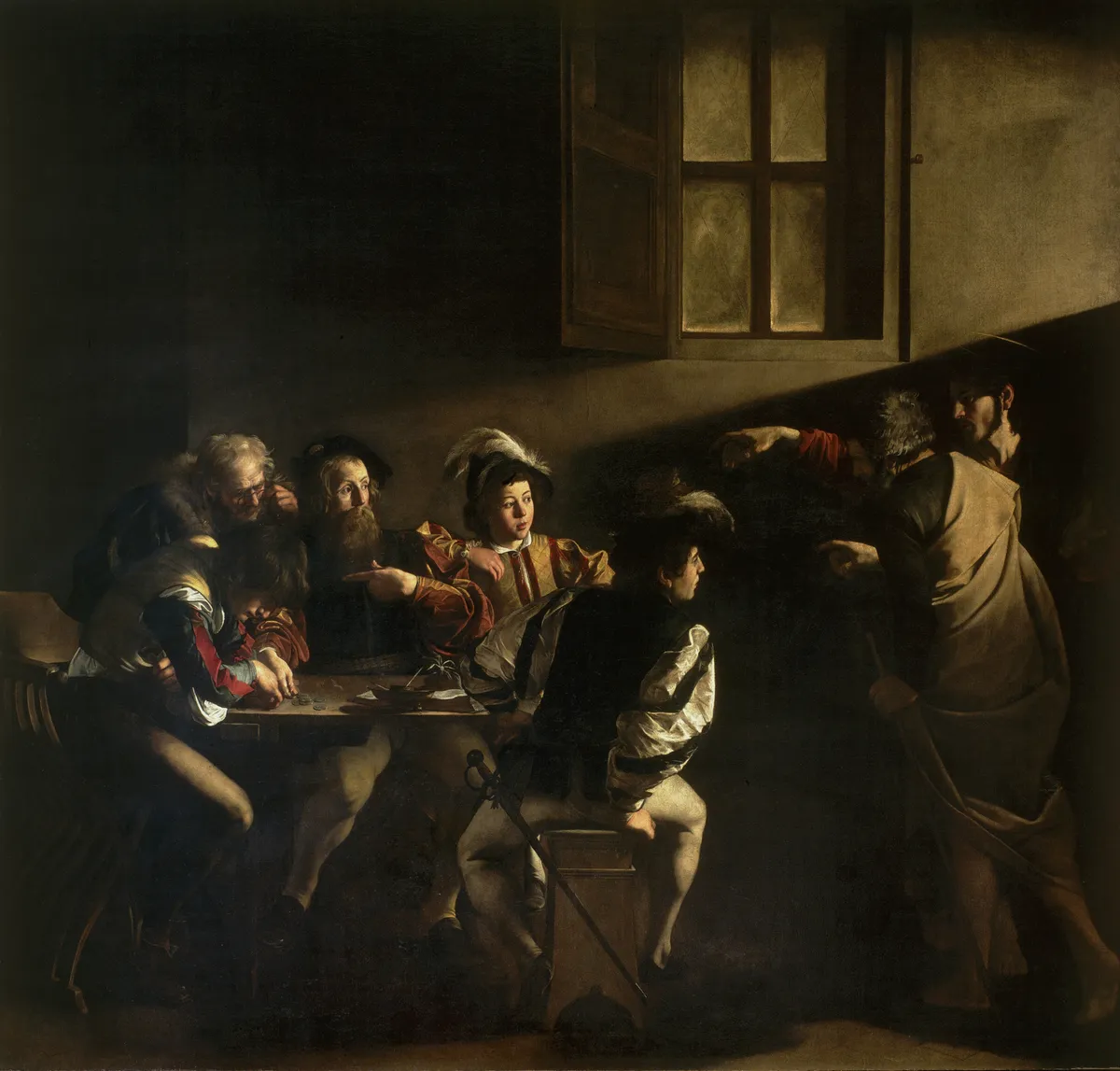
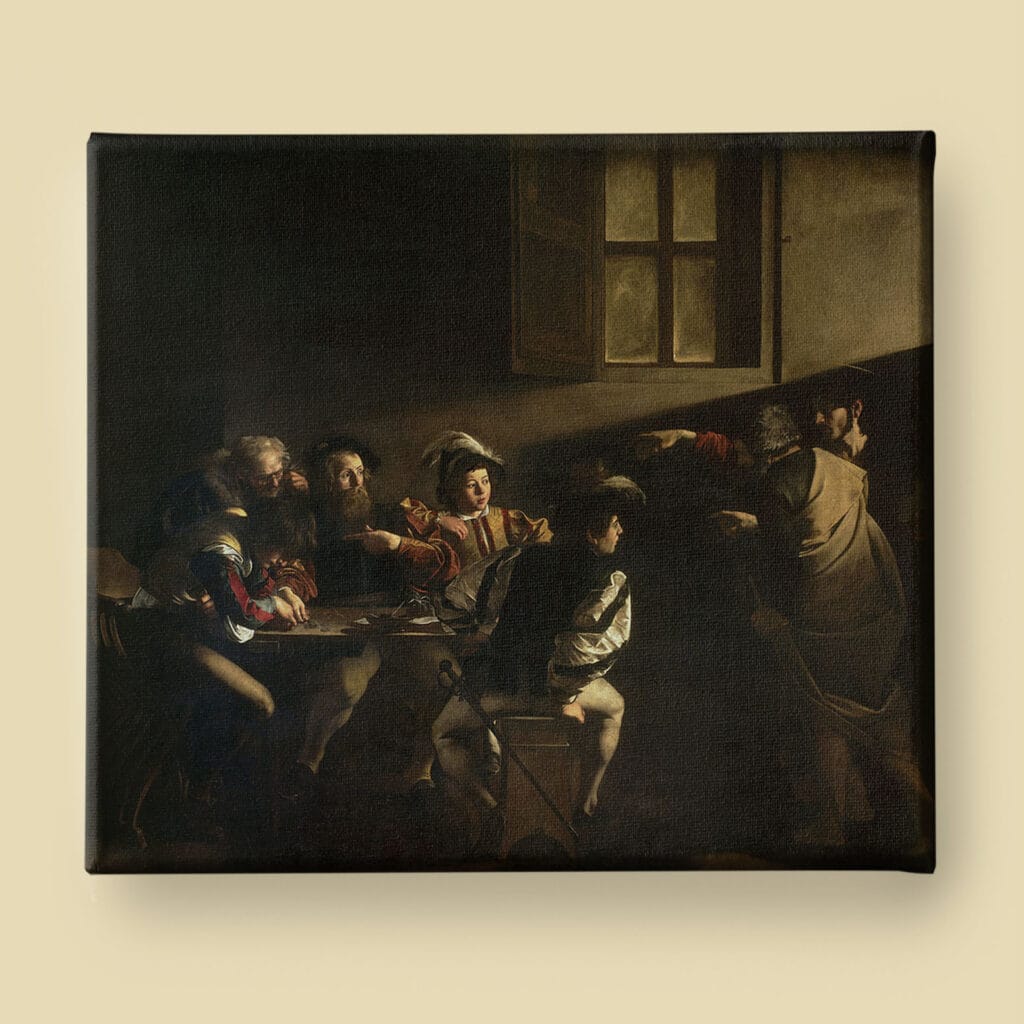
10. The Calling of Saint Matthew by Caravaggio (1599-1600)
In a dim Roman tavern, a shaft of light cuts across the room as Christ points toward Matthew the tax collector. With one gesture, Caravaggio turns an ordinary moment into a scene of grace. His dramatic light and shadow, and his choice of common faces, gave Baroque religious painting a new and lasting power. The Calling of Saint Matthew is one of the most influential Catholic paintings of its age.
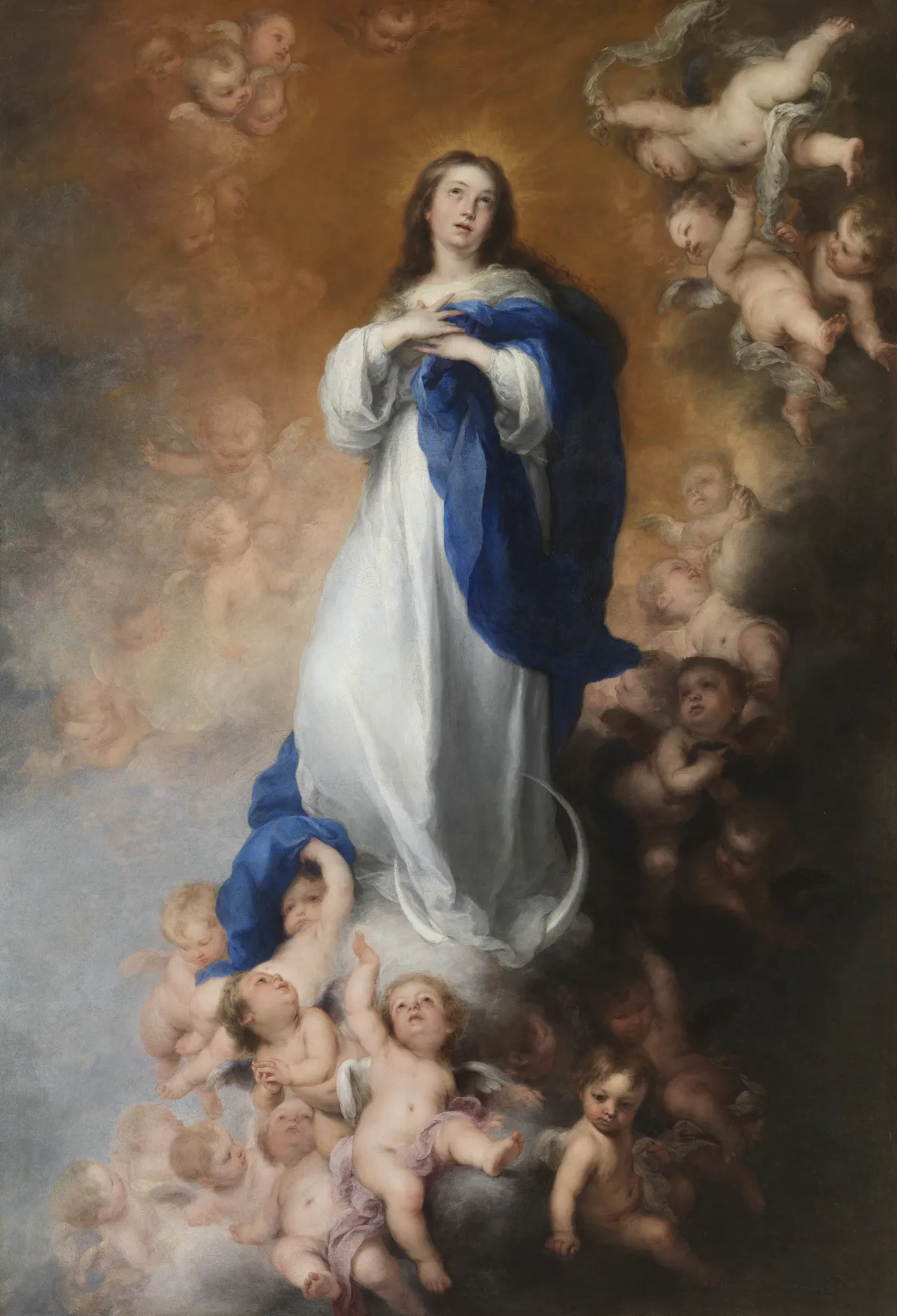
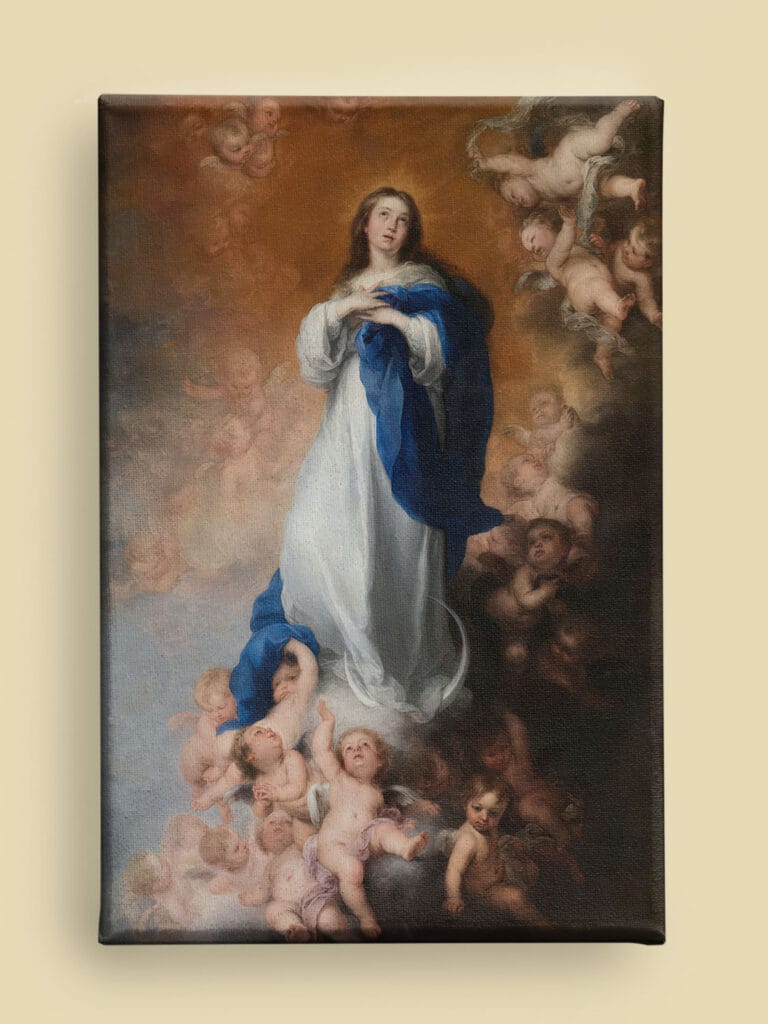
11. The Immaculate Conception by Murillo (c. 1678)
Bartolomé Esteban Murillo painted the Immaculate Conception many times, and the version known as Los Venerables is the most admired. The Virgin Mary rises on a crescent moon, wrapped in blue and white, lifted by a crowd of cherubs. The soft light and gentle mood made it a model for Spanish Baroque devotion to Mary, and the image was copied across the Catholic world.
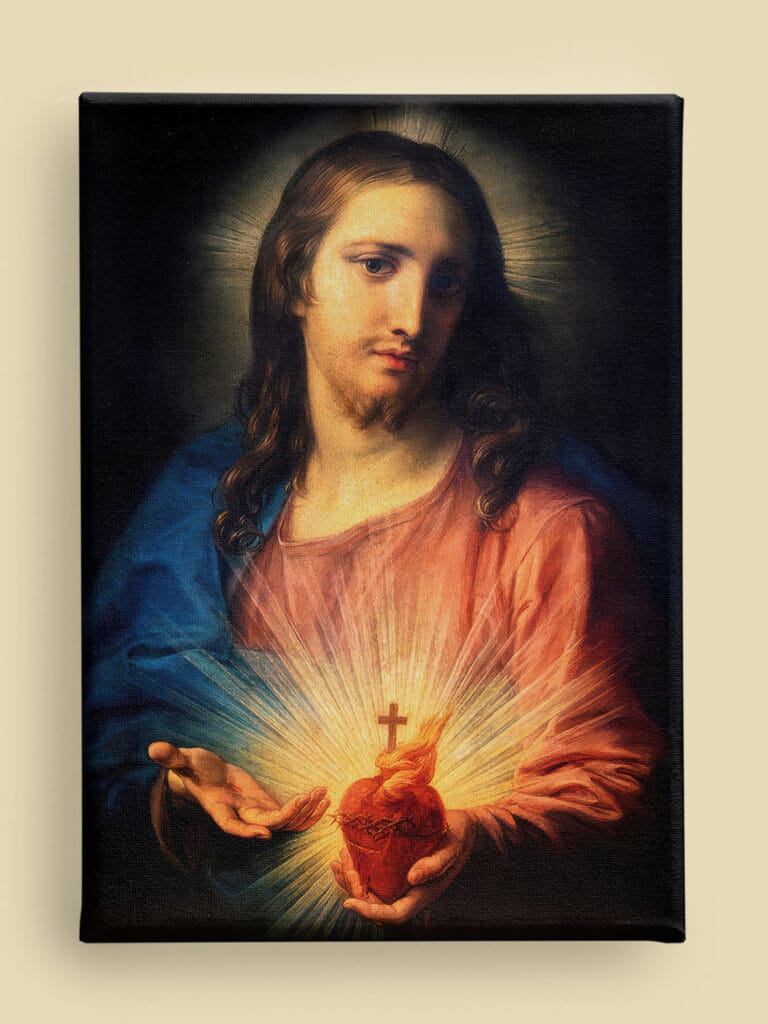
12. The Sacred Heart of Jesus by Pompeo Batoni (1767)
The way most Catholics picture the Sacred Heart comes from a single painting. You can own it as a Sacred Heart of Jesus canvas print. Pompeo Batoni painted Christ presenting his burning heart, crowned with thorns and topped by a cross, with a calm and tender gaze. Made for the Church of the Gesù in Rome, it became the standard image of the devotion and was reproduced in countless homes and prayer cards. Read more in our article on the Sacred Heart of Jesus.

The Twelve Masterpieces, Artist by Artist
| Artwork | Artist | Date | Medium | Location |
|---|---|---|---|---|
| Christ Pantocrator | Unknown (Byzantine) | 6th century | Encaustic icon | Saint Catherine’s Monastery, Sinai |
| The Ghent Altarpiece | Hubert and Jan van Eyck | 1432 | Oil on panel | St Bavo’s Cathedral, Ghent |
| The Annunciation | Fra Angelico | c. 1426 | Tempera on panel | Museo del Prado, Madrid |
| The Last Supper | Leonardo da Vinci | 1495-1498 | Tempera and oil mural | Santa Maria delle Grazie, Milan |
| The Creation of Adam | Michelangelo | c. 1512 | Fresco | Sistine Chapel, Vatican |
| The Isenheim Altarpiece | Matthias Grünewald | c. 1512-1516 | Oil on panel | Musée Unterlinden, Colmar |
| The Sistine Madonna | Raphael | 1513-1514 | Oil on canvas | Gemäldegalerie, Dresden |
| Our Lady of Guadalupe | Tradition (acheiropoieton) | 1531 | Image on cloth | Basilica of Guadalupe, Mexico City |
| The Burial of the Count of Orgaz | El Greco | 1586 | Oil on canvas | Santo Tomé, Toledo |
| The Calling of Saint Matthew | Caravaggio | 1599-1600 | Oil on canvas | San Luigi dei Francesi, Rome |
| The Immaculate Conception | Bartolomé Esteban Murillo | c. 1678 | Oil on canvas | Museo del Prado, Madrid |
| The Sacred Heart of Jesus | Pompeo Batoni | 1767 | Oil on copper | Church of the Gesù, Rome |
Conclusion
From the steady gaze of the Sinai Pantocrator to the glowing heart of Batoni’s Christ, Catholic art has carried the faith through every age of Western painting. Each of these twelve works belongs to a different time and place, yet all share the same aim: to make the unseen visible and to lead the eye toward God.
The story does not stop here. You can follow it by period in our articles on medieval, Renaissance, Baroque, and modern Christian painting, or trace the whole arc in the life of Christ in twenty paintings.
Key facts about Catholic art
- It began with the early icons of the Eastern Church and grew into the frescoes, altarpieces, and oil paintings of the West.
- Its main subjects are the life of Christ, the Virgin Mary, the saints, the angels, and the sacraments.
- It served three purposes at once: to adorn churches, to teach the faith, and to support prayer.
- Its golden ages were the Renaissance and the Baroque, when masters like Leonardo, Michelangelo, Raphael, and Caravaggio gave it lasting form.
Today these masterpieces still speak, whether seen in a museum, a church, or a fine reproduction on the wall of a home.
FAQ
What is Catholic art?
Catholic art is visual art made by or for the Catholic Church, including icons, frescoes, altarpieces, and devotional paintings. It was created to teach Scripture, support prayer, and adorn churches, which is why so much of it pictures Christ, the Virgin Mary, and the saints.
What is the most famous Catholic painting?
Leonardo da Vinci’s Last Supper and Michelangelo’s Creation of Adam are the works most often named as the most famous. Both date from the High Renaissance, and both have become some of the most reproduced images in the world.
Who are the most famous Catholic painters?
Among the greatest are Fra Angelico, Leonardo da Vinci, Michelangelo, Raphael, Caravaggio, El Greco, and Murillo. Each shaped the way the faith was pictured across the Renaissance and the Baroque.
What is the difference between Catholic art and Christian art?
Christian art is the wider term for all art rooted in the Christian faith. Catholic art is the part tied to the Catholic tradition, with its strong place for the Virgin Mary, the saints, the sacraments, and devotions such as the Sacred Heart.
Why does the Catholic Church use sacred images?
The Church teaches that images help the faithful remember and contemplate holy things, not that the images themselves are worshipped. Painting turned Scripture and doctrine into scenes anyone could read, which is why churches filled with sacred art.
Can you buy Catholic art prints and canvases?
You can buy Catholic art at jesuschrist.pictures, in our shop, where we sell canvas reproductions and posters of many of the masterpieces in this guide, from the Sistine Madonna to the Sacred Heart of Jesus.