13 famous Crucifixion Paintings: A Visual History of Christ on the Cross
This article is accompanied by a short podcast episode that offers an audio overview of the main themes and artworks discussed below.
The Crucifixion of Jesus Christ is the most profound and enduring subject in Christian art. More than a narrative episode from the Gospels, it represents sacrifice, redemption, suffering, and divine love. Across centuries, artists have returned to this moment to express faith, theology, and the spiritual concerns of their own time. From medieval frescoes created for prayer to modern reinterpretations shaped by symbolism and historical reflection, Crucifixion paintings offer a unique visual history of Christianity itself. This selection of thirteen major works traces how the image of Christ on the Cross evolved from the Middle Ages to the modern era. For a broader overview of Christ in art, you may also explore our related article: Famous Jesus Paintings Through Art History.
The Crucifixion is one of many scenes the great masters drew from Scripture; for a broader survey, see our guide to biblical paintings.
Early and Medieval Crucifixion Paintings
Long before any of these panels, the cross was drawn rather than painted. The earliest surviving Crucifixions in Western art are manuscript pages, and one of the most striking of them was made in Ireland: the full page Crucifixion of the Saint Gall Gospel Book, Codex Sangallensis 51, copied around 750. Christ stands in a long belted robe with his arms straight out, two angels above his shoulders and the lance and sponge bearers below, the whole scene locked inside a border of interlace. The lance bearer is Longinus, whose spear opened the side of Christ, and from that wound came the blood and water that a fourteenth century prayer, the Anima Christi, still asks to wash and to hide the soul. There is no anatomy in it and no perspective, and it is still one of the most powerful images of the Cross ever made. The monks who drew it are the subject of our page on the Irish saints and the art they left behind, and how such a page was actually made, the vellum, the burnished gold and the lapis carried from Afghanistan, is the subject of our survey of medieval manuscript art.
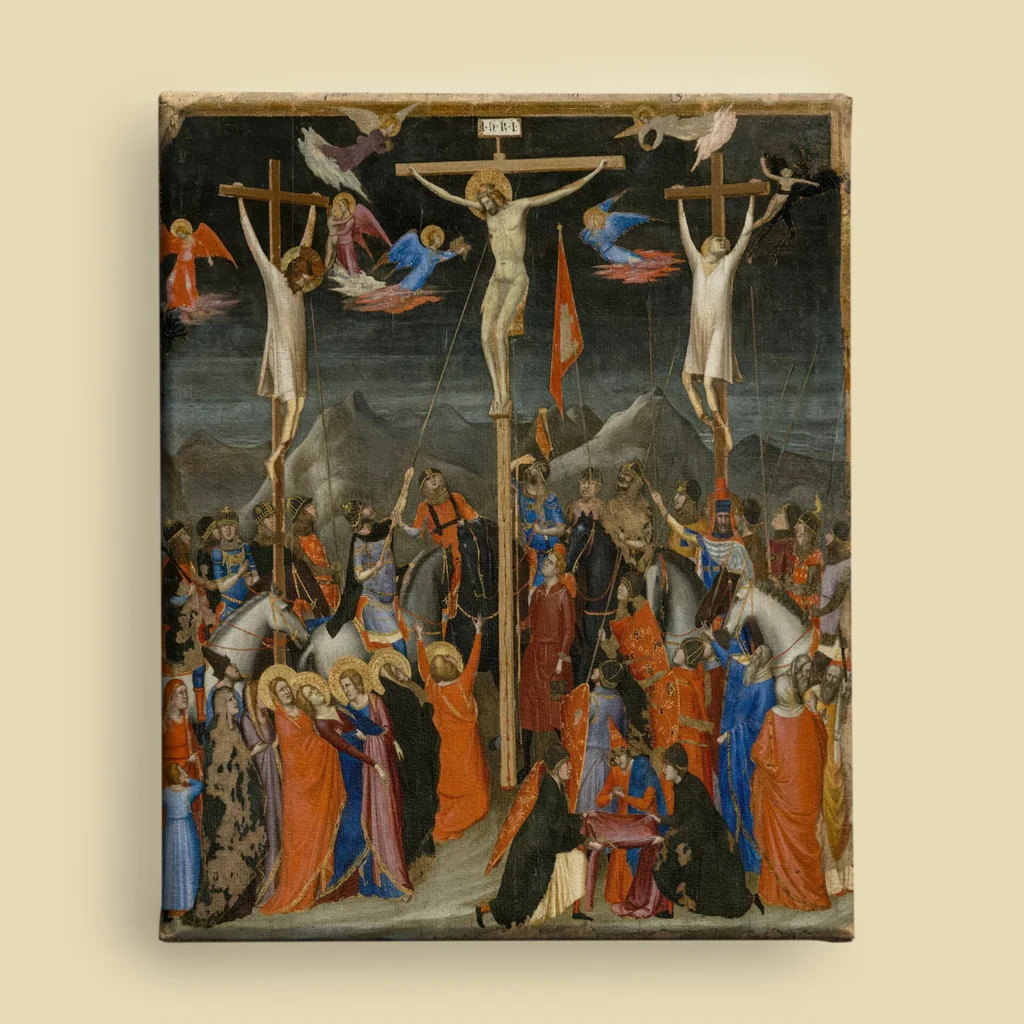
In the medieval period, Crucifixion paintings were primarily devotional. Their purpose was not realism but meditation. Artists emphasized symbolism, hierarchy, and the spiritual meaning of Christ’s sacrifice rather than physical accuracy. The Crucifixion by Giotto marks a decisive shift. Conceived by Giotto and painted with his workshop in Naples around 1330, the panel now in the Louvre shows how he brought human emotion into sacred imagery. The Virgin collapses in grief, the Magdalene raises her arms toward the cross, and angels react dramatically to Christ’s death. This emotional realism helped believers identify personally with the Passion.

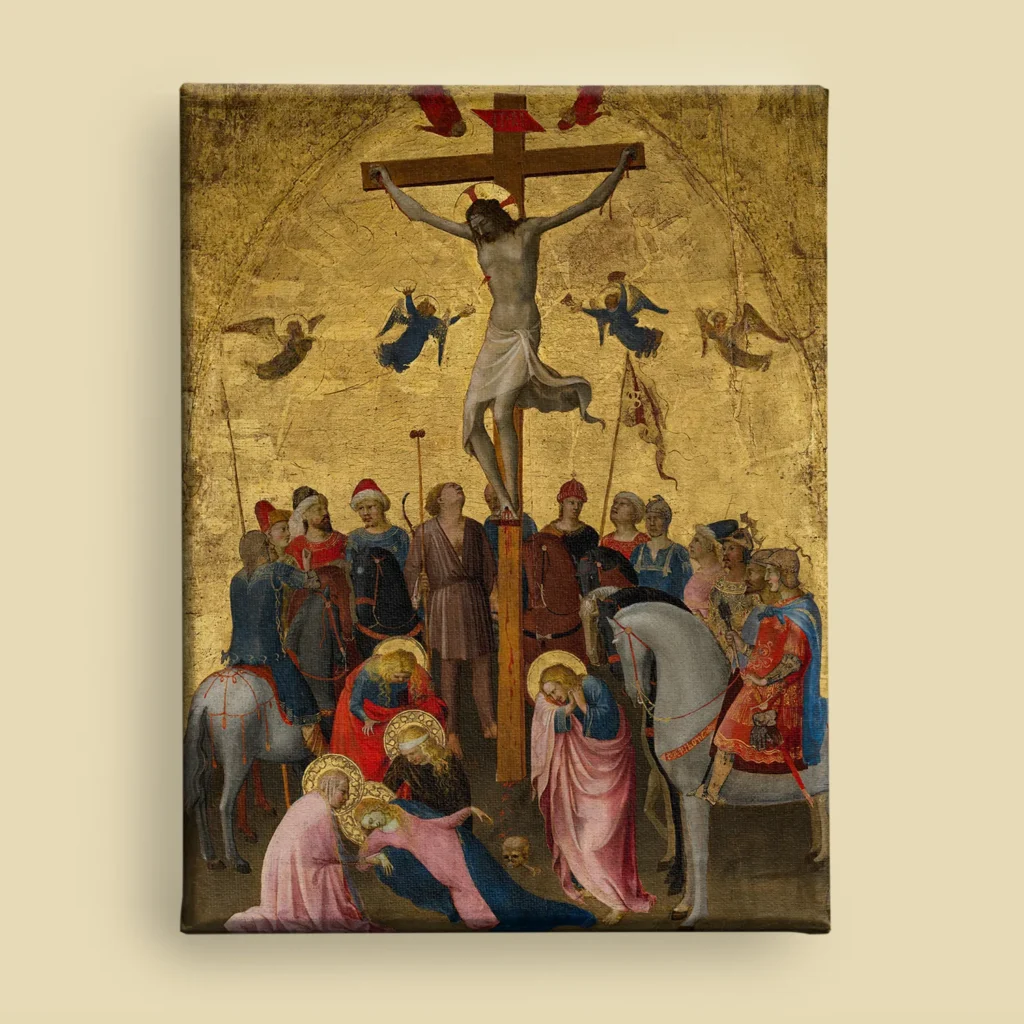
The Crucifixion by Fra Angelico reflects a more contemplative approach. Surrounded by a golden background and floating angels, Christ appears serene rather than tortured. The painting was intended for monastic meditation, guiding the viewer toward silent prayer and spiritual reflection.

The Crucifixion by Andrea Mantegna combines devotion with intellectual rigor. The strict perspective, architectural clarity, and sculptural bodies reveal Renaissance interest in classical form. Christ’s suffering is framed within a rational, ordered world, suggesting divine purpose behind human pain.

The Mond Crucifixion by Raphael represents harmony and balance. Painted around 1503, it presents Christ as calm and dignified, flanked by Mary and Saint John. The scene is restrained, emphasizing spiritual clarity over drama, and reflects the High Renaissance ideal of perfect proportion.

Renaissance and Baroque Visions of the Crucifixion
During the Renaissance and Baroque periods, artists increasingly focused on drama, movement, and emotional intensity. The Crucifixion became a stage on which faith, suffering, and redemption were powerfully enacted. Crucifixion by Titian confronts the viewer with darkness and isolation. Christ dominates the composition, his body illuminated against a somber sky. The painting emphasizes physical suffering and spiritual solitude, inviting deep emotional engagement.

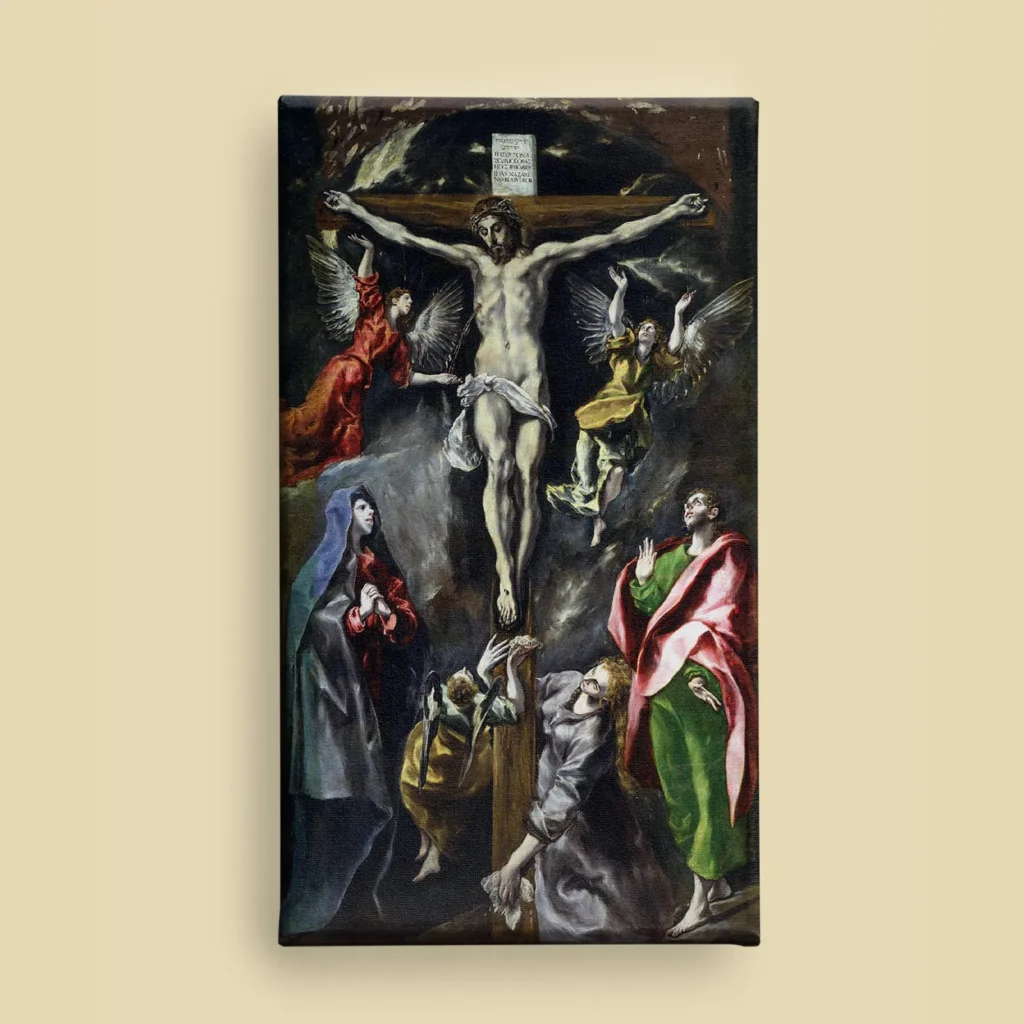
La Crucifixión by El Greco transforms the scene into a mystical vision. Elongated forms, supernatural light, and angels collecting Christ’s blood elevate the Crucifixion beyond earthly reality. The painting reflects Counter-Reformation spirituality, focusing on transcendence and divine mystery.

The Crucifixion by Paolo Veronese is monumental and theatrical. Rich colors, elaborate costumes, and a grand composition place Christ’s death within a dramatic public spectacle. Despite its scale, the painting maintains a sense of order and harmony characteristic of Venetian art.

The Crucifixion by Lucas Cranach the Elder introduces a Northern European perspective. The scene is crowded with figures, moral symbolism, and narrative detail. Cranach’s work reflects Reformation-era concerns, emphasizing personal faith and moral responsibility.

The Crucifixion by Jan Brueghel the Elder situates the event within an expansive landscape. The Crucifixion becomes part of the wider world, observed by countless figures. This panoramic approach invites contemplation of Christ’s sacrifice within the history of humanity.

Modern and Unconventional Crucifixion Paintings
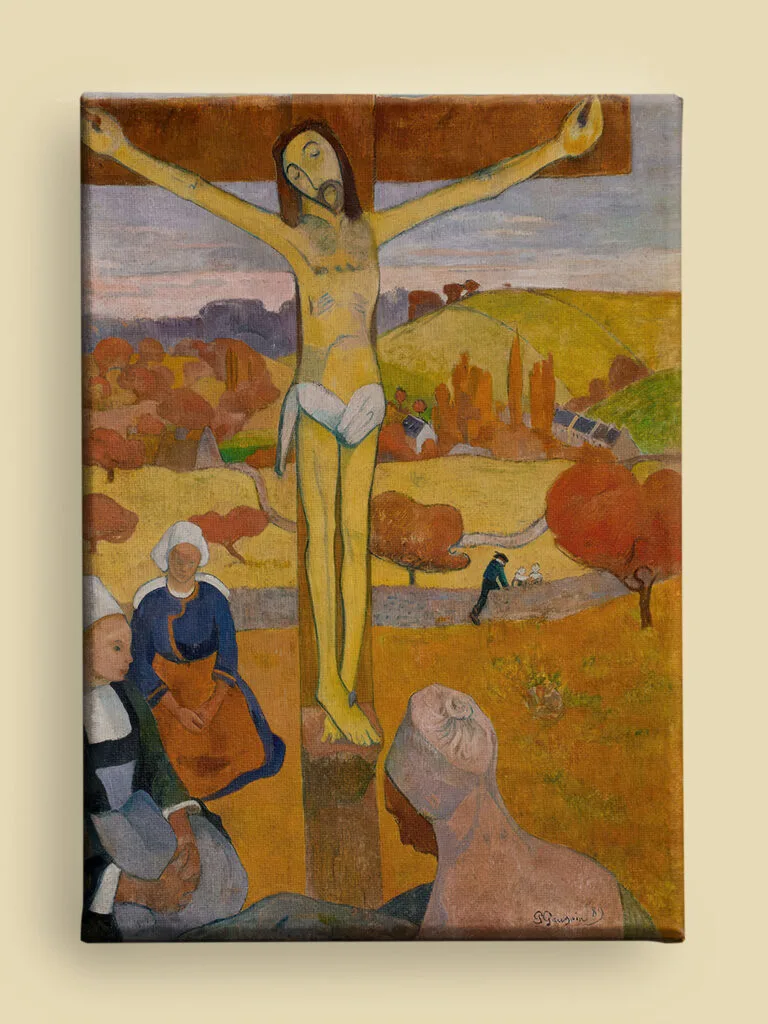
From the nineteenth century onward, artists began reinterpreting the Crucifixion in deeply personal, symbolic, and sometimes unsettling ways. These works often question tradition while remaining rooted in the spiritual power of the subject. The Yellow Christ by Paul Gauguin departs radically from realism. Painted in 1889, Christ’s body is rendered in bold yellow, set within a Breton landscape. The Crucifixion becomes a symbol of suffering, faith, and cultural identity rather than a historical reconstruction. For a broader understanding of how modern artists reinterpreted sacred themes, you may also read our article on Post-Impressionist Jesus paintings, which explores Paul Gauguin’s spiritual vision and symbolic use of color.

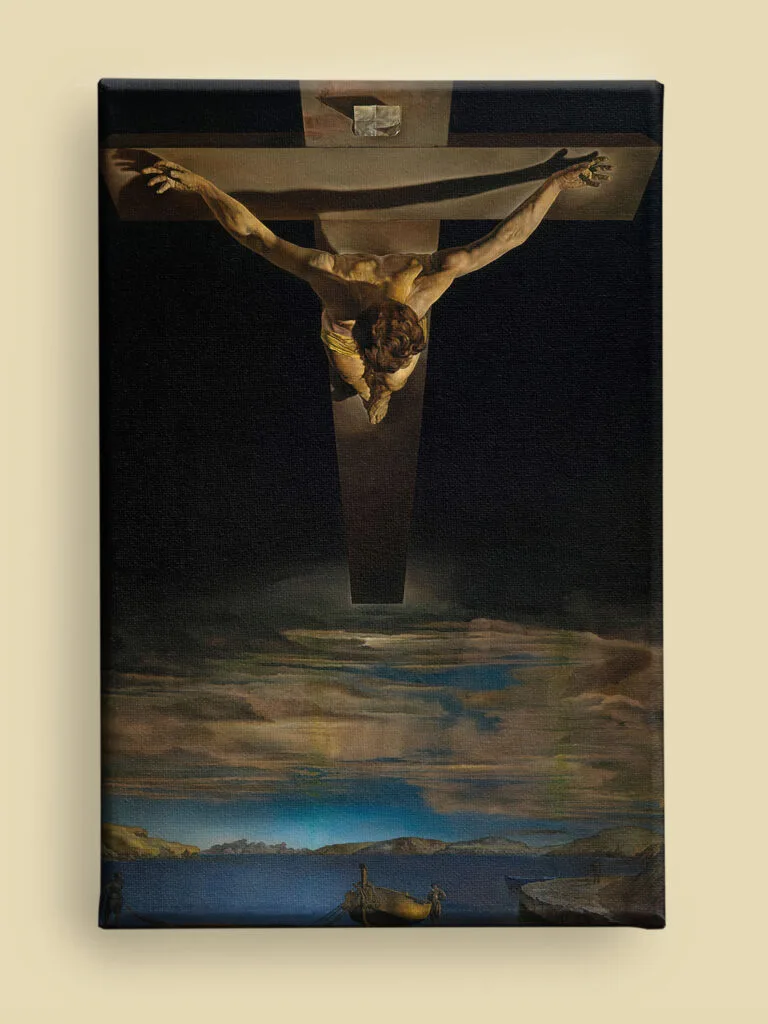
Christ of Saint John of the Cross by Salvador Dalí offers a unique, heavenly perspective. Christ is seen from above, floating without nails or blood. Dalí removes physical pain to emphasize divine serenity and cosmic order, creating one of the most iconic religious images of the twentieth century. The vantage point was not invented by Dali: he took it from a small pen drawing made at Avila by Saint John of the Cross, the Carmelite poet who sketched Christ as if seen from above the top of the cross. To explore this unique vision in greater depth, see our dedicated article on Salvador Dalí’s Surrealist Jesus paintings, which examines his spiritual turn and revolutionary approach to the Crucifixion.

Crucifixion by the Romans by Vasily Vereshchagin strips the event of sacred idealization. Presented as a historical execution carried out by Roman authorities, the painting confronts viewers with brutality and mass violence, reminding them of the political reality of crucifixion.

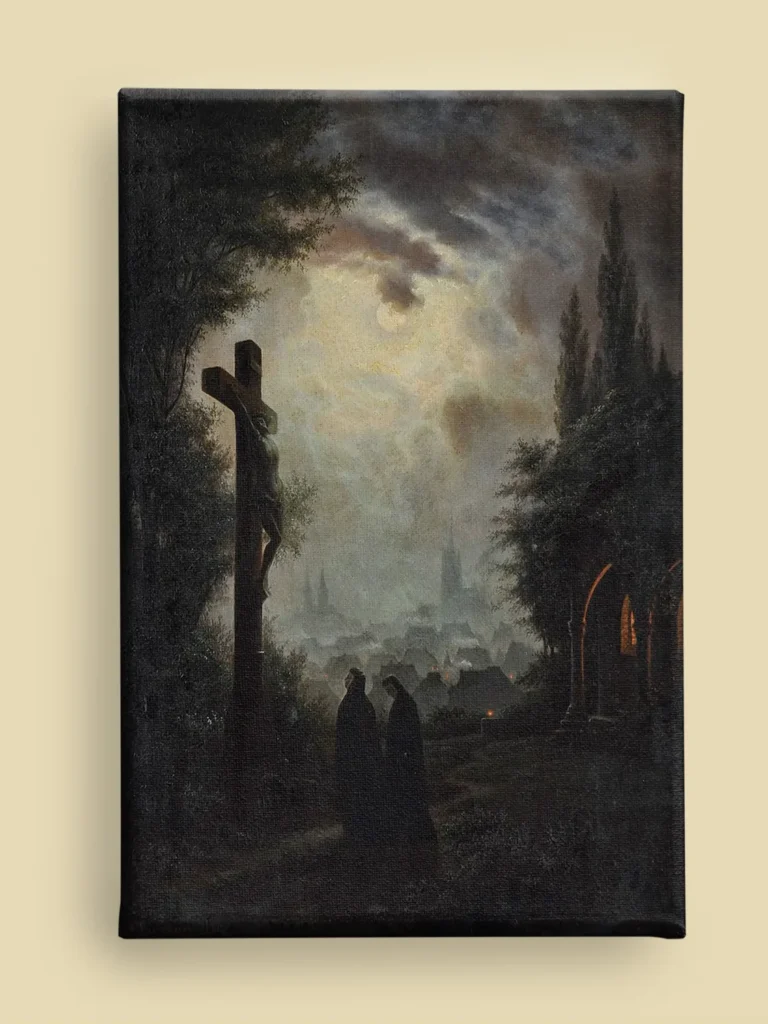
La cruz en la medianoche by Gustav Amberger portrays the Crucifixion in solitude and darkness. Christ stands alone against a nocturnal landscape, emphasizing silence, abandonment, and personal meditation rather than public drama.

Explore More Crucifixion Art
This article presents only a selection of major works. A dedicated visual collection will soon be available in our Crucifixion painting gallery, where you will be able to explore many more interpretations of Christ on the Cross across centuries.
The night before the cross, Christ shared a final meal with his disciples, a scene with its own rich tradition in art; see our guide to last supper paintings.
Conclusion
Crucifixion paintings are more than artistic representations. They are visual expressions of faith, theology, and human emotion. From medieval devotion to modern reinterpretation, each artist has approached the Cross through the lens of their own time and beliefs. Together, these works form a powerful visual history of Christianity and its enduring message of sacrifice and redemption.

✦ Free Christian & Catholic Printables
Illuminated prayer cards and Scripture verses, the Memorare, Psalm 23, Psalm 91 and more, already free to print with no email needed. Join and I will send you the complete set in every format, US Letter, A4 and pocket size, and each new card by email first, thirty days before it reaches the public library.
No spam, unsubscribe anytime. Or browse the whole library →
✦ Free Crucifixion Coloring Pages
Love these masterpieces? We turned the great Crucifixion paintings, from El Greco to Velazquez and Guido Reni, into free printable coloring pages for adults and older children. Ready to print and color this Lent and Holy Week.
Get the free coloring pages →Summary Table: 13 Famous Crucifixion Paintings
| Painting | Artist | Date | Medium | Museum / Location |
|---|---|---|---|---|
| Christ of Saint John of the Cross | Salvador Dalí | 1951 | Oil on canvas | Kelvingrove Art Gallery and Museum (Glasgow) |
| Crucifixion by the Romans | Vasily Vereshchagin | 1887 | Oil on canvas | Location unknown (reported as not currently documented in a public museum catalogue) |
| Crucifixion | Titian | 1558 | Oil on canvas | Pinacoteca Civica Francesco Podesti (Ancona) |
| La Crucifixión | El Greco | 1596 to 1600 | Oil on canvas | Museo Nacional del Prado (Madrid) |
| La cruz en la medianoche | Gustav Amberger | 19th century (exact date not securely published) | Oil on canvas (commonly reproduced as such) | Private collection (location not widely published) |
| The Crucifixion | Andrea Mantegna | 1457 to 1459 | Tempera on panel | Musée du Louvre (Paris) |
| The Crucifixion | Fra Angelico | ca. 1420 to 1423 | Tempera on wood, gold ground | The Metropolitan Museum of Art (New York) |
| The Crucifixion | Giotto and workshop | c. 1328 to 1332 | Tempera on poplar panel | Musée du Louvre (Paris) |
| The Crucifixion | Jan Brueghel the Elder | 1594 | Oil on panel (often catalogued as such in reproductions) | Alte Pinakothek (Munich) |
| Crucifixion | Lucas Cranach the Elder | 1532 | Oil on panel | Indianapolis Museum of Art at Newfields (Indianapolis) |
| The Crucifixion | Paolo Veronese | circa 1580 | Oil on canvas | Museum of Fine Arts (Budapest) |
| The Mond Crucifixion | Raphael | about 1502 to 1503 | Oil on wood (poplar) | The National Gallery (London) |
| The Yellow Christ | Paul Gauguin | 1889 | Oil on canvas | Buffalo AKG Art Museum (Buffalo, New York) |
Frequently Asked Questions
What is the oldest painting of Jesus Crucifixion?
The earliest surviving Crucifixion images date from the late Roman and early medieval periods, particularly in illuminated manuscripts and church frescoes. Monumental painted Crucifixions became more common from the thirteenth century onward.
What are some famous cross paintings?
Some of the most famous Crucifixion paintings include works by Giotto, Fra Angelico, Titian, El Greco, Raphael, and Salvador Dalí. Each reflects a different artistic and theological approach to the same sacred subject.
What is the most famous Crucifixion?
There is no single definitive answer, but paintings such as The Crucifixion by Giotto and Christ of Saint John of the Cross by Salvador Dalí are among the most widely recognized and influential representations of the Crucifixion.
Where can I buy Crucifixion paintings on canvas?
You can buy Crucifixion paintings on canvas at jesuschrist.pictures. Our collection of Crucifixion paintings on canvas features museum-quality reproductions of the Crucifixion masterpieces. Browse the Crucifixion canvas collection, or our Christian art gift buying guide where you’ll find a Easter section.