The O Antiphons: 7 Advent Prayers in 7 Paintings
The O Antiphons are seven short prayers that the Church sings on the last seven evenings of Advent, from December 17 to December 23. Each one calls on Christ by a title taken from the Old Testament, most of them from the prophet Isaiah, Wisdom, Adonai, Root of Jesse, Key of David, Dayspring, King of the Nations and Emmanuel, and each one ends with the same word: come. This page gives all seven in English and Latin, with the verse of Scripture behind each one and a great painting to pray with, and a free printable booklet of the same seven evenings.
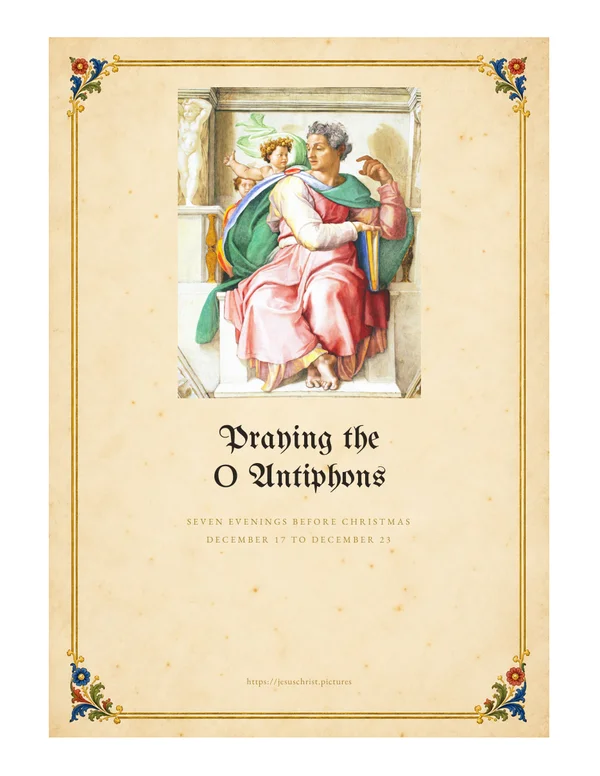
✦ The O Antiphons as a Free Printable Booklet
The seven antiphons below are also a booklet you can print at home: nine illuminated pages, one for each evening from December 17 to 23, with the painting, the antiphon in English and Latin, the verse of Scripture behind it, a short reading and a prayer. It is free, and there is nothing to fill in.
Download for US LetterDownload for A4
PDF, nine pages, ready to print.
What Are the O Antiphons?
An antiphon is a short verse sung before and after a psalm or canticle. These seven belong to Vespers, the evening prayer of the Church, where they frame the Magnificat, the song of Mary, and they are also sung as the Gospel acclamation at Mass on the same days. They are at least as old as the eighth century, and they are called the O Antiphons, or the Great O’s, because every one of them begins with that single cry.
The days are fixed: O Sapientia on December 17, then one each evening until O Emmanuel on December 23. In the medieval English use of Sarum they began a day earlier, with an eighth antiphon to the Virgin, which is why some Anglican calendars still mark “O Sapientia” on December 16. The English translation of the antiphons on this page is our own, made from the Latin, and the Scripture is quoted from the King James Version.
The Hidden Message: ERO CRAS
Read the first letters of the Latin titles from the last evening back to the first: Emmanuel, Rex, Oriens, Clavis, Radix, Adonai, Sapientia. They spell ERO CRAS, Latin for “Tomorrow I will be there.” For a week the Church has been saying come; on December 23 the answer is complete, and the next day is Christmas Eve. No one knows whether the acrostic was planned, but it has been noticed and loved for centuries.
The Seven O Antiphons, December 17 to 23
December 17: O Sapientia (O Wisdom)
O Wisdom, who camest forth from the mouth of the Most High, reaching from end to end and ordering all things mightily and sweetly: come, and teach us the way of prudence.
O Sapientia, quae ex ore Altissimi prodiisti, attingens a fine usque ad finem, fortiter suaviterque disponens omnia: veni ad docendum nos viam prudentiae.
Scripture: Wisdom reacheth from one end to another mightily: and sweetly doth she order all things. (Wisdom 8:1)
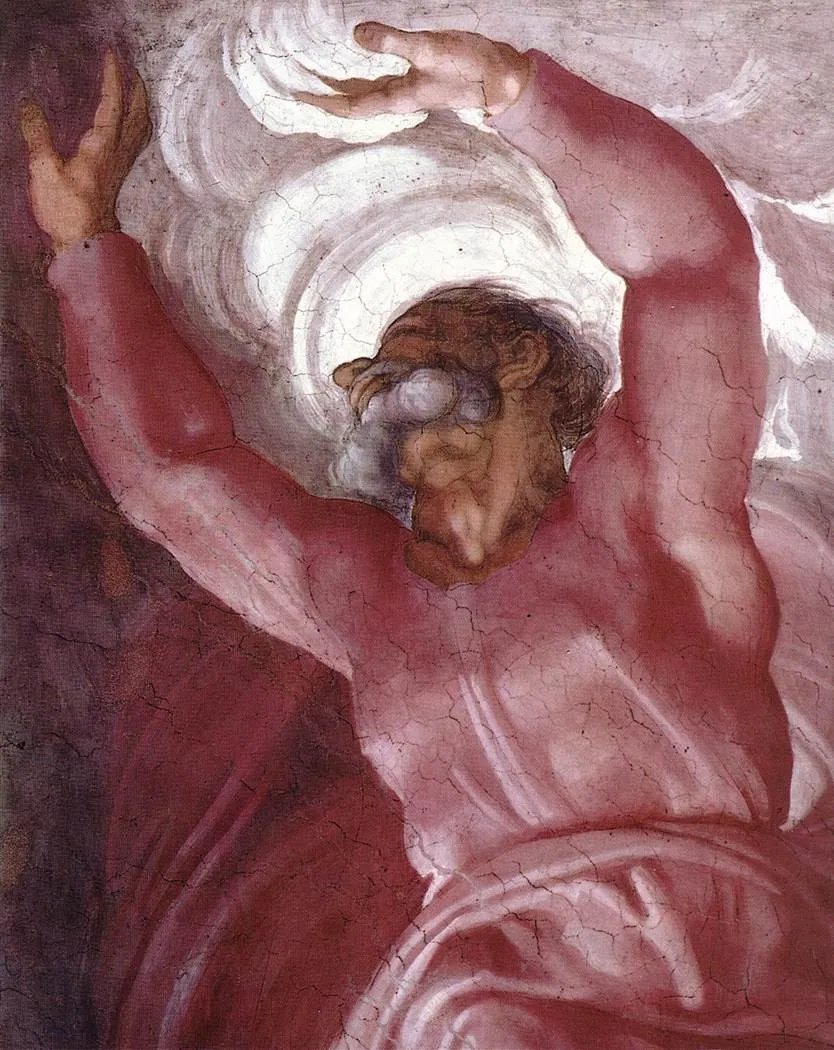
The first antiphon begins before the beginning. The Wisdom that ordered the world is the eternal Word, who will lie in a manger within the week. Michelangelo painted that ordering on the Sistine Chapel ceiling: above the altar, God twists through the clouds and separates light from darkness on the first day of creation, the same hand that would later give life to Adam in the Creation of Adam. Ask today for the prudence to set one thing in your own life back in order.
December 18: O Adonai (O Lord)
O Adonai, and Leader of the house of Israel, who didst appear to Moses in the flame of the burning bush, and didst give him the law on Sinai: come, and redeem us with an outstretched arm.
O Adonai, et Dux domus Israel, qui Moysi in igne flammae rubi apparuisti, et ei in Sina legem dedisti: veni ad redimendum nos in brachio extento.
Scripture: For the LORD is our judge, the LORD is our lawgiver, the LORD is our king; he will save us. (Isaiah 33:22)
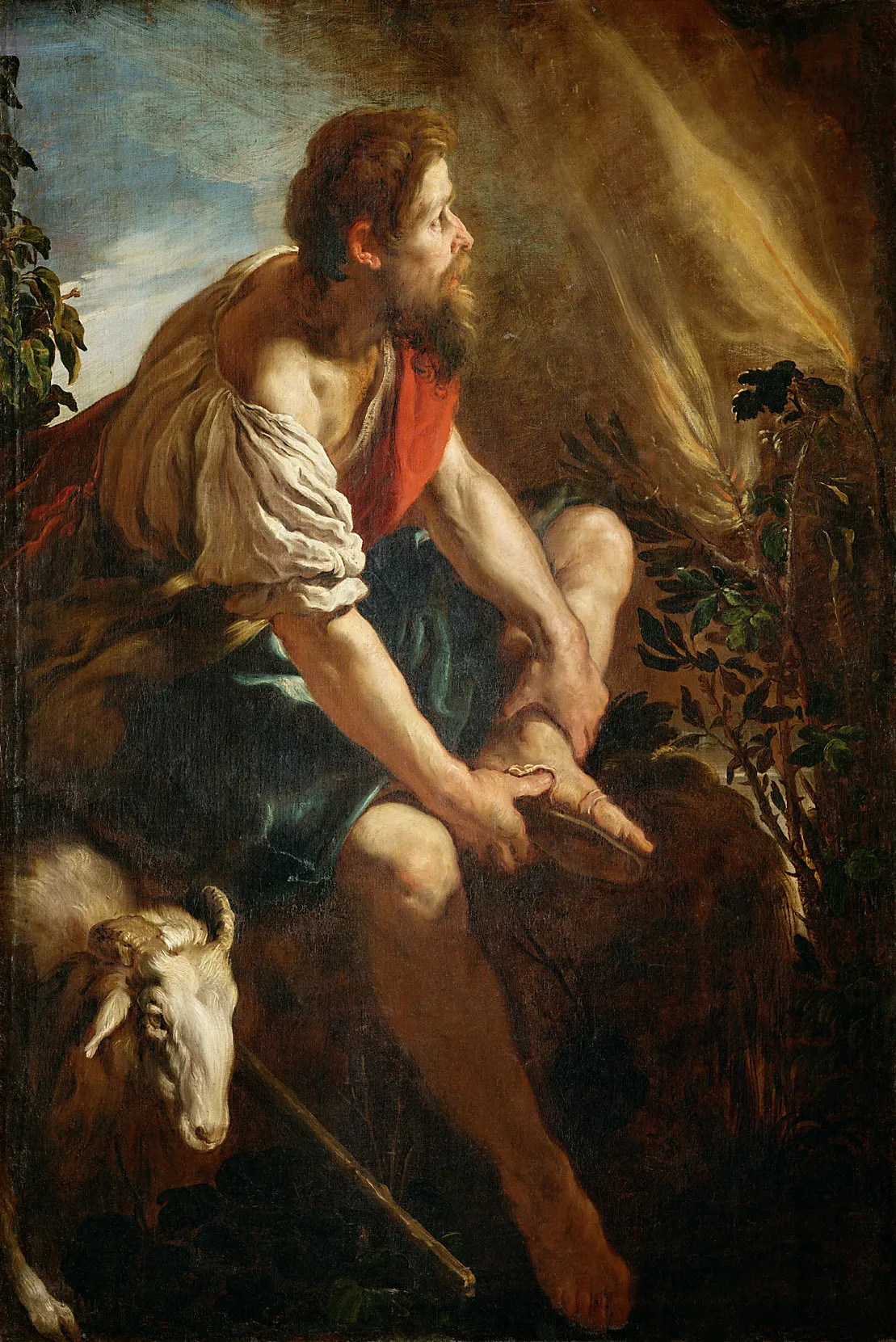
Adonai, Lord, is the word Israel spoke aloud in place of the holy Name. The God no one could see spoke to Moses from a fire that did not consume the bush. The Roman-born painter Domenico Fetti, working in the early seventeenth century, shows Moses bending to take off his sandals, because the ground he stands on is holy, while the flames rise behind him. For more of his story in art, see our Moses paintings. Before you pray today, put down one thing you carry in with you.
December 19: O Radix Jesse (O Root of Jesse)
O Root of Jesse, who standest as a sign for the peoples, before whom kings shall shut their mouths, to whom the nations shall make their prayer: come to deliver us, and tarry now no longer.
O Radix Jesse, qui stas in signum populorum, super quem continebunt reges os suum, quem Gentes deprecabuntur: veni ad liberandum nos, jam noli tardare.
Scripture: And in that day there shall be a root of Jesse, which shall stand for an ensign of the people; to it shall the Gentiles seek: and his rest shall be glorious. (Isaiah 11:10)
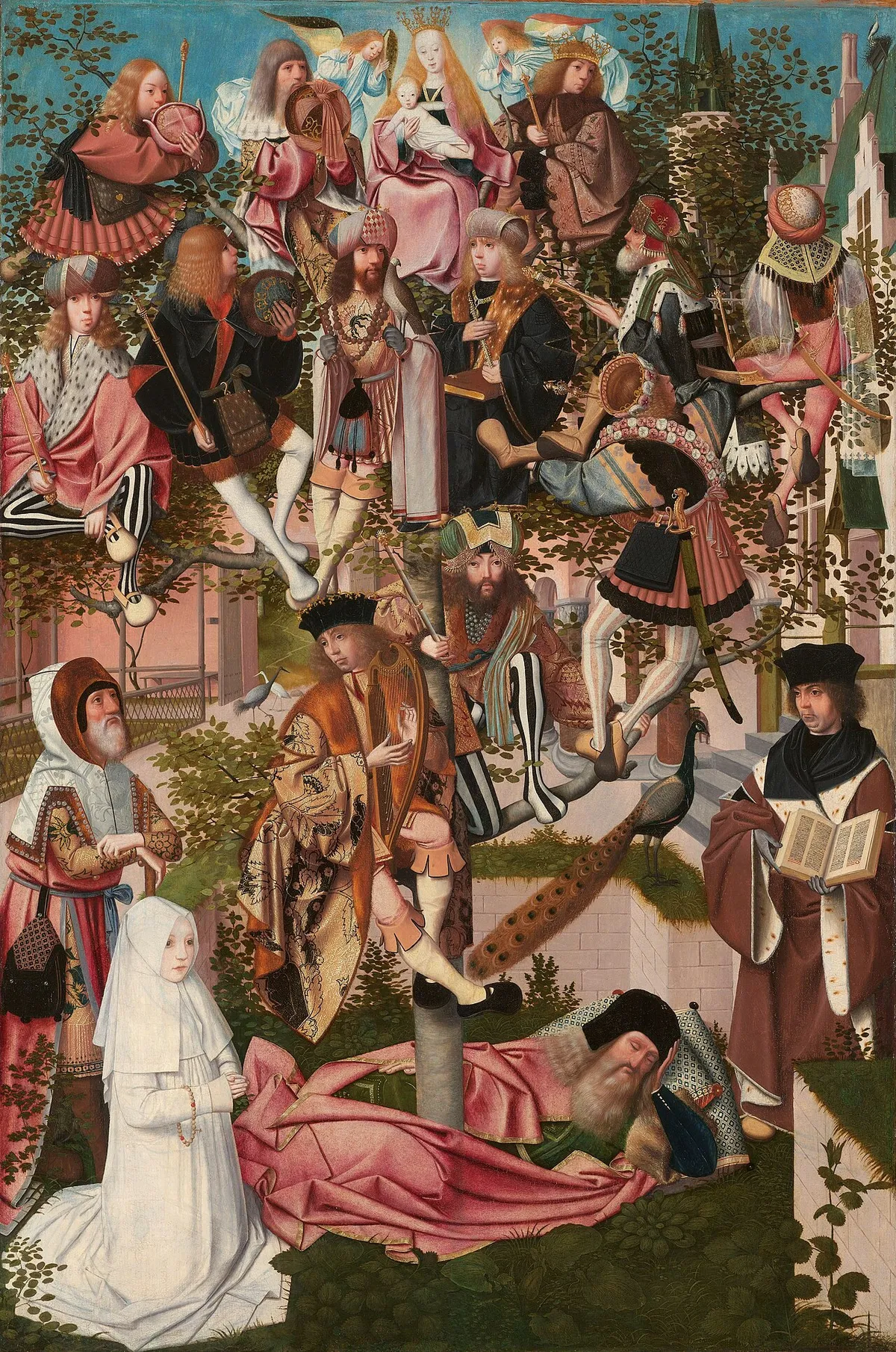
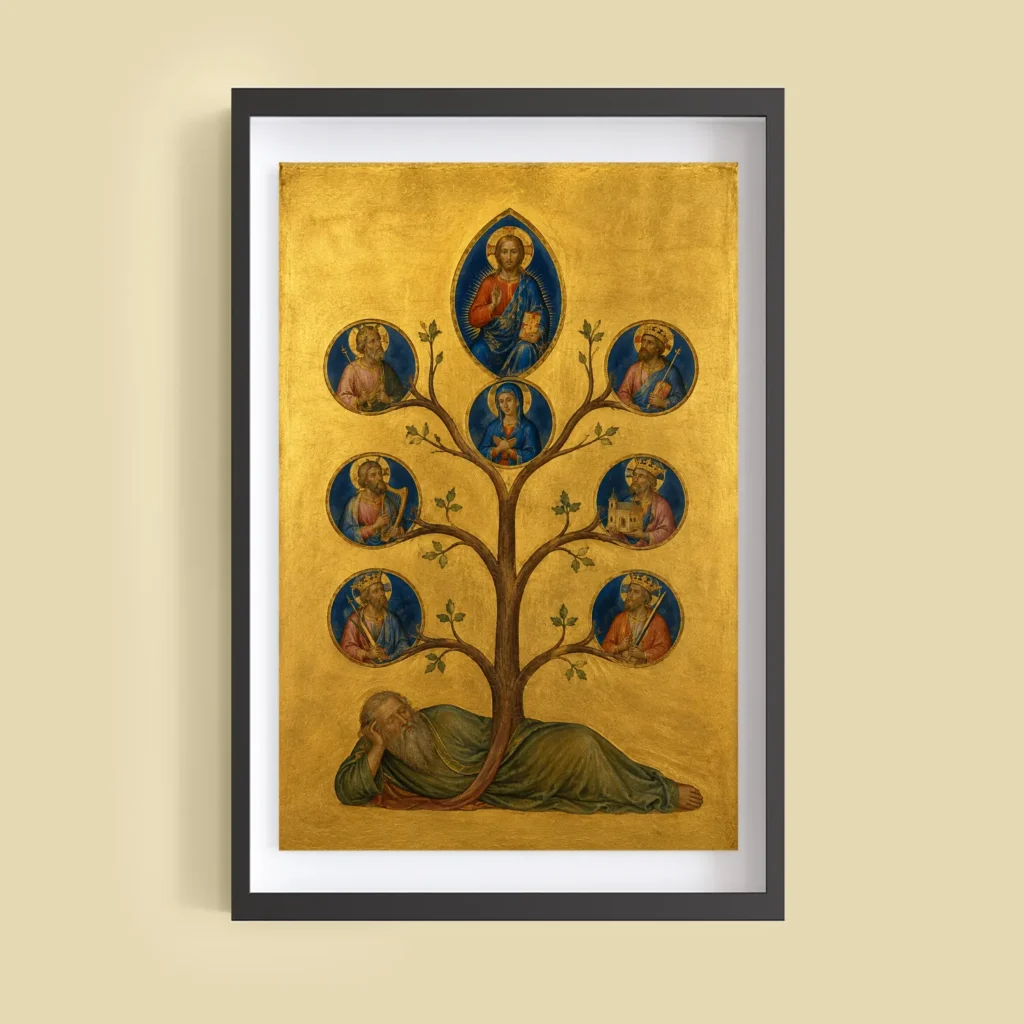
Jesse was the father of King David, and Isaiah foresaw a shoot springing from his stump. Medieval and Renaissance artists turned the prophecy into the Tree of Jesse: Jesse lies asleep at the foot of the picture, his descendants, the kings of Israel, sit in the branches that grow out of him, David among them with his harp, and at the top the Virgin holds the Child. This panel, painted around 1500 in the circle of Geertgen tot Sint Jans, came from a convent in Haarlem and is now in the Rijksmuseum. It is a family tree of saints and sinners, and God grafted his Son into it. Many families follow that same tree through the whole of Advent with a Jesse Tree, one ornament for each story from December 1. Pray today for your own family, as it really is.
December 20: O Clavis David (O Key of David)
O Key of David, and Sceptre of the house of Israel, who openest and no man shutteth, who shuttest and no man openeth: come, and lead the prisoner out of the prison house, him that sitteth in darkness and in the shadow of death.
O Clavis David, et sceptrum domus Israel, qui aperis, et nemo claudit, claudis, et nemo aperit: veni, et educ vinctum de domo carceris, sedentem in tenebris, et umbra mortis.
Scripture: And the key of the house of David will I lay upon his shoulder; so he shall open, and none shall shut; and he shall shut, and none shall open. (Isaiah 22:22)
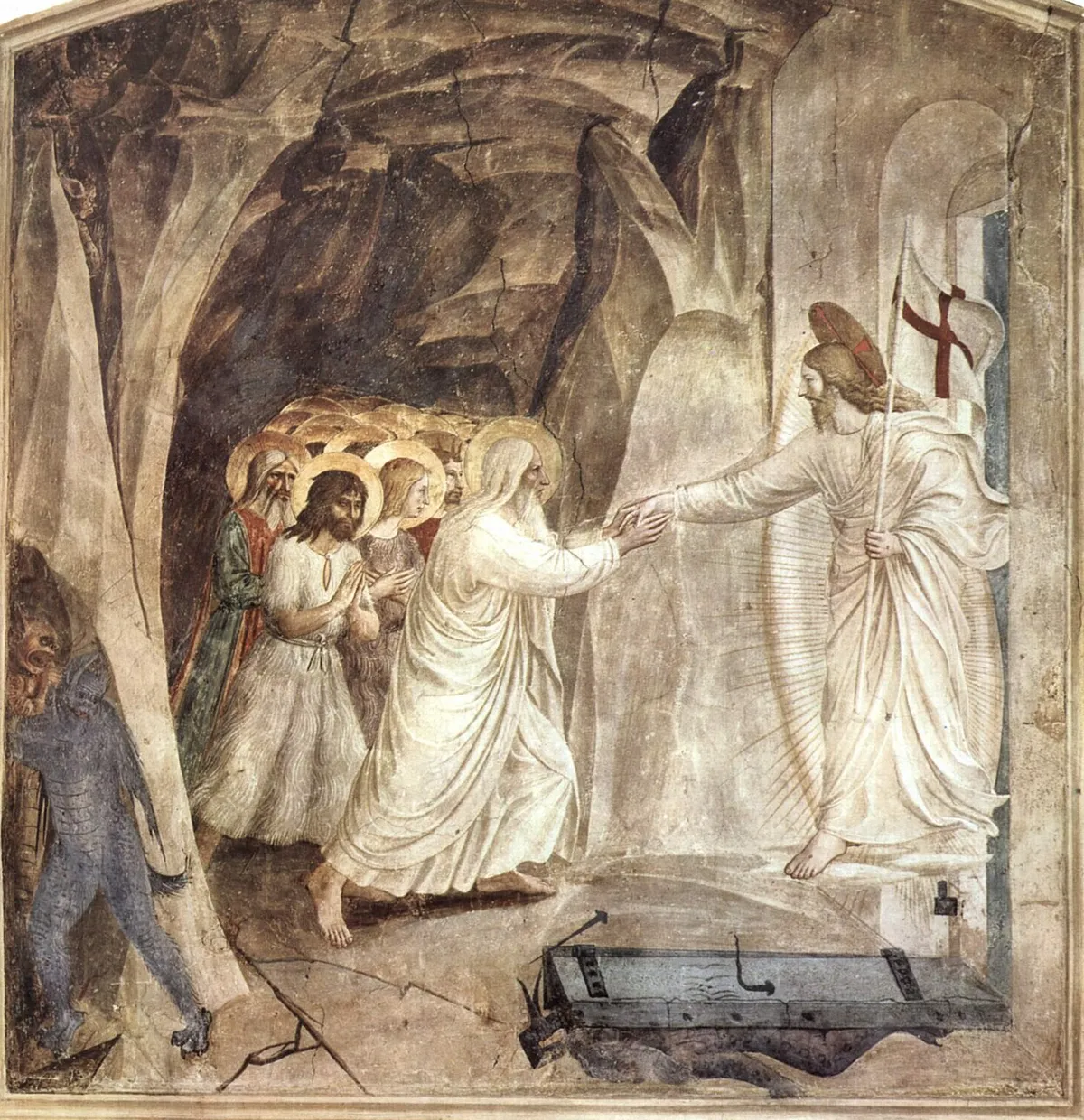
The key is the authority to open what no one else can open. In a cell of the friary of San Marco in Florence, Fra Angelico and his workshop painted Christ going down to the dead after the Crucifixion: the door of their prison lies flat on the ground, a demon crushed beneath it, and Christ takes Adam by the hand to lead the just out into the light. No lock holds against this key. Name the door in your life you believe is shut for good.
December 21: O Oriens (O Dayspring)
O Dayspring, splendour of the light eternal and sun of justice: come, and give light to them that sit in darkness and in the shadow of death.
O Oriens, splendor lucis aeternae, et sol justitiae: veni, et illumina sedentes in tenebris, et umbra mortis.
Scripture: The people that walked in darkness have seen a great light: they that dwell in the land of the shadow of death, upon them hath the light shined. (Isaiah 9:2)
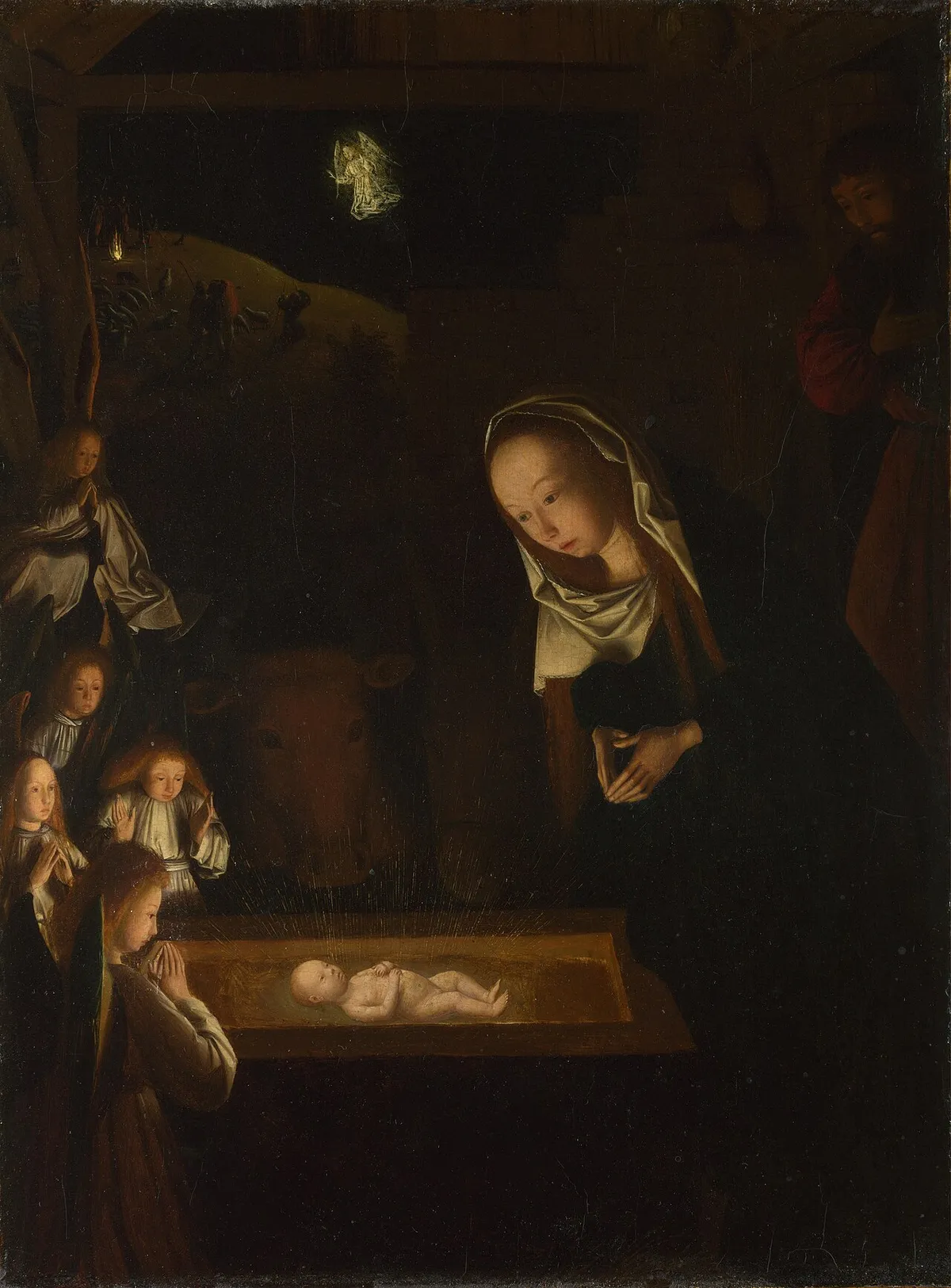
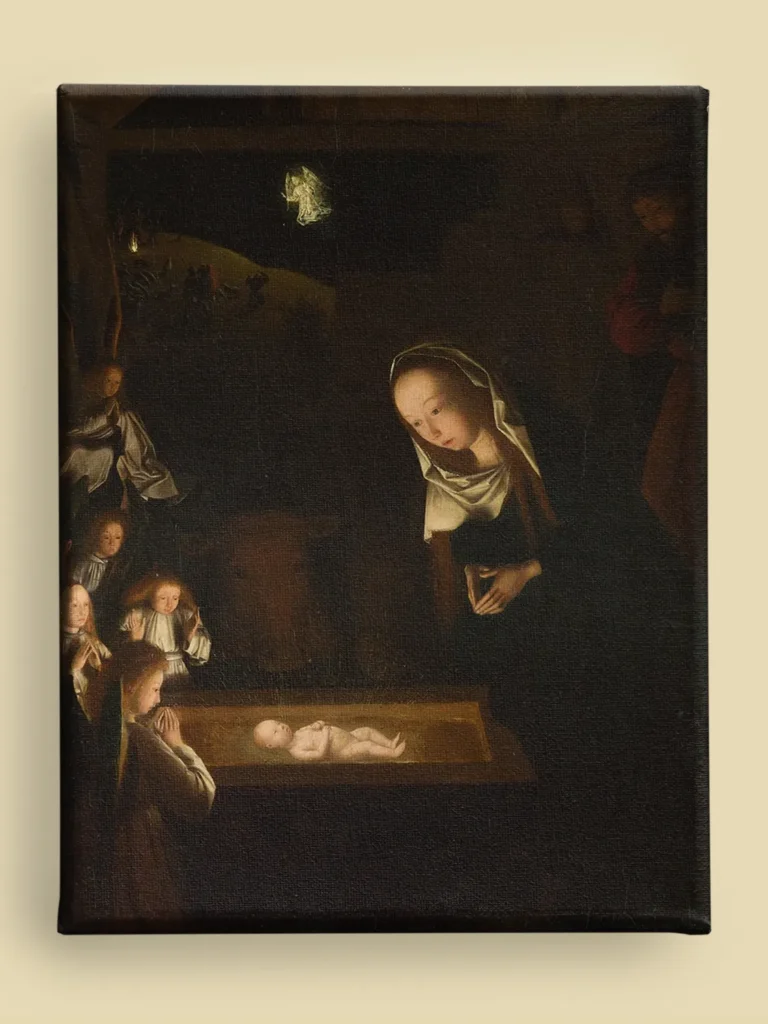
This antiphon falls on December 21, the longest night of the year in the northern world, and asks for the dawn. Geertgen tot Sint Jans painted the stable almost in darkness: the light on the face of Mary, on the small angels around the manger, on the ox and the ass, all comes from the Child himself, while the shepherds on the hill outside are lit by the angel who announces him. From tonight the days begin to grow longer. Ask him to shine where you sit in the dark. You will find more paintings of this night in our famous Nativity paintings.
December 22: O Rex Gentium (O King of the Nations)
O King of the nations, and their Desired One, the cornerstone that makest both one: come, and save man, whom thou didst form from the clay.
O Rex Gentium, et desideratus earum, lapisque angularis, qui facis utraque unum: veni, et salva hominem, quem de limo formasti.
Scripture: Behold, I lay in Zion for a foundation a stone, a tried stone, a precious corner stone, a sure foundation. (Isaiah 28:16)
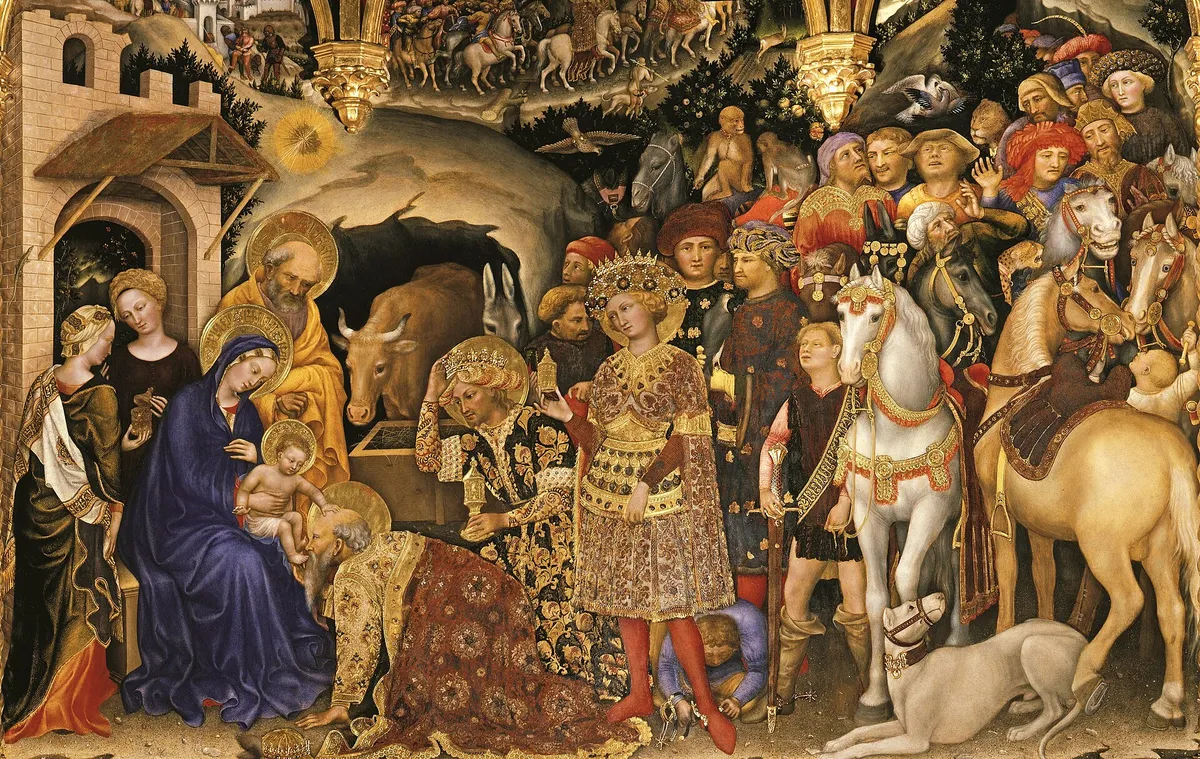
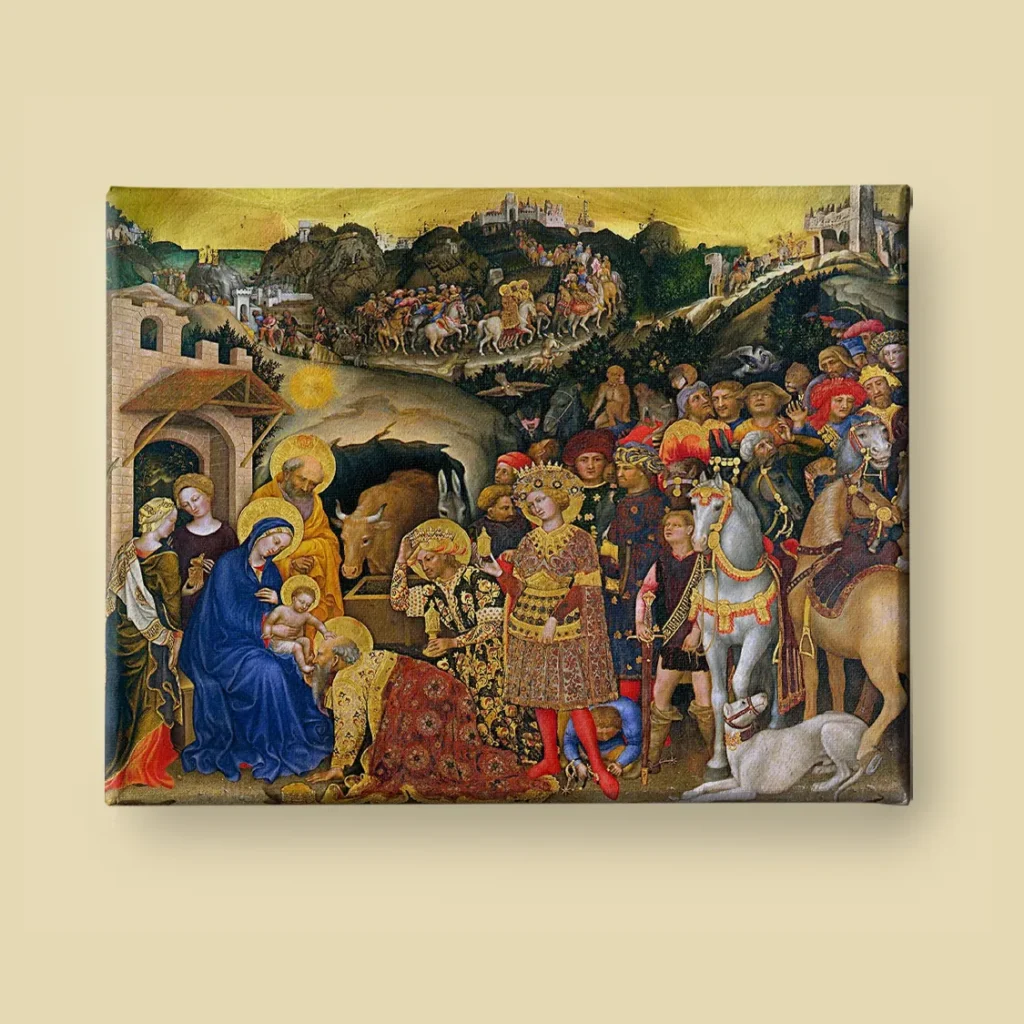
The King of the nations is the one the whole world was waiting for, the cornerstone that joins two walls into one house. Gentile da Fabriano painted his Adoration of the Magi in 1423 for the banker Palla Strozzi in Florence, and filled the road to Bethlehem with horses, hunting dogs and courtiers in gold, while the oldest king kneels in the dust before the Child. The nations have come. Pray today for someone you find it hard to stand beside. The kings have their own gallery in our Adoration of the Magi paintings.
December 23: O Emmanuel (O God With Us)
O Emmanuel, our King and Lawgiver, the Expected of the nations and their Saviour: come to save us, O Lord our God.
O Emmanuel, Rex et legifer noster, exspectatio Gentium, et Salvator earum: veni ad salvandum nos, Domine, Deus noster.
Scripture: Therefore the Lord himself shall give you a sign; Behold, a virgin shall conceive, and bear a son, and shall call his name Immanuel. (Isaiah 7:14)
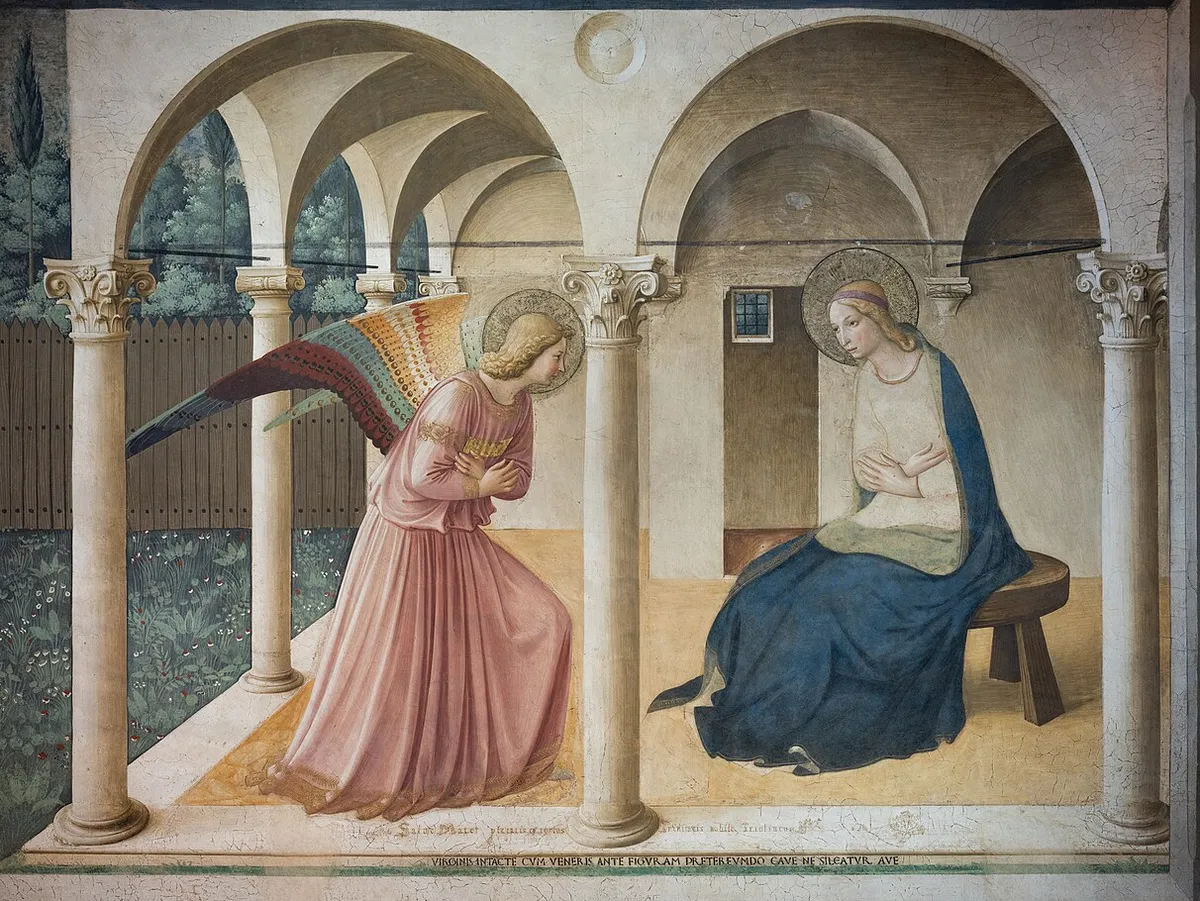
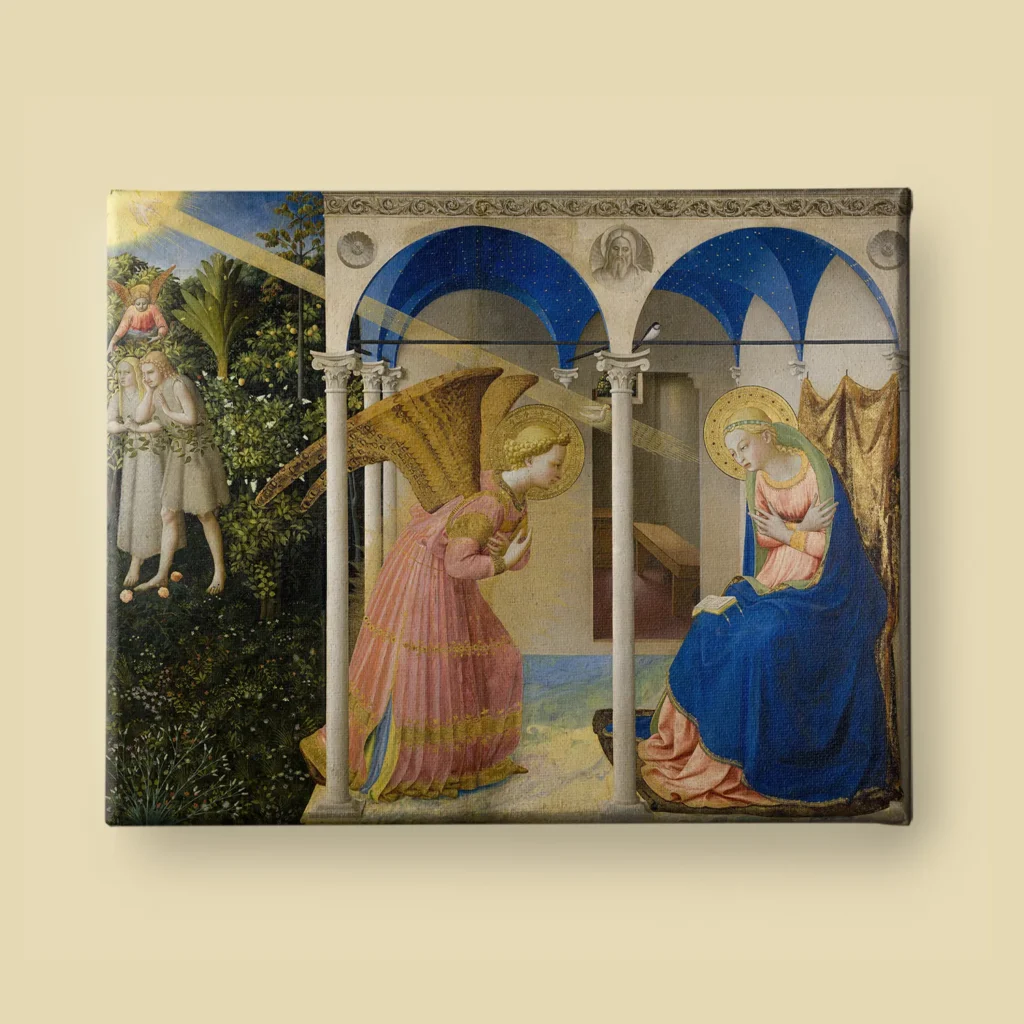
The last antiphon gives his name at last: Emmanuel, God with us, the sign Isaiah promised to King Ahaz. Fra Angelico painted this Annunciation at the top of the stairs of San Marco, where every friar passed it on the way to his cell, and an inscription beneath it asks them not to go by without saying a Hail Mary. Tonight, read the seven titles backward, and see what the Church has been answered all week.
The O Antiphons and “O Come, O Come, Emmanuel”
The best known Advent hymn in English grew out of these seven prayers. Centuries after the antiphons, five of them were turned into a Latin hymn, Veni, veni, Emmanuel, first printed in Cologne in 1710. John Mason Neale translated it into English in 1851, and in 1861 it appeared in Hymns Ancient and Modern as O Come, O Come, Emmanuel. Each verse takes one title, Emmanuel, the Rod of Jesse, the Dayspring, the Key of David and the Lord of might on Sinai, and in the twentieth century verses for Wisdom and the Desire of Nations were added. Singing it during the last week of Advent is a simple way to pray the O Antiphons with children.
How to Pray the O Antiphons at Home
Pray one antiphon each evening, beginning on December 17. If you have an Advent wreath, light it first. Read the antiphon slowly, then the verse of Scripture, and look at the painting together: children can find the sign of the day, the light, the fire, the tree, the key, the dawn, the kings and the angel. Then say the Magnificat, or simply end with the last word of the antiphon: come.
If you are looking for other prayers for these weeks, the Saint Andrew Christmas Novena is said from the end of November until Christmas, and the Our Lady of Guadalupe novena leads to her feast on December 12. For children, our free Nativity coloring pages are drawn from great paintings of the same night. And when the season reaches the Epiphany, bless your home with the Epiphany house blessing, a prayer at the front door and a line of chalk above it.
✦ Free Christian & Catholic Printables
Love this one? Find it, and our complete collection of illuminated prayer cards, novenas and Scripture printables, ready to print, free, in one place.
Browse all free printables →Frequently Asked Questions
What are the O Antiphons?
The O Antiphons are seven short prayers sung at Vespers, the evening prayer of the Church, on the last seven days of Advent, from December 17 to December 23. Each one calls on Christ by an Old Testament title, Wisdom, Adonai, Root of Jesse, Key of David, Dayspring, King of the Nations and Emmanuel, and ends with the plea “come.” They frame the Magnificat at Vespers and are also used as the Gospel acclamation at Mass on those days.
When do the O Antiphons begin?
They begin on December 17 with O Sapientia and end on December 23 with O Emmanuel, one each evening. In the medieval English use of Sarum they began on December 16, with an eighth antiphon to the Virgin Mary, and some Anglican calendars still mark O Sapientia on that day.
What does ERO CRAS mean?
ERO CRAS is Latin for “Tomorrow I will be there.” It appears when you read the first letters of the Latin titles of the O Antiphons backward, from December 23 to December 17: Emmanuel, Rex, Oriens, Clavis, Radix, Adonai, Sapientia. After a week of asking Christ to come, the answer is complete on the eve of Christmas Eve.
Why are they called the O Antiphons?
Because each one begins with the word “O,” a cry of address to Christ: O Wisdom, O Lord, O Root of Jesse, O Key of David, O Dayspring, O King of the Nations, O Emmanuel. For the same reason they are sometimes called the Great O’s or the Greater Antiphons.
Is “O Come, O Come, Emmanuel” based on the O Antiphons?
Yes. The hymn comes from a Latin hymn built on five of the O Antiphons and first printed in 1710. John Mason Neale translated it into English in 1851, and it was published as “O Come, O Come, Emmanuel” in Hymns Ancient and Modern in 1861. Each verse takes the title of one antiphon.
Is there a printable PDF of the O Antiphons?
Yes. The seven antiphons on this page are also a free nine-page booklet, in US Letter and A4, with one illuminated page for each evening from December 17 to 23: the painting, the antiphon in English and Latin, the verse of Scripture, a short reading and a prayer. The download links are at the top of this page.
Can you buy the paintings of the O Antiphons as canvas prints?
You can buy several of the paintings of the O Antiphons at jesuschrist.pictures, in our shop: Geertgen tot Sint Jans’ Nativity at Night, Gentile da Fabriano’s Adoration of the Magi and Fra Angelico’s Annunciation as canvas reproductions, and the Tree of Jesse as a fine art poster. They make a fitting image for a home in Advent, a prayer corner or a parish hall.


