Hail Holy Queen Prayer: Full Text, Latin, Meaning and History
On the evening of October 11, 1492, the crews of Christopher Columbus’s three ships gathered on deck and sang the Salve Regina, as sailors did every night. A few hours later, at two in the morning, a lookout on the Pinta saw land. The prayer they sang is the one Catholics still say at the end of every Rosary: the Hail Holy Queen, a cry to Mary as Mother of mercy, from exiles in a valley of tears.
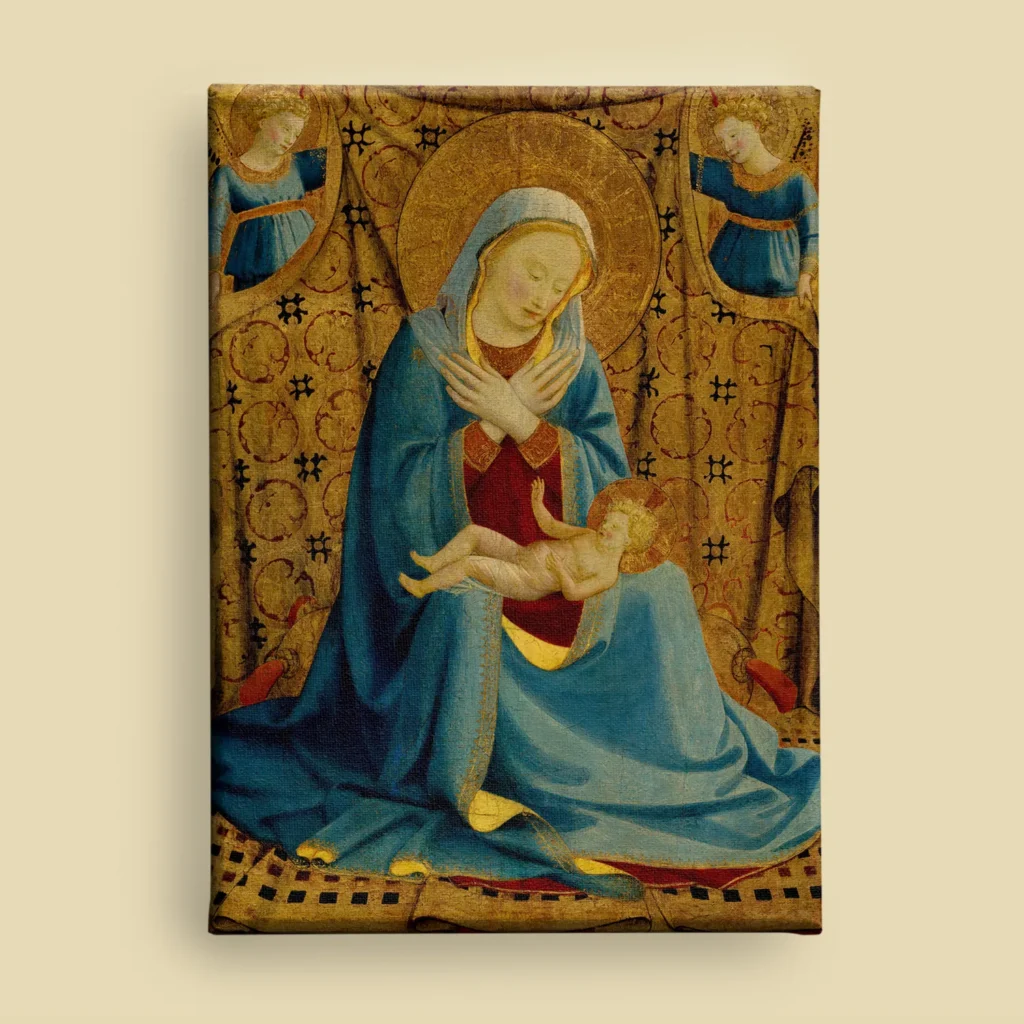
This page gives the full Hail Holy Queen prayer in English, with its response and closing prayer, the Latin Salve Regina, its history, its meaning line by line, and a free printable prayer card. Each line of the prayer is illustrated by a great painting, from Velazquez’s Coronation of the Virgin to Fra Angelico’s Madonna of Humility.
The Hail Holy Queen Prayer: Full Text
This is the traditional English form of the prayer, the one printed in Catholic prayer books for more than a century:
Hail, holy Queen, Mother of mercy, our life, our sweetness and our hope. To thee do we cry, poor banished children of Eve. To thee do we send up our sighs, mourning and weeping in this valley of tears. Turn then, most gracious advocate, thine eyes of mercy toward us, and after this our exile show unto us the blessed fruit of thy womb, Jesus. O clement, O loving, O sweet Virgin Mary. V. Pray for us, O holy Mother of God. R. That we may be made worthy of the promises of Christ.
When it closes the Rosary, the prayer is followed by this collect:
Let us pray. O God, whose only begotten Son, by his life, death and resurrection, has purchased for us the rewards of eternal life, grant, we beseech thee, that while meditating on these mysteries of the most holy Rosary of the Blessed Virgin Mary, we may imitate what they contain and obtain what they promise, through the same Christ our Lord. Amen.
Some modern books say “you” and “your” instead of “thee” and “thy”, and “To you do we cry”. The meaning does not change.
The Salve Regina in Latin
The prayer was written in Latin, and it is still sung in Latin at the end of Compline, the night prayer of the Church:
Salve, Regina, Mater misericordiae, vita, dulcedo, et spes nostra, salve. Ad te clamamus, exsules filii Hevae. Ad te suspiramus, gementes et flentes in hac lacrimarum valle. Eia, ergo, advocata nostra, illos tuos misericordes oculos ad nos converte. Et Iesum, benedictum fructum ventris tui, nobis post hoc exsilium ostende. O clemens, O pia, O dulcis Virgo Maria. V. Ora pro nobis, sancta Dei Genetrix. R. Ut digni efficiamur promissionibus Christi.
Where the Hail Holy Queen Comes From
The Salve Regina is one of the four great Marian anthems of the Latin Church, with the Alma Redemptoris Mater, the Ave Regina Caelorum and the Regina Caeli. It dates from the eleventh century. It is most often attributed to Hermann of Reichenau (1013 to 1054), a monk on an island in Lake Constance, crippled from birth, who was also a mathematician and an astronomer; other manuscripts name Bishop Adhemar of Le Puy. No one can say for certain.
A much loved legend says that Saint Bernard of Clairvaux, hearing the anthem sung in the cathedral of Speyer in 1146, fell to his knees and added the three last cries, O clemens, O pia, O dulcis Virgo Maria. Brass plates in the floor of the cathedral still mark the path he is said to have taken. The cries are in fact older than Bernard, but the story shows how the prayer was loved.
By the thirteenth century the Cistercians and the Dominicans sang the Salve Regina in procession every evening after Compline. Sailors took it to sea as their night prayer, which is why Columbus’s men were singing it on October 11, 1492. In 1884 Pope Leo XIII added it to the prayers said after Low Mass, and for eighty years Catholics said it on their knees at the foot of the altar. Today it closes the Rosary and is sung at Compline from the Sunday after Pentecost until Advent. In the Easter season its place is taken by another of the four Marian anthems, the Regina Caeli.
The Hail Holy Queen in Seven Paintings
Each line of the prayer has been painted by a great master. Here are seven of them, in the order of the words.
1. “Hail, Holy Queen”: The Coronation of the Virgin by Diego Velazquez (about 1635 to 1636)
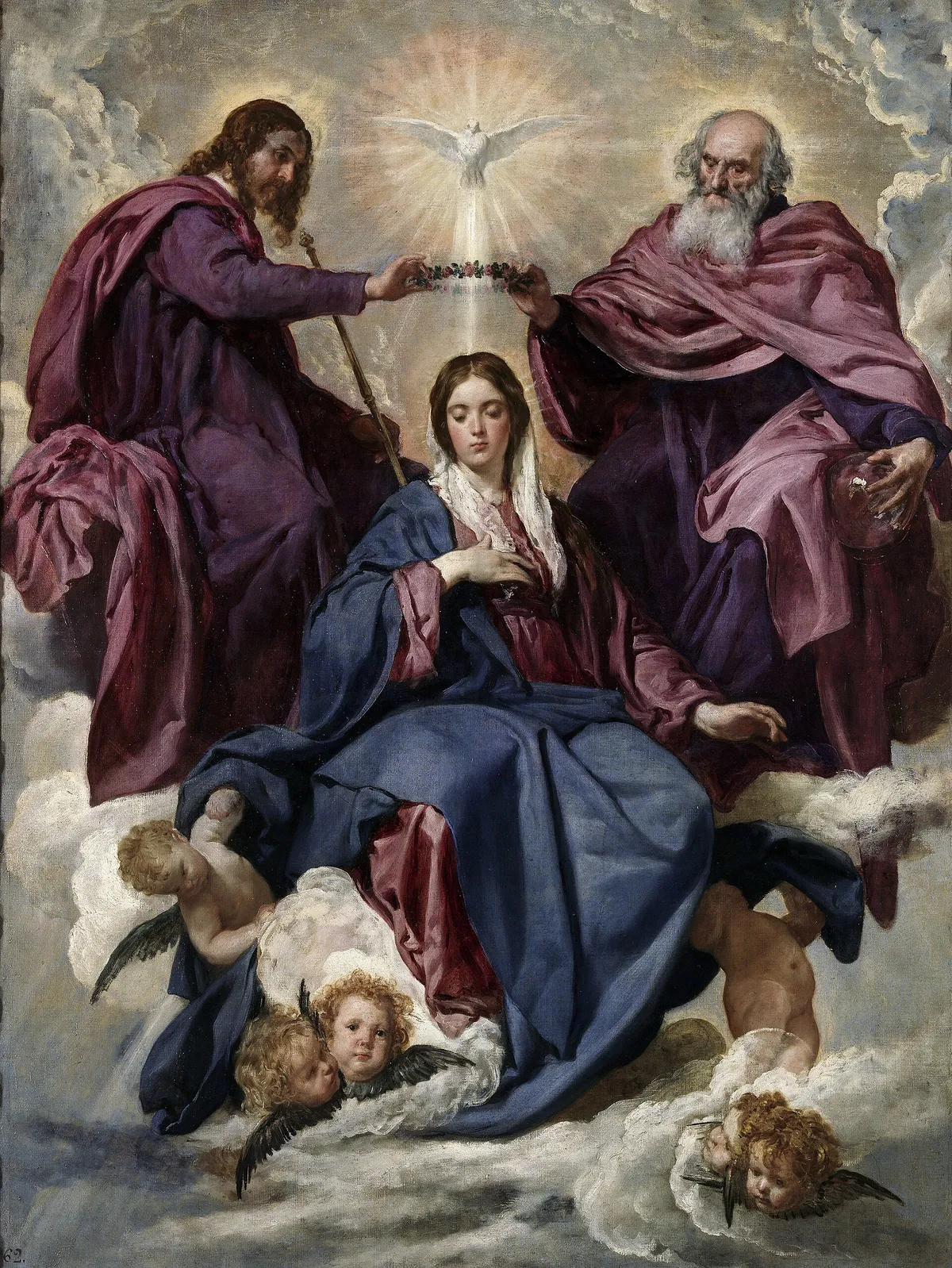
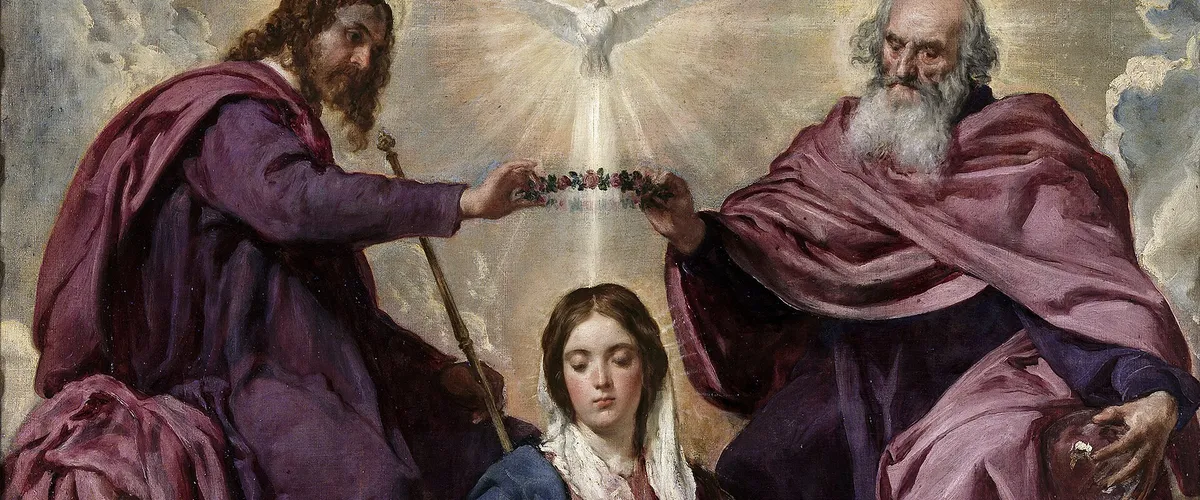
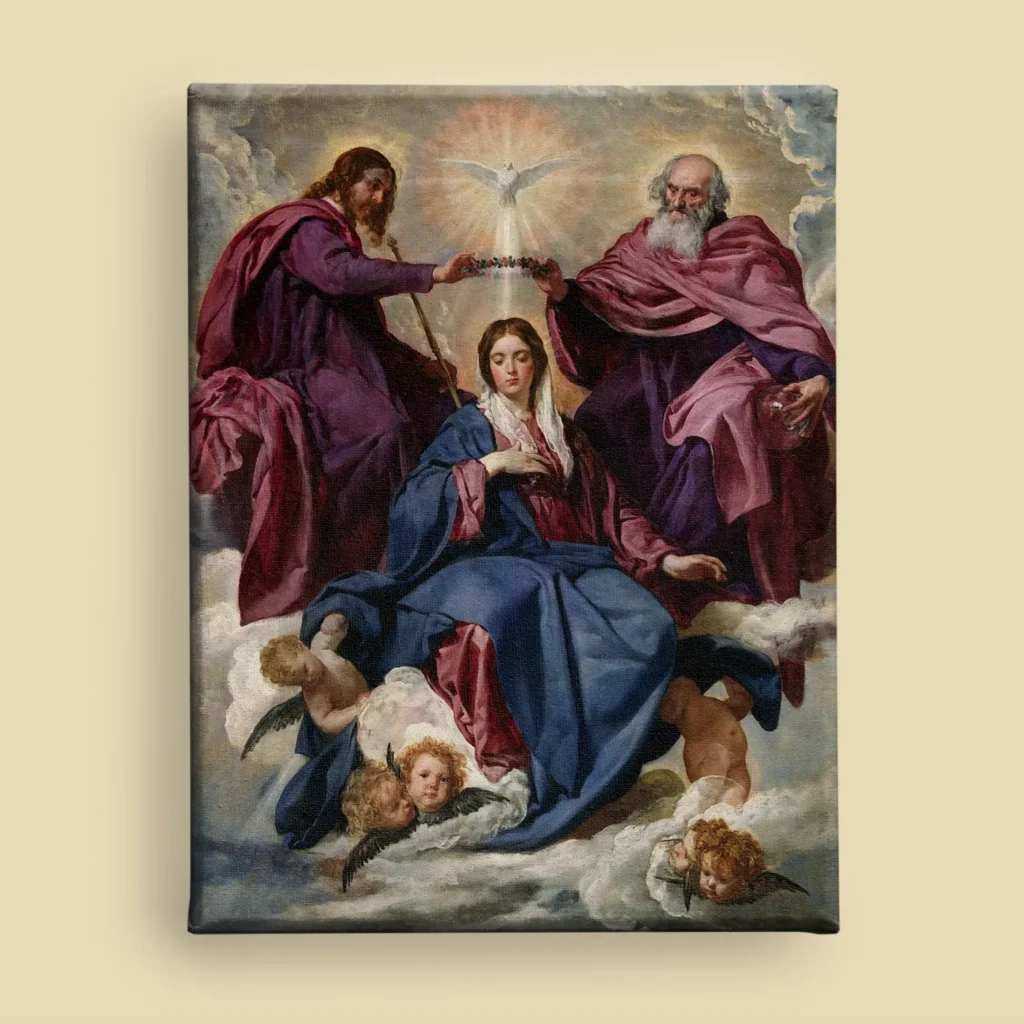
The prayer opens by greeting Mary as Queen, and no painting says it with more majesty than the Velazquez in the Prado. The Father and the Son, in robes of deep purple and red, hold a crown of roses above her head, and the dove of the Holy Spirit blazes above them. Mary does not look up. She lowers her eyes and lays her hand on her heart, a queen crowned for her humility. The canvas was probably painted for the oratory of Queen Isabel in the royal palace of Madrid, a queen praying before a Queen.
2. “Mother of Mercy”: The Madonna della Misericordia by Domenico Ghirlandaio (about 1472)
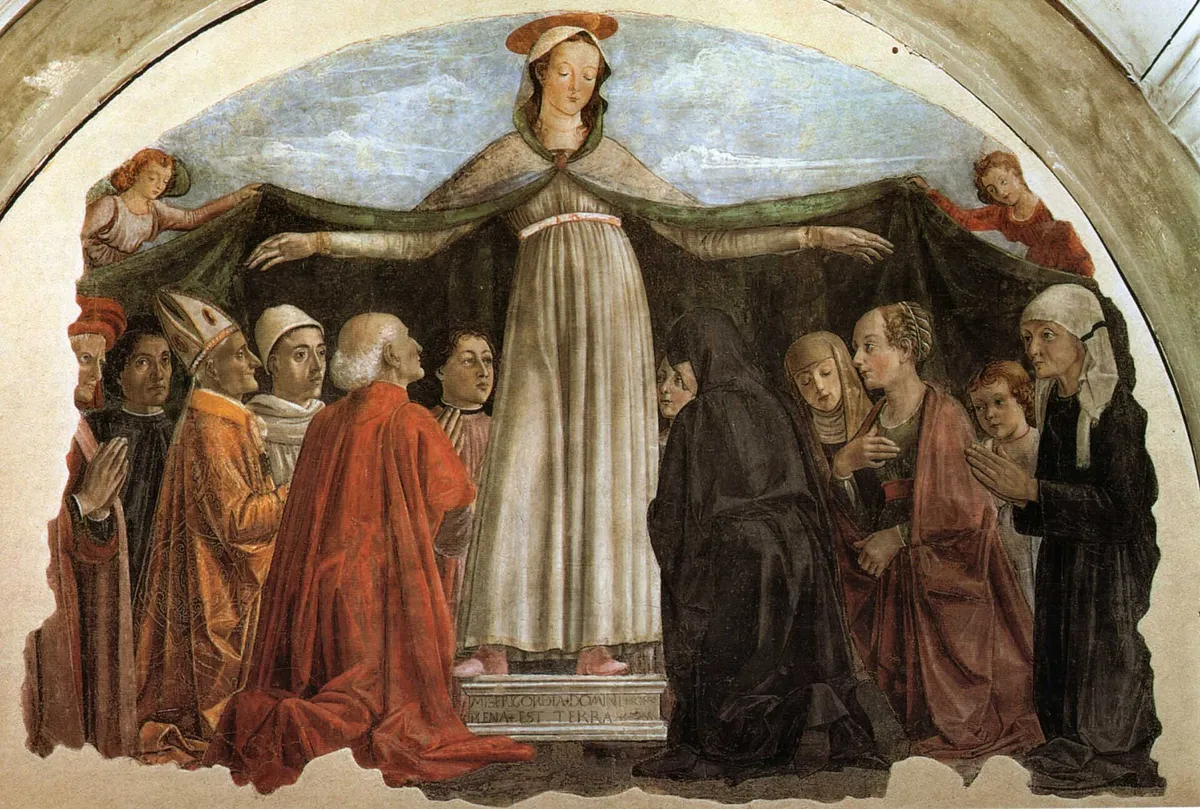
In the church of Ognissanti in Florence, the young Domenico Ghirlandaio painted the Mother of mercy for the chapel of the Vespucci family. Mary stands with her arms open, and her mantle, held up by two angels, shelters the whole family kneeling at her feet. Giorgio Vasari wrote that among them Ghirlandaio painted the portrait of Amerigo Vespucci, then a young man, the navigator whose name would be given to America. The sailors who first reached the New World sang the Salve Regina; the man who gave it its name kneels here under the Mother of mercy.
3. “Poor Banished Children of Eve”: The Expulsion from the Garden of Eden by Masaccio (about 1425)
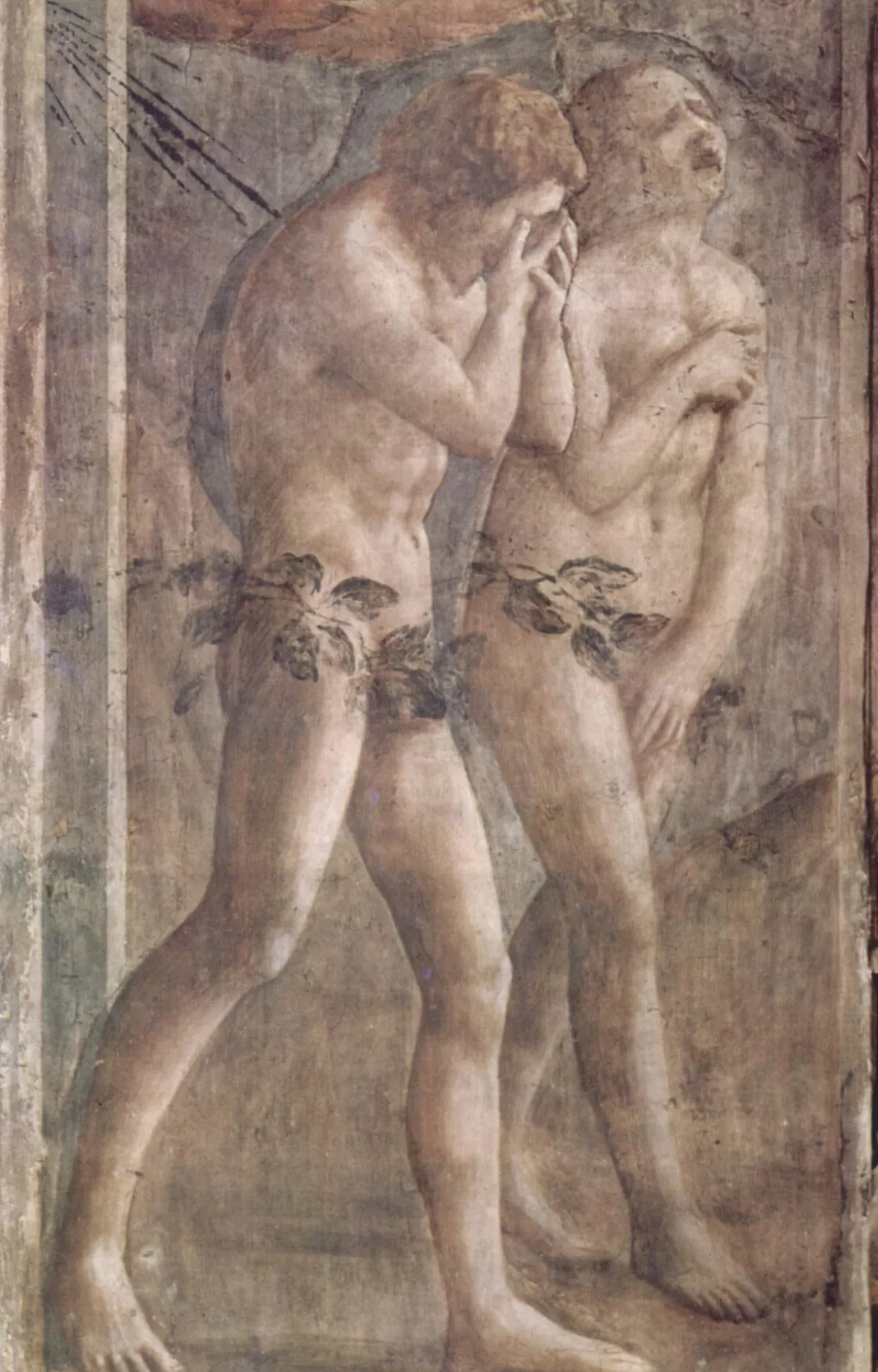
The prayer calls us banished children of Eve, and Masaccio painted the first banishment with a force no one had seen before. Adam hides his face in his hands; Eve throws back her head and cries out, her arms covering her body. The angel drives them out through the gate of Eden into a bare world. It is the “valley of tears” the prayer speaks of, and the reason Christians have always turned to a mother. Read the full story of Masaccio’s Expulsion from the Garden of Eden. The leaves that cover the figures here were added in 1680 and removed during the restoration of the 1980s.
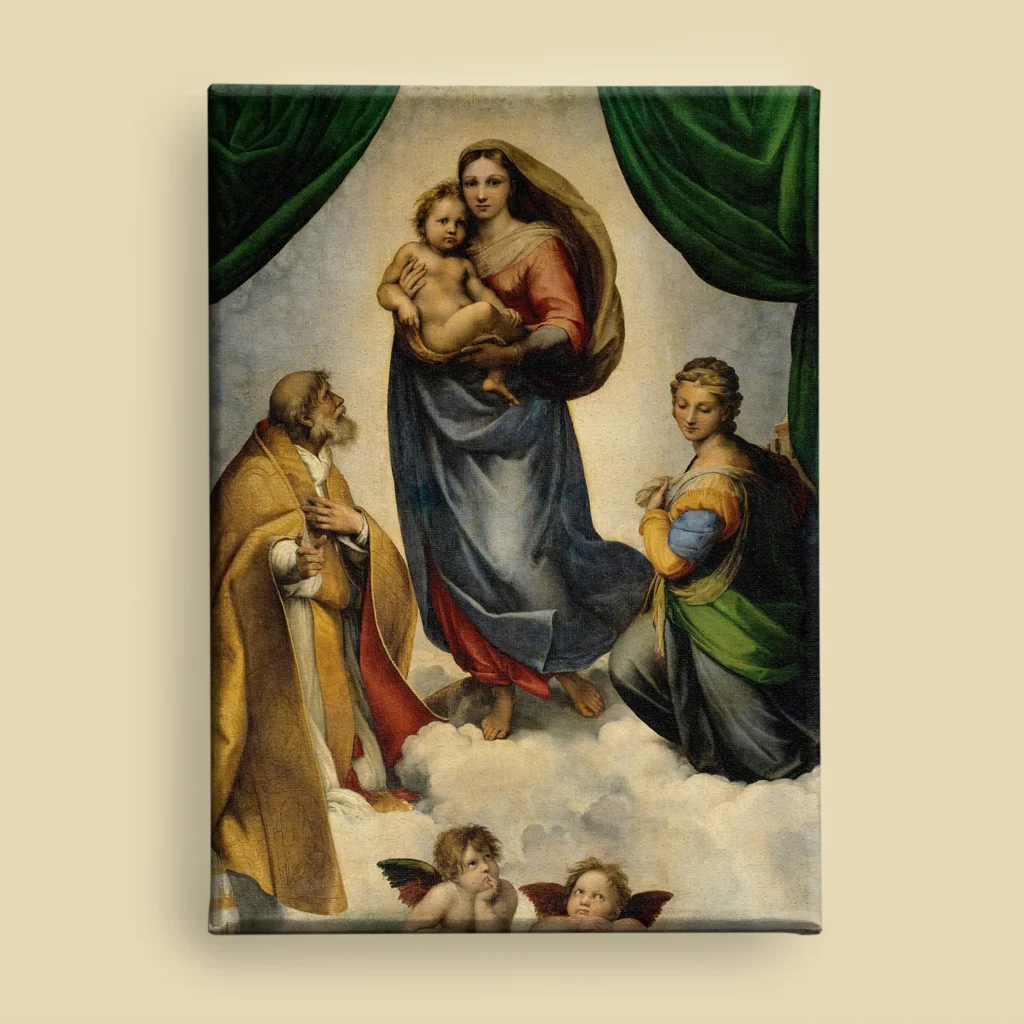
4. “Turn Then, Most Gracious Advocate, Thine Eyes of Mercy Toward Us”: The Sistine Madonna by Raphael (1512 to 1513)
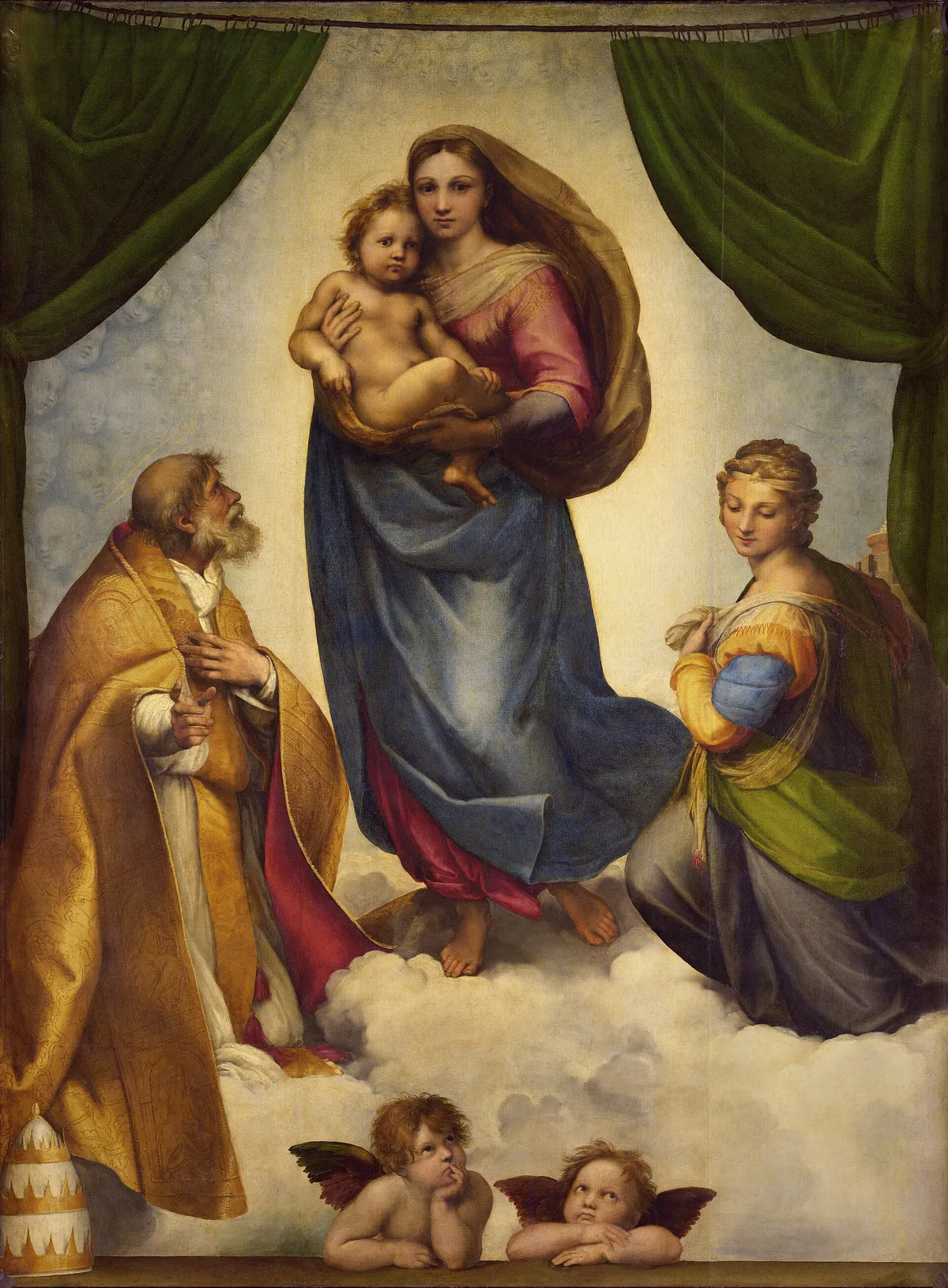
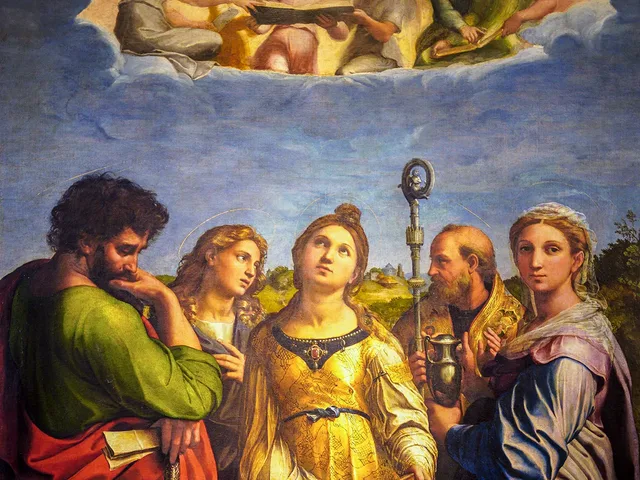
Of all the Madonnas of art, the Sistine Madonna is the one who looks most directly at us. Raphael painted her stepping forward out of the clouds between two drawn curtains, the Child in her arms, her eyes fixed on whoever stands before the altar. It is exactly what the prayer asks: turn your eyes of mercy toward us. Below, the two leaning cherubs have become the most reproduced angels in the world, as told in our article on the Sistine Madonna and its famous angels.
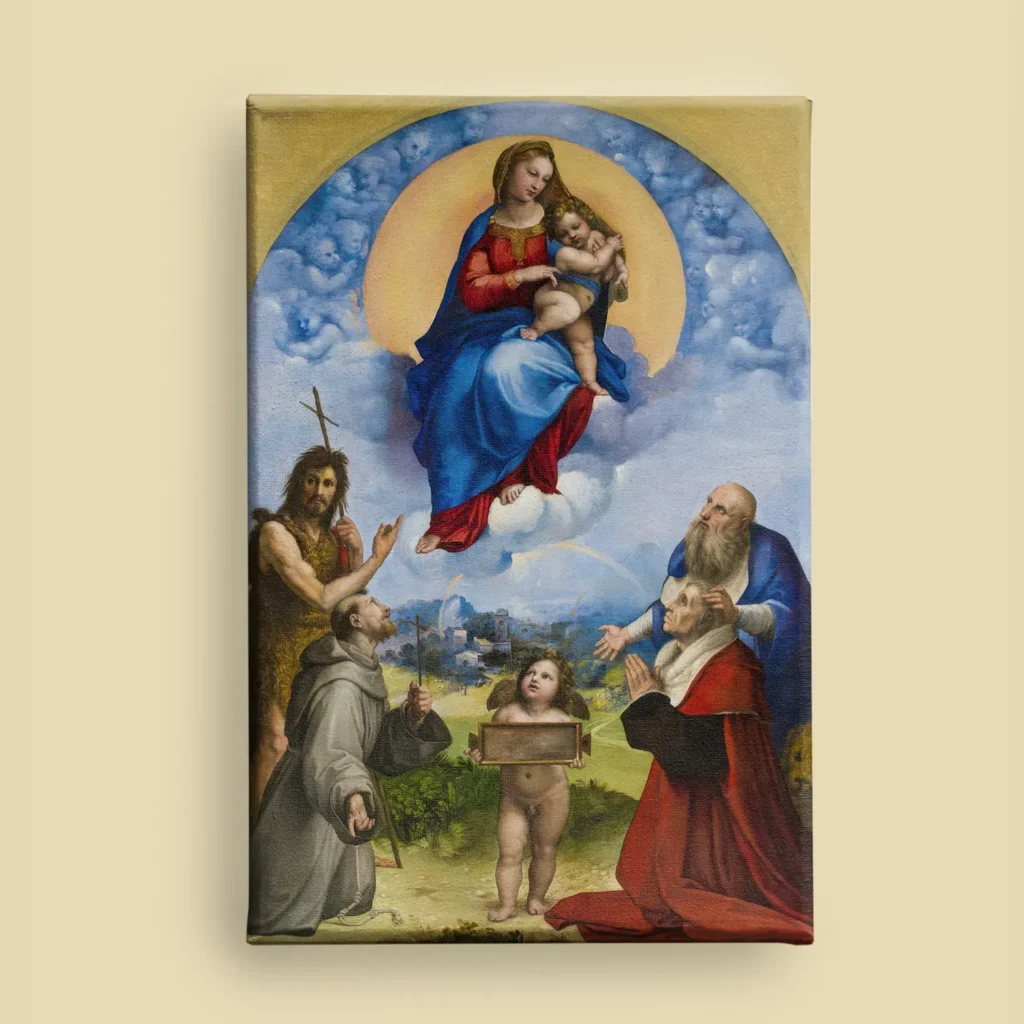
5. “Show Unto Us the Blessed Fruit of Thy Womb, Jesus”: The Madonna di Foligno by Raphael (1511 to 1512)
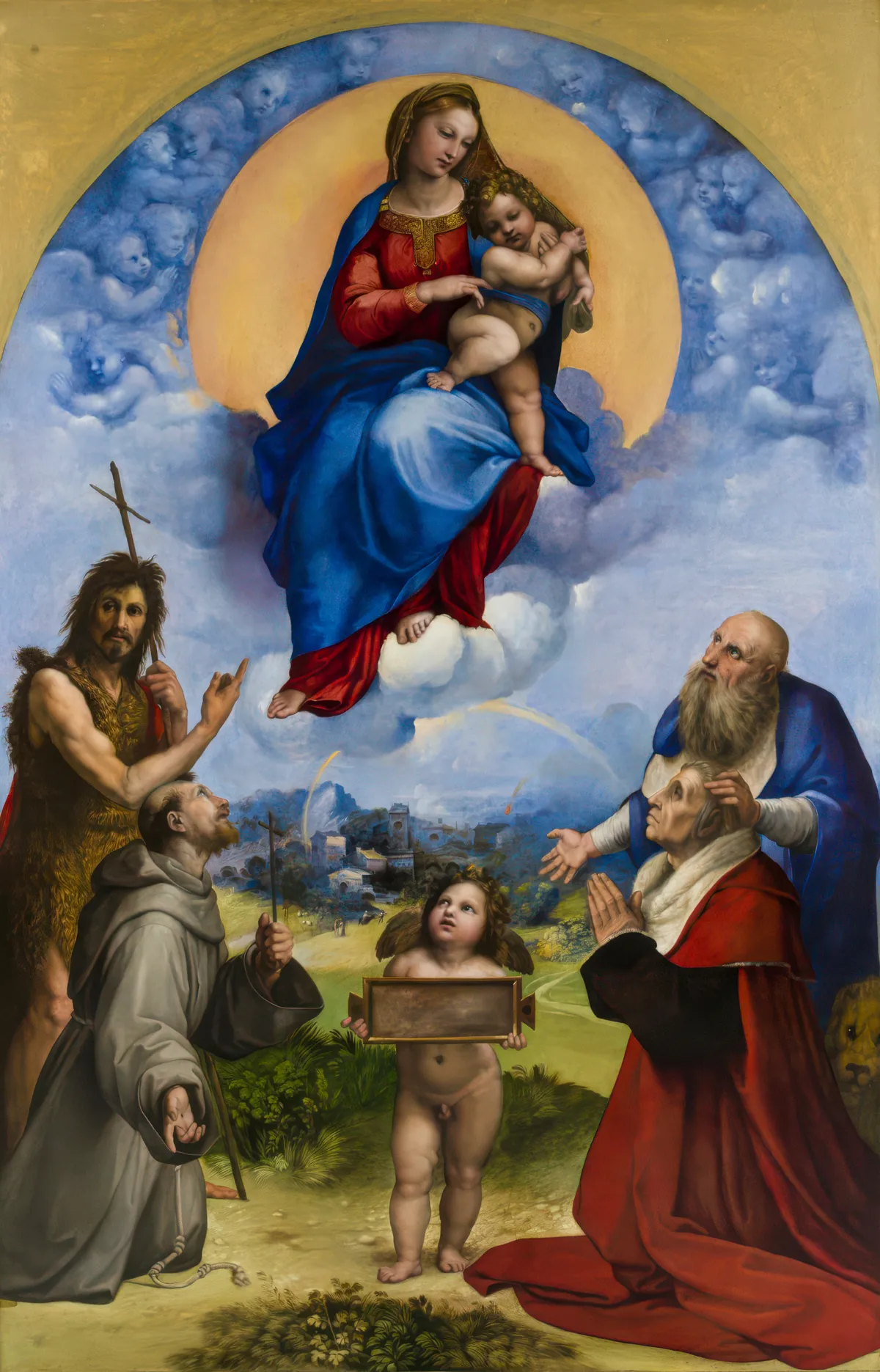
The heart of the prayer is a request: after this exile, show us Jesus. In the Madonna di Foligno, painted for Sigismondo de’ Conti, secretary of Pope Julius II, after his house was spared by a bolt of lightning, Mary sits in a golden sun and holds the Child toward the kneeling donor below. Saint John the Baptist looks out at us and points up to them, as if to say, look. Read the story of the Madonna di Foligno.
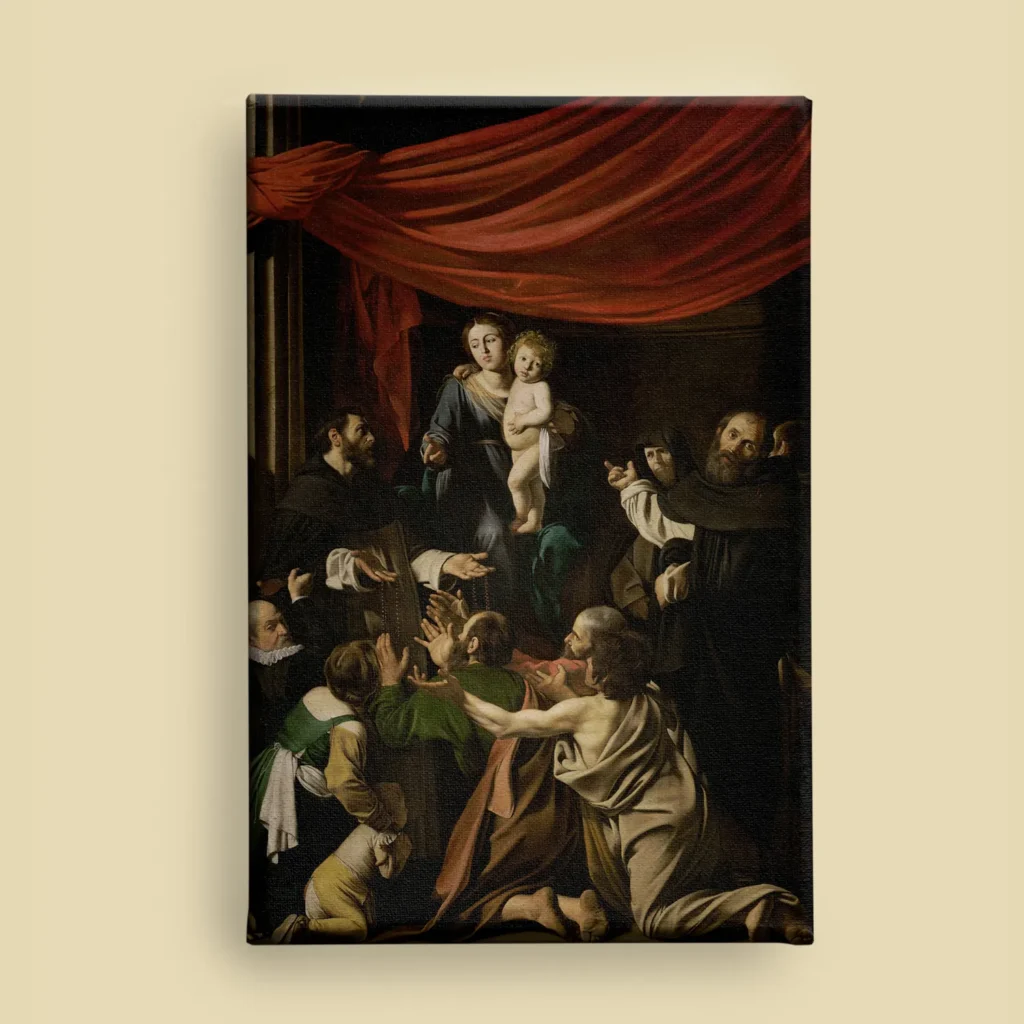
6. The Prayer That Ends the Rosary: The Madonna of the Rosary by Caravaggio (about 1606 to 1607)
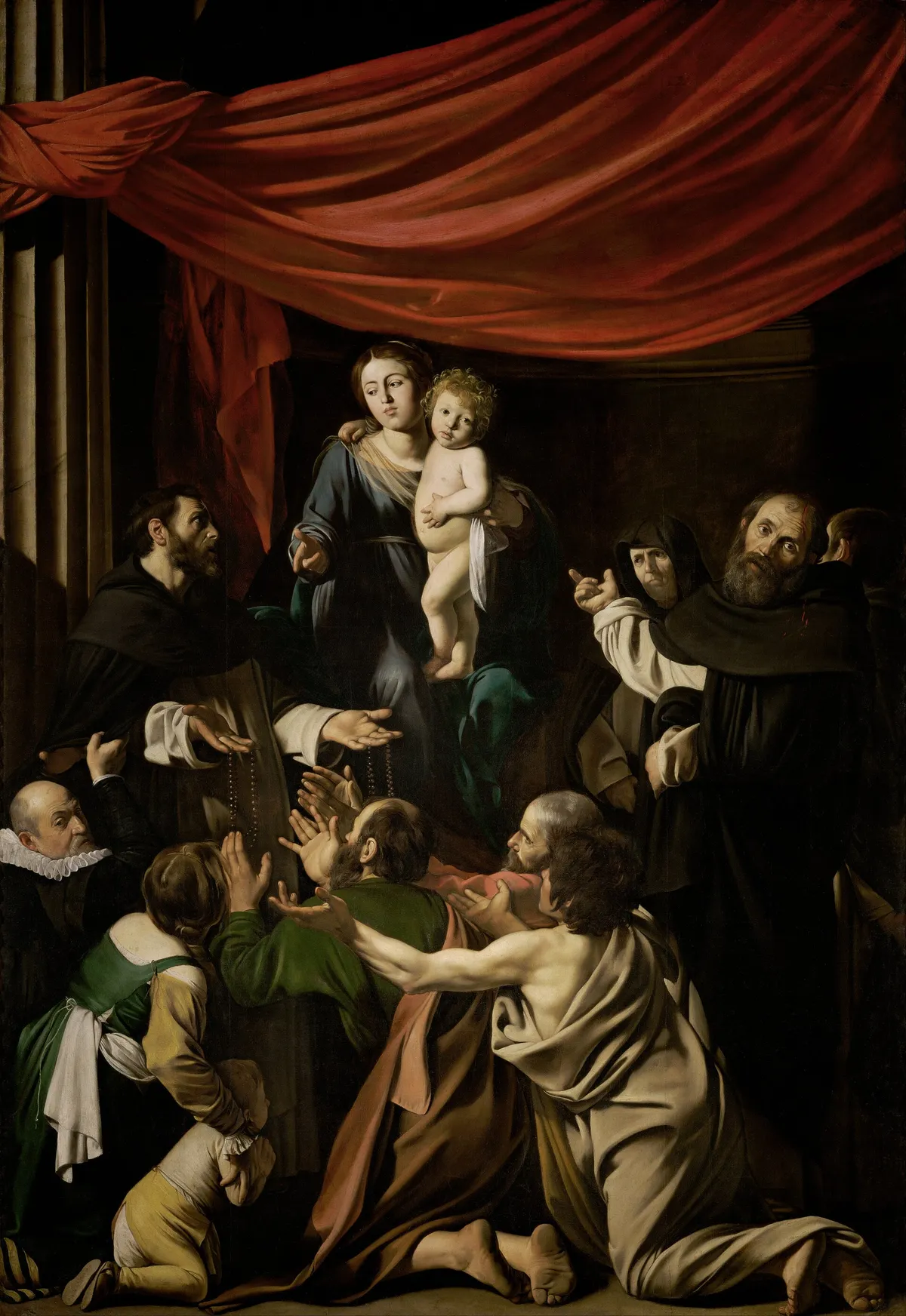
The Hail Holy Queen is the last prayer of the Rosary, and Caravaggio painted the Rosary as a gift to the poor. The Virgin and Child sit high under a heavy red curtain; she points to Saint Dominic, who holds out strings of beads to a crowd of barefoot people reaching up with open hands. The painting was bought by a group of Flemish painters, Rubens among them, for the Dominican church of Antwerp, and it hangs today in Vienna.
7. “O Clement, O Loving, O Sweet Virgin Mary”: The Madonna of Humility by Fra Angelico (about 1430)
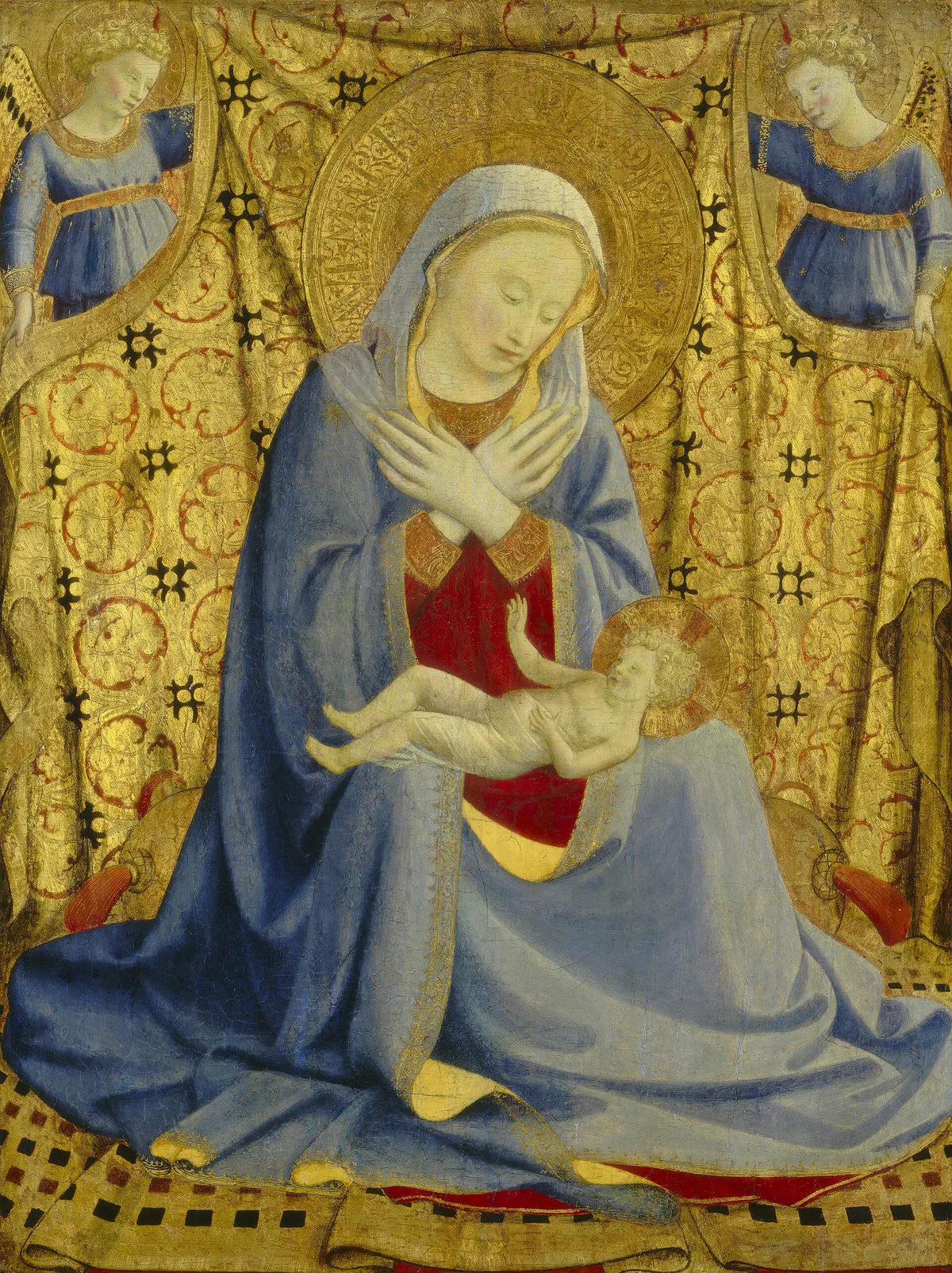
The prayer ends in three cries of tenderness, and Fra Angelico painted that tenderness better than anyone. This Mary does not sit on a throne. She sits on a cushion on the ground, the meaning of the word humility, her arms crossed over her breast, looking down at the Child on her lap, while two angels hold up a cloth of gold behind her. It is the Queen of the first line seen up close: clement, loving, sweet.
What the Hail Holy Queen Means, Line by Line
Hail, holy Queen, Mother of mercy. Mary is greeted with two titles at once. She is Queen because her Son is King, and Mother of mercy because she is the mother of Mercy himself.
Our life, our sweetness and our hope. Three names that belong first to Christ are given to his mother, because she is the one who brought him to us.
To thee do we cry, poor banished children of Eve. We speak as exiles. Since Adam and Eve were driven out of Eden, the whole human family lives far from home.
Mourning and weeping in this valley of tears. The prayer does not hide suffering. It names it, and brings it to someone who listens.
Turn then, most gracious advocate, thine eyes of mercy toward us. An advocate speaks for someone who cannot defend himself. We ask Mary to look at us, and to plead for us.
And after this our exile show unto us the blessed fruit of thy womb, Jesus. The whole prayer leads here. We do not ask Mary for herself; we ask her to show us her Son, at the end of our road.
O clement, O loving, O sweet Virgin Mary. The prayer ends not with a request but with three words of love.
How to Pray the Hail Holy Queen
- At the end of the Rosary: after the fifth decade, say the Hail Holy Queen, then the versicle and response, then the closing prayer, “O God, whose only begotten Son”.
- At night: as the monks do at Compline, say it before sleep, alone or as a family. It is short enough to learn by heart.
- In trouble: like the Memorare, it is a prayer for the moments when we feel far from home.
If one person leads, the others answer the response: “That we may be made worthy of the promises of Christ.” With children, start with the first line and the last, then add a line each week. The Hail Mary and the Hail Holy Queen are often the first two Marian prayers children learn.
A Free Printable Hail Holy Queen Prayer Card
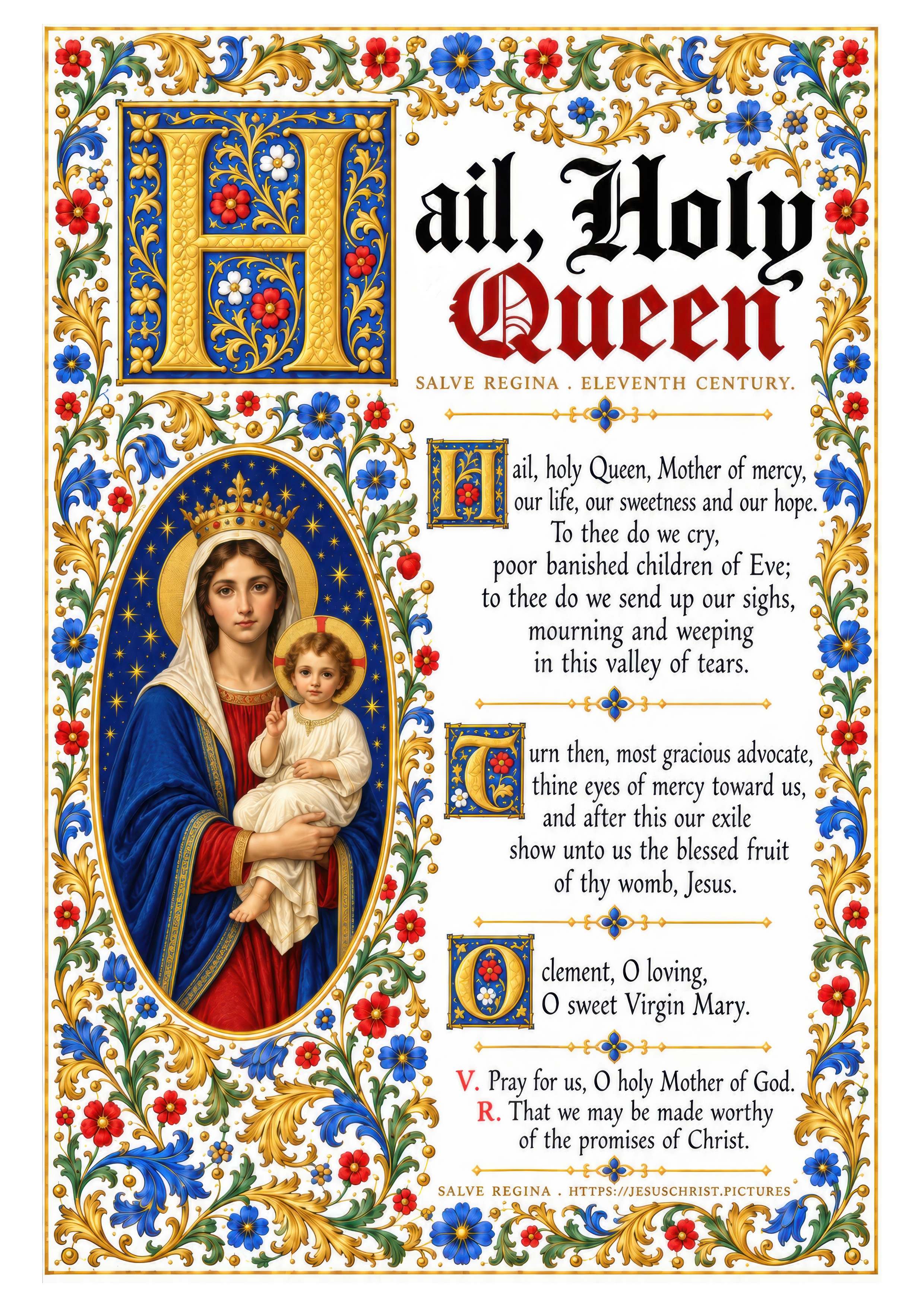
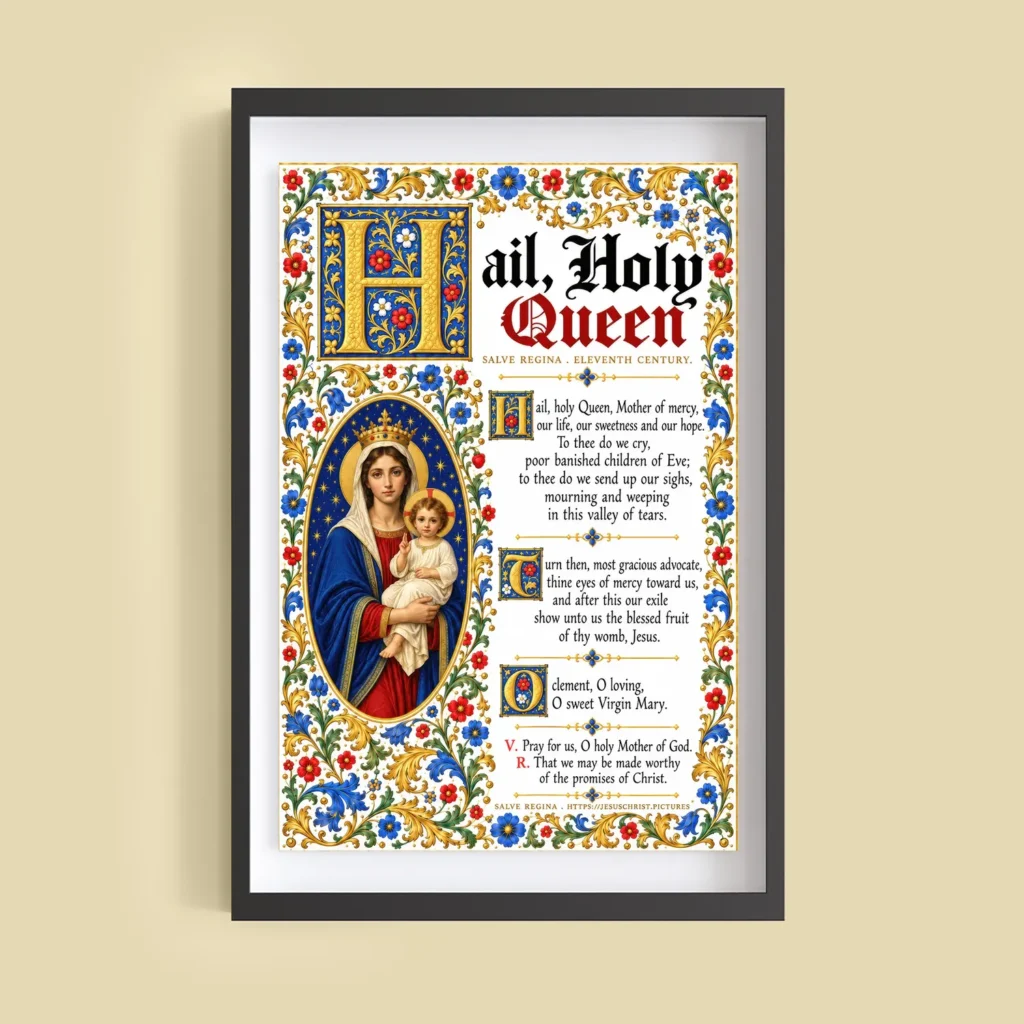
We have made the Hail Holy Queen into an illuminated prayer card, in the style of a medieval book of hours: the crowned Virgin presenting the Child in a starry medallion, a gold initial H, and the full prayer with its versicle and response.
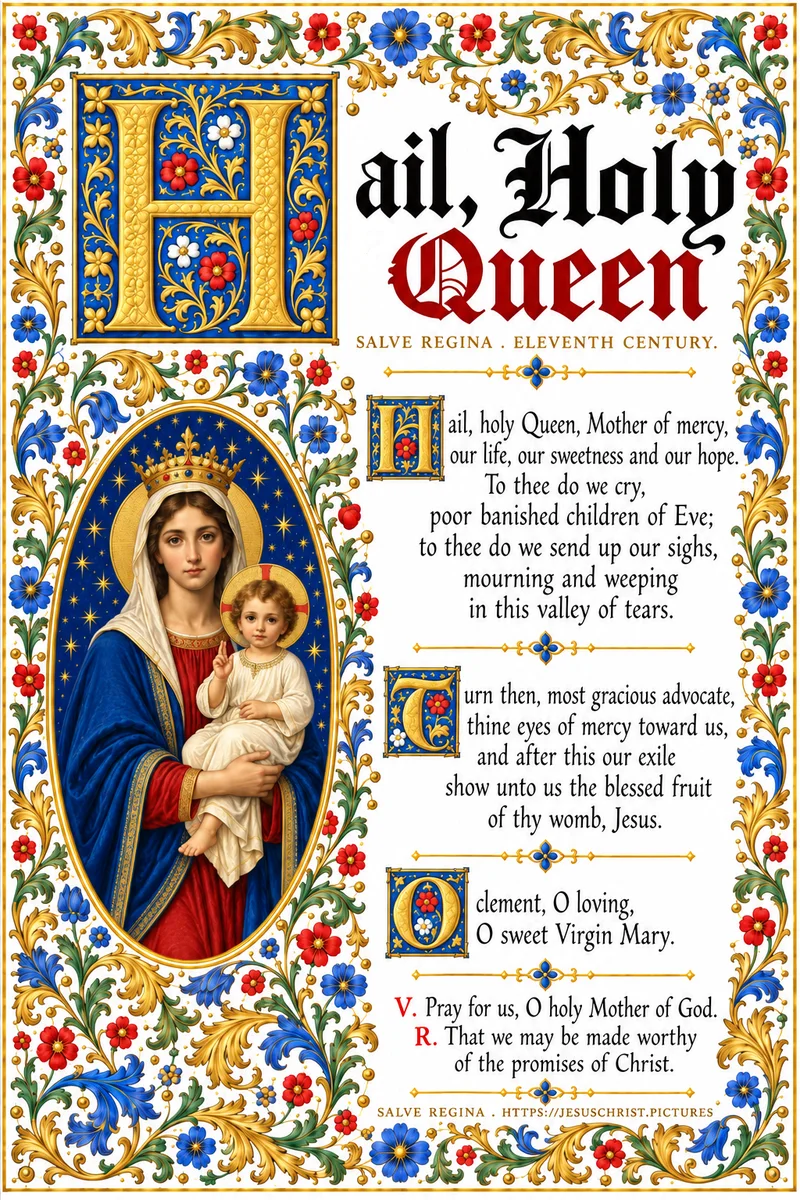
✦ Free Printable Prayer Card
Print it at home for your Rosary, your missal or your nightstand. It is free, and there is nothing to fill in.
Download for US LetterDownload for A4
Also as pocket cards, four to a sheet, and as a high resolution image.
More prayer cards, novenas and Scripture printables are gathered in our free Christian printables.
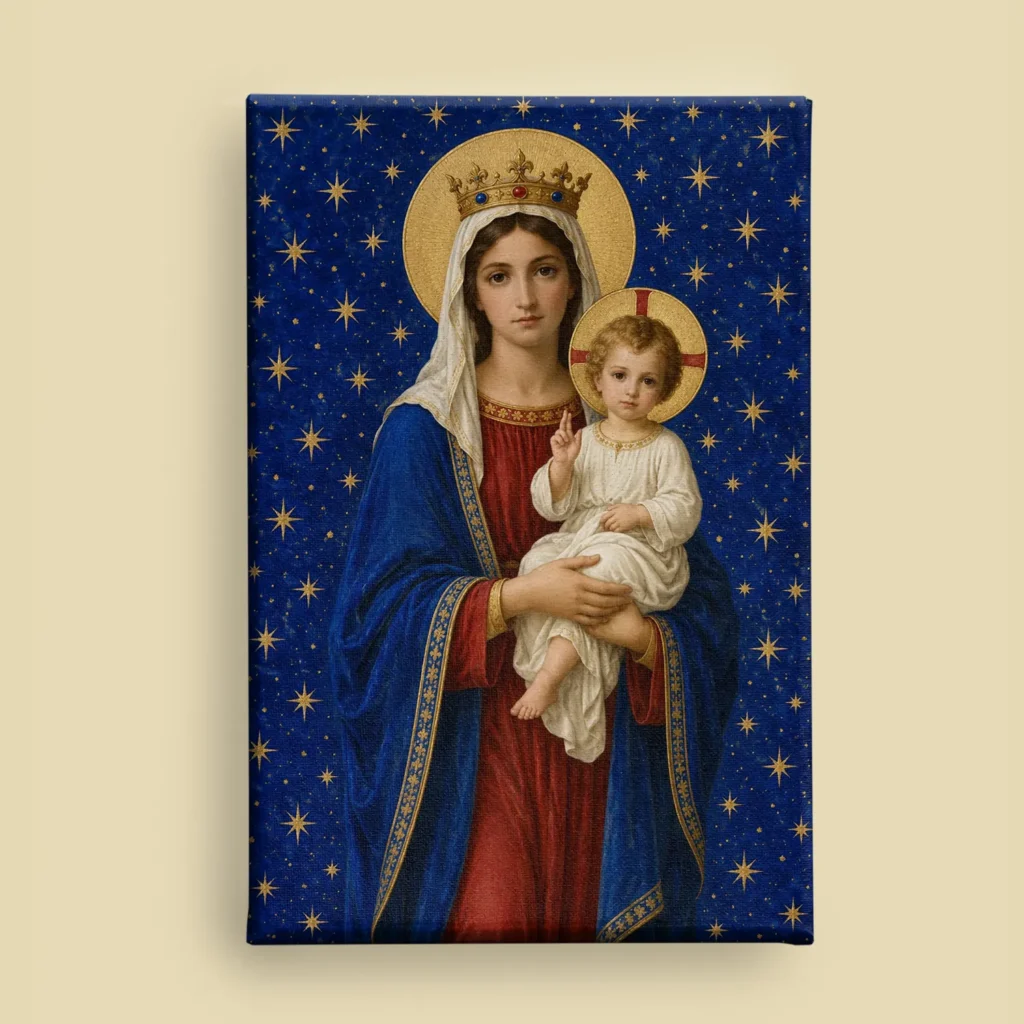
The crowned Virgin of the medallion was painted for this card. She also exists on her own, as a canvas: Mary, Queen of Heaven, holding the blessing Christ Child under a sky of gold stars.
Conclusion
The Hail Holy Queen has been prayed for nearly a thousand years, by monks at nightfall, by sailors on unknown seas, by families at the end of the Rosary. It is the prayer of people who know they are far from home and are not afraid to say so. Its painters understood this: Velazquez gave Mary a crown, Ghirlandaio gave her a mantle wide enough for a whole family, Raphael gave her eyes that look straight at us, and Fra Angelico sat her on the ground beside us. Each of them painted one line of the same request: show us Jesus.
For more images of the Mother of God, see our guide to Marian iconography and our selection of beautiful Virgin Mary paintings.
The Paintings in This Article
| Line of the prayer | Painting | Artist | Date | Medium | Location |
|---|---|---|---|---|---|
| Hail, holy Queen | The Coronation of the Virgin | Diego Velazquez | About 1635 to 1636 | Oil on canvas | Museo del Prado, Madrid |
| Mother of mercy | Madonna della Misericordia | Domenico Ghirlandaio | About 1472 | Fresco | Vespucci Chapel, Ognissanti, Florence |
| Poor banished children of Eve | The Expulsion from the Garden of Eden | Masaccio | About 1425 | Fresco | Brancacci Chapel, Santa Maria del Carmine, Florence |
| Thine eyes of mercy toward us | The Sistine Madonna | Raphael | 1512 to 1513 | Oil on canvas | Gemaldegalerie Alte Meister, Dresden |
| Show unto us Jesus | The Madonna di Foligno | Raphael | 1511 to 1512 | Oil on canvas (transferred from panel) | Vatican Pinacoteca |
| The prayer that ends the Rosary | The Madonna of the Rosary | Caravaggio | About 1606 to 1607 | Oil on canvas | Kunsthistorisches Museum, Vienna |
| O sweet Virgin Mary | The Madonna of Humility | Fra Angelico | About 1430 | Tempera on panel | National Gallery of Art, Washington |
Important Facts About the Hail Holy Queen
- Its Latin name is the Salve Regina, from its first two words.
- It dates from the eleventh century and is most often attributed to Hermann of Reichenau.
- It is one of the four Marian anthems of the Church, sung at Compline from the Sunday after Pentecost until Advent.
- Columbus’s sailors sang it on the evening of October 11, 1492, a few hours before they sighted land.
- From 1884 to the 1960s it was said after every Low Mass, among the prayers added by Pope Leo XIII.
- Today it is the closing prayer of the Rosary.
Frequently Asked Questions
What is the full Hail Holy Queen prayer?
Hail, holy Queen, Mother of mercy, our life, our sweetness and our hope. To thee do we cry, poor banished children of Eve. To thee do we send up our sighs, mourning and weeping in this valley of tears. Turn then, most gracious advocate, thine eyes of mercy toward us, and after this our exile show unto us the blessed fruit of thy womb, Jesus. O clement, O loving, O sweet Virgin Mary. Pray for us, O holy Mother of God, that we may be made worthy of the promises of Christ.
What is the response to the Hail Holy Queen prayer?
After the prayer, the leader says the versicle, “Pray for us, O holy Mother of God,” and everyone answers with the response, “That we may be made worthy of the promises of Christ.” At the end of the Rosary, a closing prayer follows: “O God, whose only begotten Son, by his life, death and resurrection, has purchased for us the rewards of eternal life.”
What is the history of the Hail Holy Queen prayer?
The Hail Holy Queen, or Salve Regina, was written in Latin in the eleventh century and is most often attributed to the monk Hermann of Reichenau. Cistercians and Dominicans sang it every evening after Compline, sailors took it to sea as their night prayer, and Pope Leo XIII added it to the prayers after Low Mass in 1884. Today it closes the Rosary.
Is the Hail Holy Queen said at the end of the Rosary?
Yes. The Hail Holy Queen is the traditional closing prayer of the Rosary. It is said after the fifth decade, followed by the versicle and response and the prayer “O God, whose only begotten Son”.
What is the Hail Holy Queen in Latin?
In Latin the prayer is called the Salve Regina. It begins: Salve, Regina, Mater misericordiae, vita, dulcedo, et spes nostra, salve. Ad te clamamus, exsules filii Hevae. The full Latin text is given on this page.
Can you buy the Hail Holy Queen as a prayer card or print?
You can buy the Hail Holy Queen at jesuschrist.pictures, in our shop, as a large illuminated prayer poster, a giclee fine art print of this card, and the crowned Virgin of its medallion as a canvas, Mary Queen of Heaven. The masterpieces of this article are there too as canvas prints, from Raphael’s Sistine Madonna to Fra Angelico’s Madonna of Humility. The prayer card itself is free to print from this page, in US Letter, A4 and pocket size.