Marian Iconography: The Faces of Mary in Art
Marian iconography is the visual language used to picture the Virgin Mary. Across nearly two thousand years, painters and icon writers have returned to the same handful of forms, the same gestures and symbols, to show who Mary is and what she means. Once these types are learned, almost any image of the Virgin can be read, from a gold Byzantine icon to a Baroque altarpiece.
This guide explains what Marian iconography is and walks through ten of its great types, the Hodegetria and the Eleousa, the enthroned Madonna and the Annunciation, the Immaculate Conception and the Queen of Heaven, the sorrowful Mother and the Black Madonna. Each is a different way of answering one question: how do you paint the Mother of God? For a gallery of individual masterpieces, see our selection of famous Virgin Mary paintings.
What Is Marian Iconography?
Marian iconography is the study of how the Virgin Mary is shown in art and what the recurring images mean. It includes both the fixed types of the Eastern icon tradition and the freer compositions of Western painting. In every age Mary is given attributes that carry meaning: the blue mantle of heaven, the white veil of purity, the crown of a queen, the crescent moon and the crown of stars from the Book of Revelation, and flowers such as the lily and the rose. Reading these signs turns each picture into a statement of faith about who Mary is.
This guide is an explainer of those recurring types and what they mean, not a ranking of individual works. If you are looking instead for a gallery of the most beautiful single paintings of the Virgin, see our famous Virgin Mary paintings, and for the greatest painter of the Madonna, our Raphael Madonna paintings.
1. The Hodegetria: She Who Shows the Way
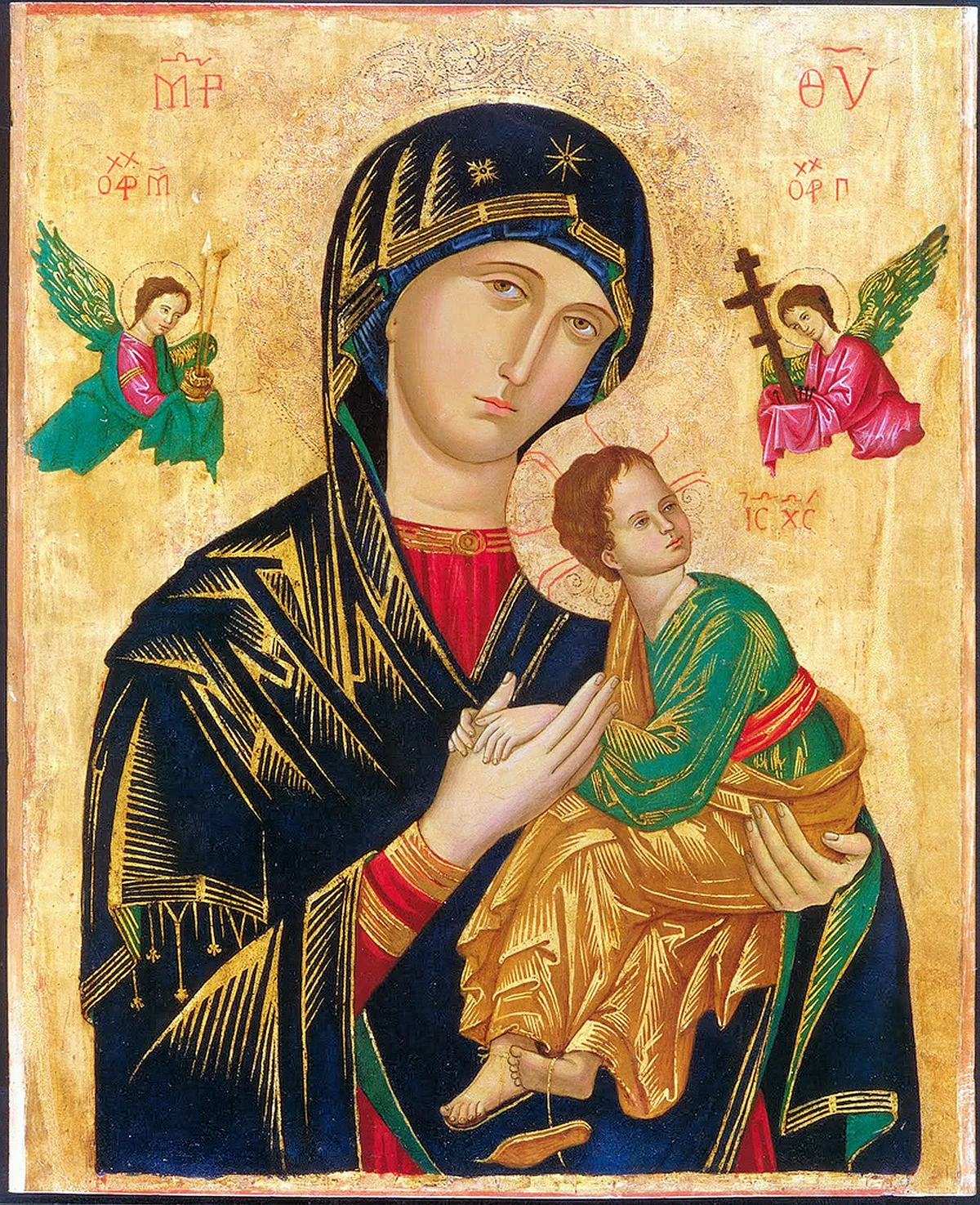
The Hodegetria, a Greek word meaning “she who shows the way”, is one of the oldest types of Marian icon. Mary holds the Christ Child on one arm and gestures toward him with the other hand, presenting him to the world as the way of salvation. Our Lady of Perpetual Help is a famous example, where the Child clutches his mother’s hand at the sight of the cross.
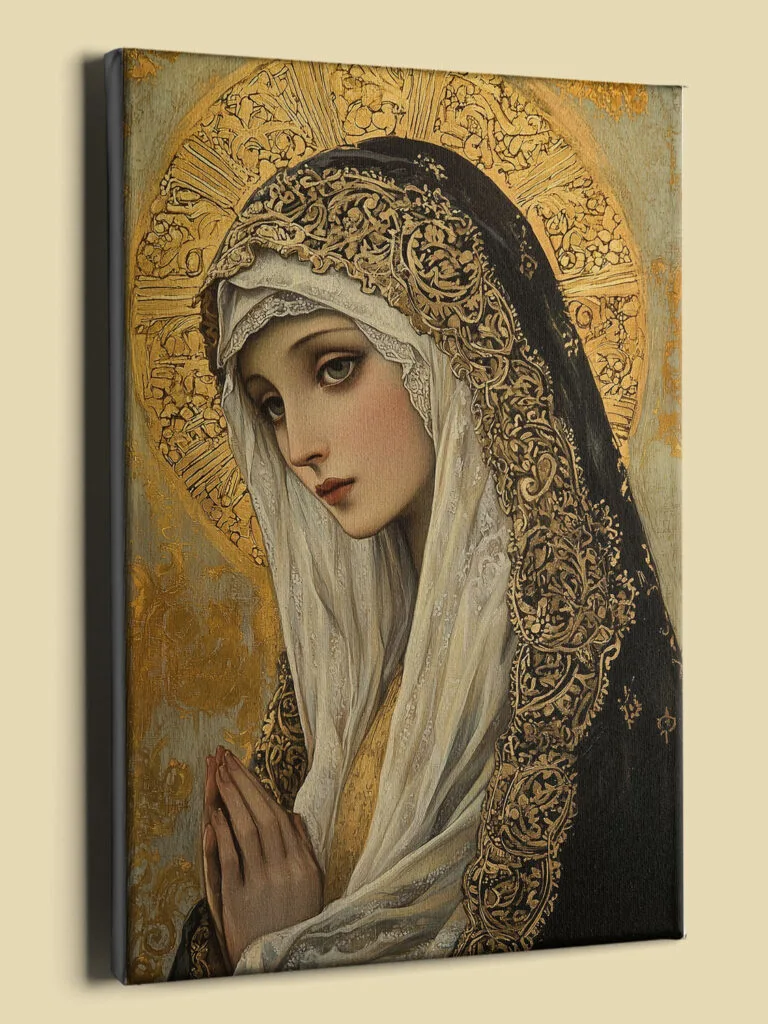
2. The Eleousa: The Virgin of Tenderness
The Eleousa, or Virgin of Tenderness, shows a more intimate moment. The Christ Child presses his cheek against his mother’s face, and Mary gazes out with a look of love already shadowed by sorrow. Our Lady of Vladimir is the most beloved icon of this type, a meeting of human warmth and divine destiny that influenced painters for centuries. The same tenderness flows into Western art, as in our gallery of Byzantine Jesus paintings.
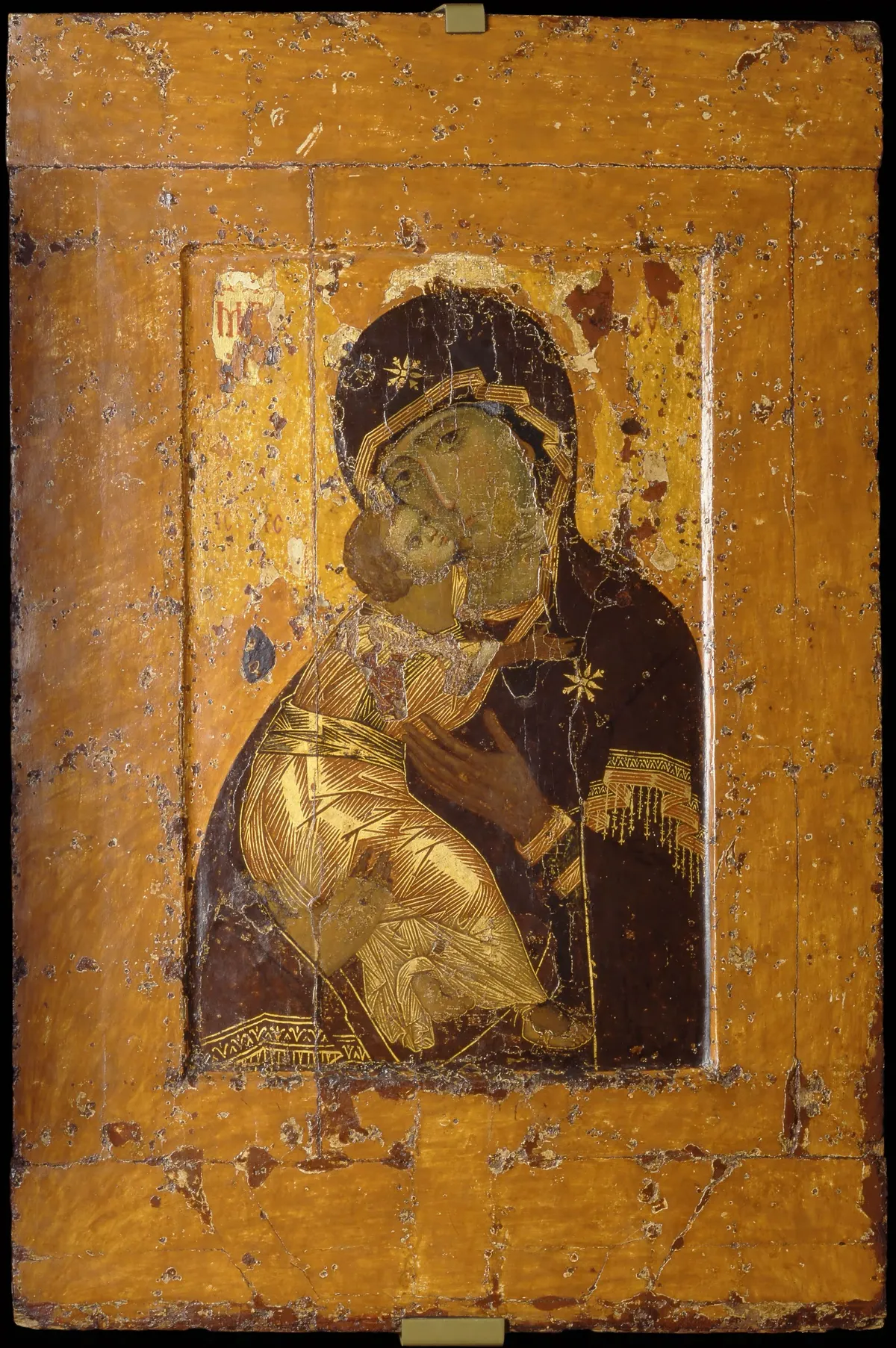
3. The Maesta: The Enthroned Madonna
In the Maesta, Mary is shown enthroned in majesty as the Queen of Heaven, holding the Christ Child and surrounded by angels and saints. Giotto’s Ognissanti Madonna marks the moment this ancient type began to turn toward realism, the Virgin given weight and presence on her great throne. Read more in our article on Giotto’s Ognissanti Madonna.

4. The Annunciation: Mary Receives the Word
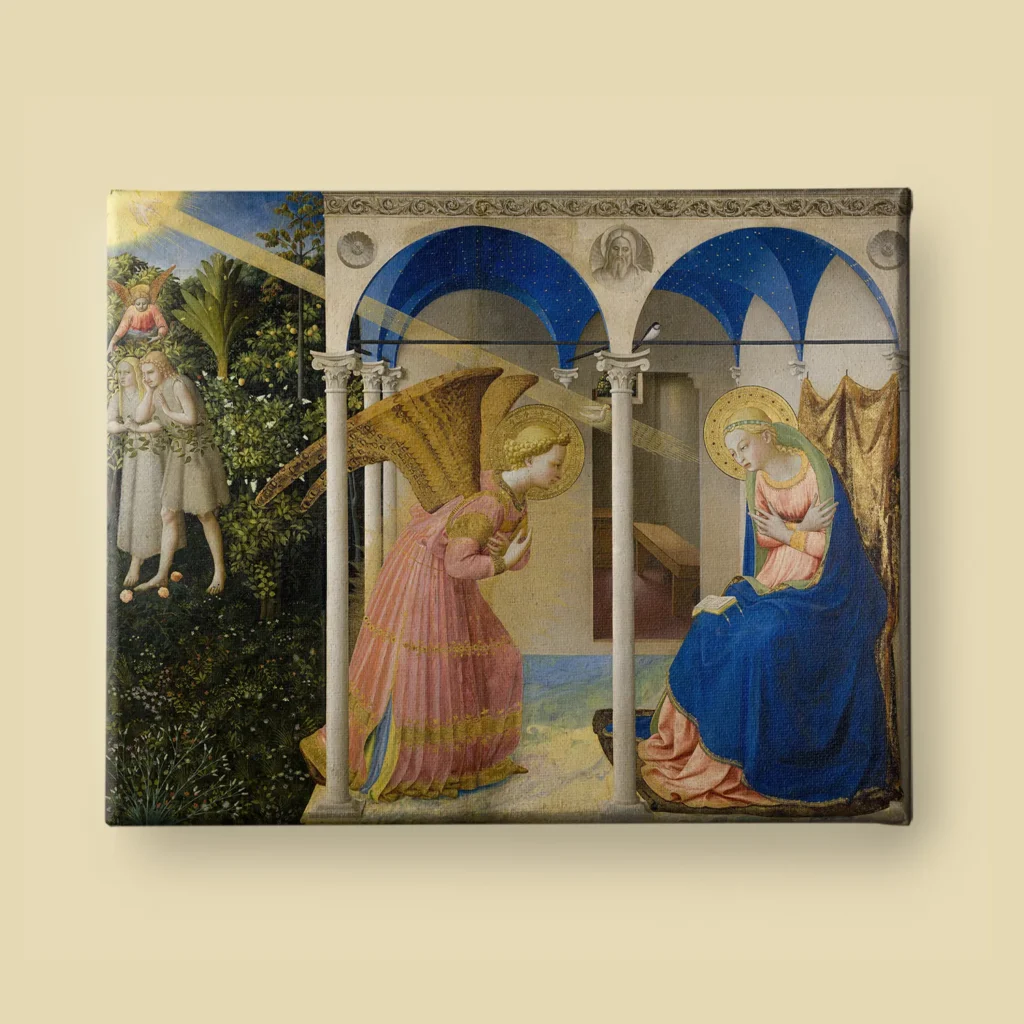
The Annunciation shows the moment the angel Gabriel tells Mary she will bear the Son of God, and she gives her yes. It is the most painted event of her life. Fra Angelico’s version, with the dove of the Spirit and the humble bowing Virgin, became a model for the whole tradition. See more in our gallery of famous Annunciation paintings.
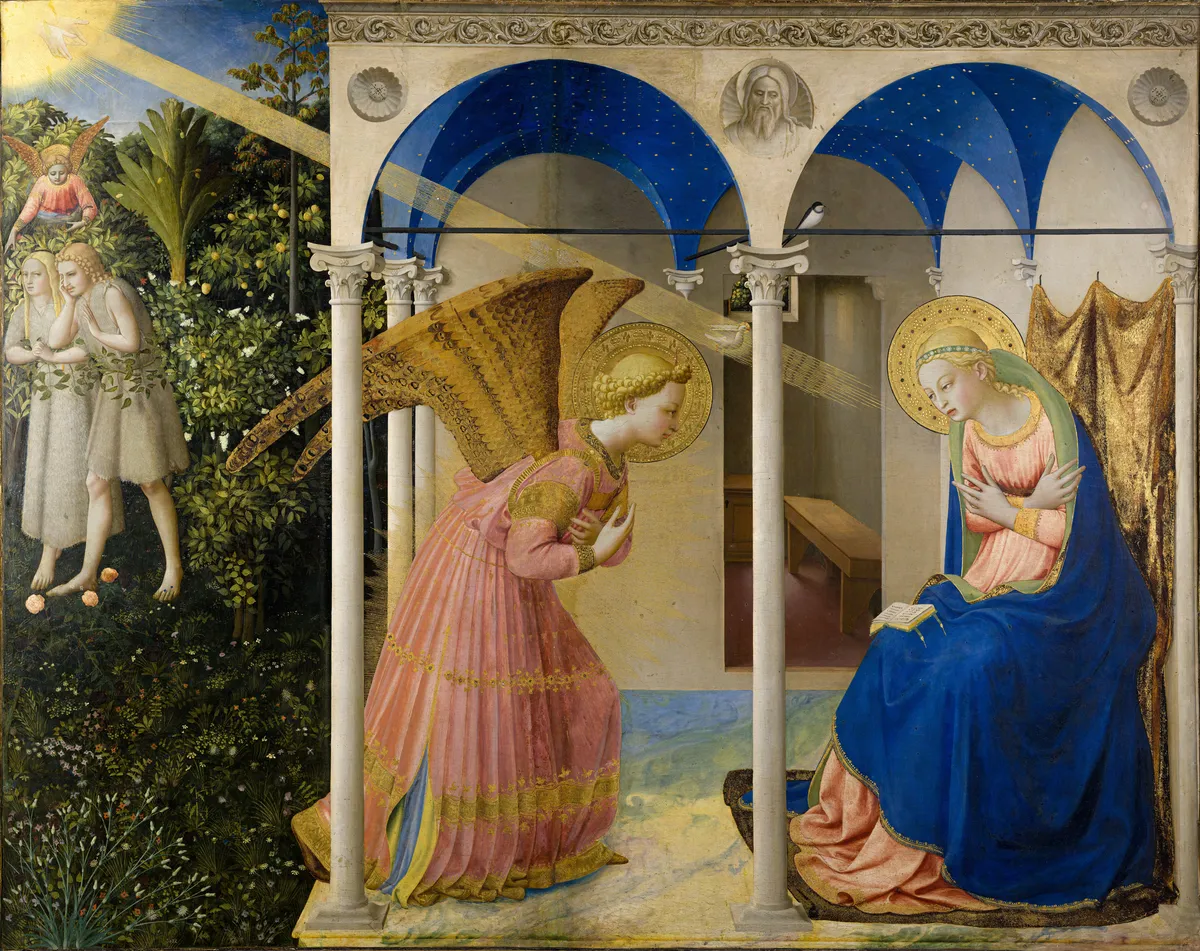
5. The Madonna and Child: Renaissance Tenderness
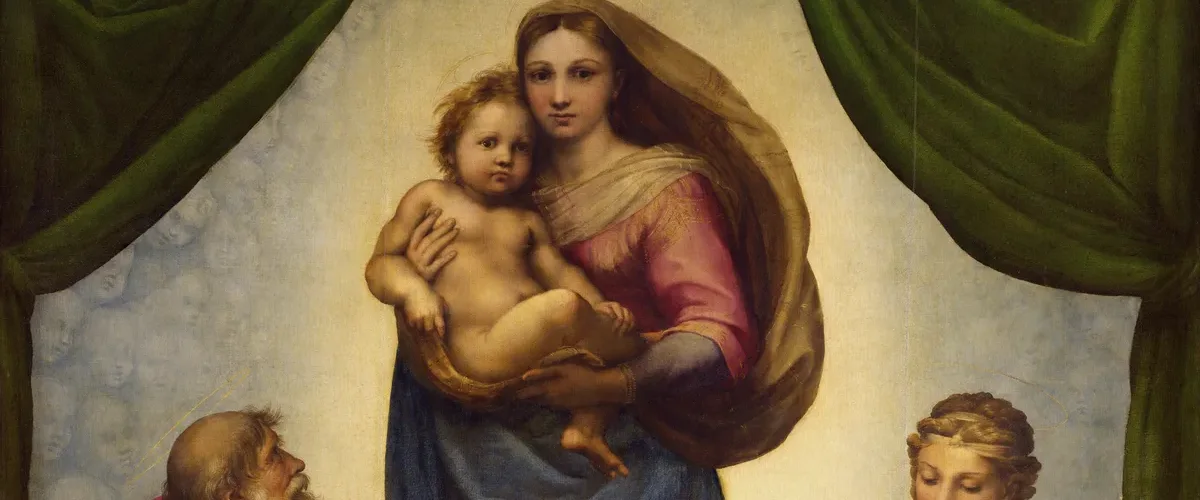
The Madonna and Child is the most common image of all, and the Renaissance made it warmly human. Raphael, the greatest painter of the Madonna, shows Mary holding her son with the closeness of any mother in his Madonna della Seggiola. Discover more in our article on the Madonna della Seggiola and our selection of Raphael Madonna paintings.

6. The Immaculate Conception
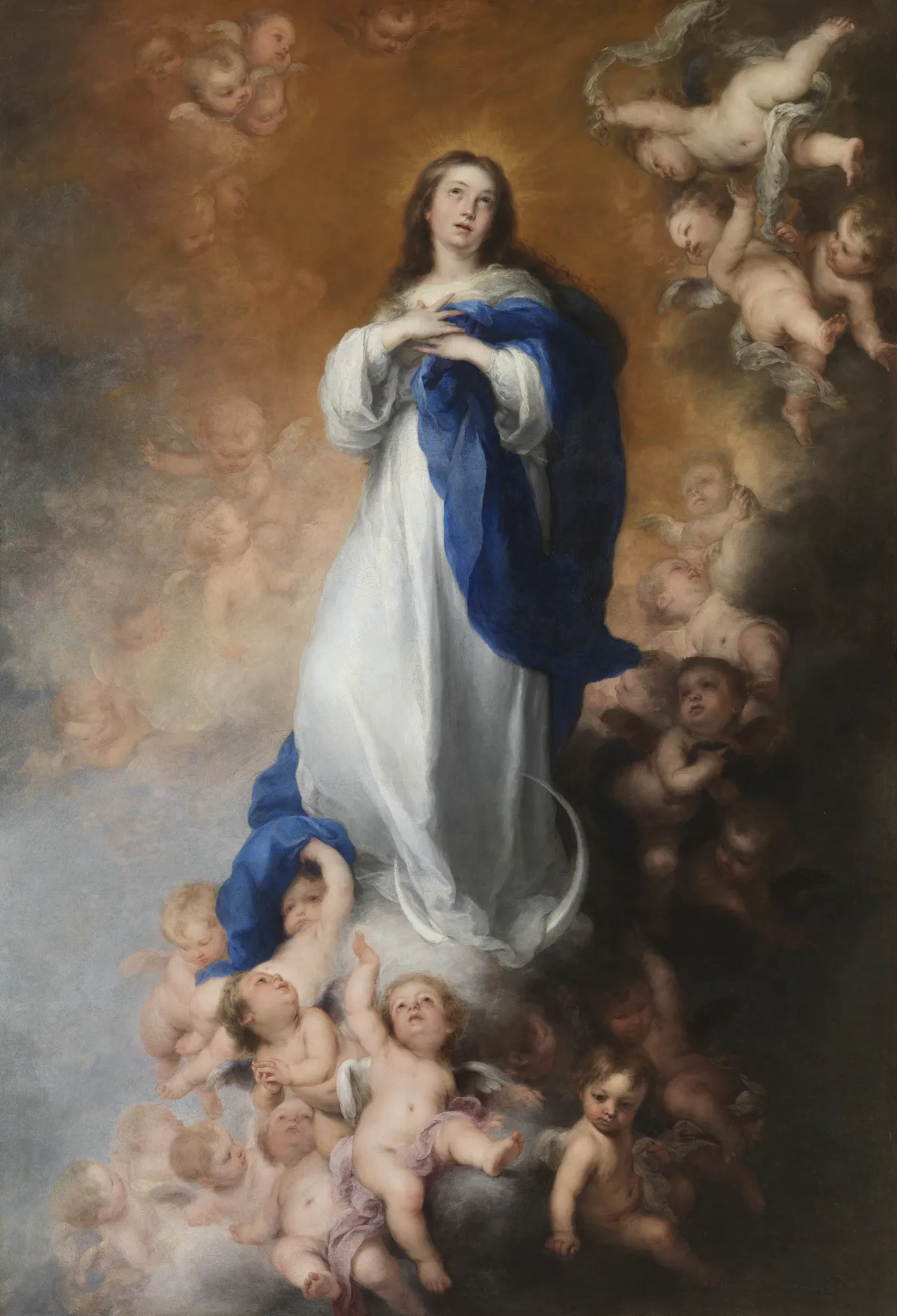
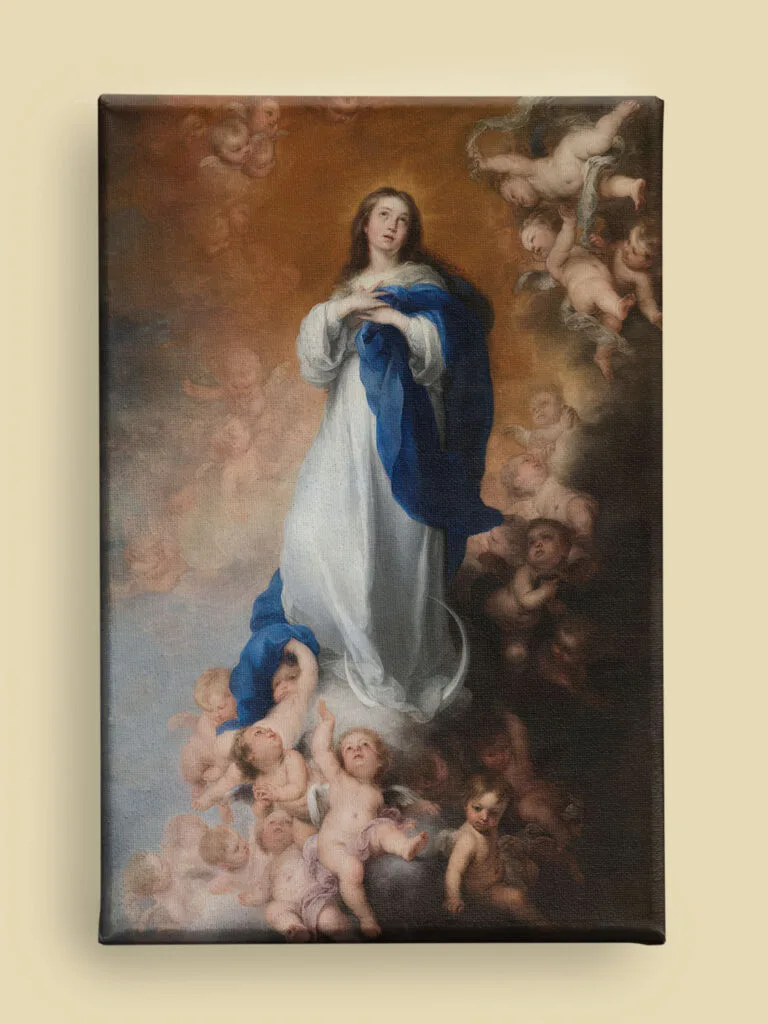
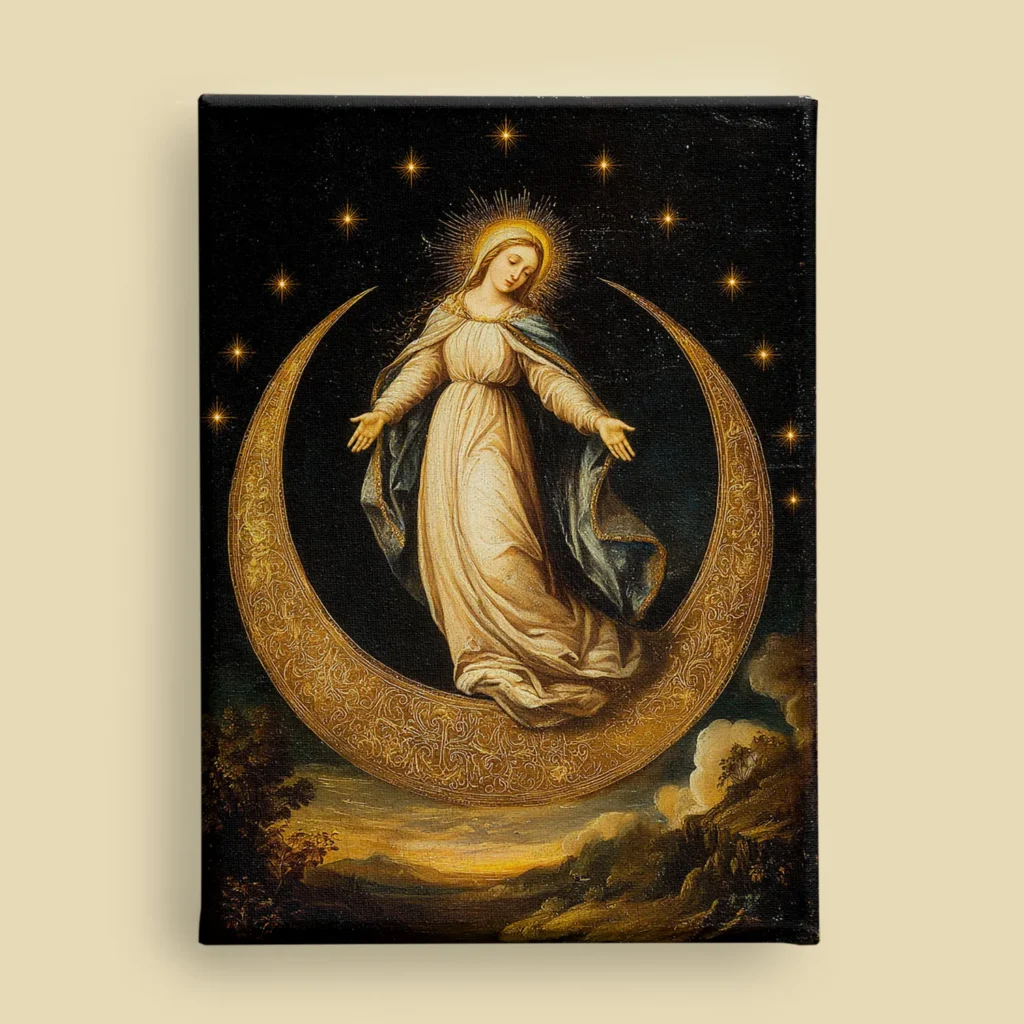
The Immaculate Conception pictures Mary conceived without sin, the all-pure Virgin. Following the Book of Revelation, she stands on a crescent moon, clothed with the sun, often lifted by cherubs. Murillo painted this subject more beautifully than anyone, and his version became the model for Catholic devotion to Mary across the world.
7. The Assumption and Coronation: Queen of Heaven
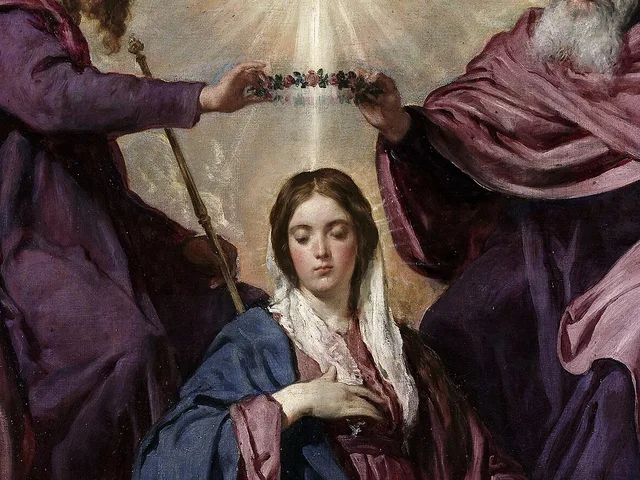
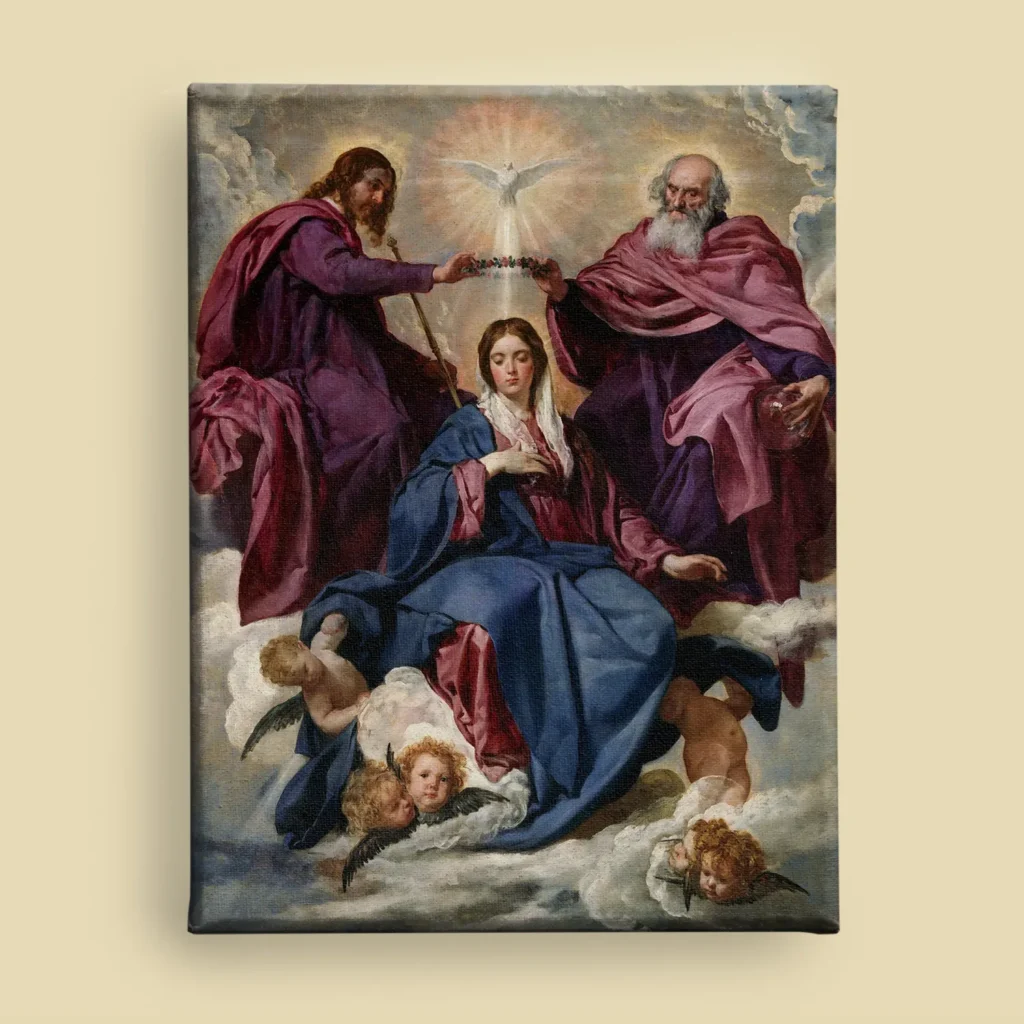
The story of Mary ends in glory. The Assumption shows her taken body and soul into heaven, and the Coronation shows her crowned there as Queen of Heaven. Velazquez paints the Trinity setting the crown on her head, the final honour of the Mother of God. Every Easter the Church greets her by that title in the Regina Caeli prayer, which takes the place of the Angelus until Pentecost. Follow this subject in our gallery of Assumption of the Virgin paintings.

8. The Mater Dolorosa: Our Lady of Sorrows
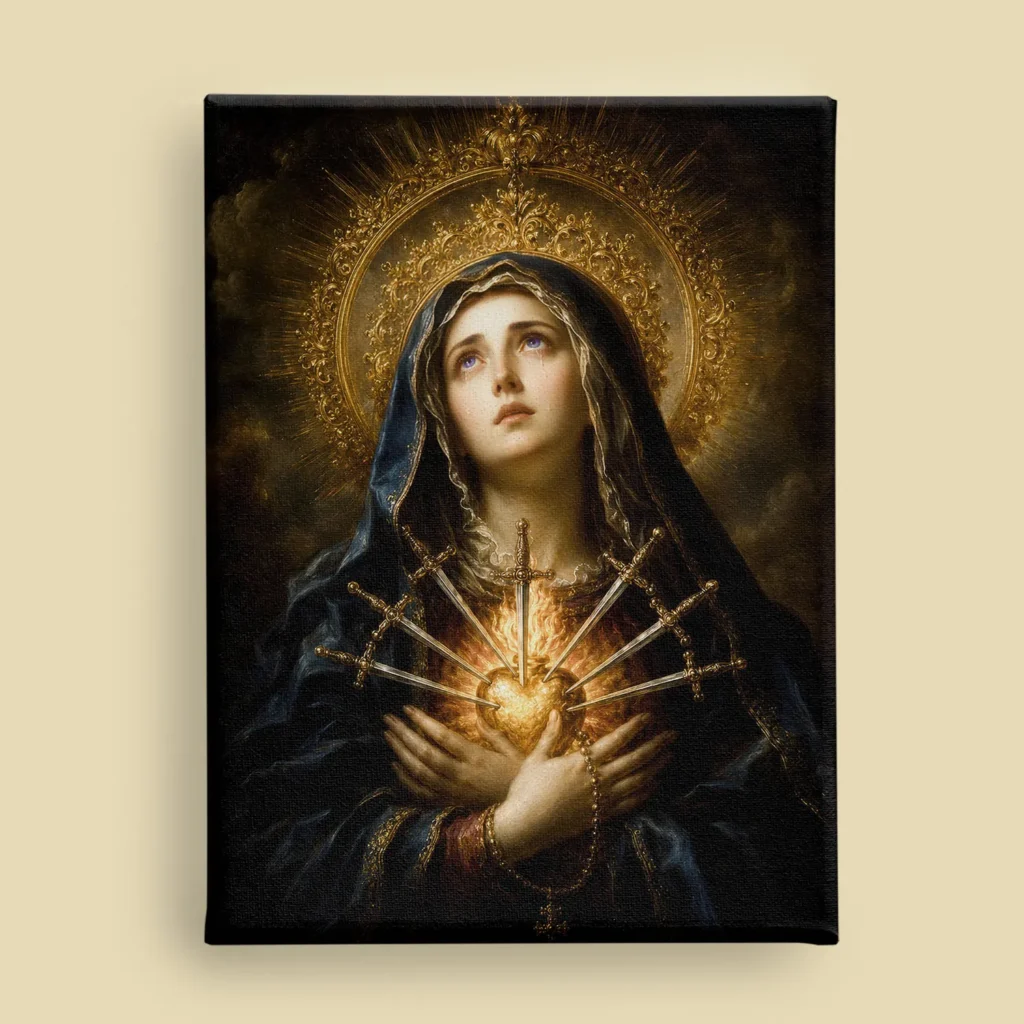
Not every image of Mary is joyful. The Mater Dolorosa, the sorrowful Mother, shows her grief at the Passion of her Son, and the Pieta shows her holding his dead body. Bouguereau’s Pieta gives this ancient subject a raw, modern power, the Virgin clutching Christ as mourning angels gather. It is the heart of the devotion to the Seven Sorrows of Mary.

9. The Black Madonna
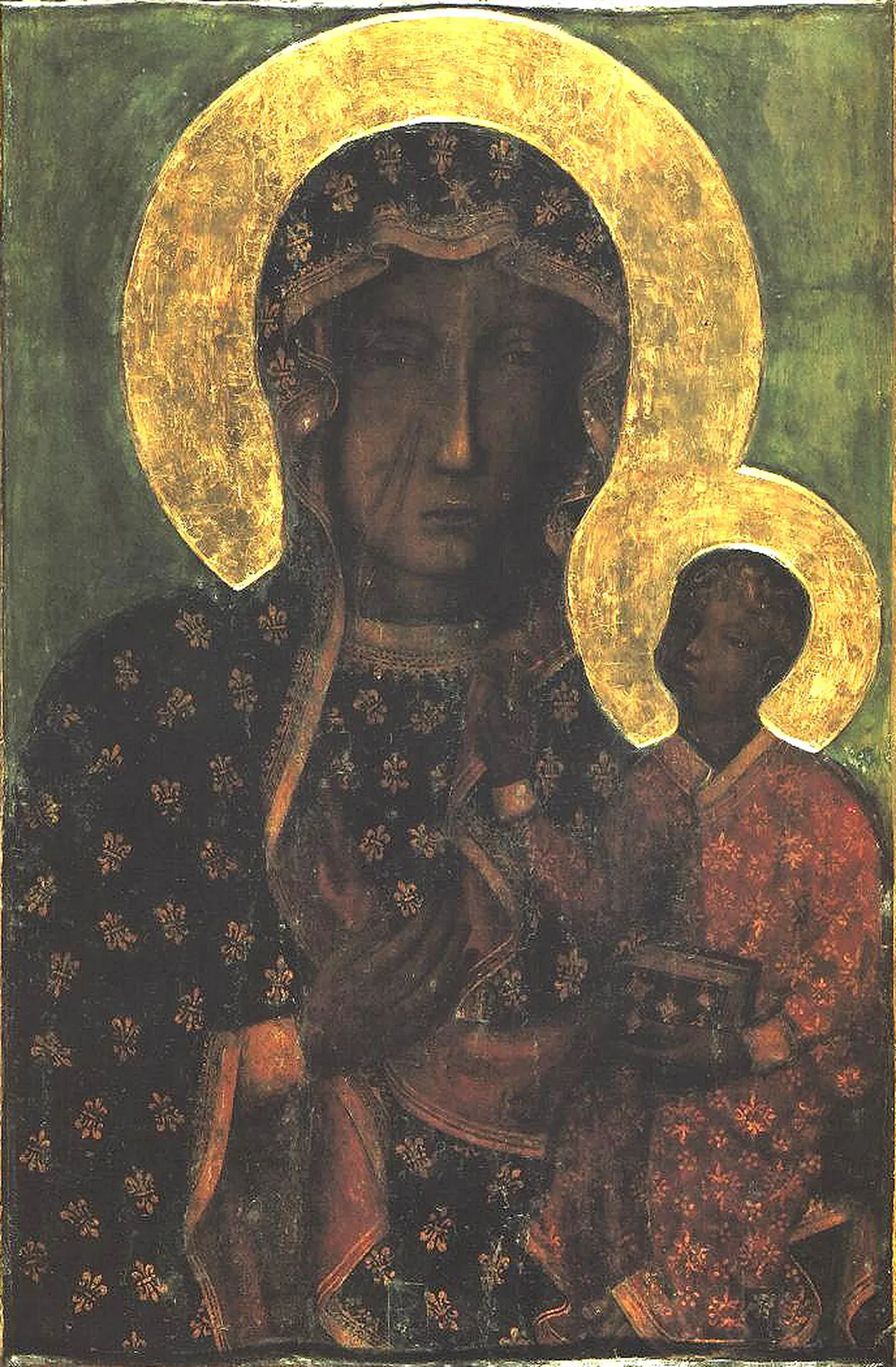
Across Europe a number of very old and very dark images of the Virgin are venerated as Black Madonnas. The most famous is the Black Madonna of Czestochowa, the holiest image in Poland, its solemn dark face marked by two long scars. Whether the darkness comes from age, candle smoke, or choice, these images draw immense devotion and are believed to work miracles.
One late Marian type stands apart from these ancient icons. In Mary, Untier of Knots, painted in Augsburg around 1700, the Virgin unties a knotted ribbon handed to her by angels, an image of tangled lives patiently undone.
10. Our Lady of Guadalupe
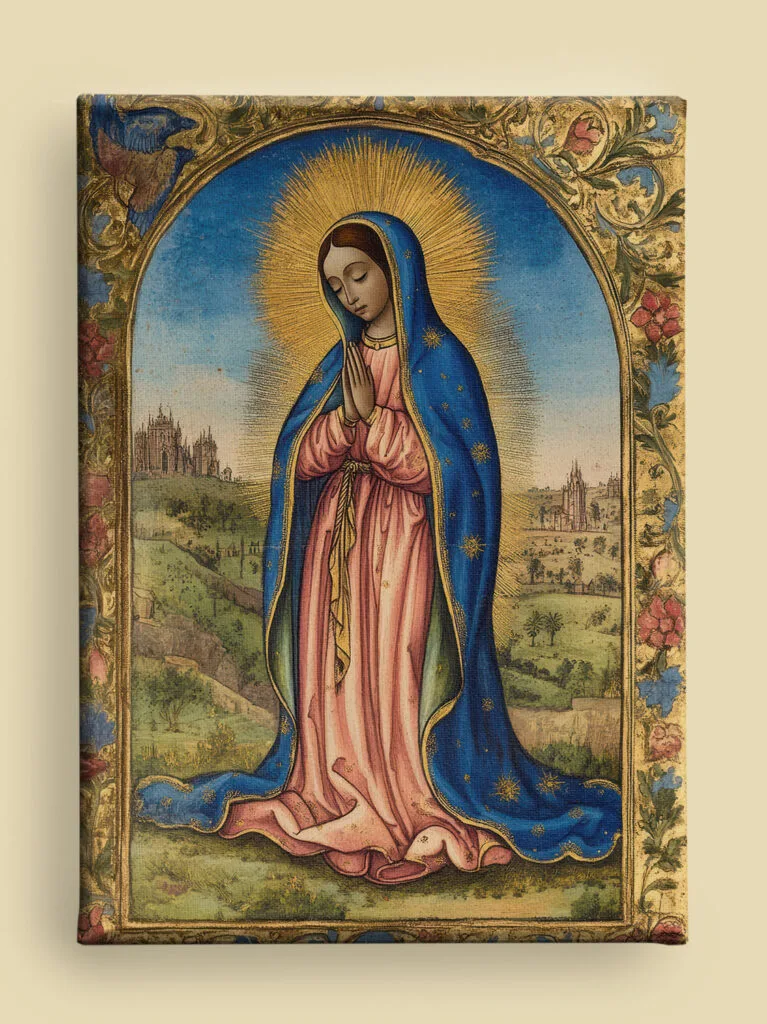
The image of Our Lady of Guadalupe, said to have appeared on the cloak of Saint Juan Diego in 1531, gathers many of these types into one. Mary stands on the moon, clothed with the sun and crowned with stars, the woman of Revelation, and she became the patroness of the Americas. Read the full story in our article on the Virgin of Guadalupe.

Marian Images Featured in This Article
| Image | Type | Artist or origin | Location |
|---|---|---|---|
| Our Lady of Perpetual Help | Hodegetria | Cretan icon | Church of Sant’Alfonso, Rome |
| Our Lady of Vladimir | Eleousa | Byzantine icon | Tretyakov Gallery, Moscow |
| The Ognissanti Madonna | Maesta | Giotto | Uffizi, Florence |
| The Annunciation | Annunciation | Fra Angelico | Museo del Prado, Madrid |
| Madonna della Seggiola | Madonna and Child | Raphael | Palazzo Pitti, Florence |
| The Immaculate Conception | Immaculate Conception | Murillo | Museo del Prado, Madrid |
| The Coronation of the Virgin | Coronation | Velazquez | Museo del Prado, Madrid |
| Pieta | Mater Dolorosa | Bouguereau | Private collection |
| The Black Madonna of Czestochowa | Black Madonna | Medieval icon | Jasna Gora, Poland |
| The Virgin of Guadalupe | Woman of Revelation | Miguel Cabrera | Mexico |
Conclusion
Marian iconography is a language that has never gone silent. The same forms invented in the first Christian centuries, the Virgin pointing to her Son, the Child pressed to her cheek, the Queen enthroned in heaven, still shape how artists picture Mary today. Each type holds a truth about her: her role as the way to Christ, her tenderness, her sorrow, her glory.
To know these types is to see the whole tradition open up, so that a worn icon and a grand altarpiece speak the same words in different accents. To go deeper, explore our gallery of famous Virgin Mary paintings, our Raphael Madonna paintings, and our wider guide to famous Christian paintings.
Key Facts About Marian Iconography
- Marian iconography is the visual language of images of the Virgin Mary, with recurring types and symbols.
- The Eastern tradition has fixed types such as the Hodegetria, the Eleousa, and the Oranta.
- Mary is identified by attributes such as the blue mantle, the crown, the crescent moon, the crown of stars, and the lily.
- Western art added subjects such as the Immaculate Conception, the Assumption, the Coronation, and the Pieta.
- Some of the most venerated Marian images, such as the Black Madonna and Our Lady of Guadalupe, are tied to miracles and to particular nations.
Frequently Asked Questions
What are the different forms of Marian iconography?
The main Eastern types are the Hodegetria, in which Mary points to the Christ Child, the Eleousa or Virgin of Tenderness, where the Child presses his cheek to hers, and the Oranta, with Mary at prayer. Western art added the Madonna and Child, the Annunciation, the Immaculate Conception, the Assumption and Coronation, and the sorrowful Pieta.
What are the symbols of Marian art?
Mary is shown with a blue mantle for heaven and a white veil for purity, often crowned as Queen of Heaven. From the Book of Revelation she takes the crescent moon beneath her feet and the crown of twelve stars. Flowers such as the lily, for purity, and the rose are also her signs, along with the enclosed garden.
What is Marian symbolism?
Marian symbolism is the set of meanings carried by the colours, objects, and gestures in images of Mary. Blue and white speak of heaven and purity, the crown of her queenship, the moon and stars of her place in salvation, and lilies and roses of her virtues. Each symbol turns the picture into a short statement of faith about the Mother of God.
What is the oldest type of image of the Virgin Mary?
Among the oldest types are the Hodegetria and the enthroned Madonna, both rooted in the early Byzantine world and traditionally traced back to images said to have been painted by Saint Luke. These forms were copied for centuries and passed from the Eastern icon into Western painting.
Can you buy paintings of the Virgin Mary as prints or canvases?
You can buy paintings of the Virgin Mary at jesuschrist.pictures, in our shop, where Marian masterpieces from the Sistine Madonna to Our Lady of Guadalupe are offered as canvas reproductions and posters. A faithful reproduction is a beautiful way to honour the Mother of God in a home or a place of prayer.