Catholic Icons: 8 Sacred Images and Their Meaning
Catholic icons are among the oldest and most powerful images in Christianity. Long before the great painters of the Renaissance, the faithful prayed before these flat, golden images of Christ, the Virgin Mary, and the saints, and many of them are still venerated today, more than a thousand years after they were made. An icon is not meant to be admired the way a museum painting is. It is a window, made to be looked through, toward heaven.
This guide explains what a Catholic icon is and how it is venerated, then presents eight of the most famous sacred images in the Christian tradition, from the sixth-century Christ of Sinai to the Black Madonna of Poland. Together they show how a single way of picturing the holy has carried the faith across fifteen centuries. For the wider story, see our overview of Byzantine Jesus paintings.
What Is a Catholic Icon?
An icon is a sacred image, usually painted on a wood panel, of Christ, the Virgin Mary, an angel, or a saint. The word comes from the Greek eikon, meaning image. Icons follow strict traditional patterns rather than the imagination of the artist, which is why the same holy faces recur across the centuries. Iconographers often say an icon is “written” rather than painted, because it is treated as a form of Scripture in images.
The Church teaches that the honour given to an icon is not worship, which belongs to God alone, but veneration that passes through the image to the person it represents. Icons are especially central to the Eastern Catholic and Orthodox Churches, but they have always belonged to the Latin West too, where images such as Salus Populi Romani have been venerated in Rome for centuries. To understand the faces that came before the Renaissance, read our article on the Christ Pantocrator of Sinai.
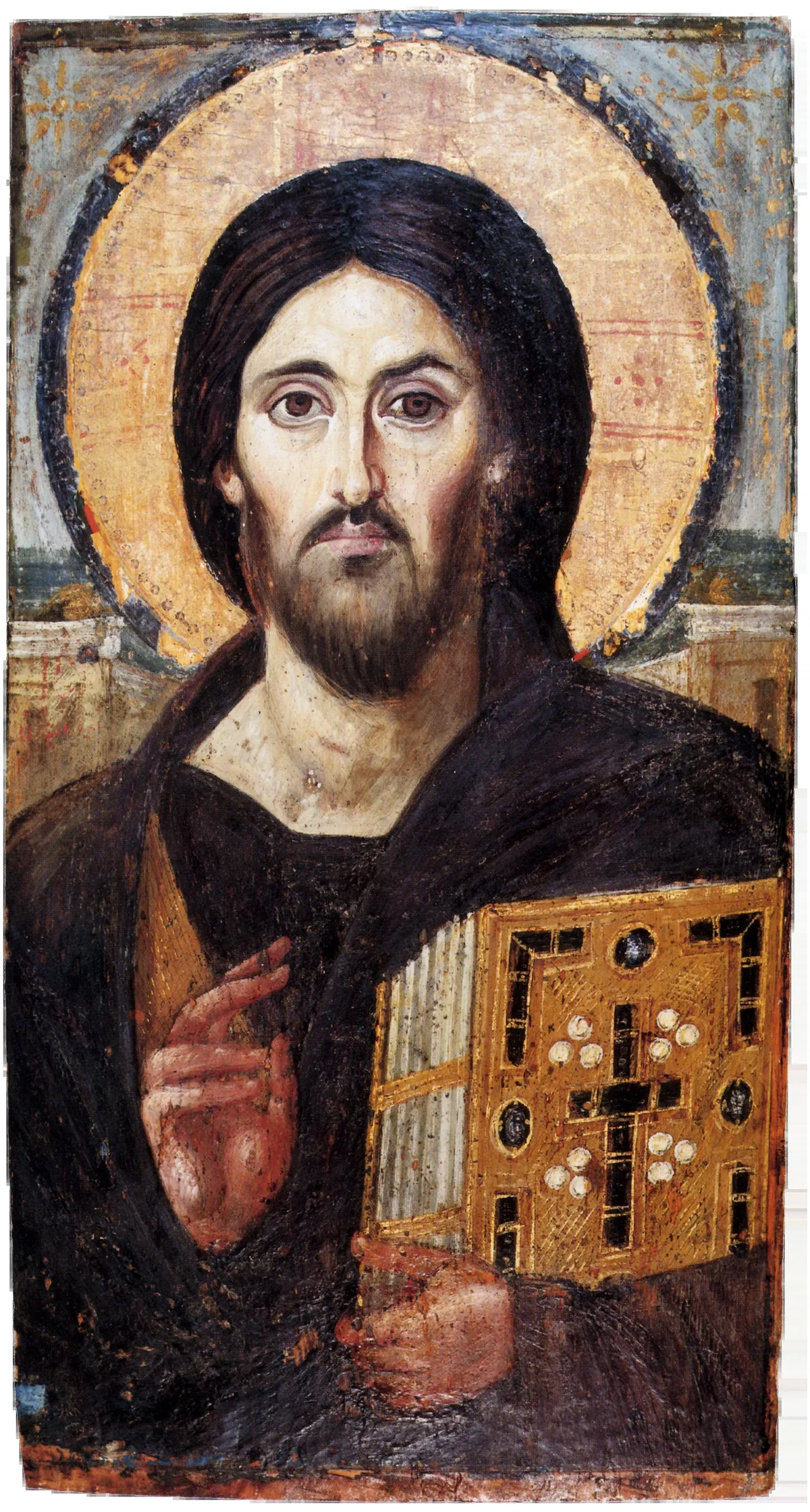
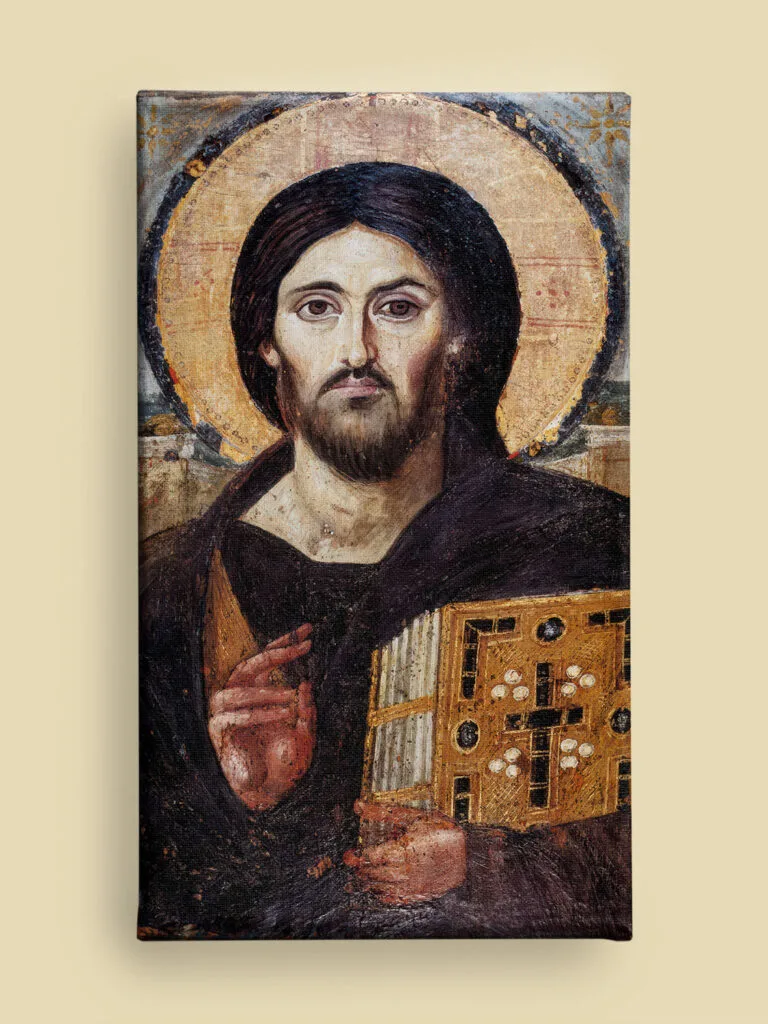
1. Christ Pantocrator of Sinai (6th century)
The oldest icon in this guide is also the most influential image of Christ ever made. The Christ Pantocrator of Saint Catherine’s Monastery, painted in encaustic on a wooden panel, shows Christ as ruler of all, holding the Gospels and raising his hand in blessing. The two sides of his face are subtly different, one calm and merciful, the other graver, as if mercy and judgment meet in a single gaze. This icon set the pattern for how both East and West would picture Christ for centuries.
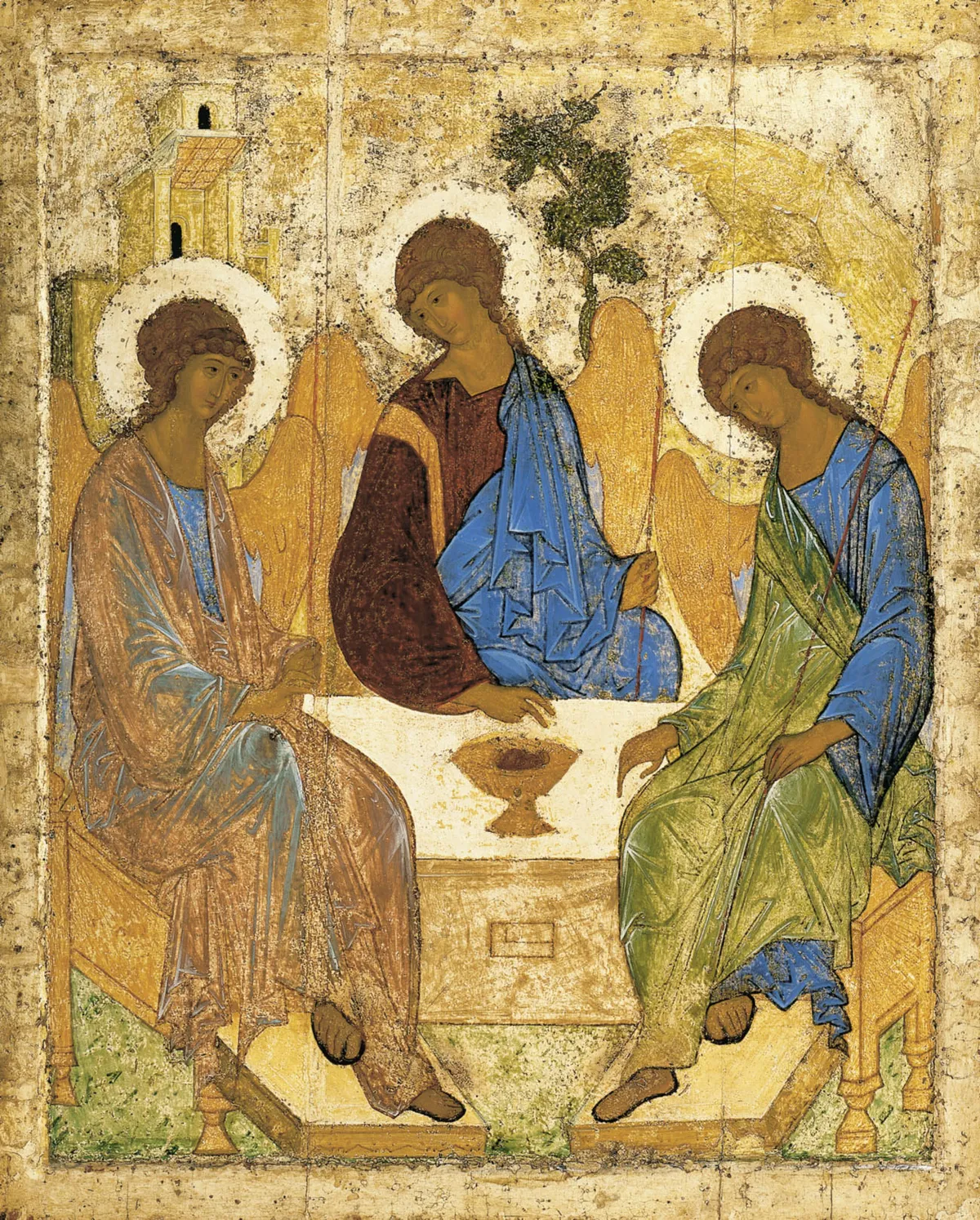
2. The Holy Trinity by Andrei Rublev (c. 1411)
The greatest of all Russian icons, the Holy Trinity by the monk Andrei Rublev, shows the three angels who visited Abraham at the oak of Mamre, an Old Testament scene read as a figure of the Trinity. The three figures bow toward one another around a single chalice, joined in a silent circle of love. With its tender colours and perfect balance, it is considered the high point of Byzantine and Russian sacred art.
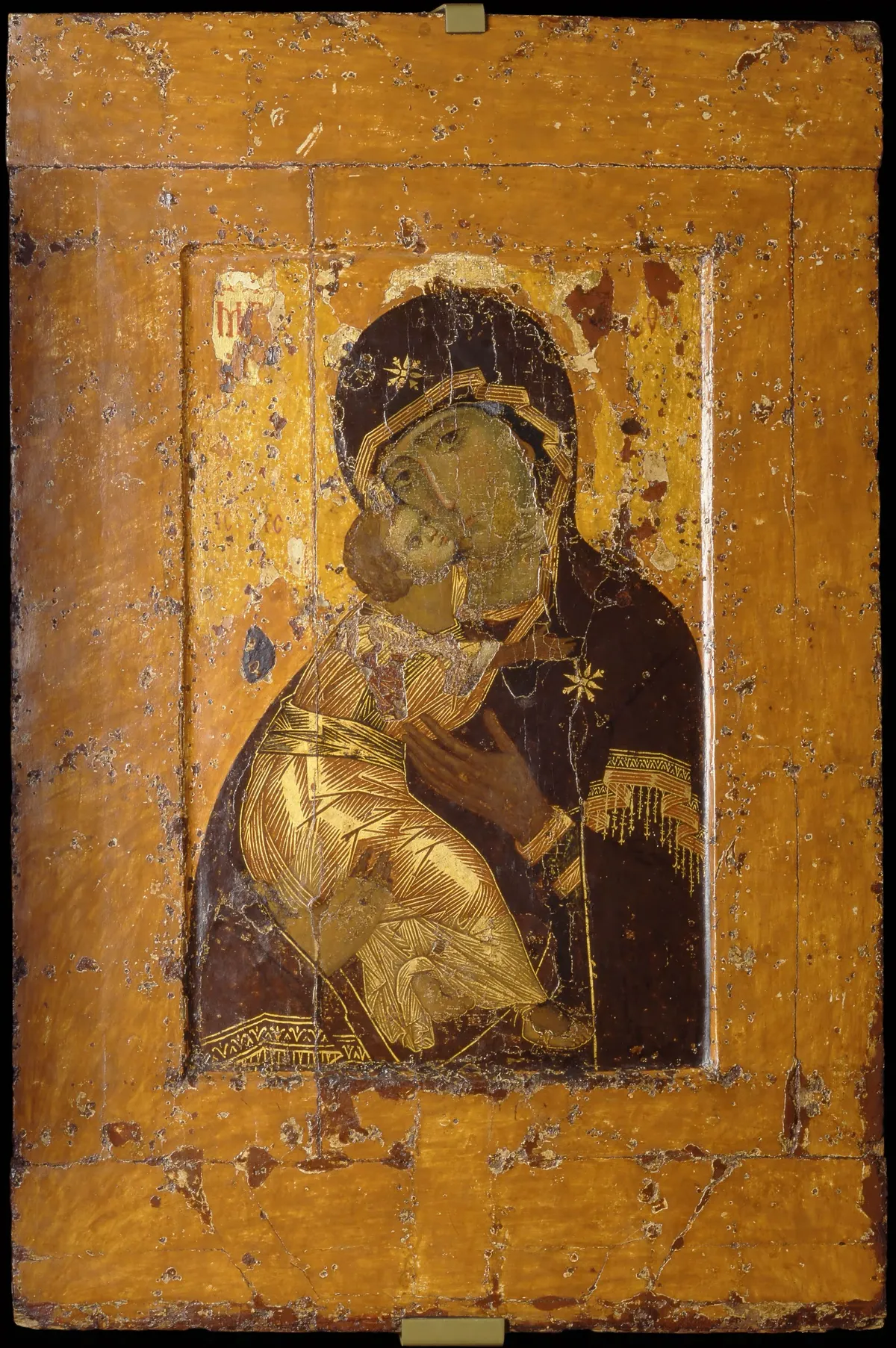
3. Our Lady of Vladimir (12th century)
The Theotokos of Vladimir is the most beloved icon of the Virgin Mary in the Eastern tradition. It belongs to the type called Eleousa, the Virgin of Tenderness, in which the Christ Child presses his cheek against his mother’s while she gazes out at us with sorrowful, knowing eyes. Painted in Constantinople and carried to Russia, it was credited with saving Moscow from invasion more than once.
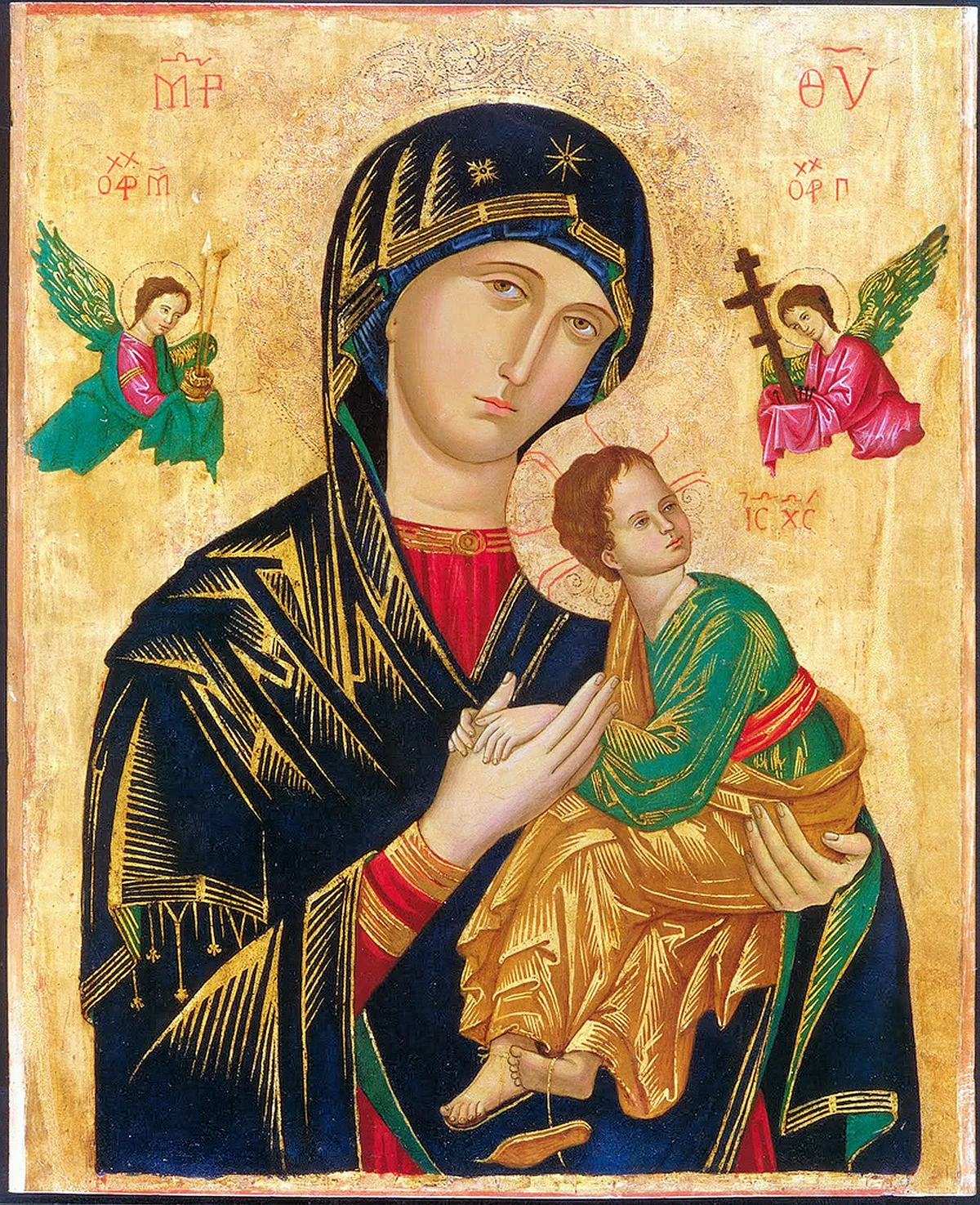
4. Our Lady of Perpetual Help (14th-15th century)
Few images are more widely reproduced in Catholic homes than Our Lady of Perpetual Help, a Cretan icon of the Hodegetria type, the Virgin who shows the way to her Son. Here the Child Jesus, frightened by a vision of the cross and lance carried by two angels, runs to his mother and clutches her hand, one sandal slipping from his foot. Mary does not look at him but at us, inviting us to bring our own fears to her.
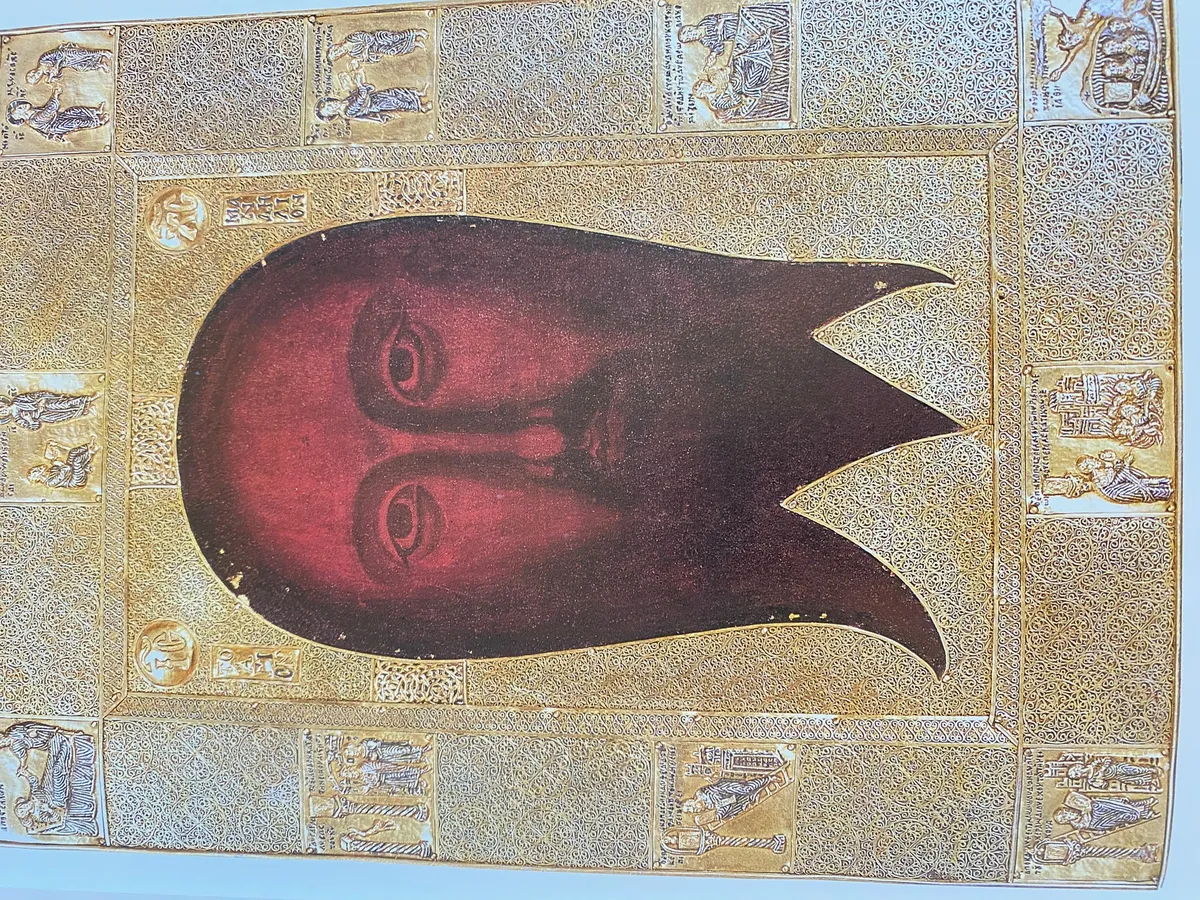
5. The Holy Mandylion, the Image of Edessa
The Mandylion, or Image of Edessa, is the icon “not made by human hands”. According to ancient tradition, Christ pressed a cloth to his face and left his image upon it, then sent it to heal the king of Edessa. As an acheiropoieton, an image of miraculous origin, it became the model for every later icon of Christ and the proof, for the faithful, that the Son of God truly took on a human face.
6. Salus Populi Romani (Rome)
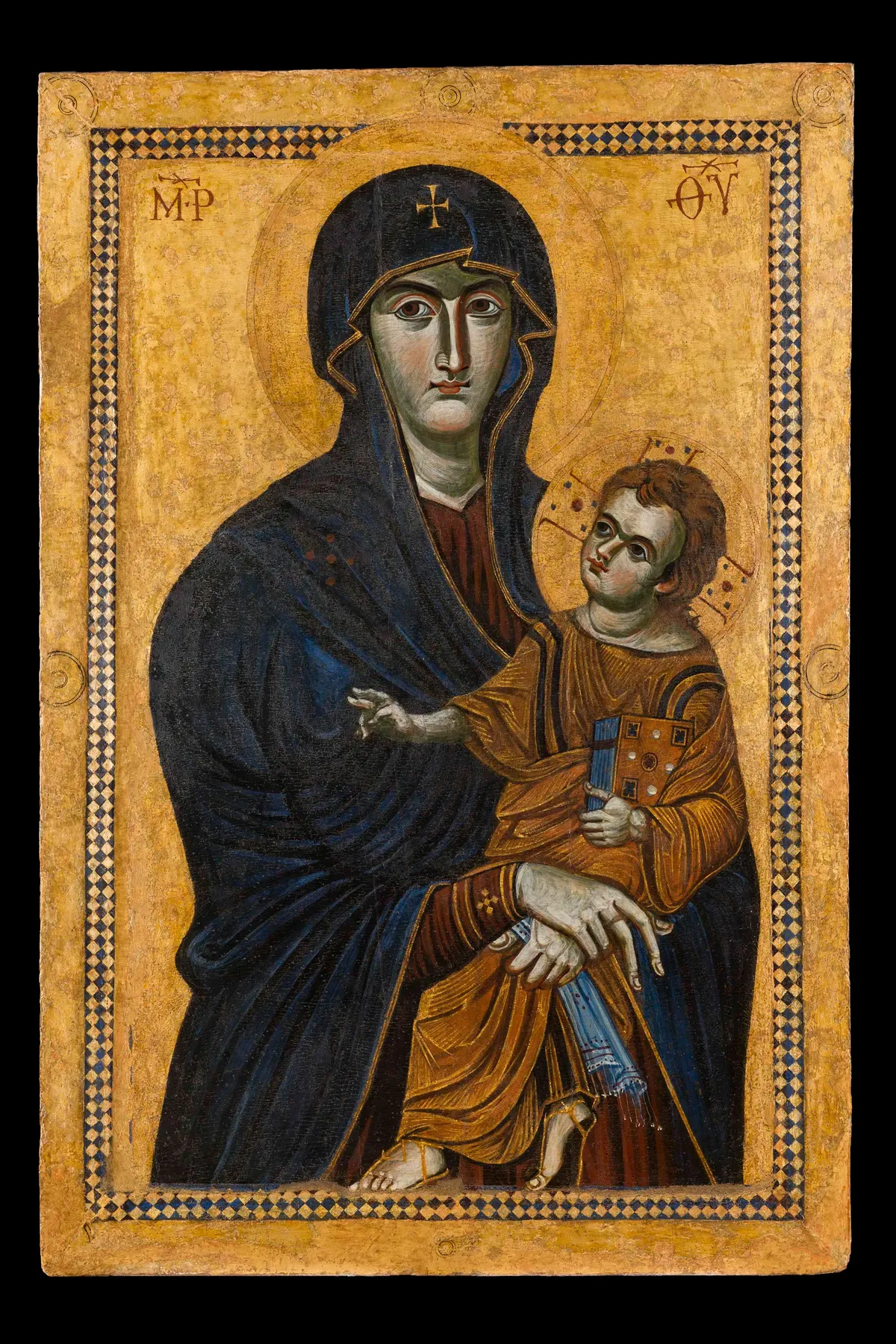
Salus Populi Romani, the “Protectress of the Roman People”, is the great Marian icon of the Latin West, kept in the Basilica of Santa Maria Maggiore in Rome. Tradition once credited it to Saint Luke himself. For centuries the popes have carried it in procession to beg the Virgin’s help against plague and war, and it remains one of the most venerated images in the city.
7. The Black Madonna of Czestochowa
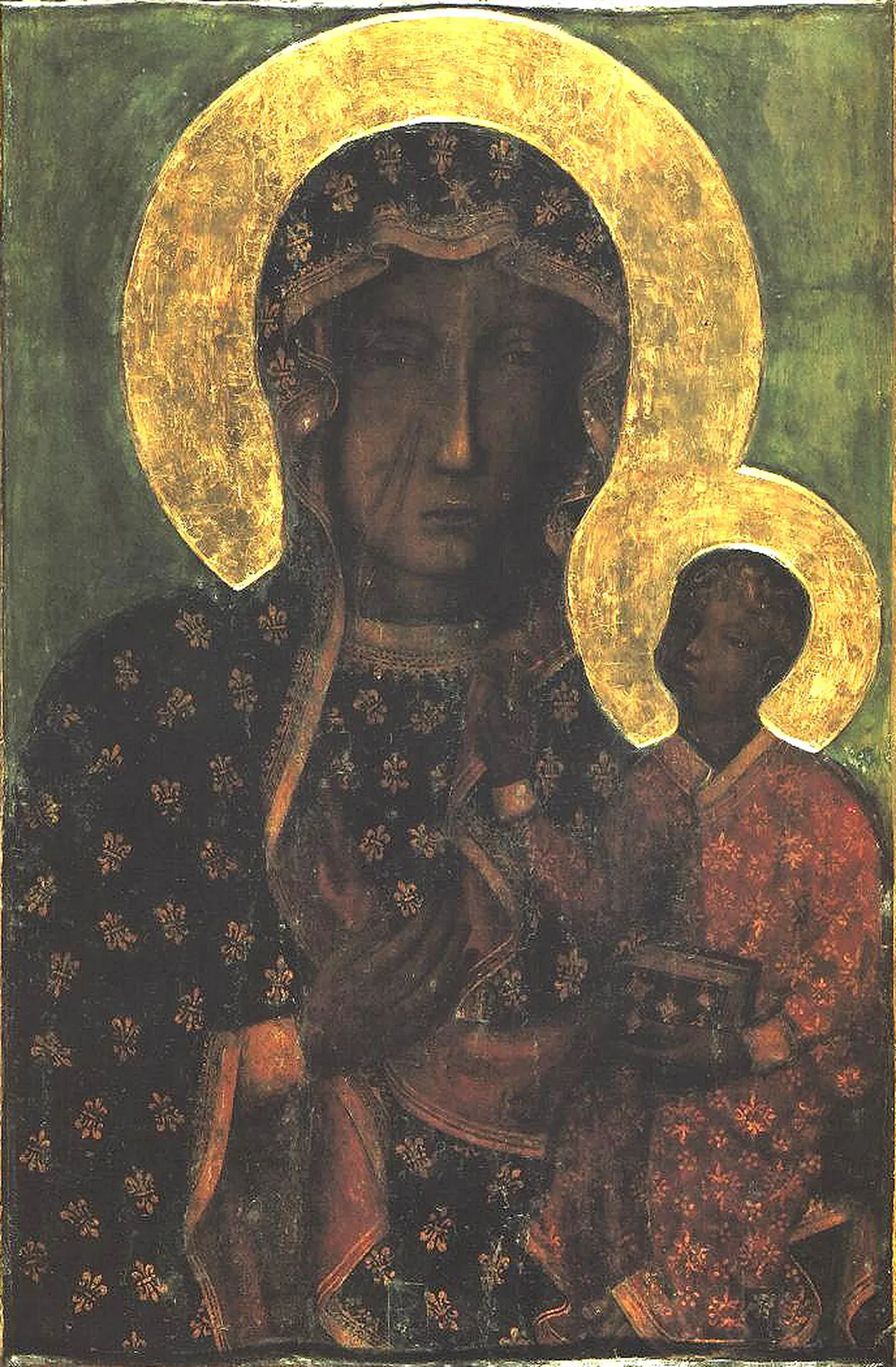
The Black Madonna of Czestochowa is the holiest image in Poland and the heart of the shrine of Jasna Gora. Its dark, solemn face and the two long scars on the Virgin’s cheek, left by an attacker who slashed the panel, have made it a symbol of a nation’s suffering and survival. Like Our Lady of Perpetual Help, it is a Hodegetria, the Virgin presenting her Son to the world.
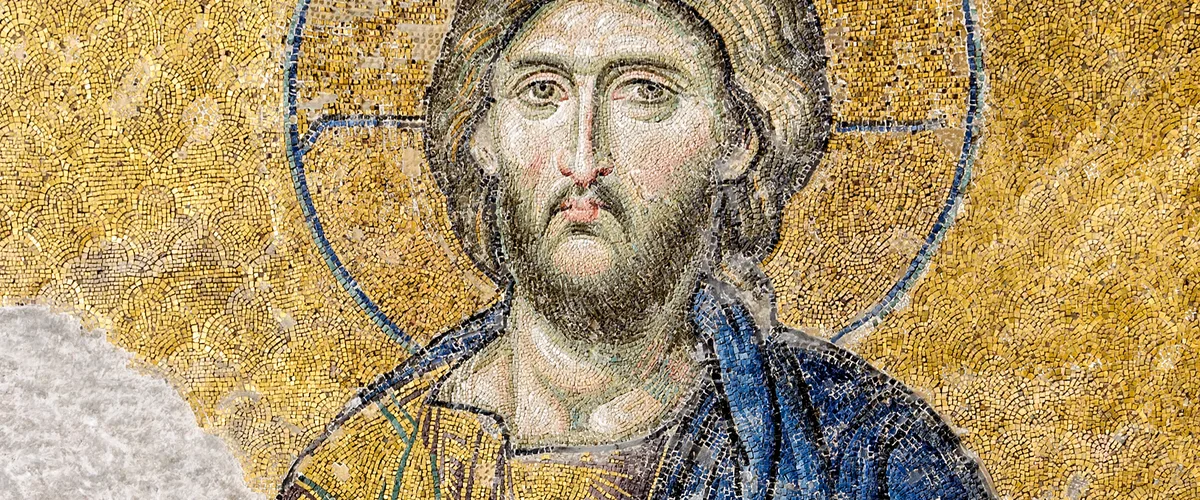
8. The Deesis of Hagia Sophia (13th century)
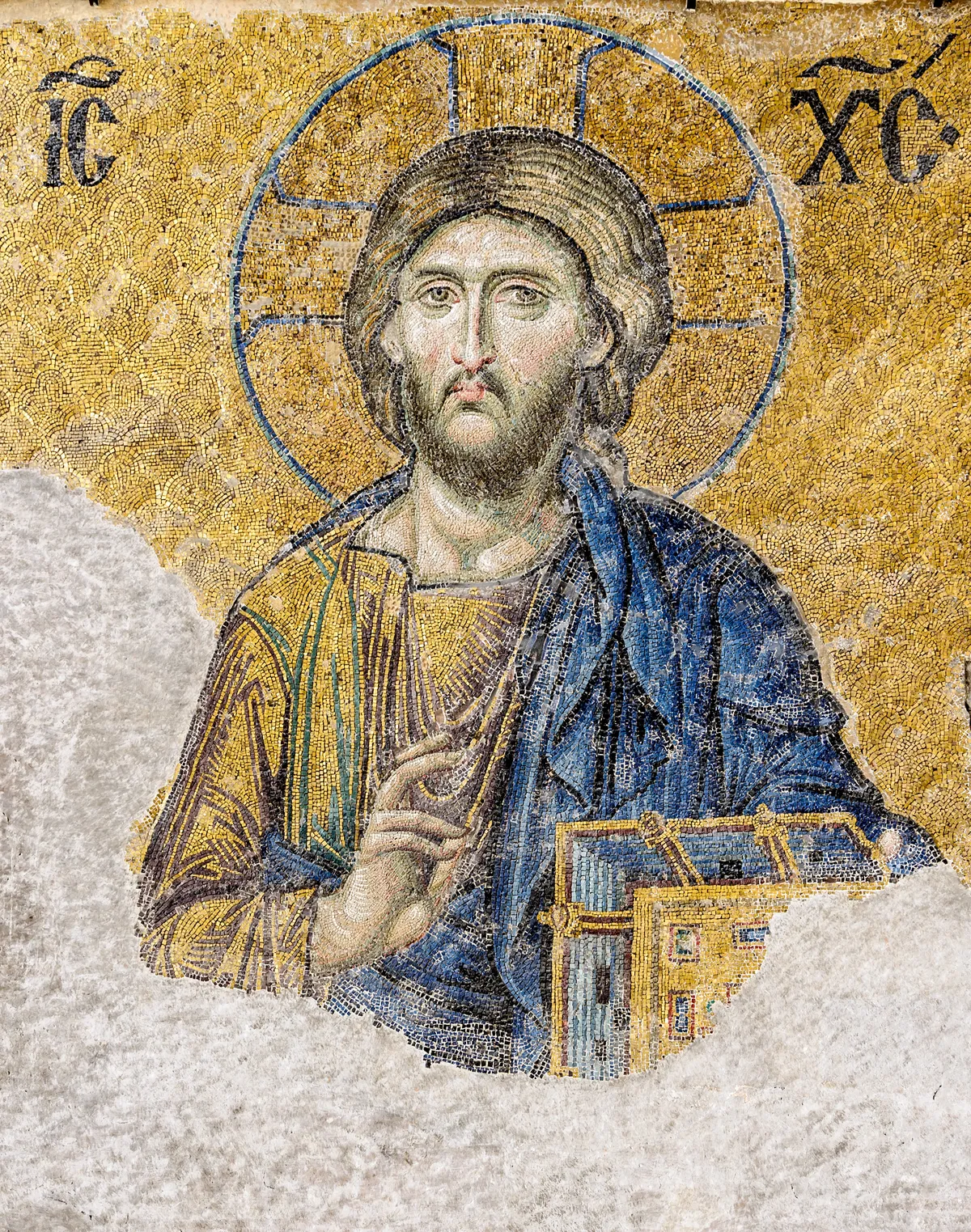
The Deesis mosaic in Hagia Sophia in Istanbul shows Christ Pantocrator between the Virgin Mary and John the Baptist, who turn toward him in prayer for humankind. Made of tiny glass tesserae, the face of Christ here is among the most beautiful in all of Christian art, gentle and majestic at once. It is the same Pantocrator of Sinai, now lifted into shimmering gold.
Catholic Icons Featured in This Article
| Icon | Date | Type | Location |
|---|---|---|---|
| Christ Pantocrator | 6th century | Pantocrator | Saint Catherine’s Monastery, Sinai |
| The Holy Trinity | c. 1411-1425 | Old Testament Trinity | Tretyakov Gallery, Moscow |
| Our Lady of Vladimir | 12th century | Eleousa (Tenderness) | Tretyakov Gallery, Moscow |
| Our Lady of Perpetual Help | 14th-15th century | Hodegetria | Church of Sant’Alfonso, Rome |
| The Holy Mandylion | Tradition | Acheiropoieton | Image of Edessa tradition |
| Salus Populi Romani | Early medieval | Hodegetria | Santa Maria Maggiore, Rome |
| The Black Madonna of Czestochowa | Medieval | Hodegetria | Jasna Gora, Poland |
| The Deesis | 13th century | Pantocrator (Deesis) | Hagia Sophia, Istanbul |
Conclusion
Catholic icons are not relics of a distant past. The same faces that early Christians prayed before still hang in churches and homes around the world, still venerated, still believed to carry the presence of the one they show. From the steady gaze of the Sinai Pantocrator to the dark, scarred face of the Black Madonna, each icon is a meeting point between earth and heaven, made not to display the skill of an artist but to open a door to God.
That is why these images have outlasted empires. They were never meant to be looked at and forgotten, but to be looked through, again and again, in prayer. To follow the same faces into the age of painting, read our gallery of Byzantine Jesus paintings and our wider guide to famous Christian paintings.
Key Facts About Catholic Icons
- An icon is a sacred image of Christ, the Virgin Mary, an angel, or a saint, usually painted on a wood panel and following traditional patterns.
- The Church teaches that icons are venerated, not worshipped, and that the honour passes through the image to the person it represents.
- Icons are central to the Eastern Catholic and Orthodox Churches, but Rome has venerated images such as Salus Populi Romani for centuries.
- The oldest surviving icon of Christ as ruler of all is the sixth-century Christ Pantocrator of Sinai.
- Many famous icons belong to set types, such as the Hodegetria and the Eleousa of the Virgin Mary.
Frequently Asked Questions
What are Catholic icons?
Catholic icons are sacred images, usually painted on wood, of Christ, the Virgin Mary, the angels, and the saints. They follow traditional patterns rather than the artist’s imagination and are used as aids to prayer and veneration. The honour given to them is understood to pass through the image to the holy person it represents.
What is the difference between Catholic and Orthodox icons?
The style and theology of icons are almost identical in the Catholic and Orthodox traditions, since both inherit them from the early Church. Icons are most central to Eastern Christianity, both Orthodox and Eastern Catholic, while the Latin West has also developed devotional paintings and statues. Many of the most famous icons, such as Our Lady of Vladimir, are shared by all.
Are Catholics allowed to venerate icons?
Yes. The Second Council of Nicaea in 787 confirmed that sacred images may be venerated, drawing a clear line between veneration, which honours the person shown, and adoration, which belongs to God alone. Venerating an icon is not worshipping the wood or paint but honouring Christ or the saint it depicts.
What are the most famous Catholic icons?
Among the most famous are the Christ Pantocrator of Sinai, Andrei Rublev’s Holy Trinity, Our Lady of Vladimir, Our Lady of Perpetual Help, Salus Populi Romani in Rome, and the Black Madonna of Czestochowa in Poland. Each has been venerated for centuries and copied countless times.
Can you buy Catholic icons as prints or canvases?
You can buy Catholic icons at jesuschrist.pictures, in our shop, where images such as the Christ Pantocrator are offered as canvas reproductions and posters. A faithful reproduction lets you bring one of these sacred images into a home, a parish, or a place of prayer.