10 Wedding at Cana Paintings of Christ’s First Miracle
Wedding at Cana paintings gather around the very first miracle of Jesus. In the Gospel of John, Christ, his mother, and his disciples are guests at a village wedding in Cana of Galilee when the wine runs out. At Mary’s quiet prompting, Jesus has the servants fill six stone jars with water, and when the steward tastes it the water has become wine, better than any served before. It is the moment John calls the first of the signs, the miracle that opens Christ’s public ministry, and painters have returned to it for seven hundred years. The subject gives an artist almost everything at once: a feast full of guests and colour, a tender exchange between a son and his mother, and a hidden miracle that most of the table never notices. Some painters filled the scene with music and marble and hundreds of figures, others reduced it to a handful of people around a plain cloth. The Virgin’s role here, gentle yet decisive, is one reason the scene appears so often in Marian art, and you can see her many other faces in our gathering of beautiful Virgin Mary paintings. The ten works below span four centuries, from a Paduan chapel wall to the vast canvases of Venice.
1. The Wedding at Cana by Paolo Veronese (1563)
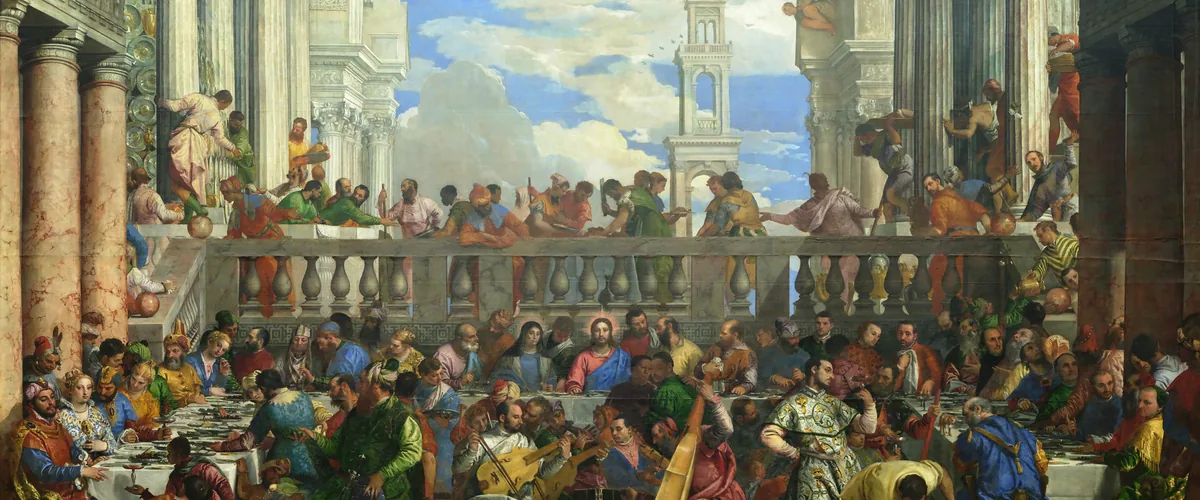
No painting of the subject is larger or more famous than this one. Paolo Veronese covered nearly seventy square metres of canvas for the refectory of the Benedictine monastery of San Giorgio Maggiore in Venice, turning the modest village feast into a glittering banquet of more than one hundred and thirty guests. Musicians play in the foreground, servants pour the new wine, and Christ sits at the exact centre of the table, haloed and calm amid the noise.
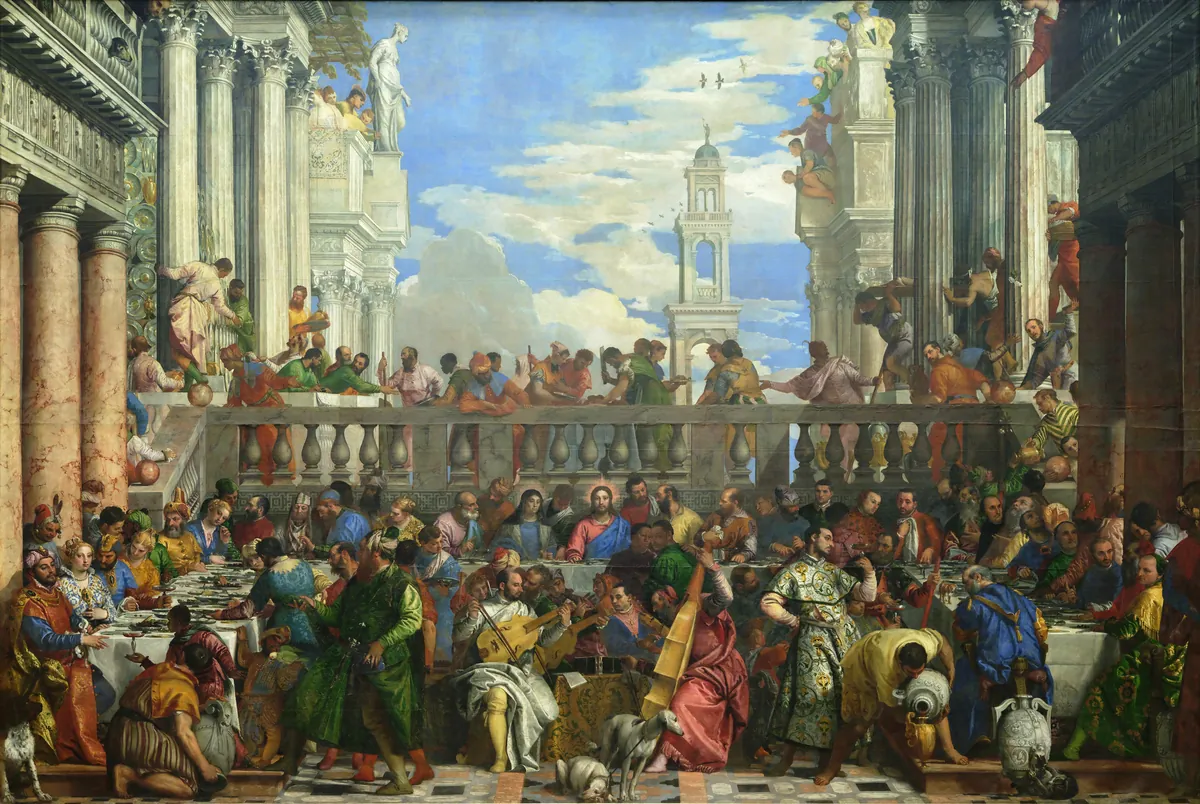
Veronese dressed the miracle in the silks, marble, and music of his own Venice, a splendour that later brought him before the Inquisition for other works. Napoleon’s troops seized the picture in 1797, and today it hangs in the Louvre on the wall facing the Mona Lisa, where it is the largest painting in the museum.
2. Marriage at Cana by Giotto (c. 1305)
The earliest work here is also one of the most human. Giotto painted the Marriage at Cana as one panel in his great fresco cycle in the Scrovegni Chapel in Padua. The scene is stripped to essentials: Christ raises his hand in blessing on the left, the Virgin and the wedding guests sit along a simple table, and on the right a stout steward lifts a bowl to taste the wine while a servant tends the tall white jars.
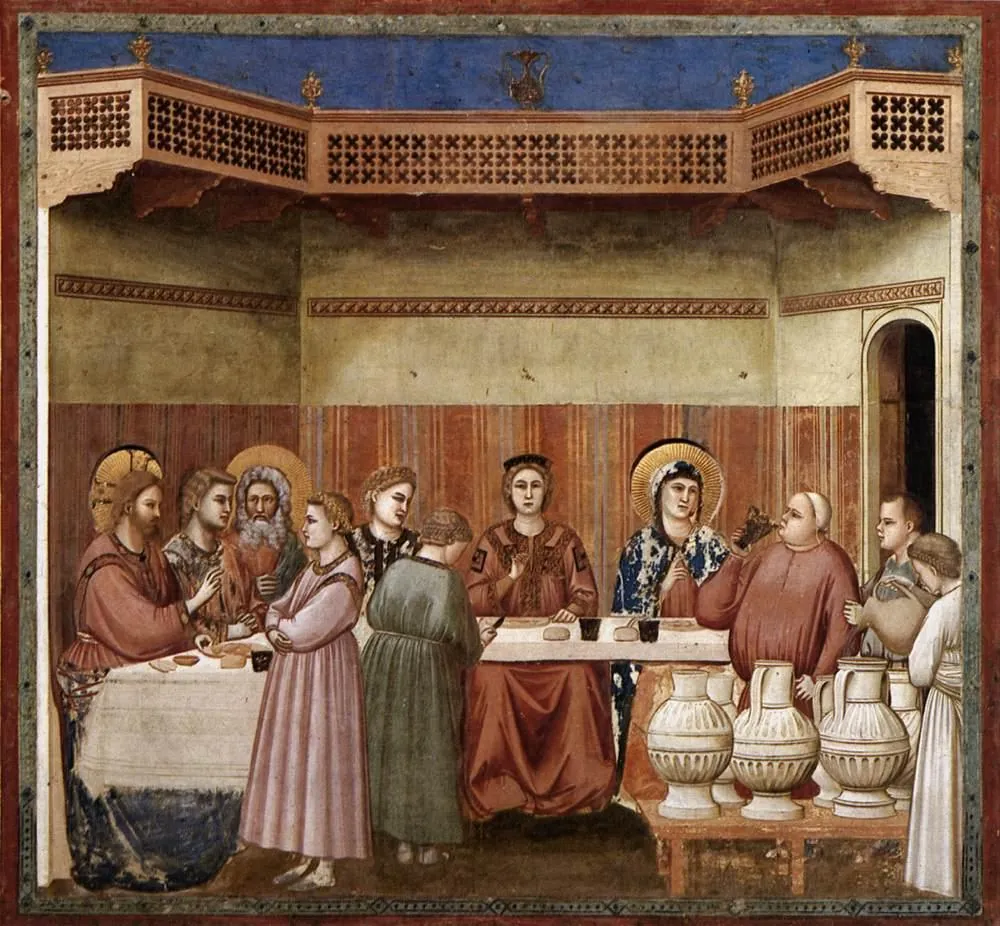
Giotto gives every figure real weight and feeling, breaking with the flat gold of earlier medieval art. The plump steward, caught in the act of tasting, is one of the small touches of ordinary life that made Giotto famous. The whole cycle in the Scrovegni Chapel is a landmark in Western painting, and the Cana panel shows why.
3. The Wedding at Cana by Duccio (1308 to 1311)
Working in Siena at almost the same moment, Duccio di Buoninsegna painted his Wedding at Cana as a small scene on the back of his monumental altarpiece, the Maesta. Against a warm gold ground, Christ and the Virgin sit at one end of the table while, in the foreground, servants stoop over the great terracotta jars, one of them pouring from a jug as the miracle takes place.
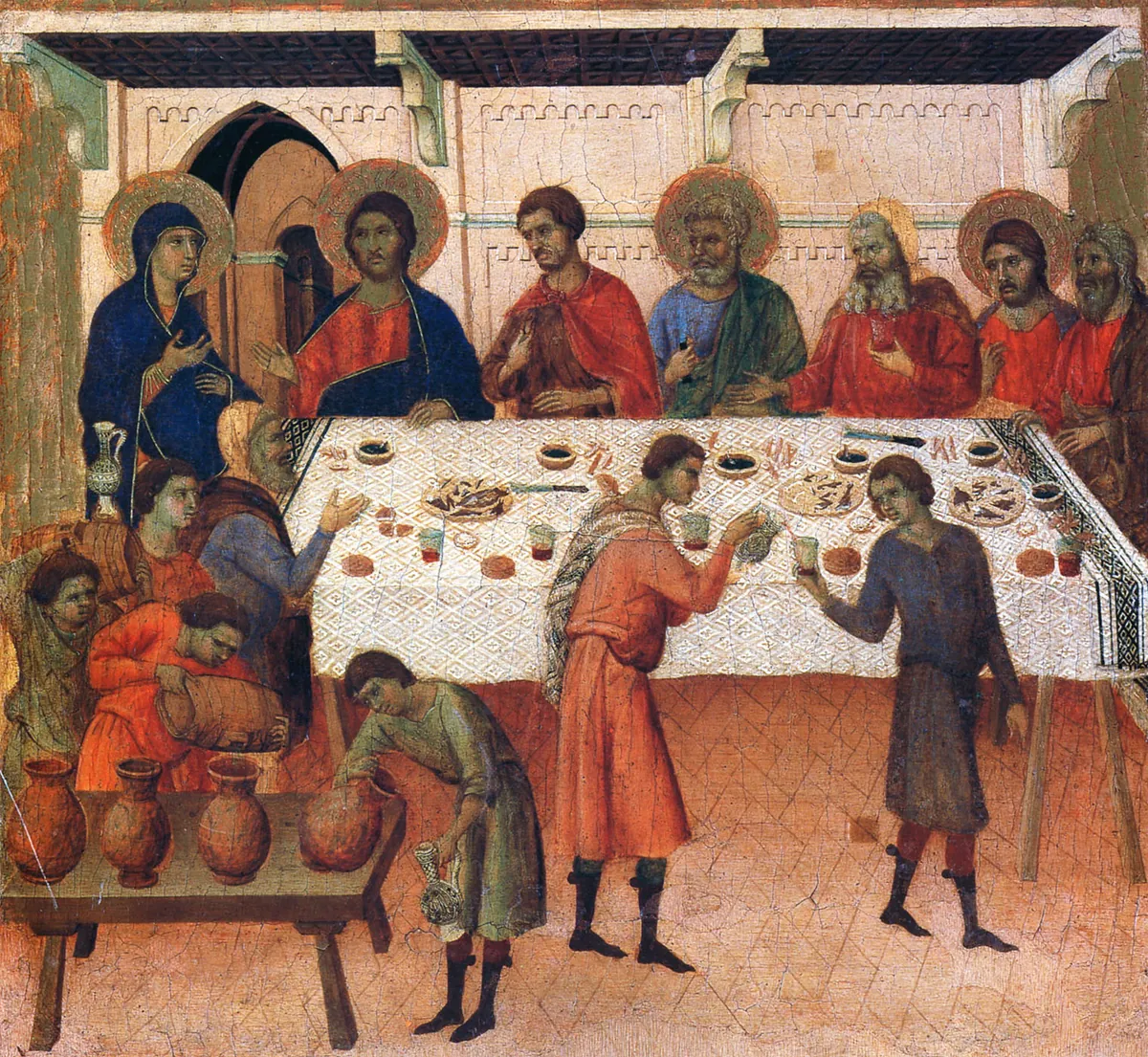
Duccio tells the story with quiet grace, all curving line and glowing colour, in the refined Sienese manner. The panel is one of dozens that once formed the double sided Maesta, now displayed in the Museo dell’Opera del Duomo in Siena. Seen beside Giotto’s fresco, it shows two great schools, Florentine and Sienese, telling the same story in the same years.
4. The Marriage at Cana by Gerard David (c. 1500)
Two centuries later the scene crossed the Alps into the world of Flemish oil painting. Gerard David, the last of the great masters of Bruges, set the feast in a calm, tiled interior and gave it the still, devout mood of Northern art. Christ and the Virgin sit quietly at the table, the bride in her finery beside them, while at the lower corners two kneeling donors, the couple who paid for the painting, join the sacred guests.
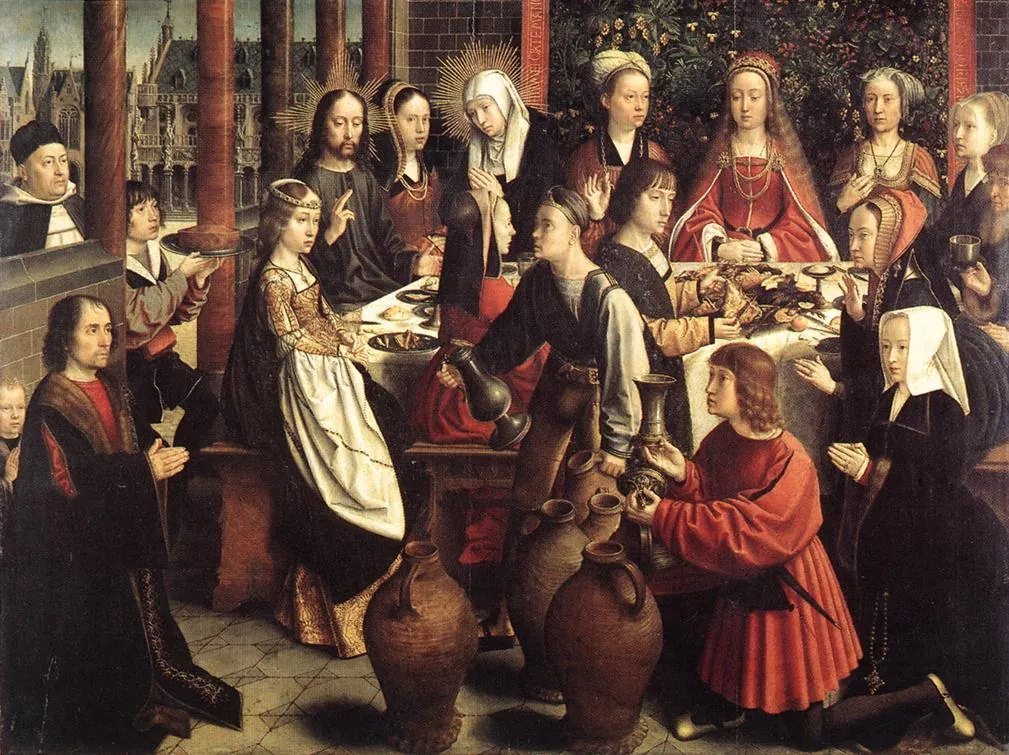
The picture is painted with the jewel like precision that made Bruges famous, every fold and vessel rendered with patience. The mood is one of prayer rather than celebration, the miracle treated as a matter of grace. Gerard David’s Marriage at Cana is now in the Louvre, a world away from Veronese’s roar of music down the same corridors.
5. The Marriage Feast at Cana by Juan de Flandes (c. 1500 to 1504)
This small, luminous panel is the work of Juan de Flandes, a Netherlandish painter who spent his career in Spain as court artist to Queen Isabella of Castile. It once belonged to a large retable of the life of Christ, and its size makes its detail all the more remarkable. Christ and the Virgin sit at a bare table with a few guests, while at the right a servant tips a jug into one of the six stone jars set on the tiled floor.
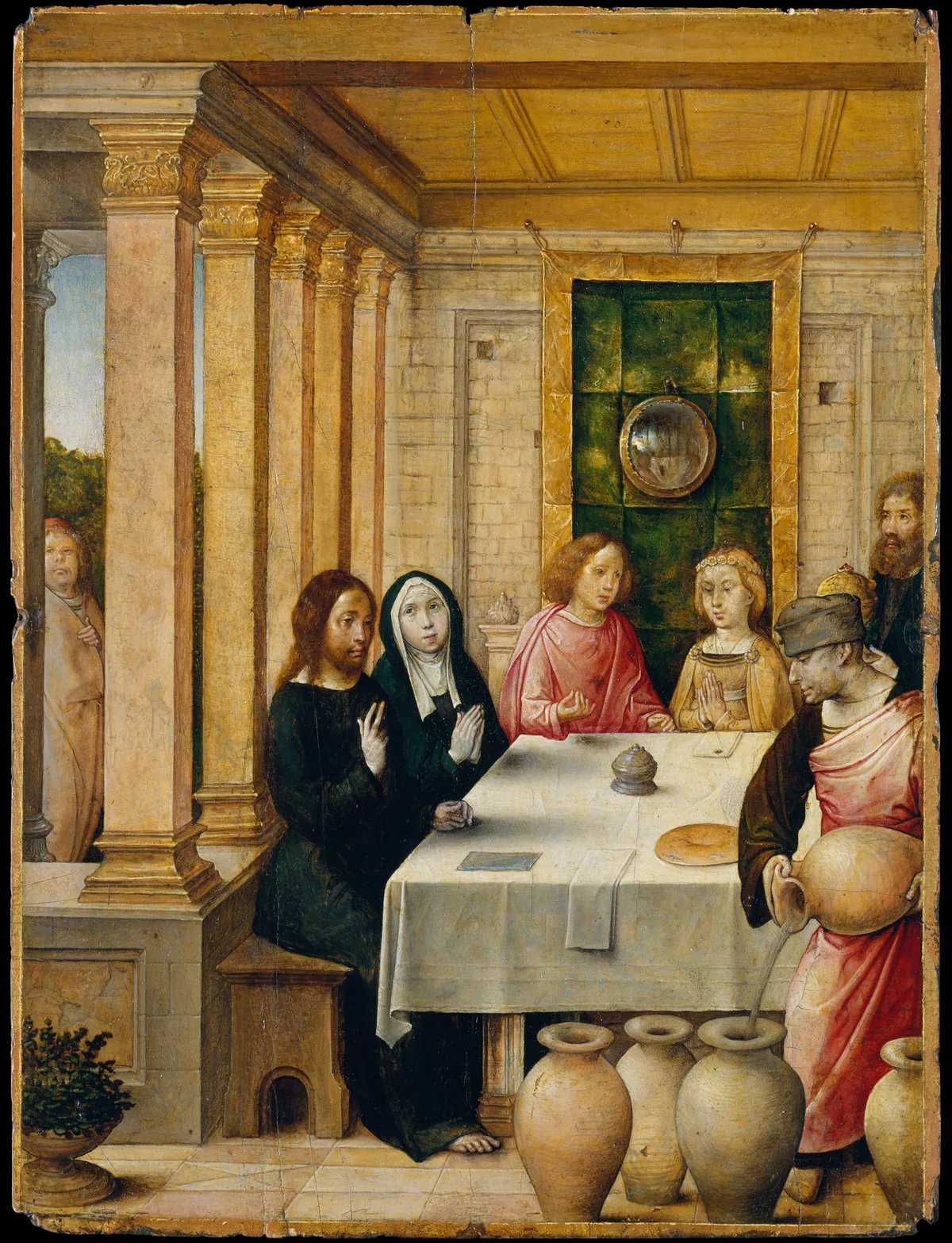
Everything is precise and still: the columns, the green cloth of honour, the quiet gestures of blessing. Juan de Flandes brings the northern love of clear light and fine detail to a subject usually given more noise. The panel is one of the treasures of the Metropolitan Museum of Art in New York.
6. The Marriage at Cana by Tintoretto (1561)
Back in Venice, Tintoretto painted the feast for the refectory of a Venetian convent, and he used it to show off his mastery of space. Instead of spreading the table across the canvas, he drives it deep into the picture, a long diagonal rushing toward a bright window at the far end. Christ sits small and distant at the head, while nearer to us the women of the party and the servants with their jars fill the foreground.
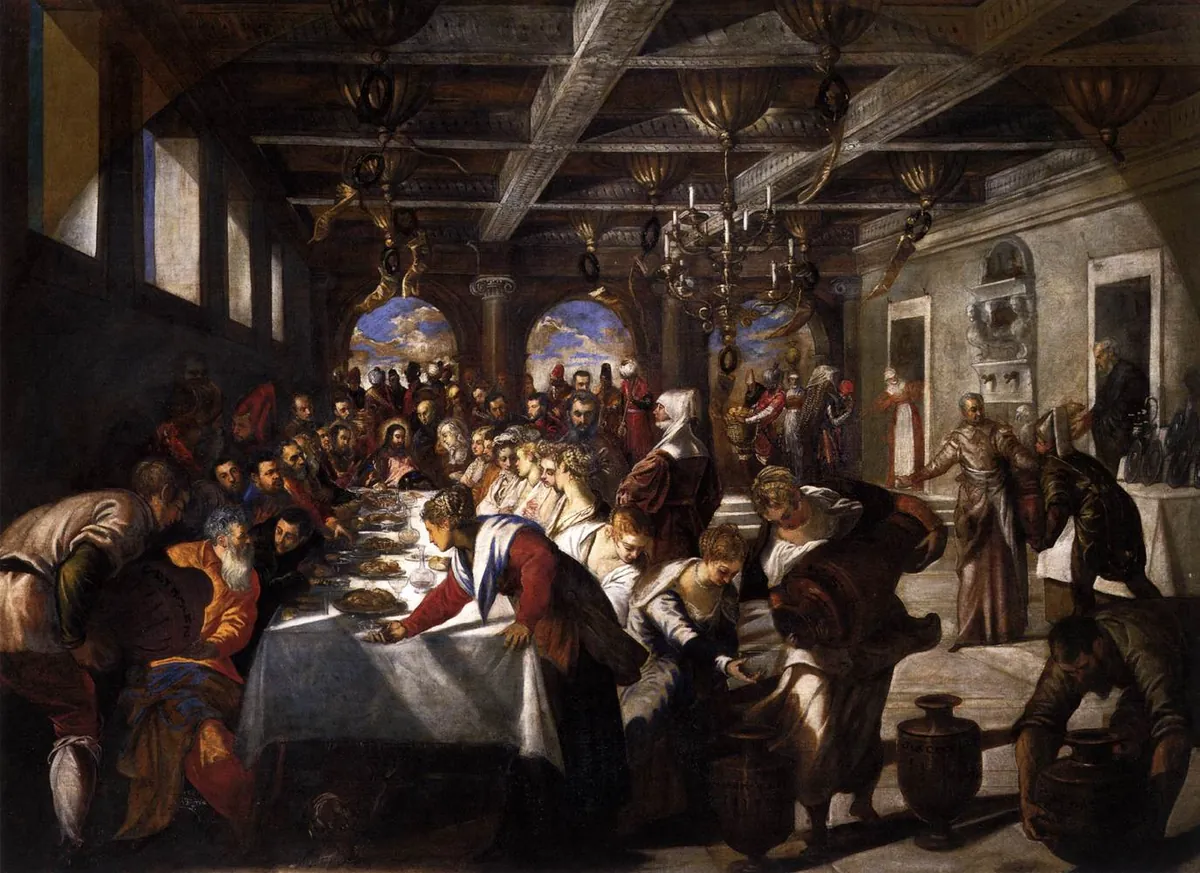
The daylight pouring through the far windows unifies the whole crowded hall, a favourite effect of this restless, dramatic painter. Tintoretto turns the miracle into a study of light and recession, so that the eye travels the length of the table before it finds Christ. The canvas still hangs where it can be seen in the sacristy of Santa Maria della Salute in Venice.
7. The Marriage at Cana by Maerten de Vos (1596 to 1597)
The Antwerp painter Maerten de Vos brought the full splendour of late Flemish Mannerism to the subject. His Cana is a crowded, festive hall: the crowned bride sits in state at the centre, musicians play on a balcony above, and along the foreground servants pour wine from a row of elaborate gold and silver vessels. Christ, in a red robe, blesses the miracle at the left, the Virgin close beside him.
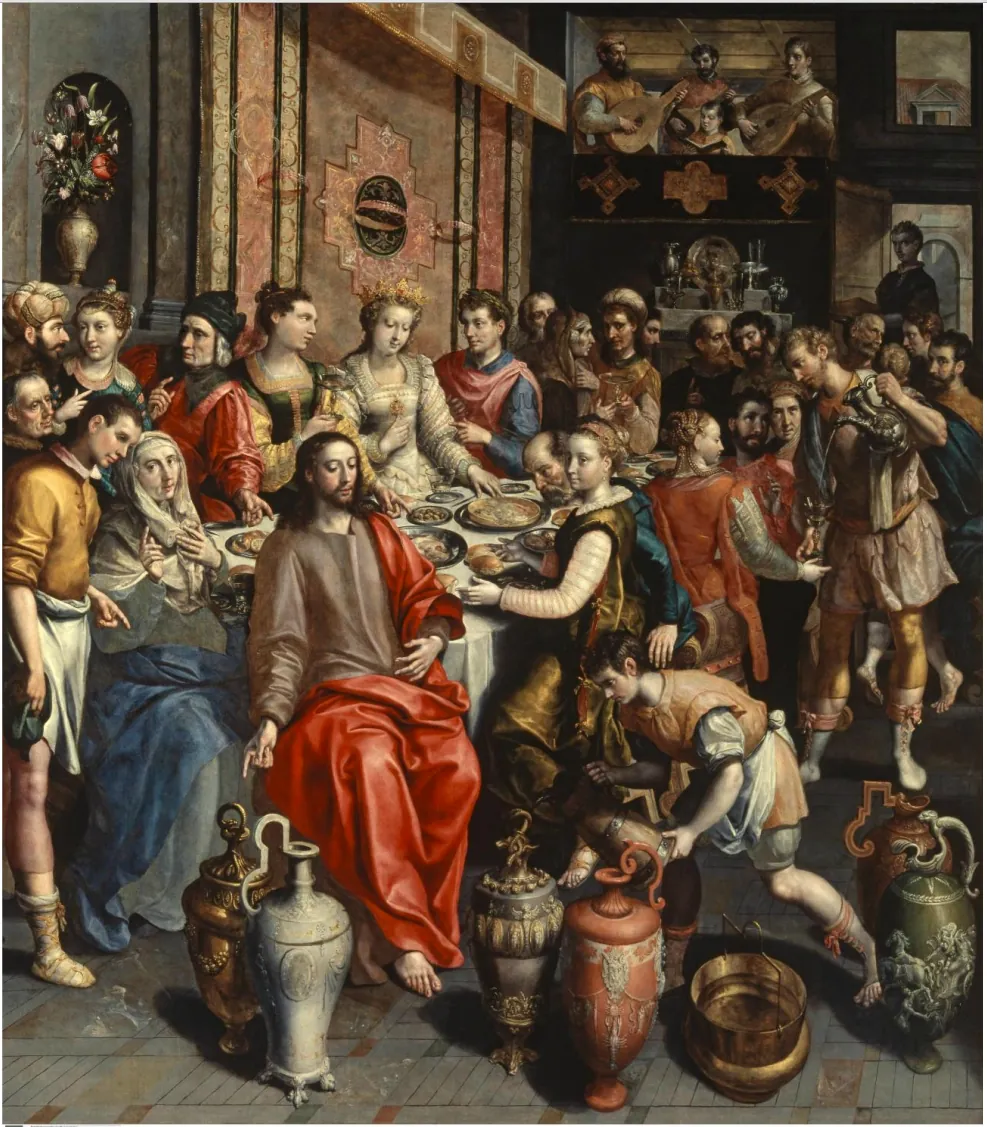
De Vos loved rich fabrics, glinting metal, and lively movement, and here he fills every corner with them. The picture was painted for an Antwerp church at the height of the Counter Reformation, when such grand altarpieces reaffirmed Catholic worship. It now belongs to the Koninklijk Museum voor Schone Kunsten in Antwerp.
8. The Marriage Feast at Cana by Murillo (c. 1672)
The Spanish master Bartolome Esteban Murillo gave the scene the soft warmth for which he is loved. Christ sits at the left, gesturing gently toward the miracle, while the bride and groom hold the centre of the table in fine silks. In the foreground a young servant, stripped for work, pours water into a cluster of tall earthenware jars, the everyday labour through which the wonder is done.
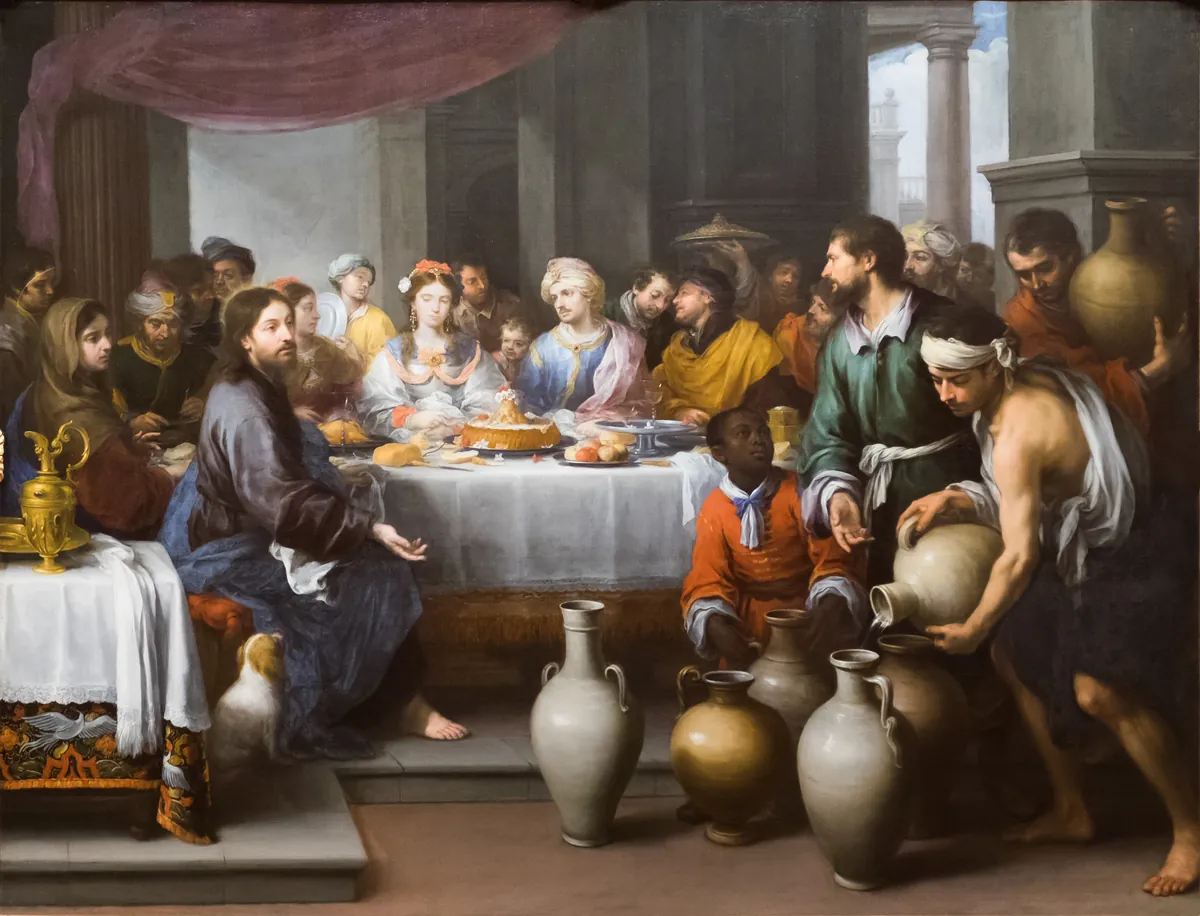
Murillo bathes the whole scene in the tender, hazy light that fills his religious paintings, and grounds the miracle in believable human faces. Painted in Seville around 1672, the picture is one of the finest old master works in Britain outside London. It hangs in the Barber Institute of Fine Arts in Birmingham.
9. The Wedding at Cana by Mattia Preti (1655)
For sheer drama, few versions match that of the Neapolitan painter Mattia Preti. He plunges the banquet into deep shadow and lets a raking light pick out only what matters: the white cloth, the pale faces, and the crucial gesture at the centre, where the steward raises a glass of the new wine to taste it. Christ sits at the right with the Virgin, calm within the darkness, while a servant fills the great jars in the lower corner.
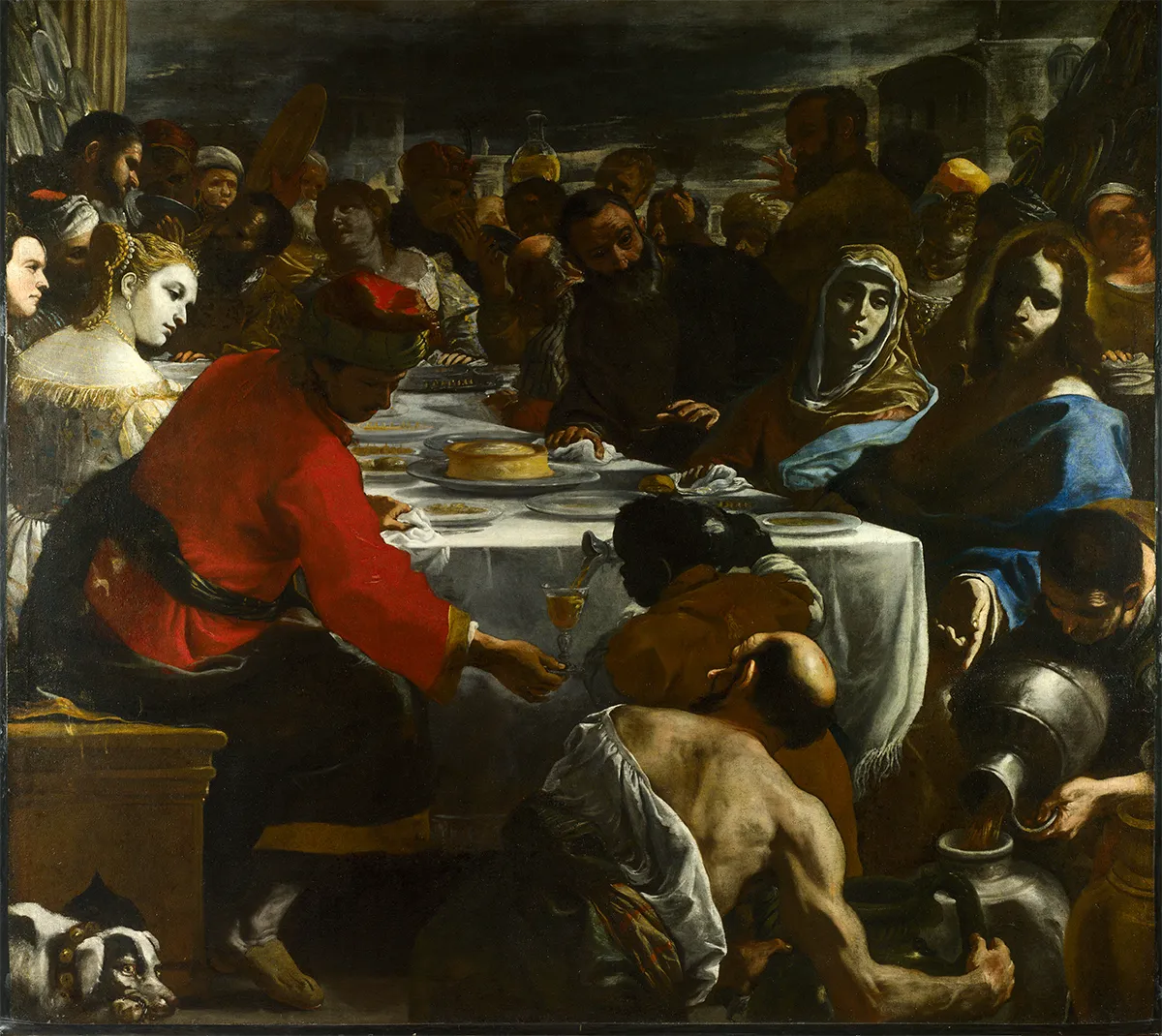
Preti learned this powerful light and shade from the followers of Caravaggio, and he uses it to turn a wedding into a moment of hushed revelation. The eye is led straight to the tasting of the wine, the instant the miracle is confirmed. The painting is part of the collection of the National Gallery in London.
10. The Marriage Feast at Cana, after Hieronymus Bosch (c. 1550 to 1560)
The strangest work in this list comes from the world of Hieronymus Bosch. Painted by a follower after Bosch’s manner, it sets the wedding in a tall, shadowy hall full of odd incident: servants carry in a swan and a boar’s head on gold platters, a small figure perched on the mantel seems to aim a bow, and dogs prowl beneath the table. Christ blesses the feast at the right while the bride sits pale and still at the centre.
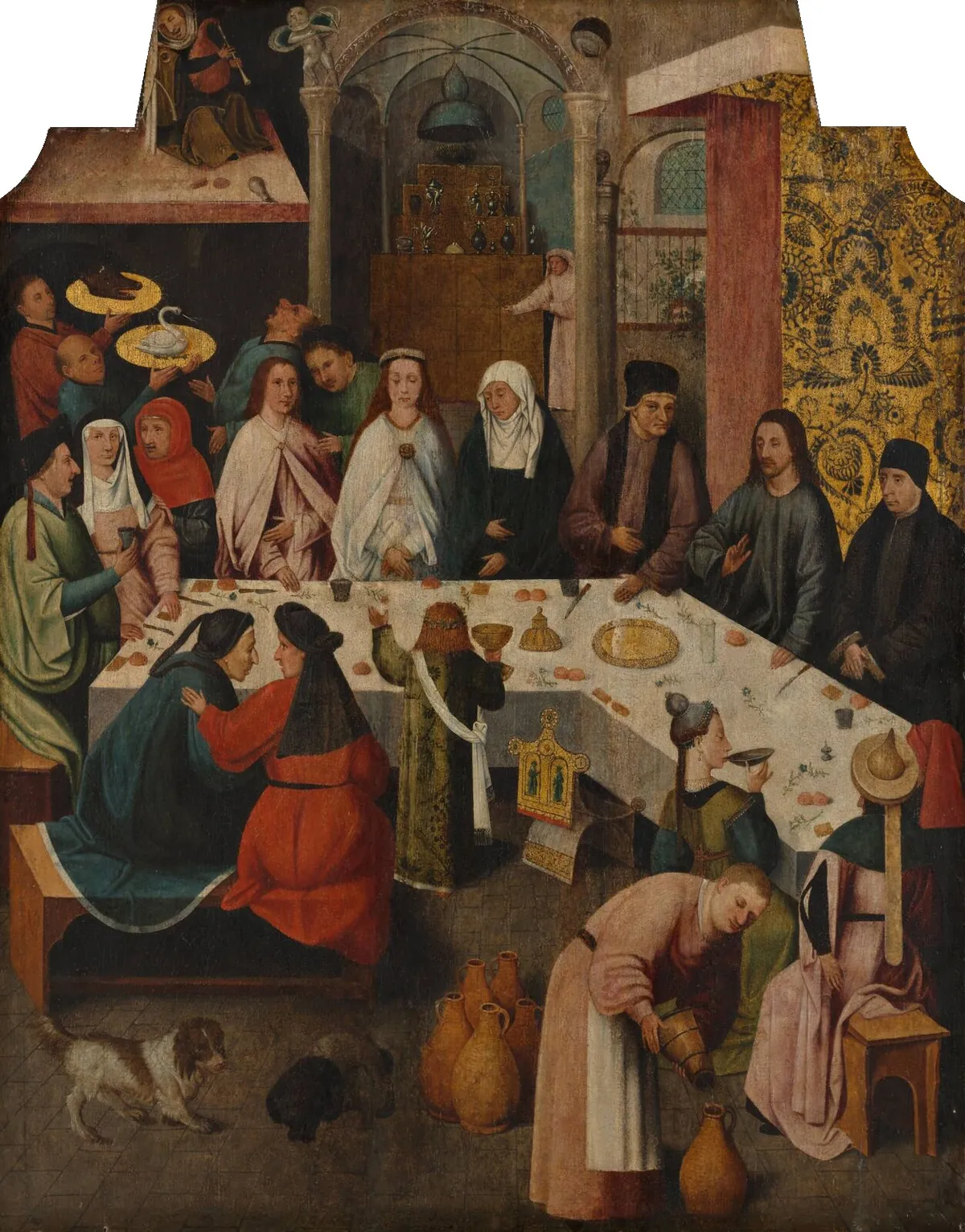
The panel keeps Bosch’s taste for the uncanny, crowding the sacred scene with mystery and half read symbols. Its irregular, arched top is the original shape of the wooden support. Long linked to Bosch himself and now regarded as the work of a close follower, it belongs to the Museum Boijmans Van Beuningen in Rotterdam.
Summary of the Paintings
| Painting | Artist | Date | Medium | Museum |
|---|---|---|---|---|
| The Wedding at Cana | Paolo Veronese | 1563 | Oil on canvas | Musee du Louvre, Paris |
| Marriage at Cana | Giotto | c. 1304 to 1306 | Fresco | Scrovegni Chapel, Padua |
| The Wedding at Cana (Maesta) | Duccio di Buoninsegna | 1308 to 1311 | Tempera on panel | Museo dell’Opera del Duomo, Siena |
| The Marriage at Cana | Gerard David | c. 1500 | Oil on panel | Musee du Louvre, Paris |
| The Marriage Feast at Cana | Juan de Flandes | c. 1500 to 1504 | Oil on panel | Metropolitan Museum of Art, New York |
| The Marriage at Cana | Tintoretto | 1561 | Oil on canvas | Santa Maria della Salute, Venice |
| The Marriage at Cana | Maerten de Vos | 1596 to 1597 | Oil on panel | KMSKA, Antwerp |
| The Marriage Feast at Cana | Bartolome Esteban Murillo | c. 1672 | Oil on canvas | Barber Institute of Fine Arts, Birmingham |
| The Wedding at Cana | Mattia Preti | 1655 | Oil on canvas | National Gallery, London |
| The Marriage Feast at Cana | After Hieronymus Bosch | c. 1550 to 1560 | Oil on panel | Museum Boijmans Van Beuningen, Rotterdam |
Conclusion
Across seven centuries, painters found in the Wedding at Cana a story wide enough to hold their whole imagination. Giotto and Duccio pared it to a few solemn figures around a table, Veronese and de Vos swelled it into a roar of music and marble, Tintoretto bent it into deep space, and Preti sank it into shadow so the tasting of the wine could shine. Murillo warmed it with tender light, while the follower of Bosch filled it with mystery. What unites them is the shape of the miracle itself, a moment of ordinary need met by quiet grace. The wine runs out, a mother speaks, servants fill the jars with water, and something new is poured. That is why these paintings still hold us, far beyond the walls of any church or museum. For another table where Christ is revealed to those who share the meal, see our gathering of Supper at Emmaus paintings, and for the great supper of Holy Thursday, our survey of the most famous Last Supper paintings.
Important Facts About the Wedding at Cana in Art
- The Wedding at Cana is told only in the Gospel of John, chapter 2, verses 1 to 11, where Jesus turns water into wine at a wedding in Cana of Galilee.
- John calls it the first of Jesus’ signs, the miracle that begins his public ministry and leads his disciples to believe in him.
- The Virgin Mary sets the miracle in motion with the words, “They have no wine,” and tells the servants, “Do whatever he tells you.”
- The six stone water jars are a fixed feature of the scene, and painters almost always place them in the foreground where the miracle is performed.
- Paolo Veronese’s version of 1563 is the largest painting in the Louvre, measuring about 6.77 by 9.94 metres, and hangs on the wall facing the Mona Lisa.
Questions and Answers
Who painted the Wedding at Cana?
Many great artists painted it, because the subject was popular for seven hundred years. The single most famous version is by Paolo Veronese, finished in 1563 and now in the Louvre. Earlier landmarks include Giotto’s fresco in the Scrovegni Chapel and Duccio’s panel from the Maesta of Siena, both around 1305 to 1311. Later masters such as Tintoretto, Maerten de Vos, Murillo, and Mattia Preti each left memorable versions of their own.
Is Jesus in the Wedding at Cana painting?
Yes, Christ is always present, usually seated at or near the table with his mother beside him. Painters mark him out with a halo and a gesture of blessing toward the water jars. In some versions, such as Veronese’s, he sits at the very centre of the composition, while in others, like Tintoretto’s, he is placed further back so the eye must search the crowded table to find him. The Virgin Mary is nearly always shown close at hand.
Where is the Wedding at Cana painting located?
It depends which version you mean. Veronese’s monumental canvas is in the Louvre in Paris, directly across from the Mona Lisa. Giotto’s fresco remains on the wall of the Scrovegni Chapel in Padua, and Duccio’s panel is in the Museo dell’Opera del Duomo in Siena. Other versions hang in the Metropolitan Museum of Art in New York, the National Gallery in London, the Barber Institute in Birmingham, and museums in Antwerp and Rotterdam.
How long did it take to paint Veronese’s Wedding at Cana?
Veronese and his workshop painted the enormous canvas in about fifteen months, between 1562 and 1563, for the refectory of the monastery of San Giorgio Maggiore in Venice. The contract required him to cover the entire end wall of the dining hall, nearly seventy square metres, and to use the finest pigments. The result is one of the most ambitious paintings of the Italian Renaissance and remains the largest work in the Louvre.
Why is the Wedding at Cana important?
In the Gospel of John it is the first of Jesus’ miracles, the sign that opens his public ministry and reveals his glory to his disciples. It shows Christ blessing marriage and human joy, and it turns on the intercession of his mother, who trusts him to act. For all these reasons the scene became a favourite in Christian art, a way to picture both the humanity of Jesus and the quiet power of his first great sign.
Can you buy Wedding at Cana paintings as canvas prints?
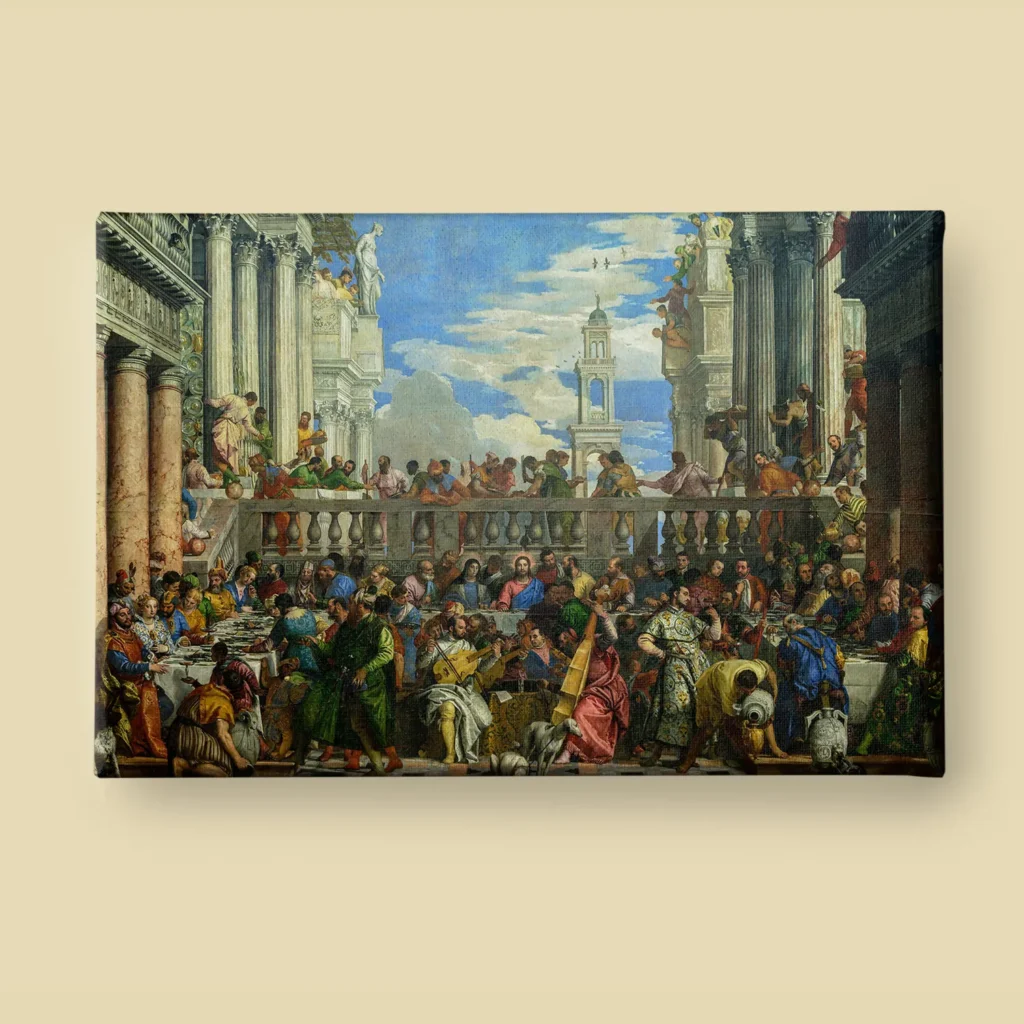
You can buy Wedding at Cana paintings at jesuschrist.pictures, in our shop, where sacred masterworks are offered as high quality canvas prints. Because the scene has been painted by so many great artists, a faithful reproduction lets you bring a work like Veronese’s shining banquet or Murillo’s gentle feast into a home, classroom, or parish hall. Browse our collection of Christian art reproductions on canvas, including other works by masters such as Tintoretto, Duccio, and Murillo, to find a piece for your own walls.