7 Famous Saint Cecilia Paintings, from Raphael to Waterhouse
Saint Cecilia is the patron saint of music, and for five hundred years she has been one of the most beloved subjects in Christian art. A Roman noblewoman martyred in the early Church, she is remembered for a single luminous detail from her legend: on her wedding day, while the instruments played, she sang in her heart to God alone. From that one line grew a whole tradition of painting, in which Cecilia sits at an organ, holds a violin, or listens, rapt, to a music no one else can hear.
This guide gathers seven famous Saint Cecilia paintings, from Raphael’s High Renaissance masterpiece in Bologna to the dreaming Pre-Raphaelite saint of John William Waterhouse. Together they trace how each age imagined the patroness of music, and why painters returned to her again and again. She also appears among the great holy women in our gallery of female saints in art, and you can read her full story on our page devoted to Saint Cecilia, patron saint of music.
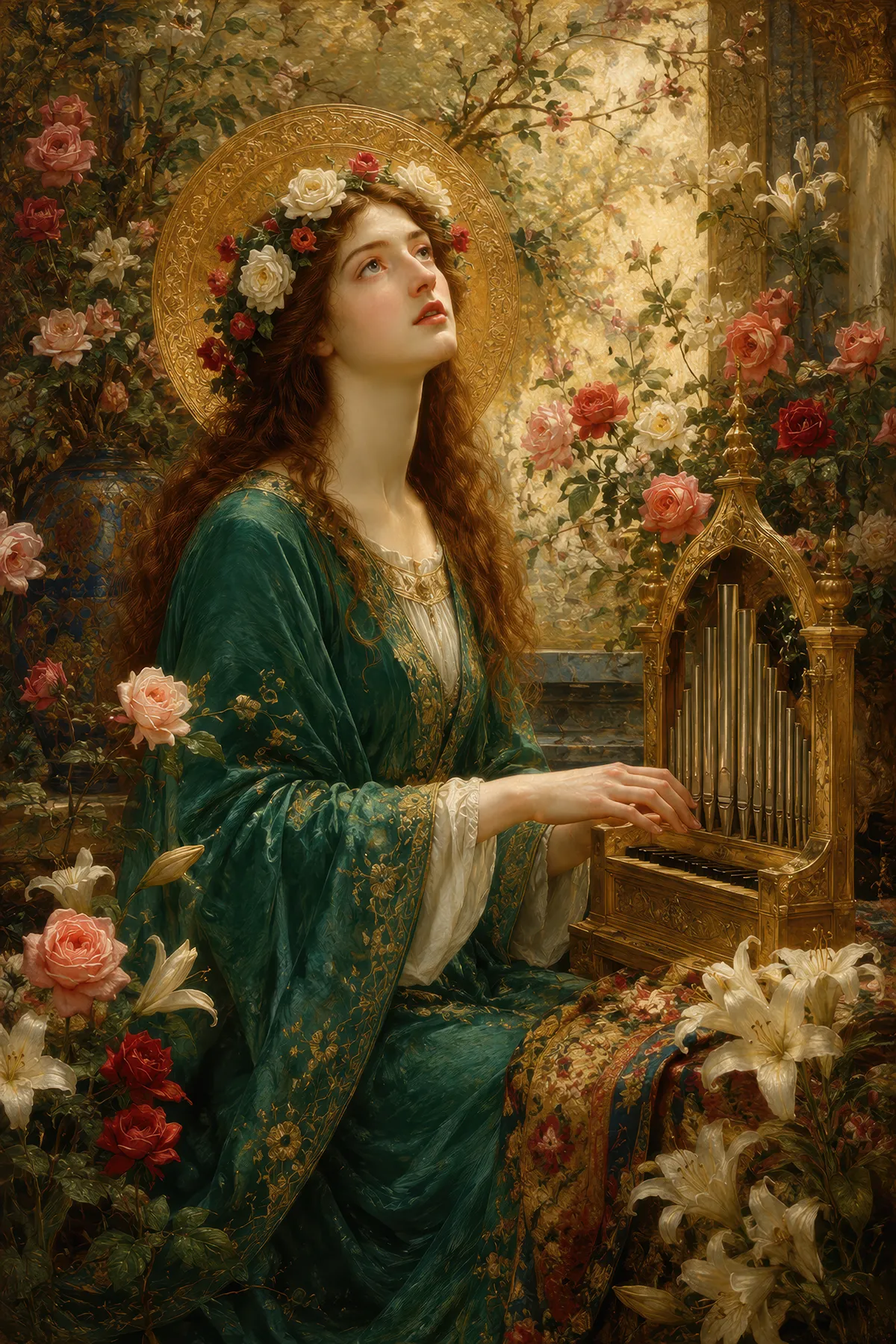
Why Saint Cecilia Is Shown With Music
The instruments that fill her paintings come from a phrase in her sixth-century legend, the Passio, which says that as the musicians played at her marriage, “Cecilia sang in her heart to the Lord alone.” Read closely, the line means she turned away from earthly music toward God, but painters took it more literally, and gave her the organ, the lute, the harp and the violin as her attributes. By the fifteenth century she was firmly the patroness of musicians, singers and Church music, and the small portable organ became her surest sign. Once you know it, she is easy to recognise: the young woman with an instrument, her eyes lifted to a heaven only she can hear.
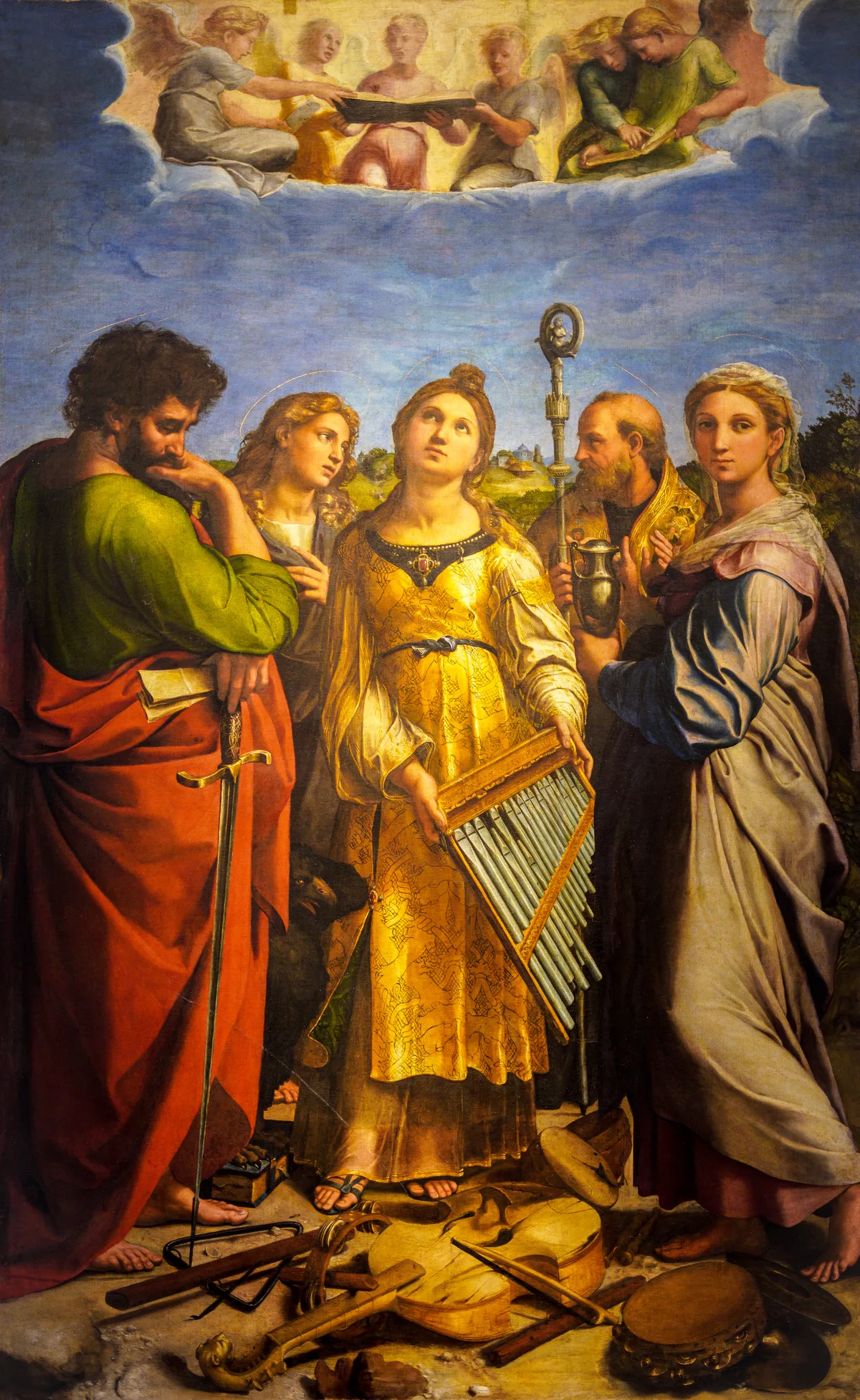
1. The Ecstasy of Saint Cecilia by Raphael
The most famous of them all, painted around 1516 for a chapel in Bologna, is Raphael‘s Ecstasy of Saint Cecilia. Cecilia stands among Saints Paul, John, Augustine and Mary Magdalene, letting a small organ slip from her hands while broken instruments lie scattered at her feet. Above her, a choir of angels sings, and every earthly sound is abandoned for that heavenly one. It is the definitive image of the saint, the moment her whole legend is compressed into a single upward glance. To follow the master of the High Renaissance, read our article on Raphael’s paintings.
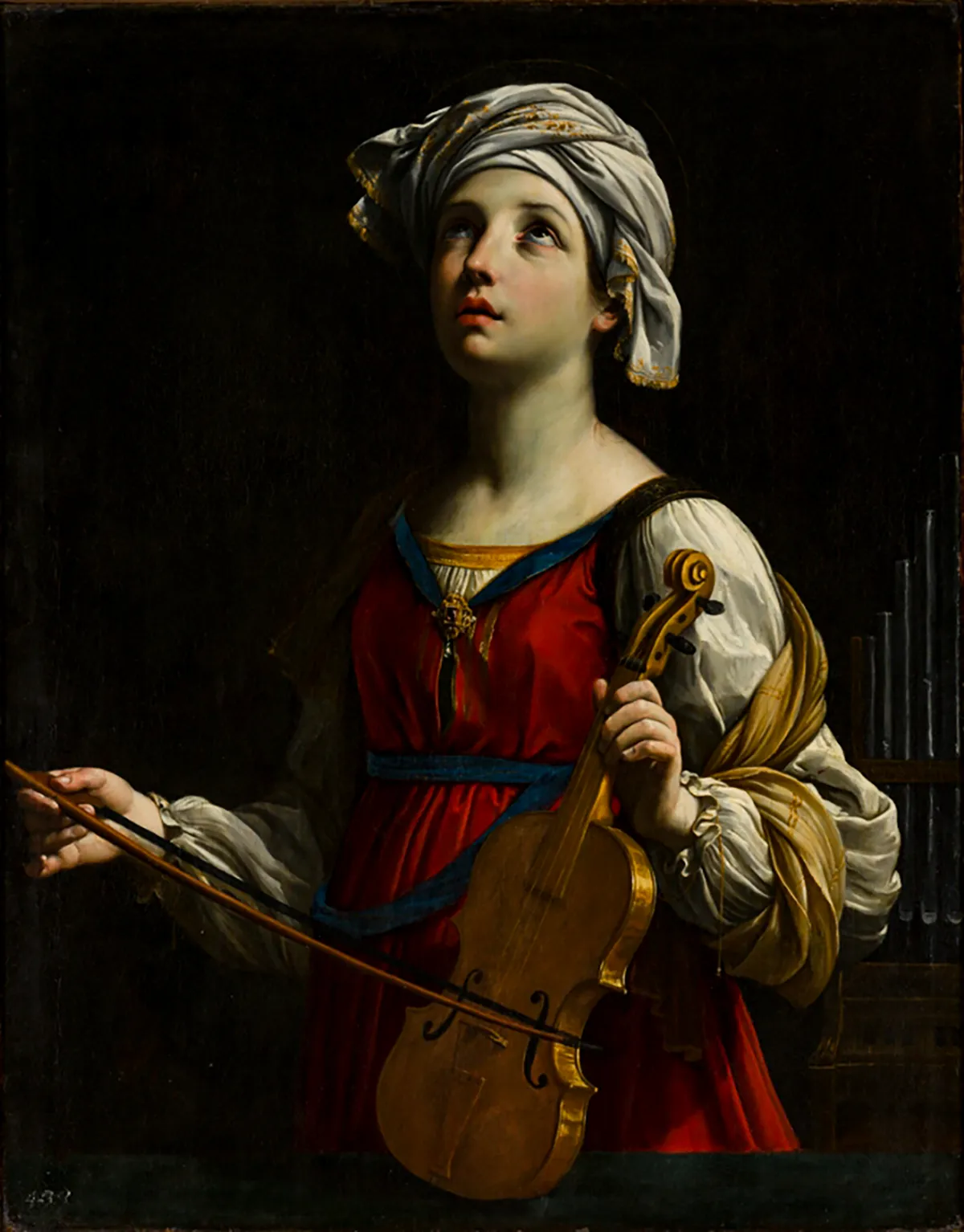
2. Saint Cecilia by Guido Reni
A century after Raphael, Guido Reni gave the saint a quieter, more intimate treatment. His Saint Cecilia of 1606 shows her half-length in a rich red dress and a white turban, a violin resting in one hand and the bow in the other, her eyes raised in the same rapt attention. Reni, who admired Raphael above all painters, keeps the upward gaze but sets it in the warm shadow of the Baroque. The picture, now in the Norton Simon Museum in Pasadena, was copied and engraved so often that it shaped how later ages pictured her.
3. Saint Cecilia by Artemisia Gentileschi
Artemisia Gentileschi, the boldest woman painter of the Baroque, painted Cecilia around 1620 as a musician absorbed in her playing, a lute in her hands and her face turned toward the light. Where the martyrdom is the subject of other pictures, here it is simply music, treated with the seriousness Artemisia brought to every heroine she painted. To discover this fearless artist, read our article on Artemisia Gentileschi’s paintings.

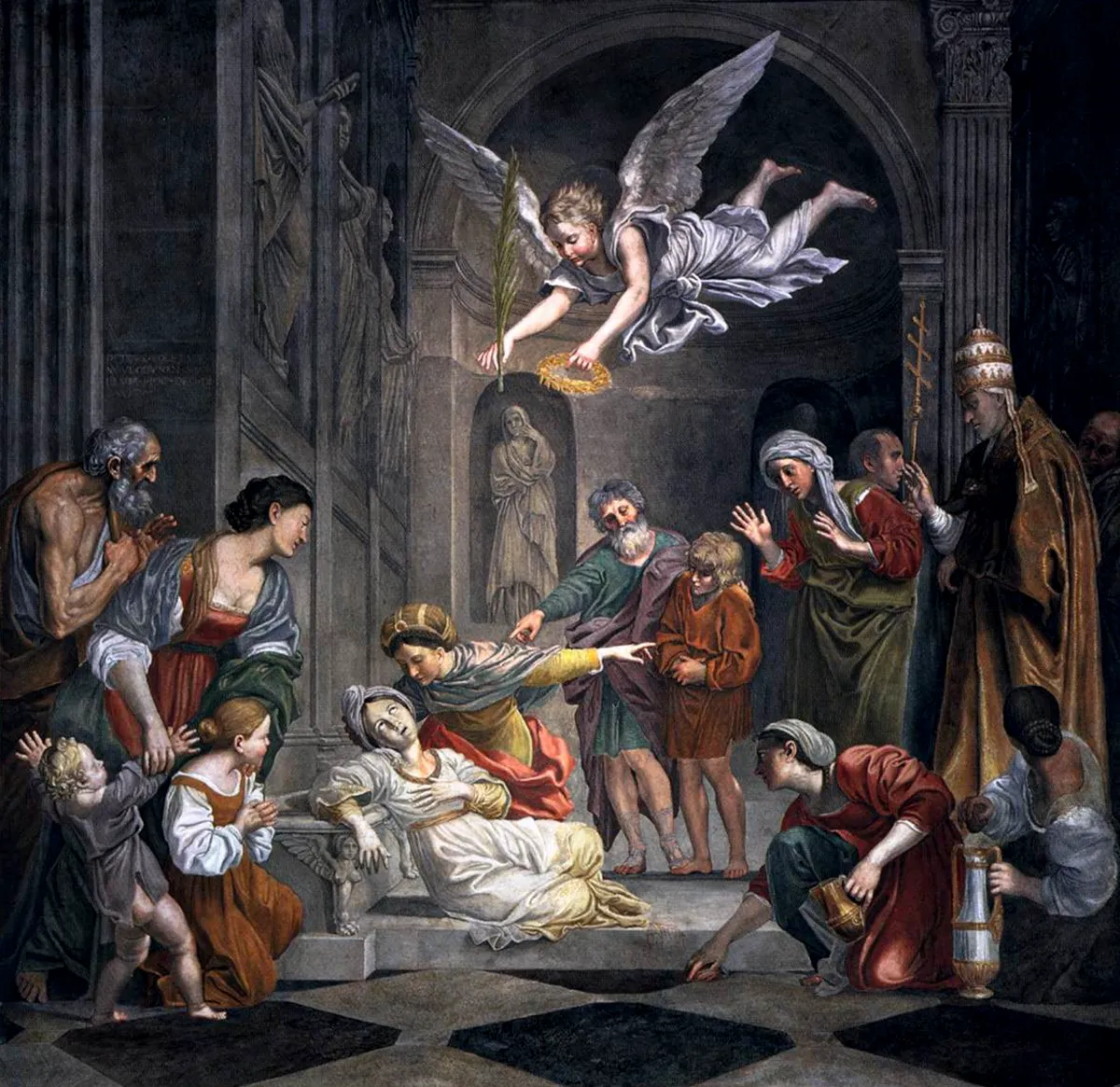
4. The Death of Saint Cecilia by Domenichino
For the drama of her martyrdom, no image is more moving than Domenichino‘s fresco in the Polet Chapel of San Luigi dei Francesi in Rome, painted between 1612 and 1615. According to her legend, Cecilia survived three blows of the sword and lived three days, and Domenichino shows her sinking down among grieving companions as an angel descends with the palm and the crown of the martyr. The whole cycle of frescoes tells her life, and this scene is its climax, grief and glory held together in one composition.
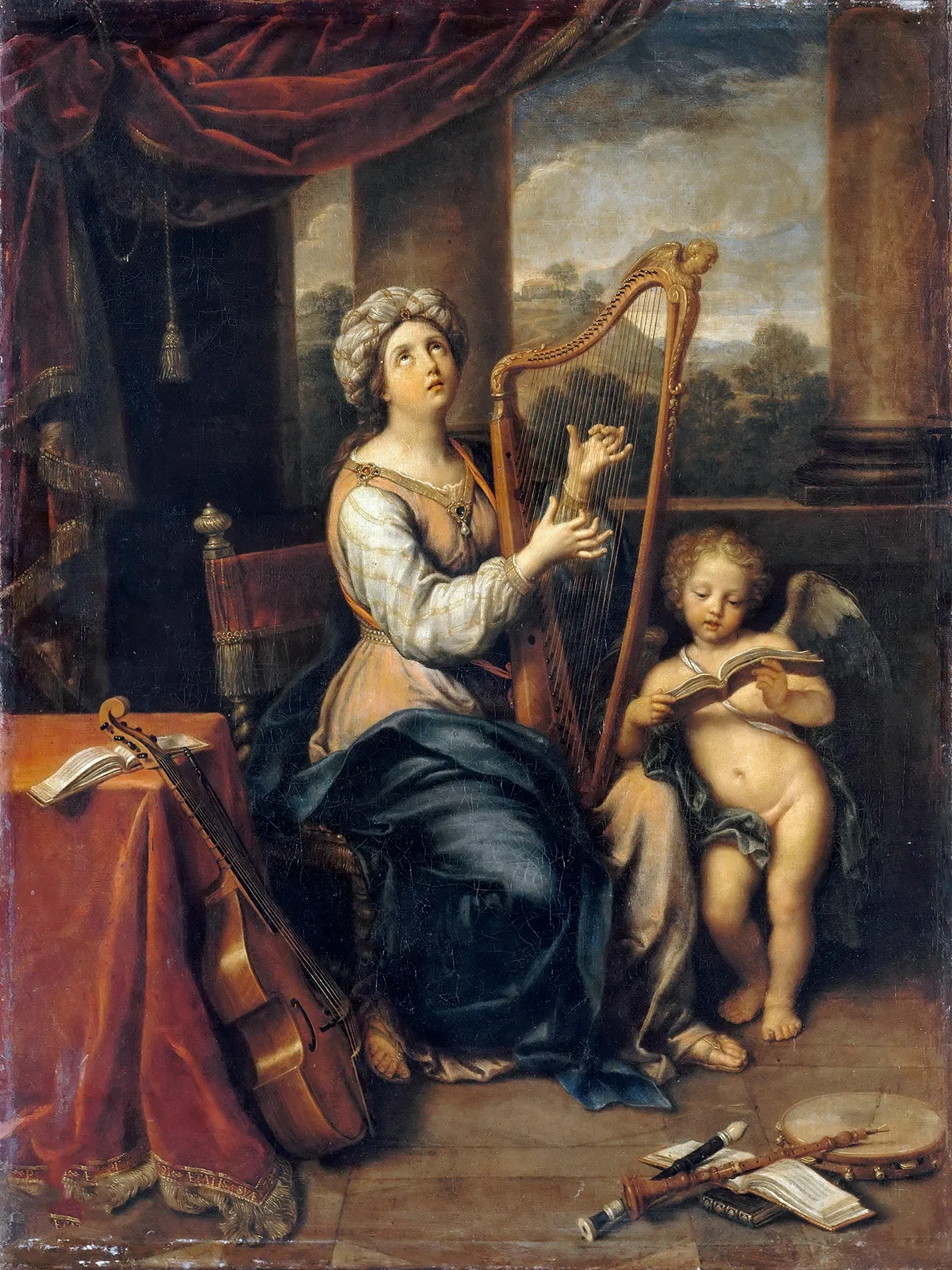
5. Saint Cecilia by Pierre Mignard
The French Baroque painter Pierre Mignard pictured her around 1691 as a court musician, seated at a harp with a small angel holding the score, a viol leaning against the table and instruments scattered on the floor. It is a scene of music-making rather than martyrdom, elegant and tender, and it hangs today in the Musee du Louvre. Mignard turns the saint into an image of art itself, the human musician and the heavenly one playing together.
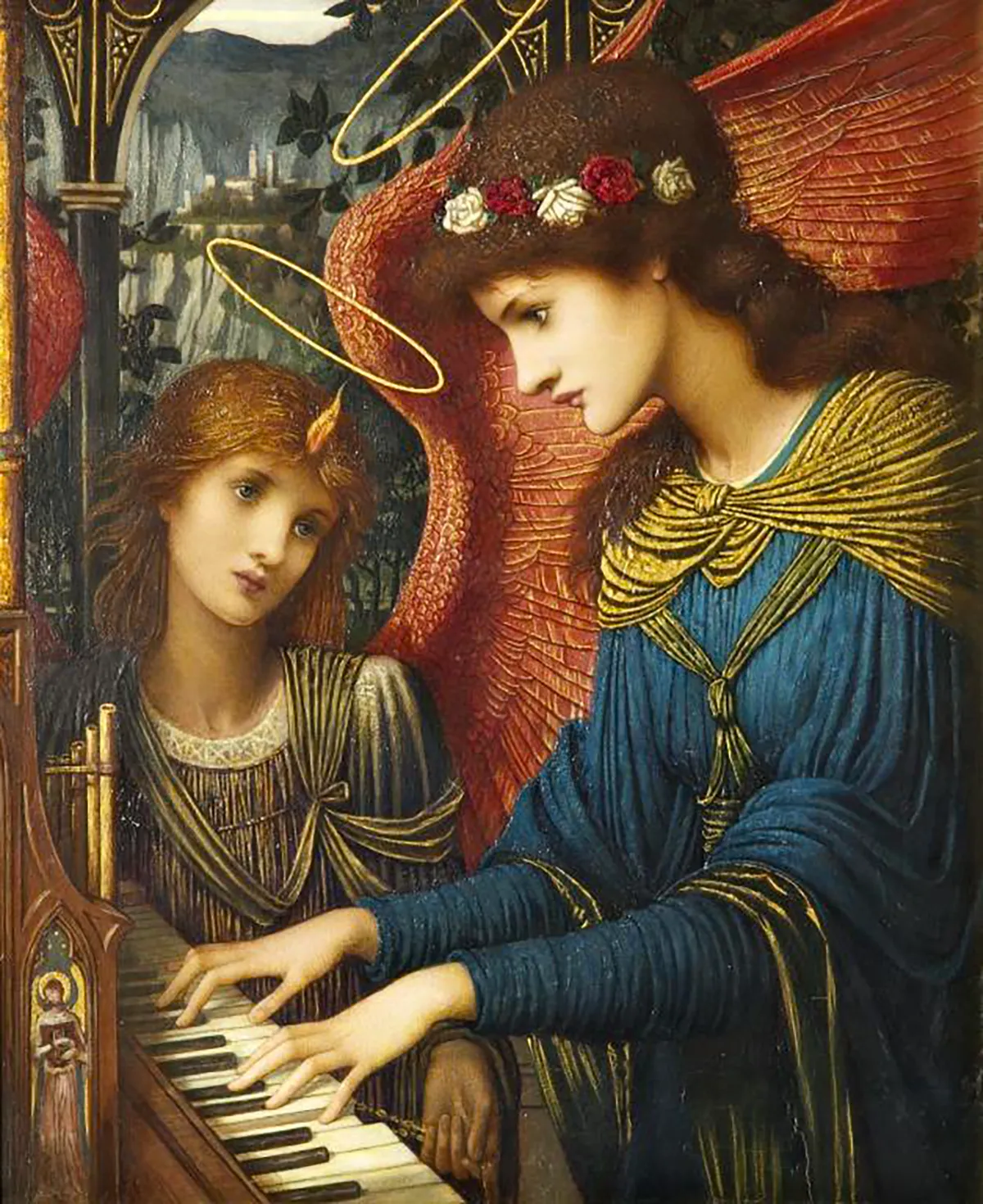
6. Saint Cecilia by John Melhuish Strudwick
With the Victorians, Cecilia returned in jewel-like colour. John Melhuish Strudwick, a follower of Burne-Jones, painted her in 1896 at a small organ, an angel with deep red wings close beside her, every surface worked like enamel. The Pre-Raphaelites loved her precisely because she joined two of their great themes, sacred devotion and the beauty of music, and Strudwick gives the scene the stillness of a stained-glass window come to life.
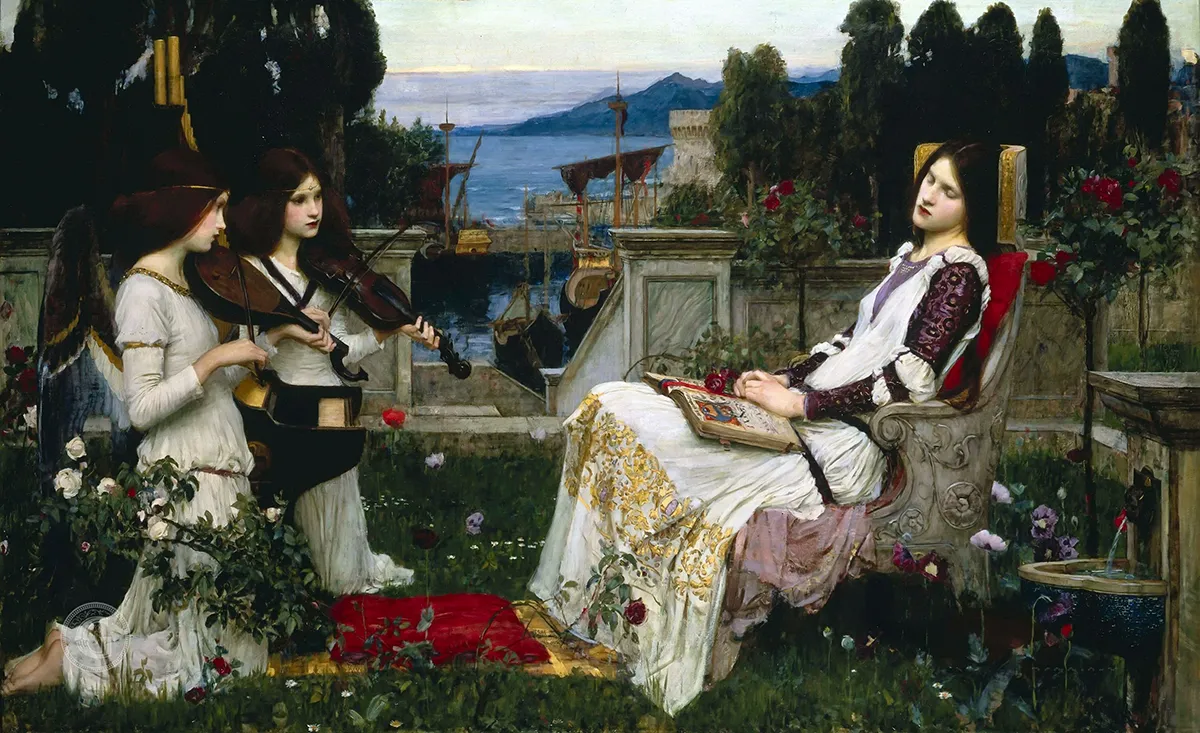
7. Saint Cecilia by John William Waterhouse
The most dreamlike of all is John William Waterhouse‘s Saint Cecilia of 1895. The saint sits asleep in a walled rose garden above a calm sea, an open book of music fallen in her lap, while two angels play violins to her closed eyes. There is no violence and no organ, only rest, roses and the faint music that reaches her in sleep. It is the perfect close to the tradition, the patroness of music shown at last simply listening. She takes her place among the loveliest images in our gallery of female saints in art.
Saint Cecilia Paintings Featured in This Article
| Painting | Artist | Date | Location |
|---|---|---|---|
| The Ecstasy of Saint Cecilia | Raphael | c. 1516-1517 | Pinacoteca Nazionale, Bologna |
| Saint Cecilia | Guido Reni | 1606 | Norton Simon Museum, Pasadena |
| Saint Cecilia | Artemisia Gentileschi | c. 1620 | Galleria Spada, Rome |
| The Death of Saint Cecilia | Domenichino | 1612-1615 | San Luigi dei Francesi, Rome (fresco) |
| Saint Cecilia Singing the Praises of the Lord | Pierre Mignard | c. 1691 | Musee du Louvre, Paris |
| Saint Cecilia | John Melhuish Strudwick | 1896 | Private collection |
| Saint Cecilia | John William Waterhouse | 1895 | Private collection |
Conclusion
Across four centuries the painters agree on one thing: Saint Cecilia is the saint who hears something the rest of us cannot. Raphael sets down the instruments of earth so she can listen to heaven, Reni lifts her eyes over a violin, Waterhouse lets her sleep while angels play. The details change with each age, the organ, the lute, the harp, the roses, but the upward glance stays the same. That is why she has never left the walls of chapels and galleries, and why she remains the patron saint of every musician who has ever tried to make of sound a prayer. For the tradition as a whole, see our overview of famous Christian paintings.
Key Facts About Saint Cecilia in Art
- Saint Cecilia is the patron saint of music, musicians, singers and Church music, and is usually shown with an organ, a violin, a lute or a harp.
- Her attributes come from a line in her legend that says she “sang in her heart to the Lord alone” at her wedding.
- Raphael’s Ecstasy of Saint Cecilia, painted around 1516 and now in Bologna, is the most famous and most copied image of her.
- Domenichino’s fresco cycle in San Luigi dei Francesi in Rome tells the story of her life and death.
- Her feast day is November 22, and she is buried in the church of Santa Cecilia in Trastevere, Rome.
Frequently Asked Questions
Why is Saint Cecilia shown with an organ?
The organ, and the other instruments in her paintings, come from a sentence in her sixth-century legend which says that while the musicians played at her wedding, Cecilia sang in her heart to God alone. Painters took the line as a sign that she belonged to music, and by the Renaissance the small portable organ had become her surest attribute. It marks her as the patroness of musicians and Church music.
Who painted the most famous Saint Cecilia?
The most famous painting of Saint Cecilia is Raphael’s Ecstasy of Saint Cecilia, made around 1516 for a chapel in Bologna and now in the city’s Pinacoteca Nazionale. It shows her among four other saints, letting an organ slip from her hands as broken instruments lie at her feet and a choir of angels sings above. It became the model for how later artists pictured her.
What is the Ecstasy of Saint Cecilia about?
Raphael’s painting shows the moment Cecilia turns from earthly to heavenly music. The instruments at her feet are broken and silent, the organ is slipping from her grasp, and her eyes are raised to a group of singing angels in the clouds. The idea is that all human music is only a faint echo of the music of heaven, which the saint alone can hear.
What is Saint Cecilia the patron saint of?
Saint Cecilia is the patron saint of music, musicians, composers, singers and Church music, and also of poets. Her patronage grew from her legend, in which she heard heavenly music in her heart, and she has been honoured as the protectress of music since the late Middle Ages. Her feast day, November 22, is still marked by concerts and musical celebrations around the world.
Why do so many artists paint Saint Cecilia?
Painters were drawn to Cecilia because her story joins beauty, faith and music in a single figure. She let artists show rich instruments and lovely young women while telling a story of devotion and martyrdom, and the upward, listening glance gave them a way to picture the invisible. From Raphael and Reni to the Pre-Raphaelites, almost every school of European painting produced its own Saint Cecilia.
Can you buy Saint Cecilia paintings as prints or canvas?
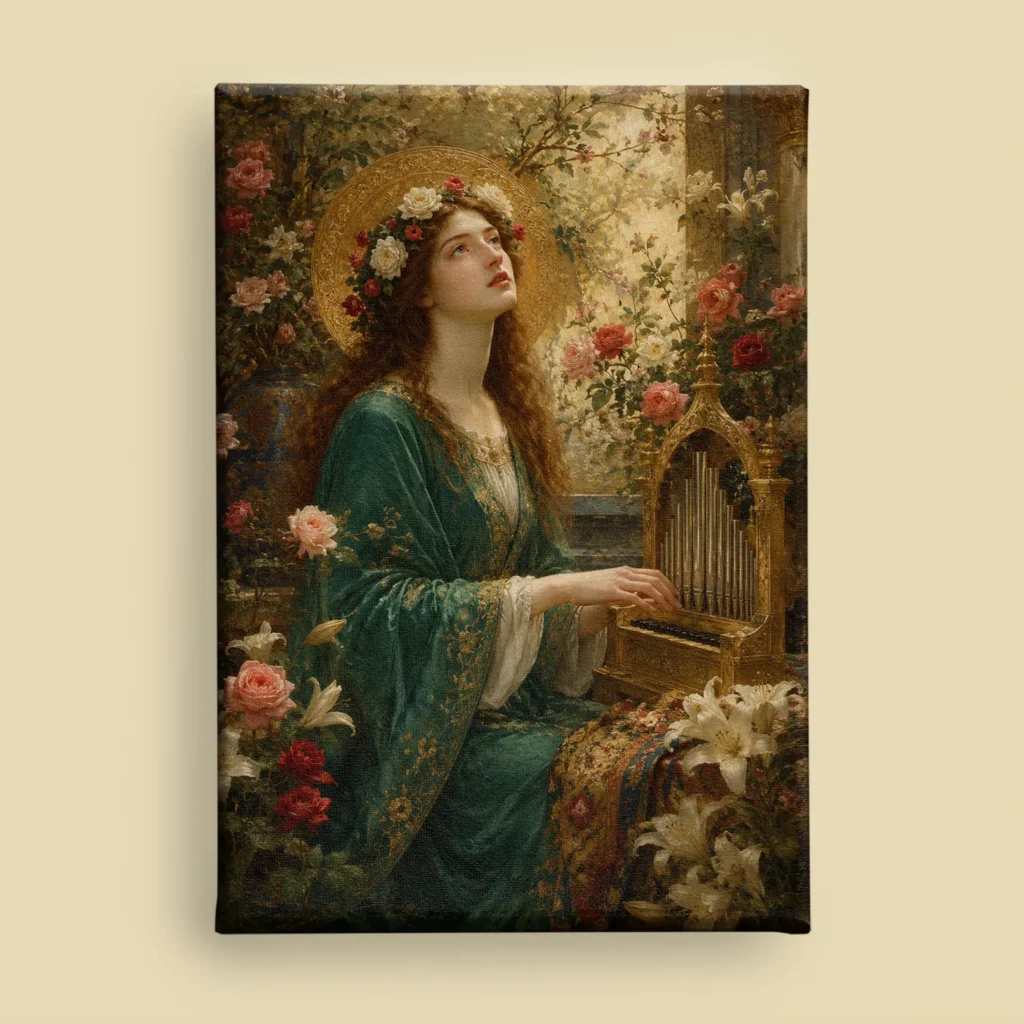
You can buy Saint Cecilia paintings at jesuschrist.pictures, in our shop, where our original Saint Cecilia canvas shows the patron saint of music crowned with roses beside her organ, and the prayer to Saint Cecilia is offered as an illuminated prayer poster. A faithful reproduction is a meaningful gift for a musician, a choir, or a music room, printed to gallery standard and shipped ready to hang.


