Saint Jude Thaddeus: Patron of Hope & Impossible Causes
Saint Jude Thaddeus is the patron saint of hope and of hopeless causes, one of the twelve apostles of Jesus and, tradition says, a kinsman of the Lord himself. When a situation seems impossible, a diagnosis, a debt, a marriage, a lost soul, it is to Saint Jude that millions of Christians turn, confident of the old promise that with God nothing is beyond help. He is, in the loved phrase, the apostle of the impossible.
This article tells who Jude was, untangles his name from that of Judas Iscariot, explains how the forgotten apostle became the patron of desperate cases, reads his symbols in art, and ends with his feast day and his prayer. If you have come mainly to pray, our companion page gathers the traditional prayer and the complete Saint Jude novena.
Who Was Saint Jude Thaddeus?
Jude was one of the twelve apostles chosen by Jesus, named in the Gospels of Luke and in the Acts of the Apostles as “Judas of James” and in Matthew and Mark as Thaddaeus. The early Church identified the two names as one man, and he is often called Jude Thaddeus to distinguish him clearly from Judas Iscariot. Tradition also counts him among the relatives of Jesus, a “brother”, meaning kinsman or cousin, of James the Less, and therefore a member of the holy family’s wider circle.
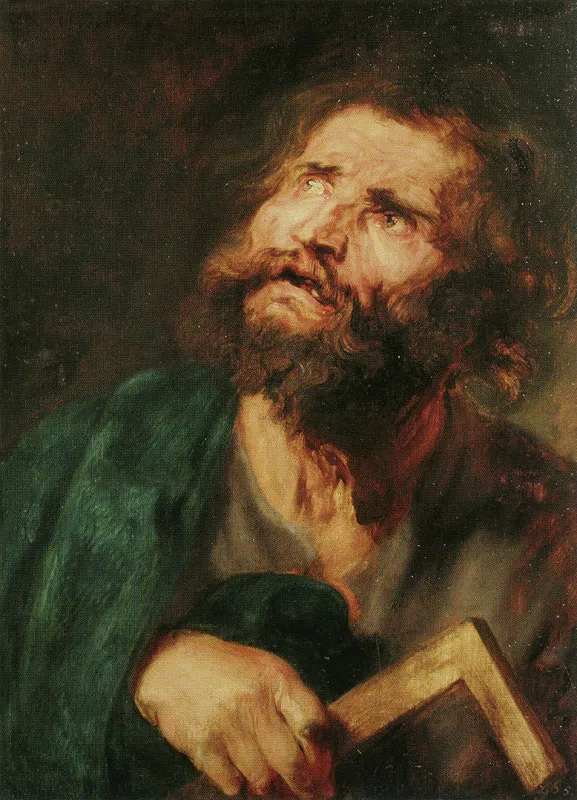
At the Last Supper it is Jude who asks Jesus, “Lord, how is it that you will reveal yourself to us, and not to the world?”, one of the few times his voice is heard in the Gospels. The short New Testament Letter of Jude, which urges the faithful to “contend for the faith” and to build themselves up in prayer, is traditionally ascribed to him, and painters from Anthony van Dyck onward have shown him as an ageing apostle holding that letter, his eyes lifted in prayer.
Jude, Thaddaeus, and the Other Judas
Two of the twelve apostles were named Judas, a common and honourable Jewish name, Judas Iscariot and Judas Thaddaeus. After the betrayal, the name of Iscariot became so hated that the second Judas was almost always called by his surname, Thaddaeus or Jude, so as not to confuse the friend of Jesus with the traitor. The evangelist John is careful to note, when Jude speaks at the Last Supper, that this was “Judas, not Iscariot.”
This shadow over his name is, strangely, the root of his greatness. Because early Christians hesitated to invoke a saint who shared a name with the betrayer, Jude was long neglected, the forgotten apostle whom few thought to ask. And so, devotion holds, he became all the more eager to help those who finally turned to him, especially when no other help remained.
Why Is He the Patron Saint of Hopeless Causes?
That is the traditional explanation for his unusual patronage: the saint whom everyone overlooked became the saint of last resort, the one invoked when every other door has closed. The theme of his own letter reinforced it, for Jude wrote to Christians in a discouraging time and told them to keep the faith and to persevere in prayer against all odds.
The devotion spread widely in the twentieth century, carried by the Claretian missionaries and the National Shrine of Saint Jude in Chicago, and by the countless “thank you Saint Jude” notices that grateful petitioners still place in newspapers. His name is also carried by Saint Jude Children’s Research Hospital, founded in his honour by the entertainer Danny Thomas, who in a hard season of his life had prayed to the patron of the impossible. The devotion is not about denying how bad a situation is, but about refusing to despair within it. Whatever you carry, Jude’s message is the same: with God, no cause is finally lost.
The Apostle of the Impossible and the Image of Edessa
After Pentecost, tradition sends Jude out to preach in Mesopotamia, Persia and Armenia, often in the company of the apostle Simon. One of the oldest stories told of him concerns King Abgar of Edessa, who was gravely ill and sent to Jesus for healing. According to the legend, a cloth bearing the miraculous image of Christ’s face, the Image of Edessa, was brought to the king by Jude, and Abgar was healed and his city converted. It is one of the roots of the Christian tradition of the holy face, which you can explore in our guide to Catholic icons.
Jude and Simon are said to have been martyred together in Persia for refusing to worship the local gods, Jude beaten to death with a club or struck with an axe. His relics were later brought to Rome, and today many rest beneath an altar in Saint Peter’s Basilica.
Symbols of Saint Jude in Art
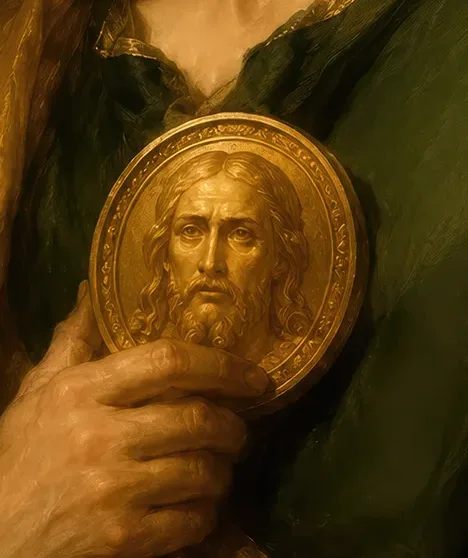
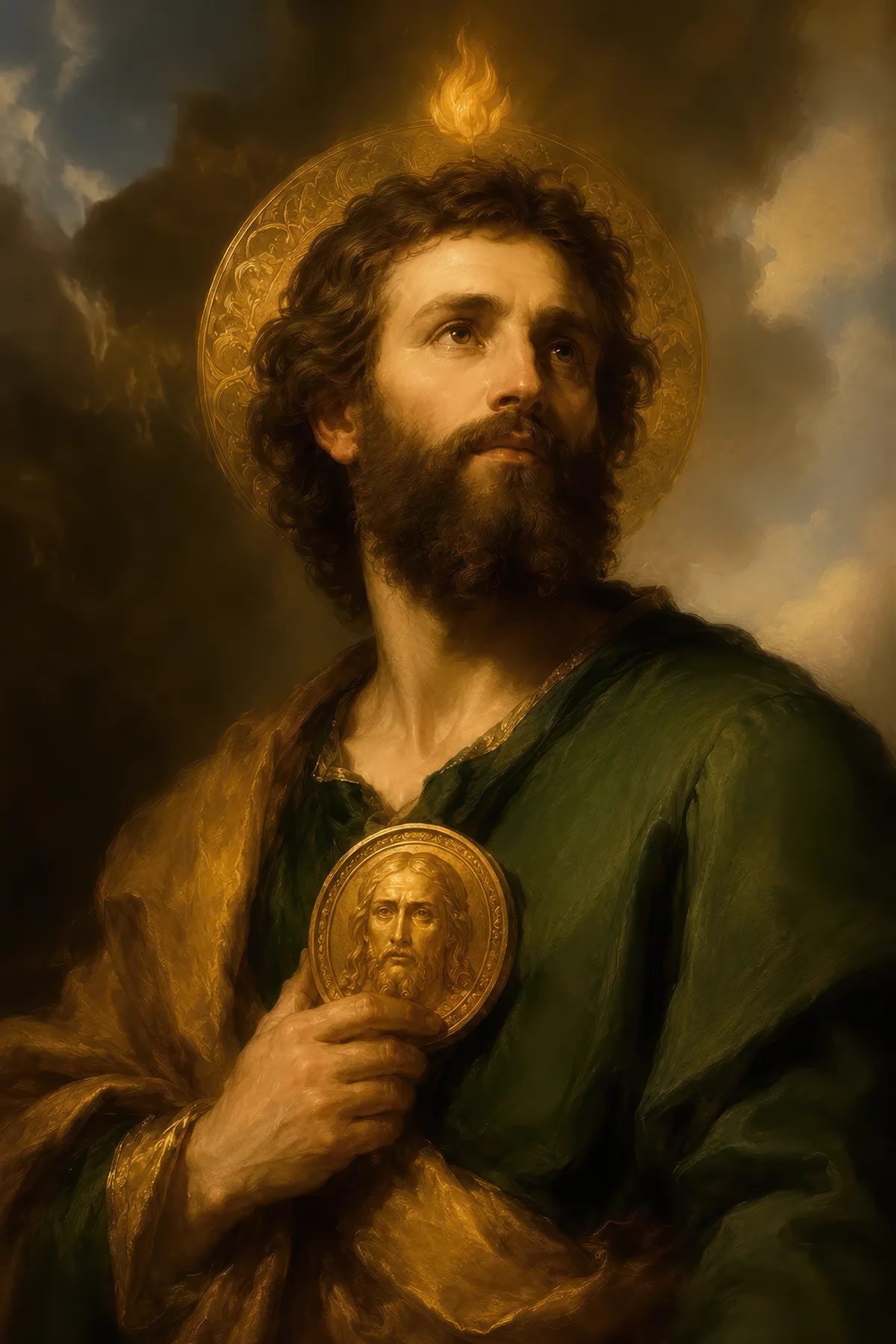
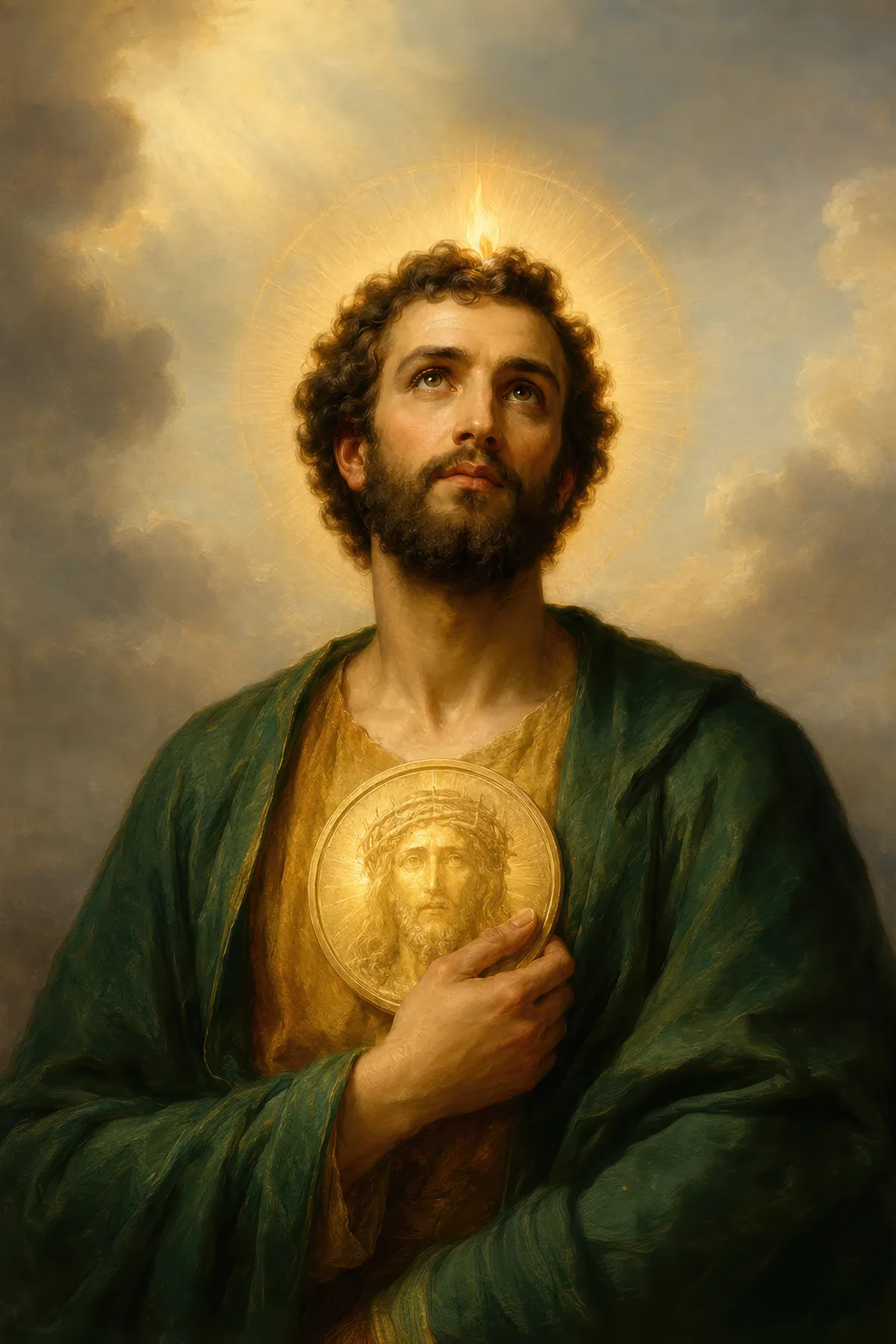
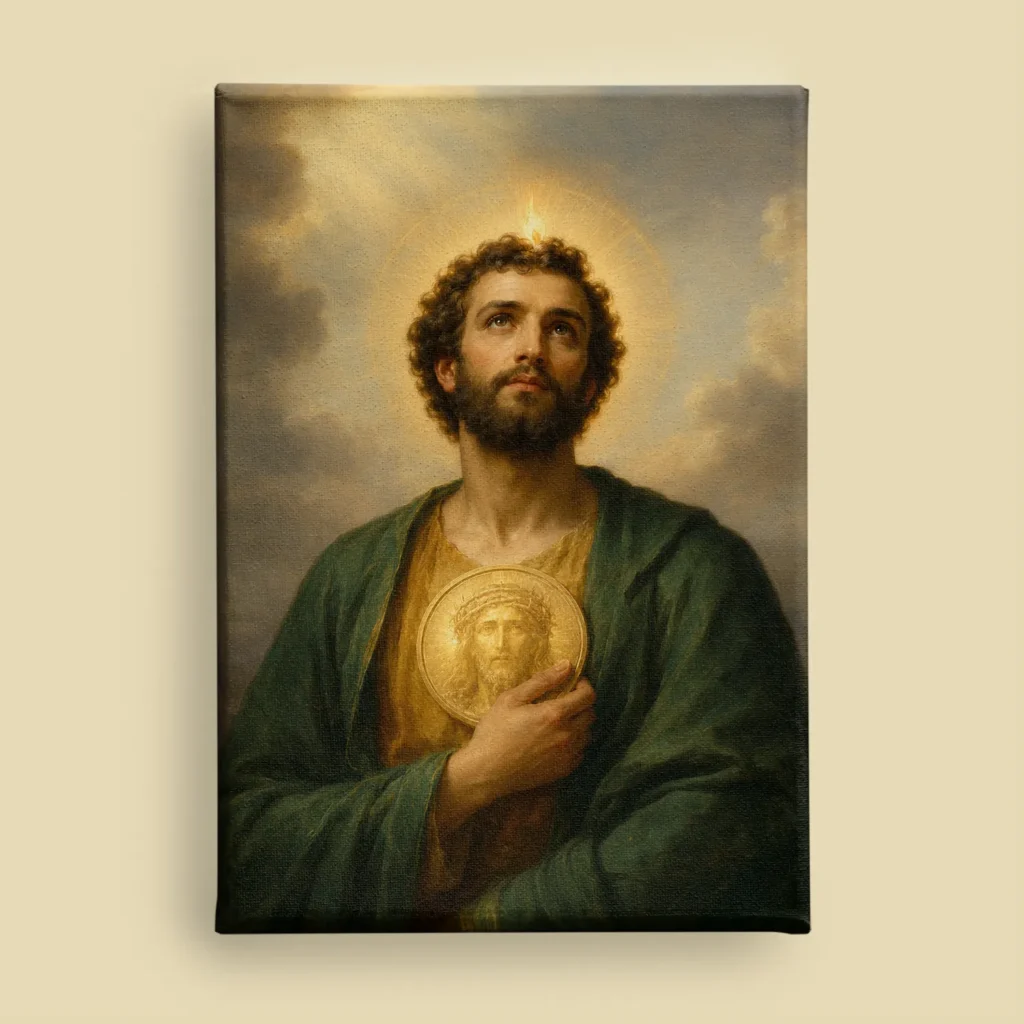
Painters recognise Jude by three attributes, two of them present in the painting that opens this article. The first is the medallion or icon bearing the face of Christ, worn on his breast or held in his hand, which recalls the Image of Edessa he is said to have carried to King Abgar. It is his surest sign, and the one that most distinguishes him from the other apostles. The second is the flame above his head, the tongue of fire of Pentecost, marking him as one of the apostles on whom the Holy Spirit descended. The third, not shown here, is the club or axe, the instrument of his martyrdom, which he often holds the way martyrs hold the sign of their victory. He is sometimes given a boat or a carpenter’s rule as well, and, like all the apostles, a golden halo.
Feast Day: October 28
Saint Jude’s feast is kept on October 28, the same day as Saint Simon, with whom tradition links his mission and his martyrdom. His novena is traditionally prayed in the nine days leading up to the feast, from October 19 to 27, though it may be prayed at any time of need. Shrines dedicated to him, in Chicago, in Baltimore, and around the world, receive a constant stream of petitions and of thanksgivings from those whose impossible causes were, they believe, not so impossible after all.
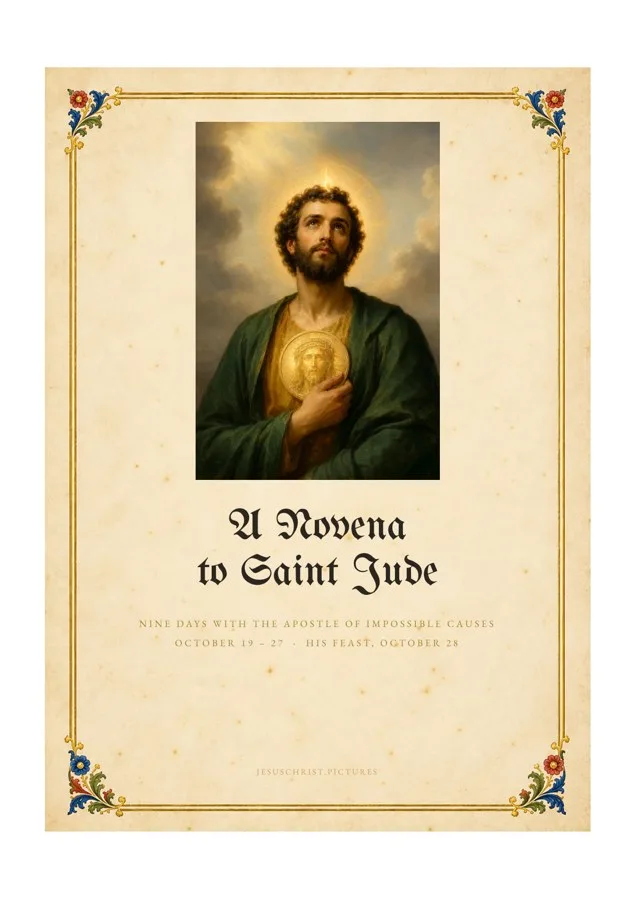
✦ Pray Those Nine Days, October 19 to 27
The novena is ours as a free printable booklet: eleven illuminated pages, a painting and a short reading for each of the nine days, and room to write your own intention. You can also read the whole novena on the page before you print it.
Download for US LetterDownload for A4
PDF, eleven pages, ready to print. Nothing to fill in.
A Prayer to Saint Jude
Here is a short prayer to pray now, in any moment of discouragement.
Saint Jude, apostle of hope and friend of Jesus, walk with me through this day.
When my cause seems lost, remind me that with God nothing is impossible.
Saint Jude Thaddeus, pray for me. Amen.
The Church’s beloved traditional prayer to Saint Jude, patron of hopeless cases, is offered below as a free printable card and poster. For its full text, together with the nine-day novena and a prayer for financial help, see our page of the Saint Jude novena and prayers.
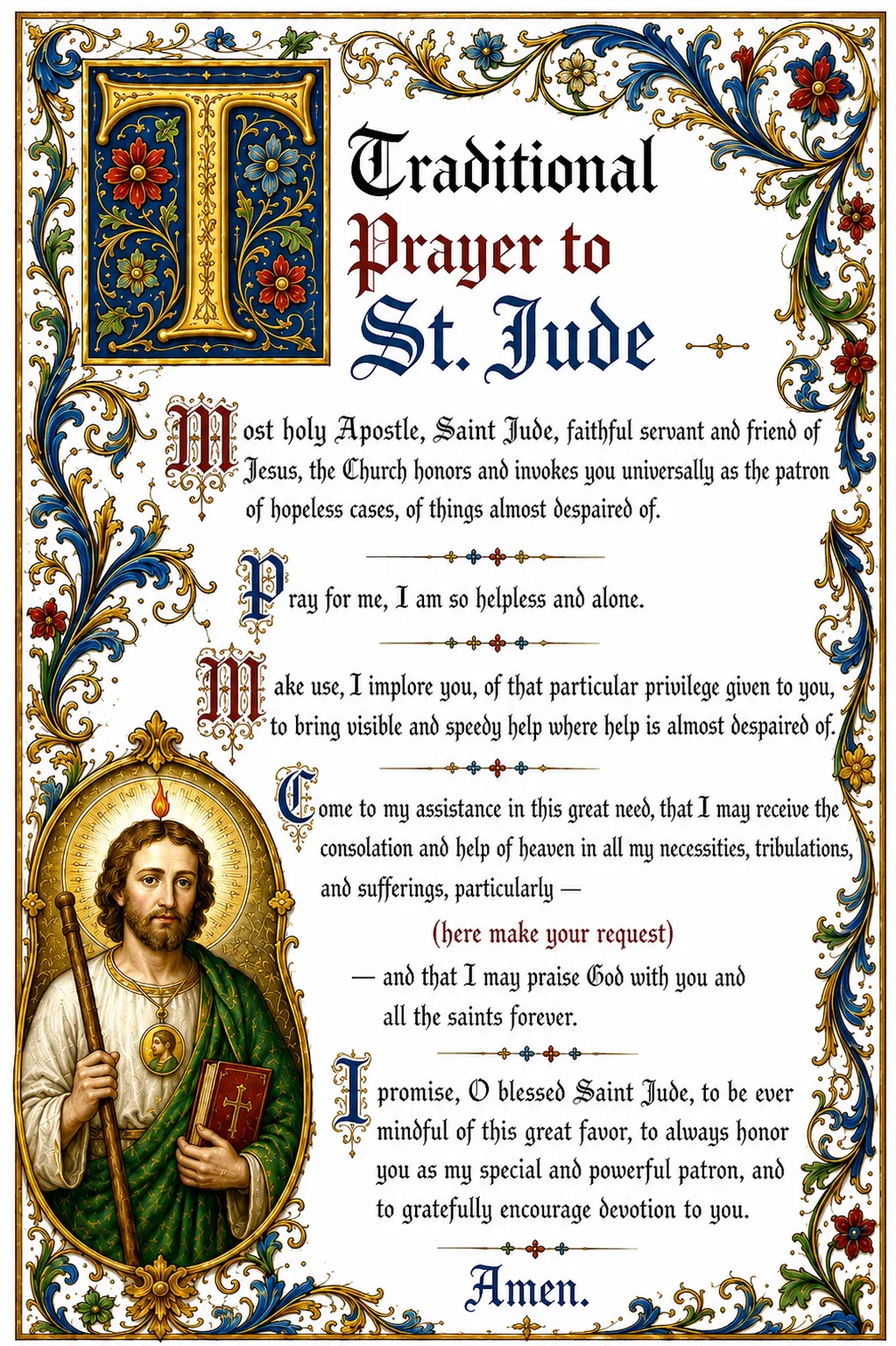
Free printable prayer card:
These files are free for personal use, for your parish, or for a friend in need of hope.
✦ Free Christian & Catholic Printables
Love this one? Find it, and our complete collection of illuminated prayer cards and Scripture printables, ready to print, free, in one place.
Browse all free printables →
Conclusion
Saint Jude began as the apostle no one dared to name, the shadow of a hated namesake falling across his memory. He ends as the friend the desperate reach for first, the patron of every cause the world has written off. Where Jude answers despair, St Dymphna answers the mind that will not rest. She is the saint invoked for anxiety, depression and mental illness, and the two are often prayed together. That reversal is the whole of his message. The saint who was overlooked understands what it is to be at the end of your hope, and he answers with the stubborn confidence of his own letter: keep the faith, keep praying, and trust the God for whom nothing is impossible.
Five Facts About Saint Jude Thaddeus
- Saint Jude, also called Thaddaeus, was one of the twelve apostles and, by tradition, a kinsman of Jesus and the author of the New Testament Letter of Jude.
- He is the patron saint of hope and of hopeless, desperate and impossible causes, invoked when every other help has failed.
- His patronage is traditionally traced to the fact that early Christians avoided his name because it resembled that of Judas Iscariot, leaving him the “forgotten” apostle.
- His symbols in art are the medallion with the face of Christ, the flame of Pentecost, and the club or axe of his martyrdom.
- His feast day is October 28, shared with Saint Simon, and his novena is traditionally prayed from October 19 to 27.
Frequently Asked Questions
What is Saint Jude Thaddeus the patron saint of?
Saint Jude Thaddeus is the patron saint of hope and of hopeless, desperate and impossible causes. The faithful invoke him when a situation seems beyond remedy, whether illness, financial hardship, a broken relationship or a lost soul. He is also honoured as one of the twelve apostles and a kinsman of Jesus, and as the author of the short Letter of Jude in the New Testament.
Are Saint Jude and Thaddeus the same person?
Yes. In the lists of the apostles, Luke and the Acts of the Apostles name “Judas of James”, while Matthew and Mark call the same apostle Thaddaeus. The early Church understood these as two names for one man, which is why he is usually called Jude Thaddeus. The double name also helps to distinguish him clearly from Judas Iscariot, who betrayed Jesus.
Why is Saint Jude called the saint of the impossible?
Tradition explains it by his name. Because Jude shared a name with Judas Iscariot, early Christians were reluctant to pray to him, and he became the neglected, “forgotten” apostle. In time this was reversed: the saint no one invoked was thought to be all the more ready to help those who at last turned to him, especially in desperate cases, and so he became the patron of the impossible.
What do you pray to Saint Jude Thaddeus for?
People pray to Saint Jude for hope and help in situations that seem hopeless: serious illness, financial crisis, family and marriage troubles, addiction, employment, and the conversion of loved ones. Many make a novena, nine days of prayer, for a particular intention, and promise to make his favours known in thanksgiving, a custom that is part of the devotion to him.
How do you pray to Saint Jude for money or financial help?
You pray to Saint Jude for financial help as you would for any grave need: name your situation honestly before God and ask the apostle to intercede, that honest work and daily bread may not be lacking. A prayer to Saint Jude for financial help, and his nine-day novena, are on our Saint Jude novena page. Prayer is an act of trust in God’s providence, not a substitute for prudent action and honest effort.
When is Saint Jude’s feast day?
Saint Jude’s feast day is October 28, which he shares with Saint Simon the apostle. His novena is traditionally prayed in the nine days before the feast, from October 19 to 27, and shrines dedicated to him hold special services in that season, though the novena may be prayed at any time of need.
Where can I buy Saint Jude wall art?
You can buy Saint Jude wall art at jesuschrist.pictures: our original Saint Jude canvas shows the apostle with the flame of Pentecost and the medallion of Christ’s face, and the traditional prayer to Saint Jude is available as an illuminated prayer poster. Both are printed to gallery standard and ship ready to hang, and the printable prayer card remains free.