St. Dominic and the Birth of the Order of Preachers
In an age of heresy and spiritual crisis, St. Dominic de Guzmán (1170–1221) did the unthinkable: he sent monks into the streets. Rejecting the medieval cloister’s isolation, his Order of Preachers (founded 1216) became history’s first mobile army of scholar-missionaries—equally at home in university halls, royal courts, and dusty market squares.
This is the story of how a Spanish priest’s radical vision:
- Democratized preaching, making theology accessible to peasants and kings alike
- Invented modern academic methods, from the thesis defense to the research library
- Globalized Christianity through debates with Muslims, Jews, and Mongol khans
- Gave birth to the Rosary, art masterpieces, and even early human rights movements
More than 800 years later, Dominicans remain at the forefront of science, social justice, and interfaith dialogue. Their founder’s genius lay in realizing that truth needs both deep roots and wide branches—a lesson as vital today as in the Age of Cathedrals.

The Radical Preacher Who Changed Christianity
The World That Shaped Dominic
The late 12th century was a time of profound spiritual ferment. While the Crusades raged in the Holy Land, Europe faced its own religious crisis. The Albigensian heresy (also called Catharism) had taken root in southern France, rejecting Church sacraments and the material world as evil. It was into this turmoil that Dominic de Guzmán was born in 1170 in Caleruega, a small village in Castile.
As the son of minor nobility, Dominic received an exceptional education at Palencia’s emerging university. Contemporary accounts describe him as:
- A voracious student who sold his precious parchment books to feed the poor during a famine
- A natural mediator who resolved conflicts through reason rather than force
- A night owl who would pray in the cathedral until dawn, earning whispers that “he spoke with God”
The Turning Point: Mission to Languedoc
In 1203, Dominic accompanied his bishop on a diplomatic mission to Denmark. Their route took them through Languedoc, the heartland of Catharism. Shocked by the heresy’s spread, Dominic made a pivotal decision to stay and evangelize—but with revolutionary methods:
1. The Poverty Experiment
While Cathar “perfects” lived austerely, Catholic clergy often appeared wealthy and disconnected. Dominic and his team adopted radical poverty:
- Walked barefoot between villages
- Slept in haylofts or under church porches
- Carried no money, depending on local hospitality
2. The Great Debates
Dominic organized the first recorded series of public theological debates at:
- Montréal (1206) – 15 day marathon debate
- Pamiers (1207) – Before a panel of judges
- Fanjeaux (1208) – Legend says a trial by fire proved Catholic texts unharmed
3. The First Dominican Convent
At Prouille in 1206, Dominic established a refuge for women converted from Catharism—the seed of Dominican monastic life.
Foundation of the Order (1215-1216)
The Fourth Lateran Council (1215) initially banned new religious orders. But Dominic’s persistence and Pope Honorius III’s recognition of his success led to official approval on December 22, 1216. The Ordo Praedicatorum (Order of Preachers) was born with three radical departures from tradition:
| Traditional Monasticism | Dominican Innovation |
|---|---|
| Stability (staying in one monastery) | Mobility (preachers sent where needed) |
| Manual labor as primary work | Study as sacred work |
| Latin liturgy for spiritual edification | Vernacular preaching for public understanding |
The First Generation (1217-1221)
Dominic’s famous dispersal of his friars in 1217 demonstrated his visionary trust:
- Paris: Sent Matthew of France to establish the order at Europe’s premier university
- Bologna: Dispatched Reginald of Orléans to the law school hub
- Rome: Personally led the mission to the papal court
- Spain: Returned to his homeland with Suero Gómez
By Dominic’s death in 1221, the order had:
- 60 priories across 8 countries
- Established the first systematic theology curriculum
- Developed the “collation” method (evening discussions of Scripture)
Why Dominic’s Approach Worked
Modern scholars identify key factors in his success:
- Psychological Insight
His debates appealed to both reason and emotion—unlike the purely academic approaches of his contemporaries. - Cultural Adaptation
He encouraged friars to learn local languages and customs before preaching. - Female Empowerment
The early Dominican nuns (like Diana d’Andalò) enjoyed unprecedented intellectual freedom. - Media Savvy
Used memorable visual aids like the Nine Ways of Prayer (still practiced today).
The Dominican Intellectual Revolution
The Scholar-Preachers Reshape Medieval Thought
By 1230—just nine years after Dominic’s death—his order had become Europe’s most dynamic intellectual force. The Dominicans didn’t just preach; they reinvented how Christianity engaged with knowledge, creating a model that would shape universities for centuries.

1. The First University Powerhouse
Dominicans dominated medieval academia through:
The Parisian Triumph (1229-1257)
- St. Albert the Great (Dominican) taught at Paris while compiling the first complete encyclopedia of natural science
- Thomas Aquinas joined at 19, revolutionizing theology by blending Aristotle with Christian thought
- Faculty Takeover: By 1250, Dominicans held 1/3 of Paris’ theology chairs
The Oxford Connection
- Robert Bacon (Dominican) established Oxford’s first systematic theology program
- Friars developed the “disputed question” format—the ancestor of modern academic defenses
European Study Network
Dominican studia generalia (advanced schools) formed an unprecedented intellectual network:
| Location | Specialty | Notable Figure |
|---|---|---|
| Paris | Theology & Philosophy | Thomas Aquinas |
| Bologna | Canon Law | St. Raymond of Peñafort |
| Cologne | Natural Science | Albertus Magnus |
| Oxford | Biblical Studies | Robert Kilwardby |
2. The Tools of Truth: Dominican Innovations
The Summa Method
Aquinas’ Summa Theologica wasn’t just a book—it was a new way to organize knowledge:
- Objections stated fairly
- Systematic responses
- Distinctions between doctrines
The Art of Memory
Dominic had trained in this ancient technique. His friars perfected it, creating:
- “Memory palaces” to recall Scripture
- Visual meditation aids (like the Rosary’s mysteries)
- Mnemonic systems for preaching without notes
The Library Revolution
Each priory maintained a scriptorium. The Paris house boasted:
- 1,200 volumes by 1250 (more than most royal libraries)
- Arabic scientific texts in translation
- The first systematic subject cataloging
3. Defenders of the Faith
Dominicans became the Church’s premier intellectual guardians:
Inquisition Paradox
Though later controversial, the early Dominican inquisitors:
- Insisted on fair trials with written records
- Forbade torture until 1252 (unlike secular courts)
- Bernard Gui’s Manual for Inquisitors stressed evidence over confession
Interfaith Pioneers
- Ramon Martí’s Pugio Fidei (Dagger of Faith) quoted Talmud to debate rabbis
- Riccoldo da Montecroce lived among Muslims in Baghdad, writing the first Christian Arabic grammar
The Science Preachers
Dominicans made science part of evangelization:
- Dietrich von Freiberg correctly explained rainbows 300 years before Newton
- Jordanus de Nemore wrote Europe’s first advanced mathematics textbooks
4. Global Classroom: Missions as Education
By 1300, Dominican schools operated from:
- Armenia (where they created the first Armenian-Latin dictionary)
- Persia (translating Aristotle into Persian)
- China (John of Montecorvino established Beijing’s first Latin school)
Their pedagogical principles endure today in:
- The graduate seminar model
- The thesis defense format
- The concept of academic freedom
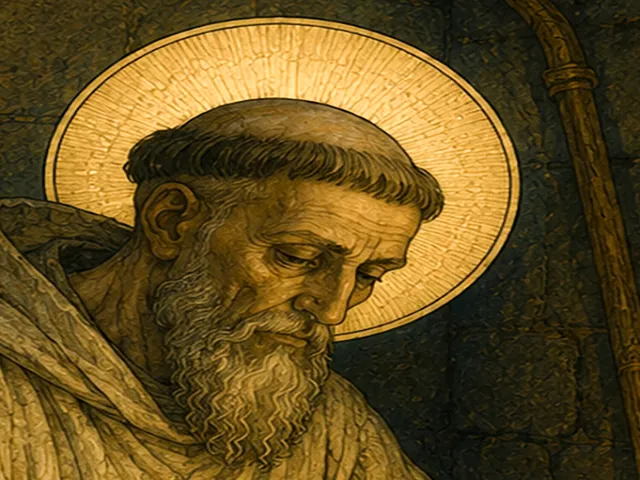
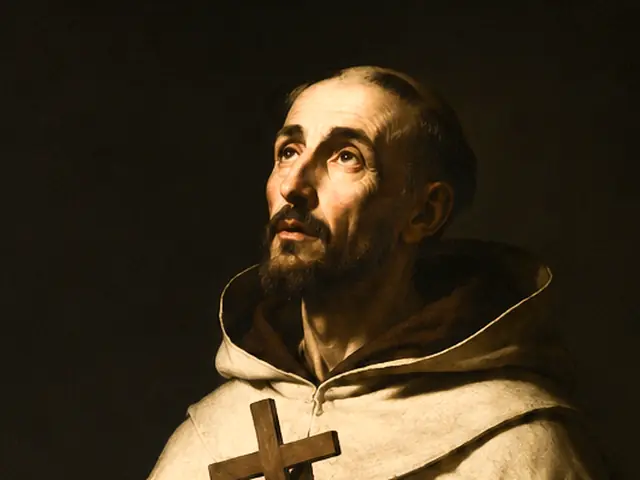
St. Dominic Paintings Featured in This Article
| Painting | Artist | Date | Size | Location |
|---|---|---|---|---|
| St. Dominic in Prayer | Fra Angelico | c. 1435 | 30 × 22 cm | Metropolitan Museum of Art, New York |
| St. Dominic and the Albigensians | Pedro Berruguete | c. 1493-1499 | 127 × 84 cm | Museo del Prado, Madrid |
Q&A: Unpacking St. Dominic’s Legacy
Why was Dominic’s approach to heresy so revolutionary?
While others used force against the Albigensians, Dominic deployed dialogue, poverty, and public debates. His friars lived poorer than the heretics’ own ascetics, proving Catholic authenticity. The 1207 Montréal debate lasted 15 days before hundreds of converts switched sides.
How did Dominicans change university education?
They pioneered:
- Textual criticism: Comparing manuscript variations to restore original meanings
- Disputed questions: The ancestor of modern thesis defenses
- Interdisciplinary study: Aquinas blended theology with Aristotle’s physics and metaphysics
What’s the connection between Dominicans and the Rosary?
Though the prayer beads predate Dominic, he systematized their meditative use during Albigensian missions. The 15 mysteries (Joyful, Sorrowful, Glorious) were codified by Dominican Alain de Roche in the 1460s.
Did Dominicans really lead the Inquisition?
Initially, yes—but early Dominican inquisitors like Bernard Gui required evidence over confessions, banned torture until 1252, and kept meticulous records. Their methods were progressive for the era, though later abuses distorted their legacy.
How did a medieval order produce groundbreaking scientists?
Dominican natural philosophers like Albertus Magnus and Theodoric of Freiberg:
- Studied optics, rainbows, and plant biology
- Insisted “God’s two books” (Scripture and Nature) couldn’t contradict
- Their empirical methods influenced Galileo
What’s the most surprising Dominican mission field?
14th-century China: Friars like John of Montecorvino:
- Translated Psalms into Mongolian
- Built Beijing’s first Latin-school cathedral
- Wrote the West’s first accurate accounts of Confucianism
Do Dominicans still matter today?
Absolutely. Modern Dominicans:
- Run the Vatican Observatory (advancing astrophysics)
- Lead social justice movements (e.g., Gustavo Gutiérrez’s liberation theology)
- Maintain global interfaith dialogues, especially with Islam
Where can I buy paintings of St. Dominic on canvas?
The shop at jesuschrist.pictures offers museum-quality canvas reproductions of the great Christian paintings, and the collection keeps growing; it is the best place to look for paintings of St. Dominic on canvas.