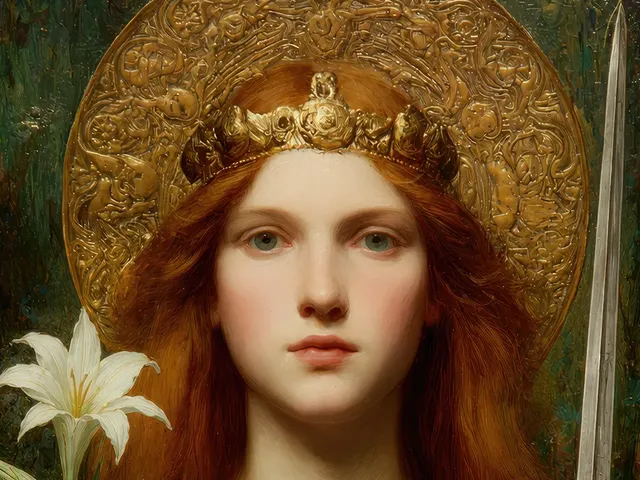
The Tearful Religious Paintings of Luis de Morales
Luis de Morales is the most poignant religious painter of the Spanish sixteenth century. Known to his contemporaries as El Divino, the Divine, for the intense devotional power of his paintings, he gave the early Counter-Reformation Spanish Church its most concentrated visual language of suffering, tears, and inward prayer. The Luis de Morales paintings that survive today, mostly small devotional panels for private chapels and Spanish parish churches, have a hushed psychological intensity that has no parallel in his time.
This article gathers ten of his finest religious works, the panels that fill the Museo del Prado with his unmistakable Spanish Mannerist devotion.

The Divine Painter of Badajoz
Luis de Morales was born around 1510 in Badajoz, a small Spanish city on the Portuguese border, into a family of modest background. His training is undocumented but he probably worked in Seville with Pedro de Campaña or in Évora across the Portuguese frontier, where the Flemish manner had already taken root. By 1539 he was an established master back in Badajoz, where he spent the rest of his life, with occasional commissions for the Spanish royal collection at El Escorial.
His mature style fuses the linear refinement of the Northern Renaissance with the elongated grace of Italian Mannerism, especially the sweet Madonnas of Sebastiano del Piombo and the Roman late Cinquecento. The result is a deeply concentrated devotional manner, with figures lit by a hushed silvery light against dark grounds, faces shown in three-quarter view with tears visible on their cheeks, and a deep psychological focus that the Counter-Reformation Catholic Church championed as the proper visual language of pious meditation.
The Virgin Dolorosa
The Virgin of Sorrows in three-quarter view, her hands crossed against her breast, a sword of grief piercing her heart in the medieval iconography of the seven sorrows. Morales paints her with the silvery flesh tones of his mature manner, her tears visible on her cheeks, her eyes lowered in patient meditation. The image is one of his most reproduced devotional types and was widely copied in his workshop and by his followers across the Iberian Peninsula.

The painting is at the Museo del Prado in Madrid.
Ecce Homo
Christ stands bound after the scourging, the crown of thorns on his head, the reed in his hands, his eyes lowered. Morales paints the body with the same psychological intensity as his Virgin Dolorosa, with the silvery flesh tones lit against a deep dark ground. The picture is one of the most concentrated images of Christian suffering in the entire Spanish sixteenth century.

The painting is at the Museu Nacional d’Art de Catalunya in Barcelona.
Christ Carrying the Cross
One of Morales’s most reproduced images, this small devotional panel shows Christ bent under the weight of the cross on the road to Calvary. The viewer is placed close to the saviour’s face, which is turned in three-quarter view, his eyes meeting the gaze of the worshipper. The composition is reduced to the essential meditation on the Passion.

The painting is at the Charterhouse of Granada, where it has hung in the Carthusian community for centuries.
The Lamentation
The body of Christ lies across the lap of the Virgin while the holy women weep around them. Morales paints the moment with the silvery flesh tones of his mature manner, in a deep dark ground that pushes the figures forward. The composition has the same psychological concentration as his single-figure devotional panels.

The painting is at the Metropolitan Museum of Art in New York.
The Resurrection of Christ
The risen Christ steps from the open sepulchre in a flood of golden light while the Roman soldiers fall back in terror around him. Morales paints the body with the same elongated grace as his other panels, but bathed here in supernatural illumination. The composition is unusually vertical for Morales, with the cross-shaped banner of the Resurrection rising above the figure of Christ.

The painting is at the Museo del Prado.
The Adoration of the Magi
The three Magi adore the Christ child in a small interior, with the Virgin holding her son and Joseph standing behind her. Morales paints the scene with the same hushed silvery light as his devotional panels, and the figures of the three kings are arranged in a calm Mannerist diagonal across the front of the picture.

The painting is at the Museo del Prado.
The Presentation in the Temple
Also called the Purification of the Virgin, this scene from Luke’s Gospel shows the eight-day-old Christ presented at the Temple by the Virgin and Joseph, with the old prophet Simeon receiving the infant in his arms and recognising in him the Messiah. Morales paints the moment with calm Italianate balance, the figures arranged in a single triangular composition in front of the columns of the Temple architecture.

The painting is at the Museo del Prado.
Saint John the Baptist
The Baptist is shown as a young man holding the lamb of God and his characteristic reed cross. Morales paints him with the silvery elongation of his mature Mannerist style, the figure isolated against a deep dark ground that pushes him gently forward. The picture is one of the most concentrated images of the Baptist in the Spanish sixteenth century.

The painting is at the Museo del Prado. For a wider survey, see our article on Saint John the Baptist paintings.
Virgin and Child with a Spindle
One of Morales’s most intimate Marian panels, this picture shows the Virgin holding the Christ child while a spindle of wool sits in her lap. The spindle was a medieval Marian attribute referring to the Protoevangelium of James and to the Virgin’s life of domestic devotion before the Annunciation. The composition is reduced to two faces lit by a hushed silvery glow.

The painting is at the Museo del Prado.
Virgin and Child with the Infant Saint John the Baptist
A companion in spirit to the Virgin with a Spindle, this small panel shows the Virgin holding the Christ child while the young Saint John the Baptist offers him a small bird. The two children look at each other with grave Mannerist seriousness, while the Virgin watches with the calm mediation that distinguishes all of Morales’s late Marian panels.

The painting is at the Museo del Prado.
For more context on Morales’s Spanish world, see our articles on the Valencian master Juan de Juanes, on the great El Greco who followed him a generation later, and on the wider tradition of Spanish Renaissance Jesus paintings.
Summary Table of Luis de Morales’s Religious Paintings
| Name | Artist | Date | Medium | Museum |
|---|---|---|---|---|
| The Virgin Dolorosa | Luis de Morales | c. 1565 | Oil on panel | Museo del Prado, Madrid |
| Ecce Homo | Luis de Morales | c. 1570 | Oil on panel | Museu Nacional d’Art de Catalunya, Barcelona |
| Christ Carrying the Cross | Luis de Morales | c. 1565 | Oil on panel | Charterhouse of Granada |
| The Lamentation | Luis de Morales | c. 1560 | Oil on panel | Metropolitan Museum of Art, New York |
| The Resurrection of Christ | Luis de Morales | c. 1570 | Oil on panel | Museo del Prado, Madrid |
| The Adoration of the Magi | Luis de Morales | c. 1568 | Oil on panel | Museo del Prado, Madrid |
| The Presentation in the Temple | Luis de Morales | c. 1565 | Oil on panel | Museo del Prado, Madrid |
| Saint John the Baptist | Luis de Morales | c. 1565 | Oil on panel | Museo del Prado, Madrid |
| Virgin and Child with a Spindle | Luis de Morales | c. 1565 | Oil on panel | Museo del Prado, Madrid |
| Virgin and Child with the Infant Saint John the Baptist | Luis de Morales | c. 1570 | Oil on panel | Museo del Prado, Madrid |
Conclusion
Morales’s religious painting is the founding visual language of Spanish Counter-Reformation devotion. His small panels of the Virgin Dolorosa, the Ecce Homo, and the Madonna with the Spindle were copied and recopied by his workshop and his followers across Spain, Portugal, and the New World, and they became the standard image of personal Catholic meditation for two centuries after his death. The nickname his contemporaries gave him, El Divino, captures the essence of his manner. He painted holy figures who seem already in the kingdom of heaven, separated from the viewer by a hush of silver light that turns every panel into a kind of prayer.
Important Facts About Luis de Morales
- Luis de Morales was born around 1510 in Badajoz, a small Spanish city on the Portuguese border, into a family of modest background and exact origins that remain unknown.
- His training is undocumented but his earliest works show such close affinity with the Flemish manner and with the Italianate Mannerism of Sebastiano del Piombo that he probably trained in Seville or across the border in Évora.
- Morales is the most concentrated religious painter of the early Spanish Counter-Reformation and is celebrated for the silvery elongation of his figures, the hushed psychological intensity of his devotional panels, and his focus on small private devotional images rather than large public altarpieces.
- His most famous religious works are the multiple versions of the Virgin Dolorosa and the Ecce Homo that he produced from his Badajoz workshop and that became the standard images of Spanish private Catholic devotion.
- He died on 9 May 1586 in Badajoz, having spent his entire career in his native city with occasional royal commissions, and his nickname El Divino, the Divine, captures the deep devotional intensity of his religious painting.
Questions and Answers About Luis de Morales Paintings
What is Luis de Morales’s most famous painting?
The single most reproduced image is the Virgin Dolorosa in its various surviving versions, the most famous being the panel at the Museo del Prado. The Ecce Homo in Barcelona, the Christ Carrying the Cross at the Charterhouse of Granada, and the Virgin and Child with a Spindle at the Prado are also widely studied.
Where can I see Luis de Morales paintings today?
The Museo del Prado in Madrid holds the richest single collection of his religious panels, including the Virgin Dolorosa, the Resurrection, the Saint John the Baptist, and several Marian devotional images. The Museu Nacional d’Art de Catalunya in Barcelona holds the Ecce Homo, the Metropolitan Museum in New York the Lamentation, and the Charterhouse of Granada the Christ Carrying the Cross.
What style is Luis de Morales associated with?
Morales is the most distinctive Spanish Mannerist religious painter of the sixteenth century. His mature style fuses Flemish linear refinement with the elongated grace of Italian Mannerism, especially the sweet Madonnas of Sebastiano del Piombo. The result is a deeply concentrated devotional manner that became the visual language of the early Counter-Reformation Spanish Church.
Why is Morales called El Divino?
His Spanish contemporaries gave him the nickname El Divino, the Divine, because of the intense religious feeling of his small devotional panels. The Virgin Dolorosa and the Ecce Homo, in particular, were said to move worshippers to tears, and the nickname captures the deep meditative atmosphere of his entire production. The label has stuck for centuries because no other Spanish painter of his generation managed to combine elongated Mannerist beauty with such direct emotional appeal to the praying viewer.
Did Luis de Morales travel to Italy?
The documentary record is silent, but the close affinity of his mature style with Italian Mannerism, especially Sebastiano del Piombo and the late Cinquecento Roman school, suggests at least an indirect knowledge of the Italian tradition through engravings, prints, and imported panels. Most scholars do not accept a personal voyage to Italy and attribute his Italianate manner to the mediated diffusion of Mannerist prints across the Iberian Peninsula.
Did Morales work for Philip II of Spain?
Yes, although the documented commissions are few. He produced at least one altarpiece for the Spanish royal monastery of El Escorial and was known to King Philip II, who is said to have visited his Badajoz workshop on at least one occasion during a royal voyage to Portugal. But most of Morales’s career unfolded in his native Badajoz, far from the centres of royal patronage.
Where can I buy Luis de Morales paintings reproductions?
The shop at jesuschrist.pictures offers museum-quality canvas reproductions of the great Christian paintings, and the collection keeps growing; it is the best place to look for Luis de Morales paintings reproductions.