Baroque Jesus Paintings and the Drama of Divine Light
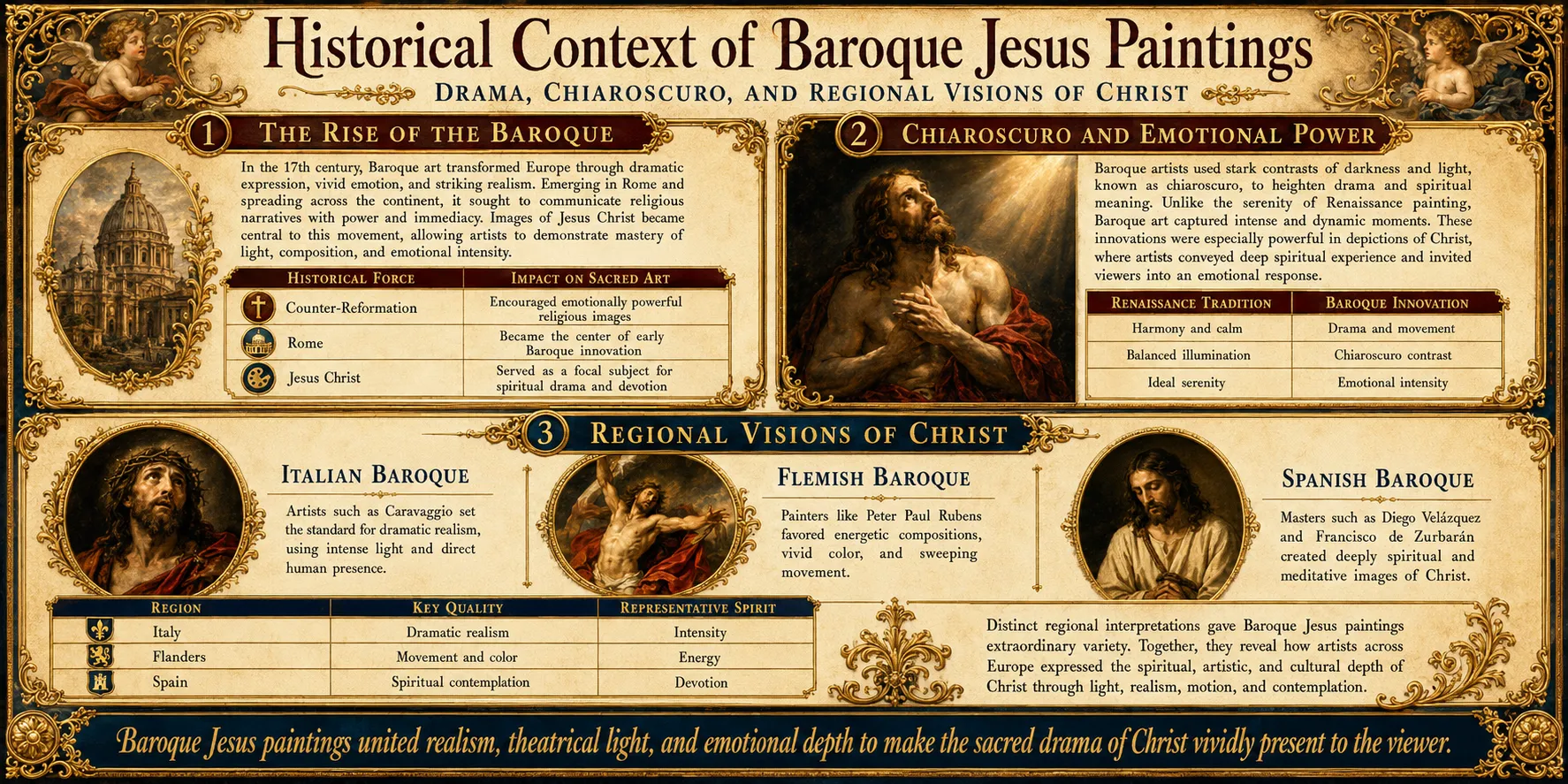
The Baroque period, spanning the 17th century, profoundly transformed European art, emphasizing dramatic expression, vivid emotion, and striking realism. Originating in Rome and rapidly spreading across Europe, the Baroque movement sought to communicate religious narratives powerfully and evocatively. Central to this artistic movement was the representation of Jesus Christ, whose portrayal became an essential means for artists to demonstrate their mastery of light, composition, and emotional intensity.
Baroque artists leveraged stark contrasts between darkness and light, known as chiaroscuro, to instill scenes with dramatic intensity and spiritual significance. Unlike the serene and harmonious depictions typical of the Renaissance, Baroque art captured dynamic moments filled with emotional depth and dramatic tension. These artistic innovations were particularly suited to portrayals of Christ, where artists conveyed profound spiritual experiences to inspire deep emotional responses from viewers.
Distinct regional interpretations of Baroque style emerged across Europe. Italian Baroque artists such as Caravaggio set a standard of dramatic realism, influencing countless followers. Flemish artists like Peter Paul Rubens preferred vivid, dynamic compositions filled with energy and color, while Spanish masters such as Diego Velázquez and Francisco de Zurbarán produced deeply spiritual and contemplative depictions of Christ. This article explores these unique regional manifestations of Baroque art, analyzing iconic paintings of Jesus Christ to uncover the spiritual, artistic, and cultural depths captured by each region’s artists.
Explore Renaissance Jesus Paintings for contextual comparison.
Jesus in Italian Baroque Art: Drama and Realism
Italian Baroque art distinguished itself by its theatricality, intense realism, and masterful use of chiaroscuro. This approach was designed not only to engage viewers visually but also emotionally, ensuring religious narratives resonated deeply with contemporary audiences. Among Italian artists, Caravaggio emerged as a revolutionary figure, setting a dramatic, realistic standard that became synonymous with Italian Baroque art. Caravaggio’s works departed significantly from previous artistic traditions by emphasizing stark realism and powerful contrasts of light and shadow.
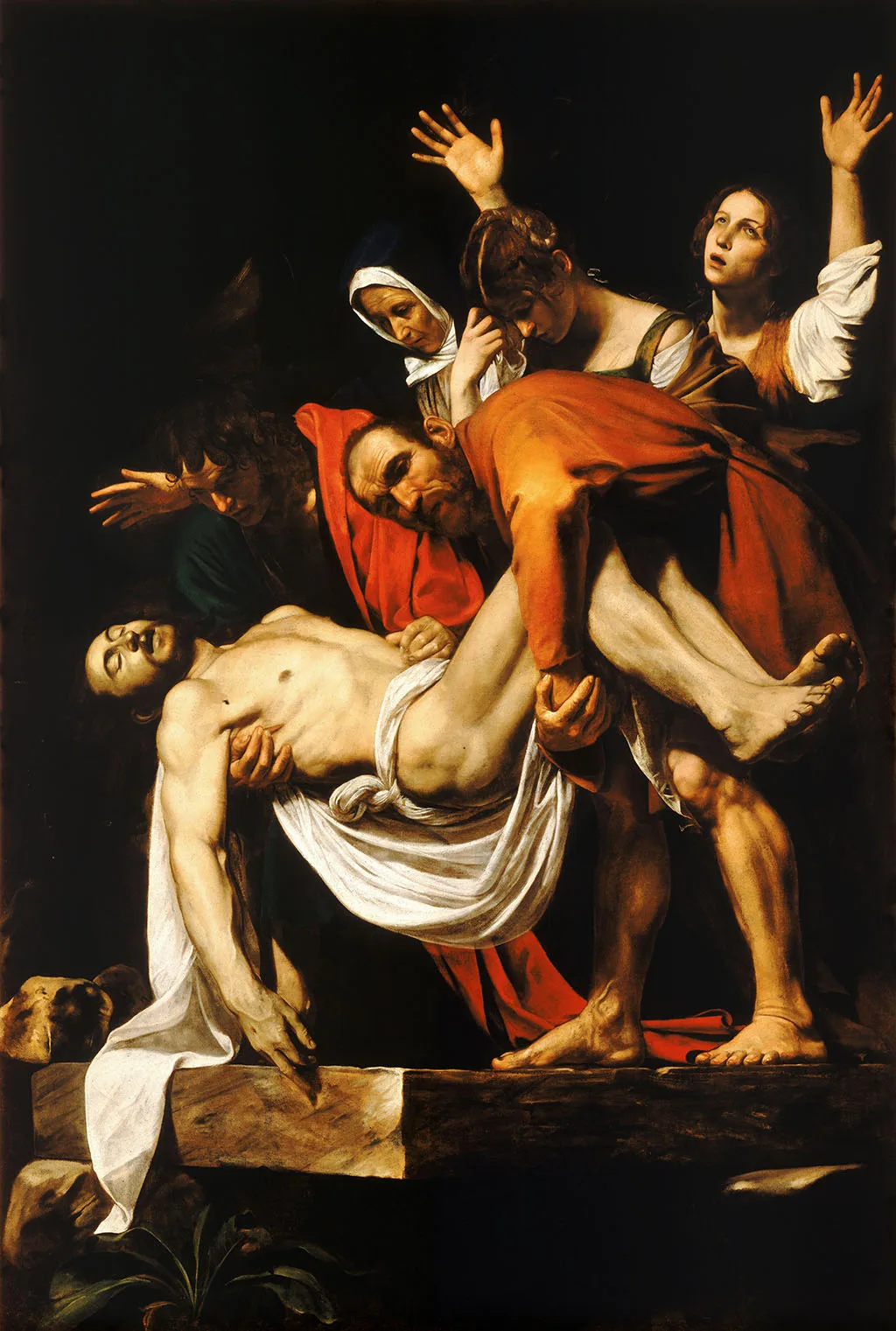
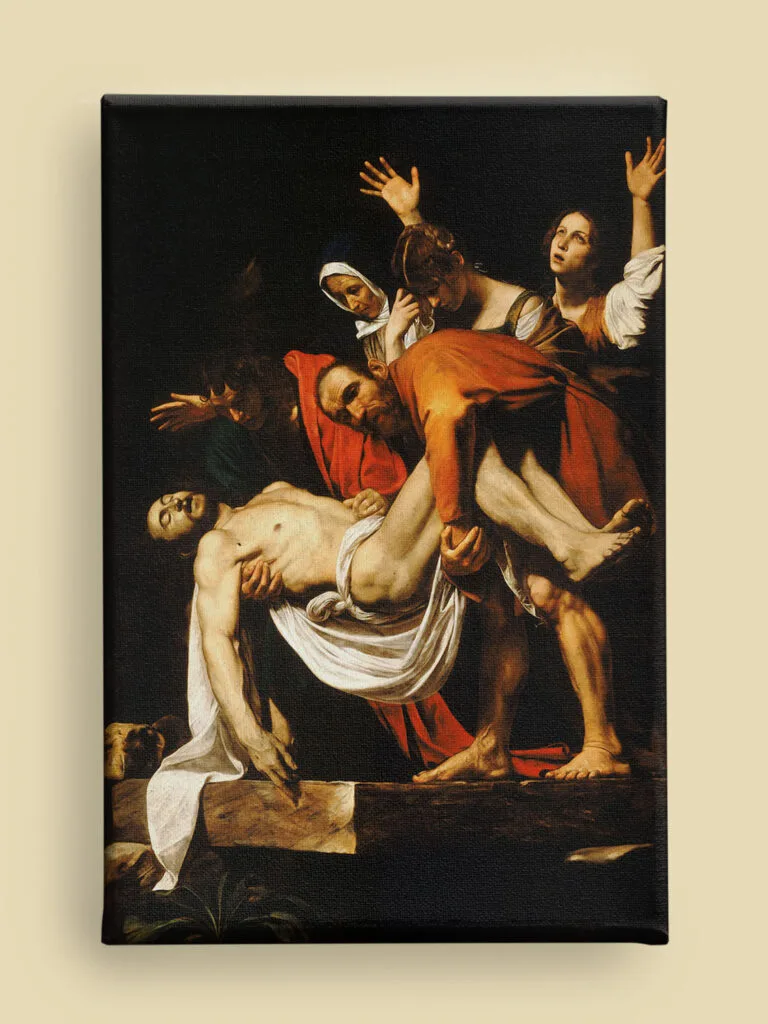
One of Caravaggio’s most influential paintings is “The Entombment of Christ” (1603-1604). The artwork masterfully employs stark chiaroscuro, highlighting the lifeless body of Christ as his followers mournfully prepare him for burial. The emotional intensity, vivid realism of expressions, and physicality of the figures render this scene profoundly moving, exemplifying Caravaggio’s innovative approach and his influence on subsequent artists.
Another significant contributor to Italian Baroque portrayals of Jesus was Guido Reni, renowned for his refined and elegant approach to religious subjects. His painting “Ecce Homo” (1639-1640) epitomizes the contemplative aspect of Italian Baroque. Reni’s work is characterized by idealized beauty and delicate lighting, creating a powerful yet subtle emotional resonance. His portrayal of Jesus, crowned with thorns and presented to the crowd, is both emotionally compelling and visually balanced, showcasing the diverse expressive possibilities within Italian Baroque art.

Caravaggio and Guido Reni set a standard of dramatic realism that painters across Europe would answer in their own voices.
Jesus in Flemish Baroque Art: Dynamism and Color
Flemish Baroque artists infused their depictions of Christ with remarkable dynamism, vibrant color palettes, and richly detailed compositions. Rooted in the artistic legacy of the Northern Renaissance, which emphasized intricate detail and emotional resonance, Flemish Baroque took these principles even further by amplifying drama through vigorous movement and lavish ornamentation. Unlike the Italian approach, which focused heavily on intense realism and stark chiaroscuro, Flemish artists often utilized brighter tones, complex groupings, and dynamic action to captivate and spiritually inspire their viewers.
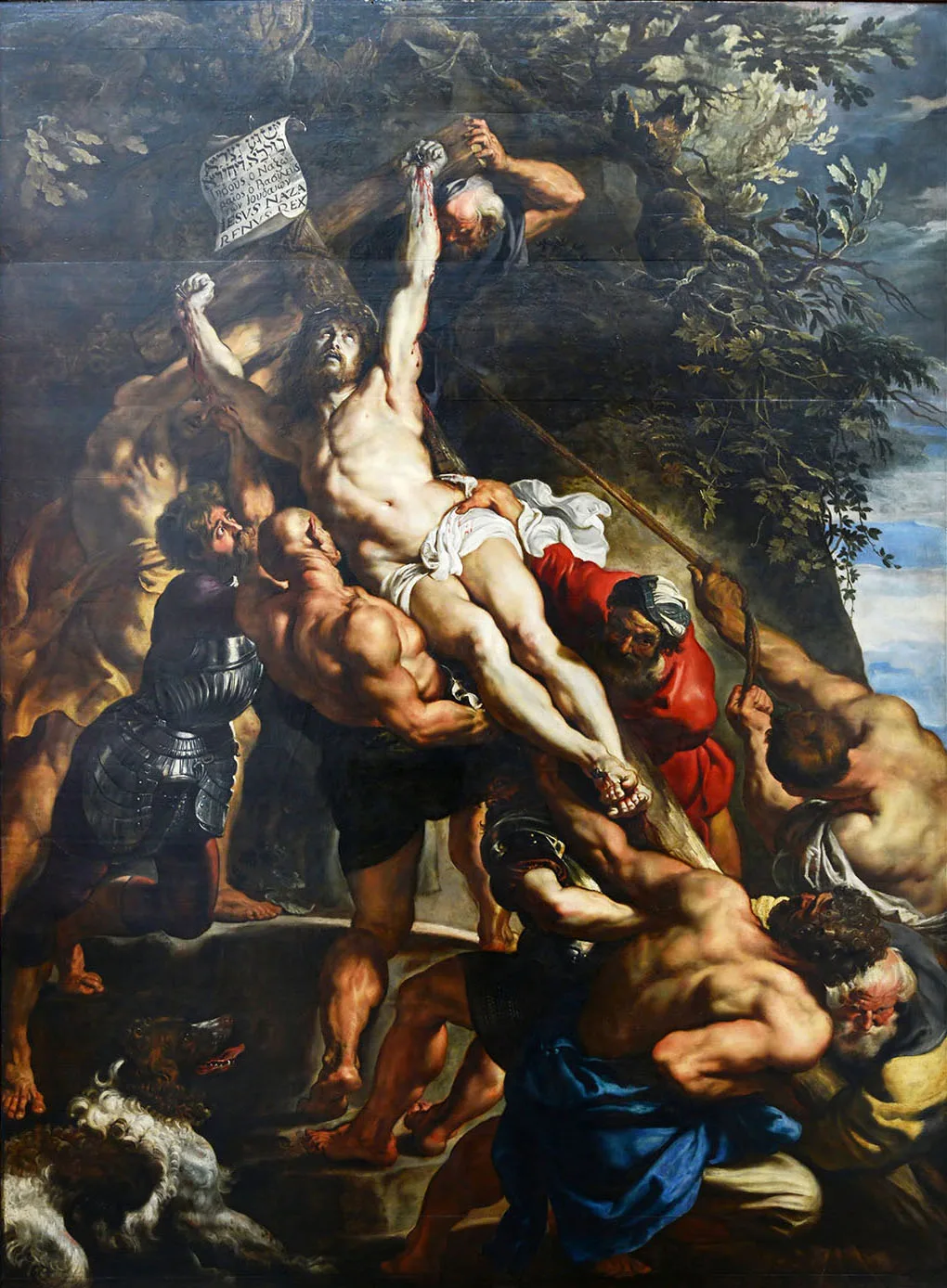
Peter Paul Rubens stands as the quintessential Flemish Baroque painter, whose work “The Elevation of the Cross” (1610-1611) exemplifies the vibrant energy and emotional intensity characteristic of this style. Rubens masterfully portrays the physical strain and dramatic tension as several muscular figures lift the heavy cross bearing Christ. The vivid colors, intricate detail, and the dynamic diagonal composition amplify the drama, deeply engaging the viewer emotionally and spiritually.
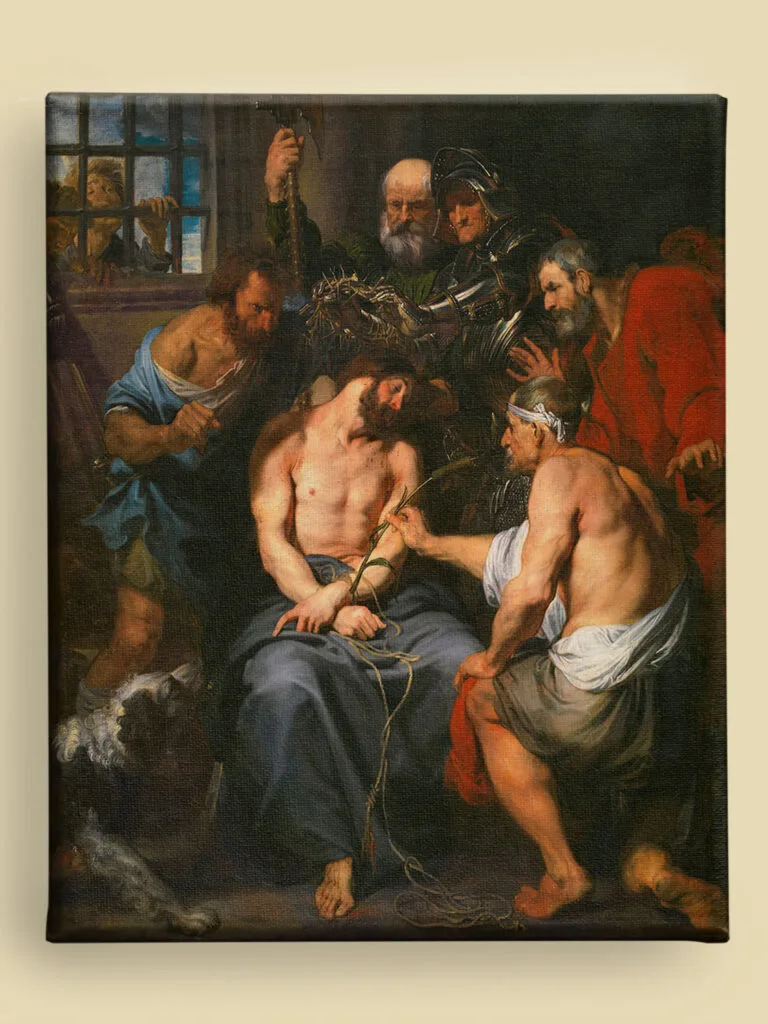
Anthony van Dyck, a notable student and collaborator of Rubens, developed his unique interpretation of Flemish Baroque by blending his master’s dynamism with a more introspective quality. His painting “Christ Crowned with Thorns” (1619-1620) exhibits a compelling mixture of emotional depth and pictorial richness. Van Dyck presents Christ with a dignified, sorrowful countenance amidst the cruel mockery he endures. The delicate handling of flesh tones, rich draperies, and emotional expressiveness illustrate Van Dyck’s refined sensitivity, distinguishing his work within the Flemish tradition.

Flemish Baroque artists thus succeeded in bringing the narrative and emotional depth of biblical stories vividly to life, setting their style apart from both their Renaissance predecessors and their Italian contemporaries.
To learn how Flemish artists brought movement, emotion, and symbolism together in sacred scenes, explore our overview of Flemish Baroque Jesus paintings.
Jesus in Spanish Baroque Art: Spirituality and Passion
The Spanish Baroque tradition, distinctively shaped by deep religious fervor and mysticism, developed a uniquely intense and contemplative portrayal of Christ. Unlike the exuberance of Flemish Baroque, Spanish artists preferred stark simplicity, profound emotional intensity, and a powerful use of chiaroscuro influenced heavily by Italian Baroque. Spanish Baroque art’s primary objective was not merely to depict Christ visually but to evoke profound spiritual reflection and emotional engagement among the faithful.
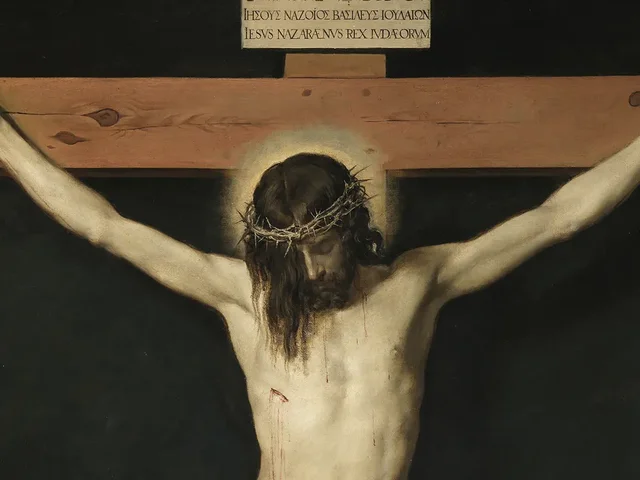
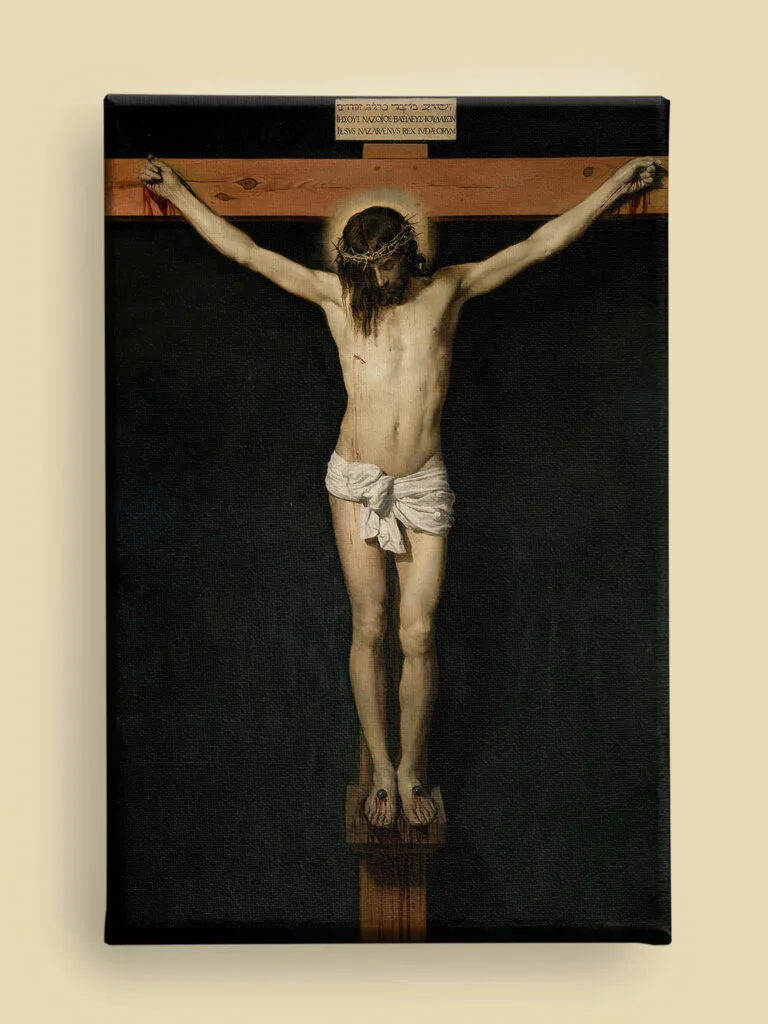
Diego Velázquez’s masterful painting, “Christ Crucified” (1632), epitomizes the Spanish approach. Here, Velázquez portrays Christ alone on the cross, bathed in dramatic light against a dark, almost empty background. The austerity and solemnity of the composition highlight Christ’s humanity and sacrifice, inviting viewers into a deeply personal and spiritual contemplation. Velázquez’s use of stark contrasts and subdued color palette emphasizes spiritual reflection over narrative detail, distinguishing his works from more lavish Flemish compositions.

Similarly, Francisco de Zurbarán’s painting, “Christ on the Cross” (1627), illustrates the artist’s distinctive approach to depicting the sacred. Zurbarán’s Christ is rendered with extraordinary realism and quiet dignity, enhanced by intense chiaroscuro and a dramatic, minimalist presentation. The emotional restraint and profound spirituality embodied in Zurbarán’s portrayal deeply resonated with the spiritual sensibilities of Spanish religious life in the 17th century.

The spiritual intensity characteristic of Spanish Baroque art echoes medieval traditions in sacred imagery, which you can further understand by exploring Medieval Jesus Paintings. This deliberate connection underlines how Spanish Baroque uniquely continued earlier devotional traditions within a new, more emotionally potent visual language.
For more on the profound spirituality and contemplative power found in this tradition, read our dedicated feature on Spanish Baroque Jesus paintings.
Comparing Baroque Jesus Paintings: Regional Styles and Characteristics
Baroque paintings of Jesus Christ across Italy, Flanders, and Spain exhibit remarkable diversity, reflecting unique cultural contexts and artistic traditions. While all Baroque artists embraced emotional expression and dramatic narratives, each region applied these principles differently, producing distinct visual and emotional experiences for their audiences.
Italian Baroque, exemplified by Caravaggio and Guido Reni, emphasized dramatic realism and intense chiaroscuro. Italian painters prioritized a deeply personal engagement, rendering Christ in emotionally charged, humanizing moments. The realistic depiction of Christ’s suffering, as demonstrated in Caravaggio’s “The Entombment of Christ”, sought to evoke empathy and spiritual reflection among viewers.
In contrast, Flemish Baroque artists, notably Peter Paul Rubens and Anthony van Dyck, embraced dynamic compositions, vibrant color schemes, and elaborate detail. Their paintings portray scenes filled with energy, movement, and vivid emotion. Rubens’ “The Elevation of the Cross” illustrates this dynamic style, capturing intense action through complex compositions, rich colors, and dramatic gestures.
Spanish Baroque artists, such as Diego Velázquez and Francisco de Zurbarán, distinguished their works through spiritual depth and stark simplicity. Influenced by Spain’s profound religious traditions, their paintings often employed minimalist settings, dramatic chiaroscuro, and somber palettes to foster meditation on Christ’s divine sacrifice. Velázquez’s “Christ Crucified” exemplifies this approach, evoking deep contemplation through quiet austerity.
Thus, the regional variations in Baroque Jesus paintings reflect deeper theological, cultural, and aesthetic differences within 17th-century Europe. Each approach uniquely enhances viewers’ spiritual experiences, ranging from Italian realism and Flemish dynamism to Spanish spiritual introspection. For further exploration of stylistic transitions and origins, consider reviewing Renaissance Jesus Paintings.
Comparison of Regional Styles in Baroque Jesus Paintings
| Characteristic | Italian Baroque | Flemish Baroque | Spanish Baroque |
|---|---|---|---|
| Artistic Focus | Realism, emotional intensity, dramatic narratives | Dynamism, vibrant color, detailed compositions | Spiritual depth, introspection, emotional austerity |
| Chiaroscuro (Light & Shadow) | Very intense; stark contrasts create drama | Moderate; light enhances colors and movement | Extremely strong; stark contrast emphasizes spiritual reflection |
| Color Palette | Mostly muted with dramatic lighting effects | Vibrant, rich, and diverse colors | Sombre, restrained colors highlighting solemnity |
| Composition | Focused, dramatic arrangements highlighting emotional scenes | Complex, dynamic compositions filled with action | Simple, austere compositions emphasizing Christ’s solitude |
| Emotional Approach | Intense emotional realism and empathy | Expressive, energetic, and visually captivating | Contemplative, introspective, spiritually profound |
| Notable Artists | Caravaggio, Guido Reni | Peter Paul Rubens, Anthony van Dyck | Diego Velázquez, Francisco de Zurbarán |
Rococo Jesus Paintings: The Late Flourish of the Baroque
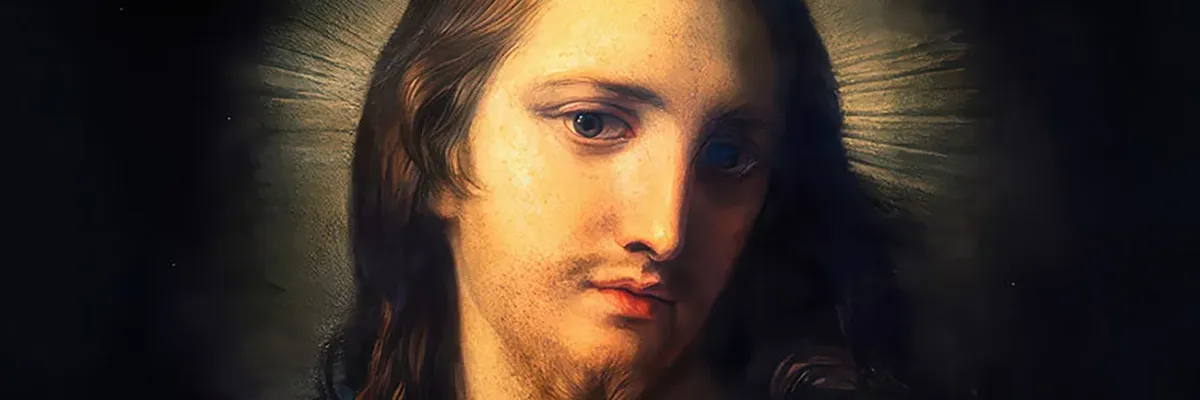
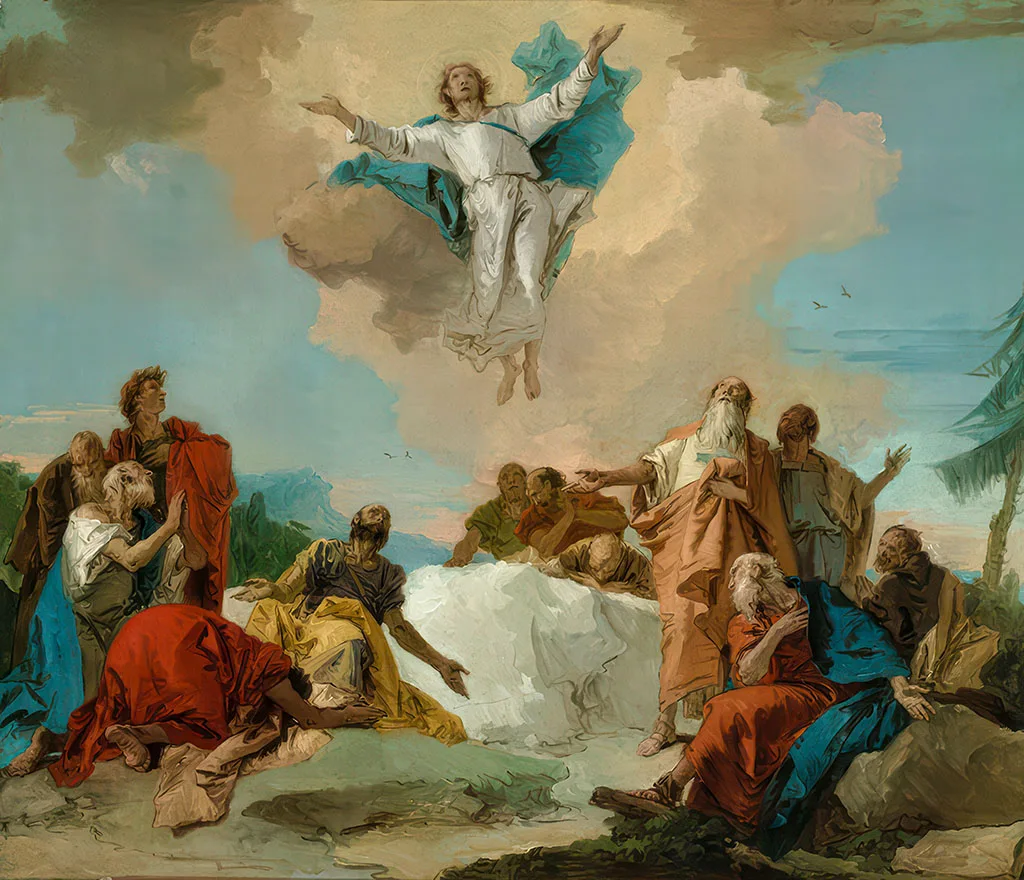
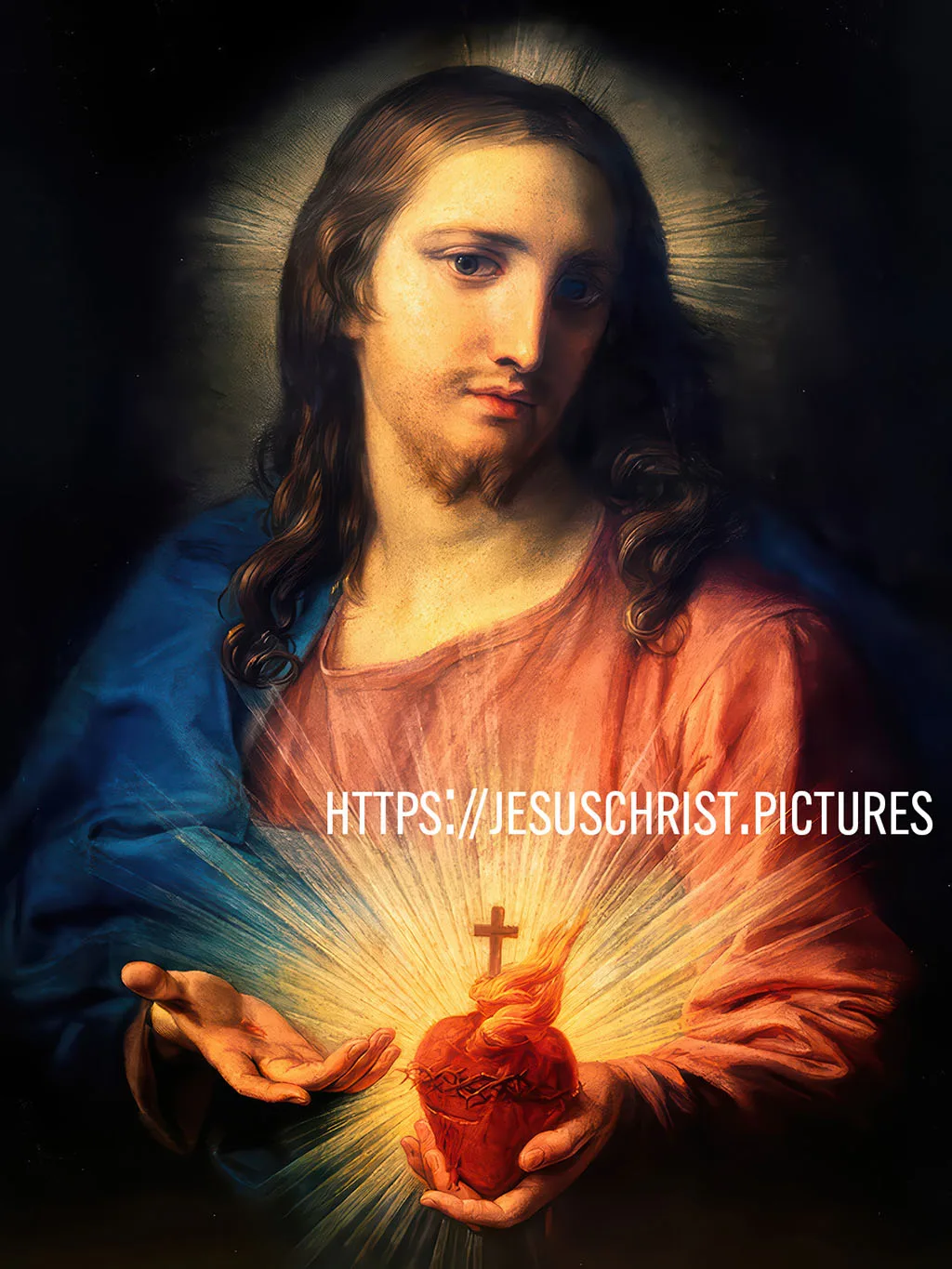
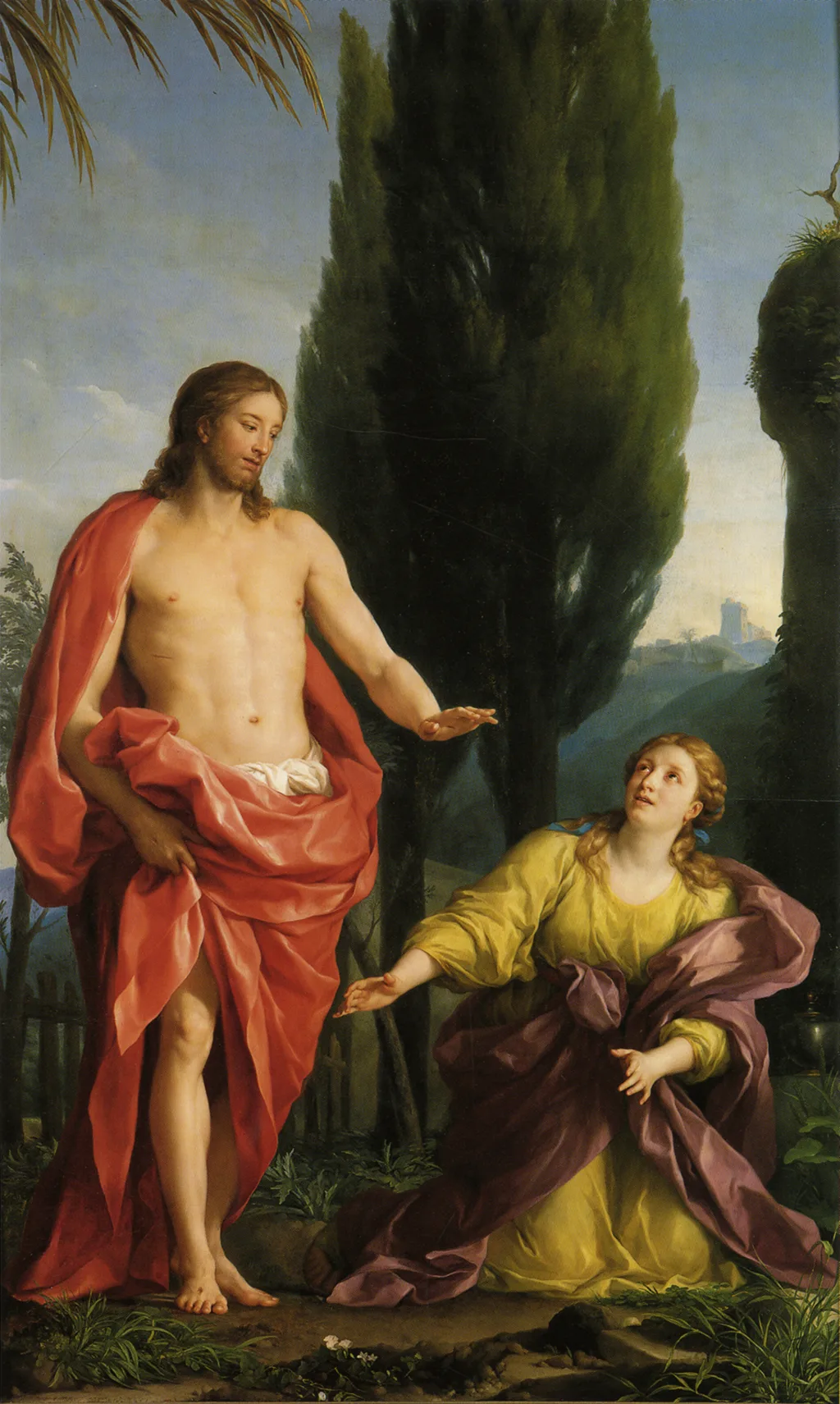
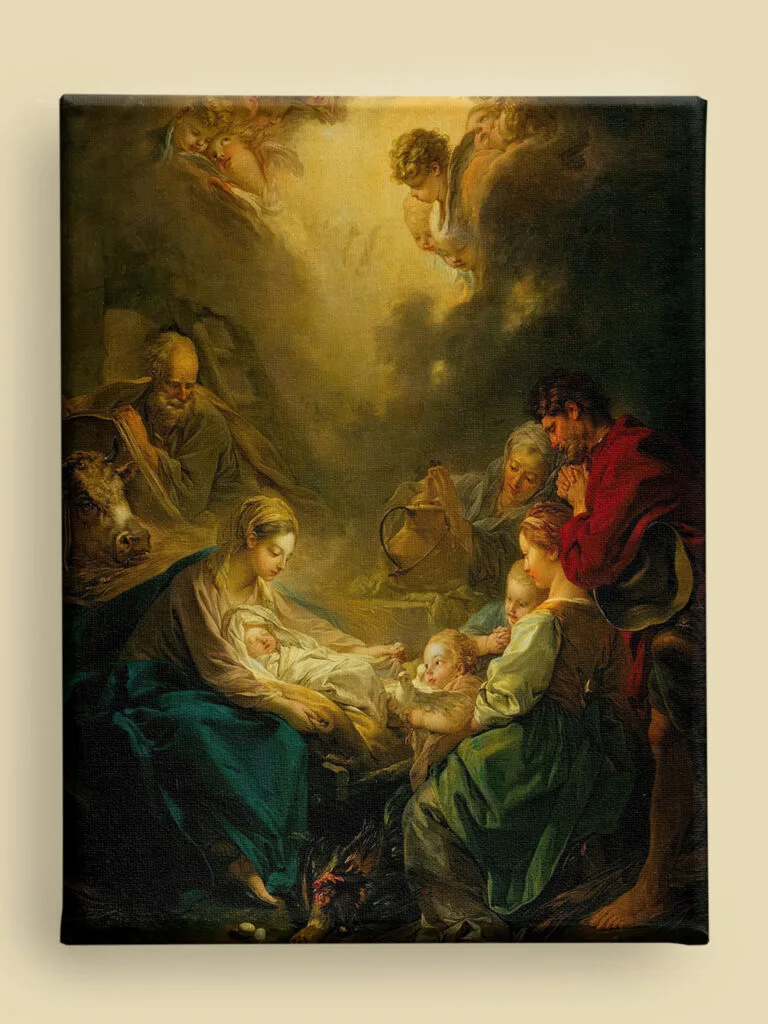
By the early 18th century the Baroque had begun to soften into the Rococo. Deep shadow gave way to pastel light and flowing movement, and Christ was shown with a new tenderness, near and gentle rather than thunderous.

Conclusion: The Enduring Impact of Baroque Depictions of Jesus
Baroque depictions of Jesus Christ represent a pinnacle of artistic and spiritual expression, profoundly shaping religious art across Europe and beyond. The vivid realism of Italian masters, the dynamic energy of Flemish artists, and the reflective spirituality of Spanish painters each uniquely capture different facets of the human and divine nature of Christ. Collectively, these masterpieces illustrate the diverse ways in which Baroque artists responded to religious, cultural, and aesthetic demands, leaving a lasting legacy that continues to inspire admiration and devotion.
These artworks remain powerful not only for their technical brilliance but also for their profound emotional resonance, which transcends temporal and cultural boundaries. Today, Baroque Jesus paintings continue to speak deeply to viewers, inviting reflection on spiritual truths, human suffering, and divine grace. They stand as timeless testaments to the extraordinary capacity of art to illuminate the mysteries of faith and the human condition.
Table of Baroque Jesus Paintings Mentioned in this Article
| Painting Title | Artist | Date | Medium | Museum (with link) |
|---|---|---|---|---|
| The Entombment of Christ | Caravaggio | 1603-1604 | Oil on canvas | Vatican Museums |
| Ecce Homo | Guido Reni | 1639-1640 | Oil on canvas | Louvre Museum |
| The Elevation of the Cross | Peter Paul Rubens | 1610-1611 | Oil on panel | Cathedral of Our Lady, Antwerp |
| Christ Crowned with Thorns | Anthony van Dyck | 1619-1620 | Oil on canvas | Museo del Prado |
| Christ Crucified | Diego Velázquez | 1632 | Oil on canvas | Museo del Prado |
| Christ on the Cross | Francisco de Zurbarán | 1627 | Oil on canvas | Art Institute of Chicago |
| Sacred Heart of Jesus | Pompeo Batoni | 1767 | Oil on canvas | Chiesa del Gesu, Rome |
Frequently Asked Questions
What defines Baroque Jesus paintings compared to Renaissance ones?
Baroque paintings feature increased emotional intensity, dramatic contrasts of light and shadow, and dynamic movement, differing significantly from the balanced compositions and idealized forms of Renaissance art.
Who are the main Baroque artists famous for their Jesus paintings?
Key artists include Caravaggio, Peter Paul Rubens, Anthony van Dyck, Diego Velázquez, Francisco de Zurbarán, and Guido Reni.
What distinguishes Italian Baroque from Flemish Baroque in religious painting?
Italian Baroque emphasizes dramatic realism and stark chiaroscuro, whereas Flemish Baroque highlights vibrant colors, elaborate details, and dynamic compositions.
Why was chiaroscuro particularly important in Baroque Jesus paintings?
Chiaroscuro enhanced emotional depth and dramatic tension, effectively emphasizing Christ’s humanity, suffering, and divine significance.
Where can I see original Baroque Jesus paintings today?
Famous museums such as the Vatican Museums, Louvre Museum, Museo del Prado, and the Art Institute of Chicago exhibit major Baroque masterpieces.
How do Rococo Jesus paintings relate to the Baroque?
Rococo grew directly out of the late Baroque in the early 18th century, trading deep chiaroscuro and high drama for pastel light, graceful movement, and a softer image of Christ. Painters such as Giovanni Battista Tiepolo and Pompeo Batoni kept the sacred subject at the center while lightening the mood, as in Batoni’s Sacred Heart of Jesus.
Where can I buy Baroque Jesus paintings reproductions?
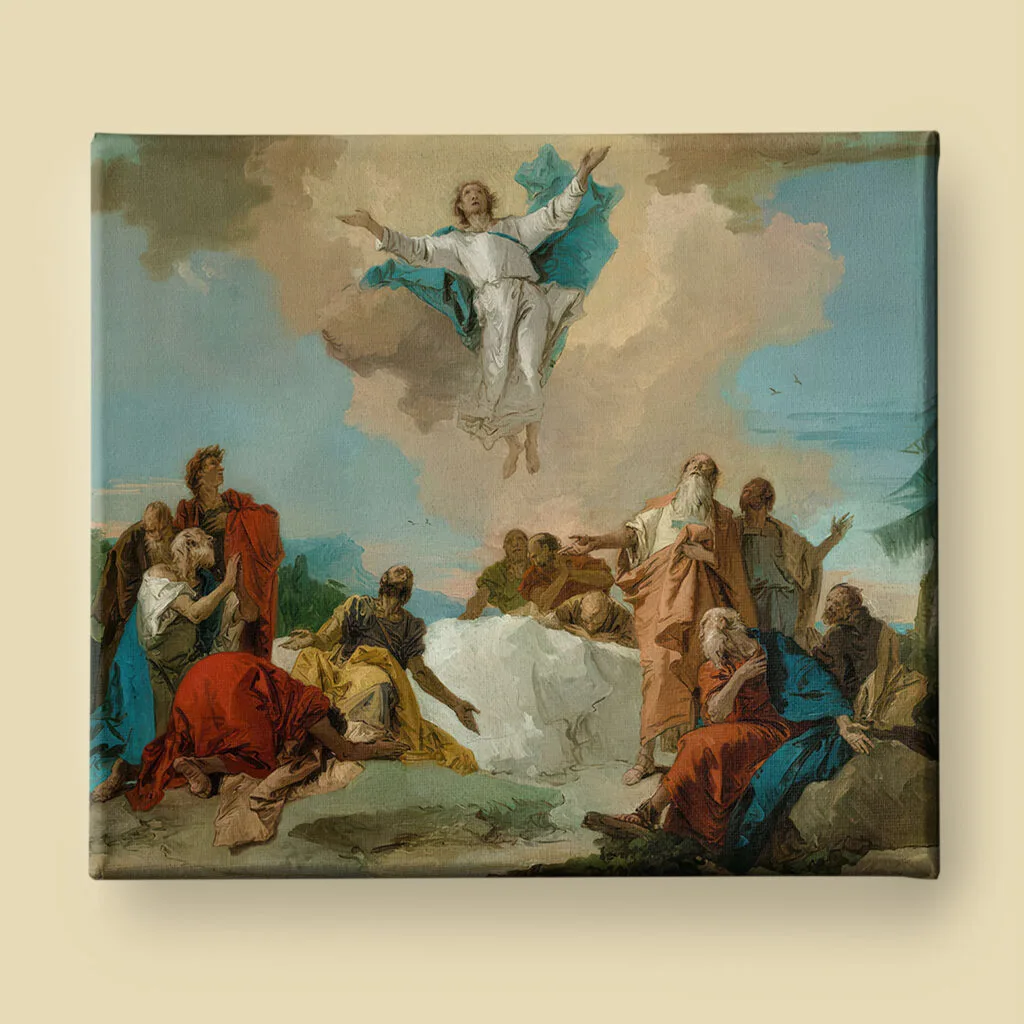
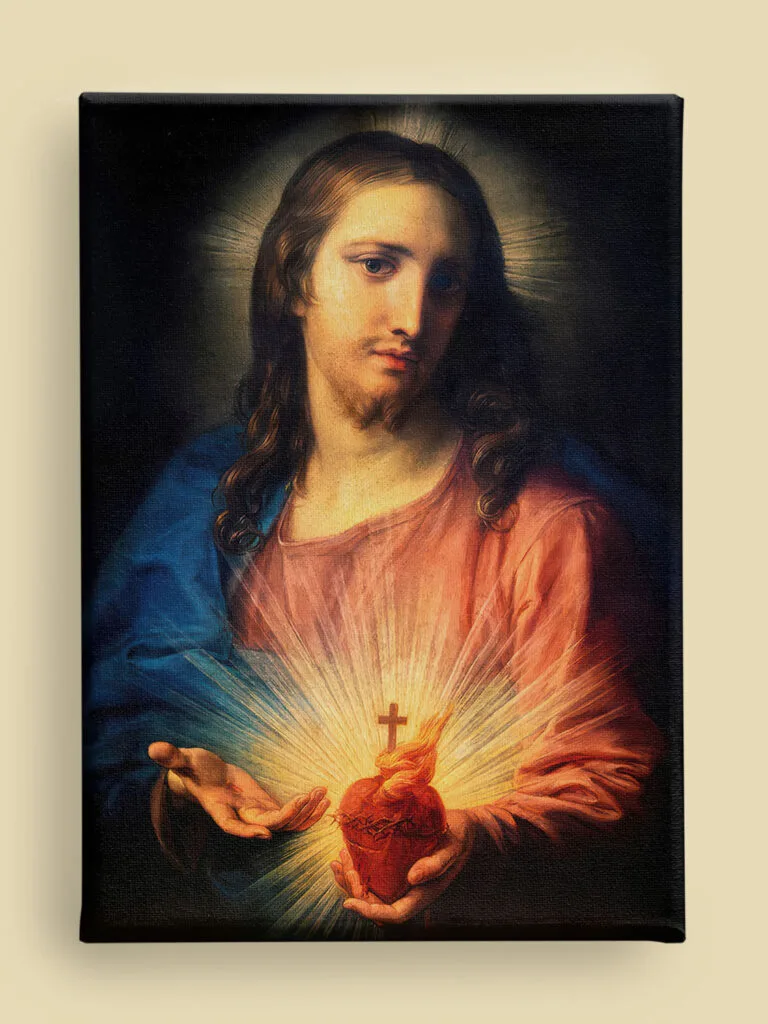
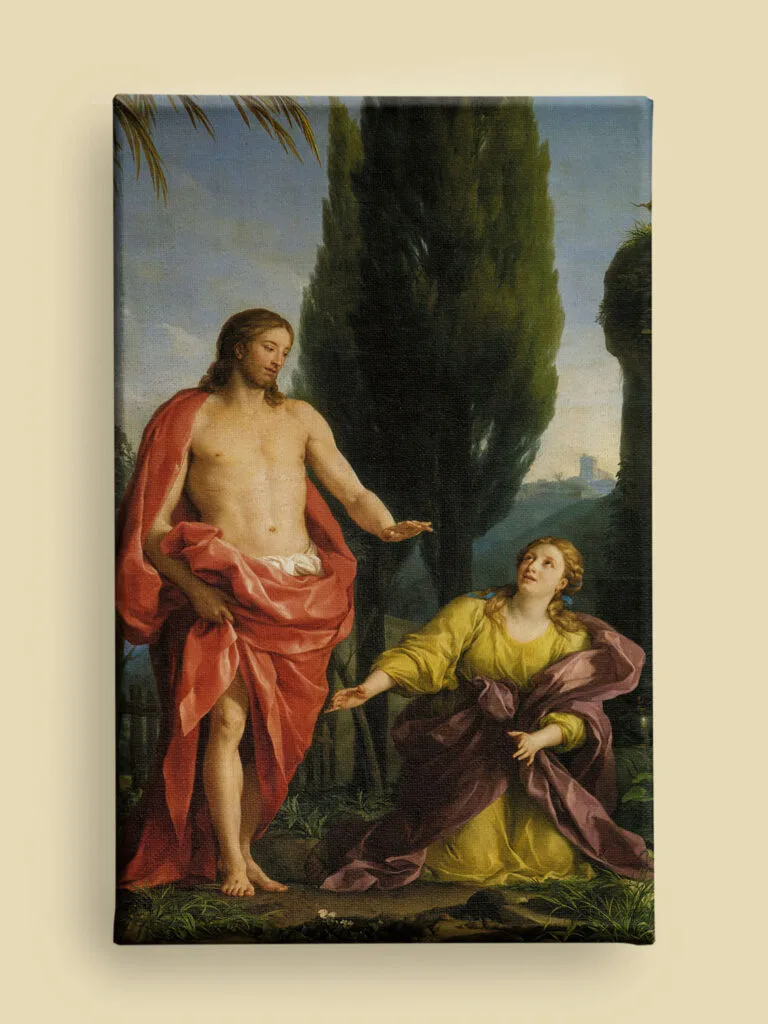
You can buy Baroque Jesus paintings reproductions at jesuschrist.pictures: see the canvas reproduction in our shop, printed on museum-grade canvas and available in several sizes.