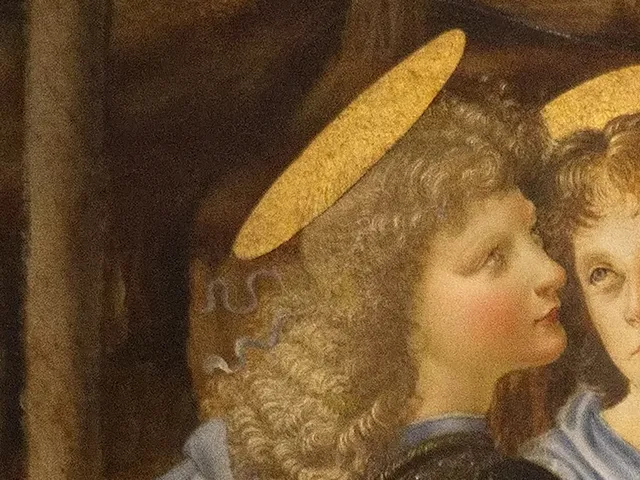
Spinello Aretino Paintings and the Late Gothic of Tuscany
Spinello Aretino paintings represent one of the most sustained achievements of the Italian Gothic tradition, produced over a career of extraordinary length and productivity. Born Spinello di Luca Spinelli around 1350 in Arezzo (hence the name “Aretino,” meaning from Arezzo) he worked in the Florentine Gothic manner from the 1370s until his death in 1410, executing fresco cycles, altarpieces, and panel paintings across central Italy. Where his younger contemporaries Gentile da Fabriano and Sassetta moved toward the refinements of the International Gothic, Spinello remained closer to the monumental tradition of Giotto: solid, clear-headed, and immensely confident in his command of narrative.

A Gothic Painter in the Giottesque Tradition
Spinello was trained in Florence in the generation of Giotto‘s followers, the Orcagna school, and he absorbed from it the sense of figural weight, the bold narrative composition, and the expressive directness that characterize all his finest work. He was among the most prolific painters of his day, producing fresco cycles in San Miniato al Monte in Florence, in Siena’s Palazzo Pubblico, in the Camposanto in Pisa, and in the cathedral of Arezzo, as well as numerous panel paintings. His frescoes in San Miniato al Monte (c. 1387), showing scenes from the Life of Saint Benedict, remain among the finest Gothic fresco ensembles in Florence. He was, in other words, not a peripheral figure but one of the central painters of the late fourteenth century in Tuscany.
What distinguished Spinello from his Florentine contemporaries was a quality of energetic directness. His figures are solidly built, their gestures clear and purposeful, their faces marked by an individuality that owes something to Giotto’s revolution even at three removes. He was not a colorist of Gentile da Fabriano’s brilliance or a spiritualist of Fra Angelico’s depth, but he was a storyteller of real power, and his fresco cycles, where he was at his best, communicate with a forcefulness that never descends to mere repetition.
Saints and Altarpieces
The Crucifixion Triptych, now in the Villa Guinigi National Museum in Lucca, is characteristic of Spinello Aretino’s panel painting at its most monumental. The central crucified Christ dominates the composition with controlled authority, while the flanking saints provide the devotional framing typical of Italian triptych altarpieces of the period. The work demonstrates the clarity and structural soundness that made Spinello a trusted choice for major ecclesiastical commissions throughout Tuscany.

The Triptych of Madonna Enthroned with Child and Saints in the Galleria dell’Accademia in Florence shows Spinello working within the most standard of Gothic altarpiece formats, the enthroned Virgin flanked by saints, and bringing to it the same qualities of solidity and directness. The Madonna sits on her throne with the Christ child in her lap, the saints arranged at her sides in the familiar Florentine arrangement that had defined altarpiece composition since Cimabue. The painting’s strength lies not in innovation but in the conviction with which Spinello inhabits an inherited form.

The Mystical Marriage of Saint Catherine, a fresco in the Basilica of the Holy Trinity in Florence, shows Spinello capable of considerable tenderness when the subject calls for it. Catherine kneels before the Christ child, who places a ring on her finger as the Virgin looks on. The composition is simple and legible, the figures rendered with the economy of a painter who understood that fresco demanded clarity above all.

Panels from the Metropolitan Museum
Several of Spinello Aretino’s finest surviving panel paintings are now in the Metropolitan Museum of Art in New York. The panel identified as A Saint, Possibly James the Greater is a large and impressive work: the figure stands in frontal majesty, his robes falling in the broad Gothic folds that Spinello handled with particular confidence. The face has an authority and individuality that goes beyond mere type, suggesting a painter with genuine interest in the specific character of the person depicted.

The Saint Philip, also in the Metropolitan, is another fine example of Spinello’s gift for the large-scale single saint panel. Philip holds his attribute with composed authority, his posture relaxed but his presence commanding. These large saint panels were typically painted as parts of polyptych altarpieces, with individual panels later separated from their original ensemble as altarpieces were dismembered over the centuries.

The Saint Mary Magdalen Holding a Crucifix is a double-sided panel (a relatively unusual format) with the standing Magdalen on the front and a scene of the Flagellation on the reverse. The Magdalen is rendered with the same directness that marks all of Spinello’s best figures: a face of genuine expression, drapery that falls naturally rather than decoratively. The Conversion of Saint Paul is one of his most dramatically charged narrative panels, showing Paul at the moment of his fall from the horse on the road to Damascus, a scene requiring the kind of energetic composition at which Spinello excelled.


Francis and the Franciscan Tradition
The Saint Francis before the Pope (Confirmation of the Franciscan Rule), in the Art Institute of Chicago, shows Spinello working within the rich tradition of Franciscan narrative painting that had flourished in Tuscany since the time of Giotto. Francis kneels before the enthroned Pope Innocent III, presenting the rule of his new order for papal approval. The scene is organized with clarity and formality: the hierarchical arrangement of figures, the gestures of petition and authority, the distinction between the humble Francis and the magnificent court all communicate with the directness that defines Spinello’s narrative manner at its best. Benozzo Gozzoli would treat Franciscan subjects with far greater ornamental elaboration a generation later; Spinello’s version has the directness of a painter who trusts his story.

Paintings by Spinello Aretino
| Name | Date | Medium | Location |
|---|---|---|---|
| A Saint, Possibly James the Greater | c. 1385-1395 | Tempera on panel | Metropolitan Museum of Art, New York |
| Crucifixion Triptych | c. 1385-1390 | Tempera on panel | Villa Guinigi National Museum, Lucca |
| Mystical Marriage of Saint Catherine | c. 1400-1404 | Fresco | Basilica of the Holy Trinity, Florence |
| Saint Francis before the Pope | c. 1380-1395 | Tempera on panel | Art Institute of Chicago |
| Saint Mary Magdalen Holding a Crucifix | c. 1395-1405 | Tempera on panel | Metropolitan Museum of Art, New York |
| Saint Philip | c. 1385-1395 | Tempera on panel | Metropolitan Museum of Art, New York |
| The Conversion of Saint Paul | c. 1380-1395 | Tempera on panel | Metropolitan Museum of Art, New York |
| Triptych of Madonna Enthroned with Child and Saints | c. 1385-1390 | Tempera on panel | Galleria dell’Accademia, Florence |
Important Facts About Spinello Aretino
- Spinello Aretino, born Spinello di Luca Spinelli around 1350 in Arezzo, was one of the most prolific Italian Gothic painters of the late fourteenth and early fifteenth centuries.
- He trained in Florence in the Giottesque tradition, absorbing the influences of the Orcagna school, and worked throughout his career in the Florentine Gothic manner across central Italy.
- Spinello Aretino is known for his bold narrative compositions and expressive figures, producing extensive fresco cycles in San Miniato al Monte in Florence, the Palazzo Pubblico in Siena, the Camposanto in Pisa, and the cathedral of Arezzo.
- His most celebrated achievement is the fresco cycle of the Life of Saint Benedict in the sacristy of San Miniato al Monte in Florence, painted around 1387 and considered one of the finest Gothic fresco ensembles in the city.
- He died in Arezzo in 1410, and his son Parri Spinelli carried on his workshop tradition, extending the reach of the Aretine Gothic school into the early decades of the fifteenth century.
Questions & Answers
What is Spinello Aretino most known for?
He is best known for his extensive fresco cycles, particularly the Life of Saint Benedict in the sacristy of San Miniato al Monte in Florence (c. 1387) and his frescoes in the Palazzo Pubblico in Siena (c. 1408), showing scenes from the Life of Pope Alexander III. Among his panel paintings, the works now in the Metropolitan Museum of Art in New York and the Galleria dell’Accademia in Florence represent his achievement most fully. He was one of the most productive Italian painters of his generation, and his career extended over almost four decades.
Where can I see Spinello Aretino’s paintings today?
Several of his panel paintings are in the Metropolitan Museum of Art in New York. The Galleria dell’Accademia in Florence holds the Triptych of Madonna Enthroned. The Art Institute of Chicago has the Saint Francis before the Pope. The Villa Guinigi National Museum in Lucca holds the Crucifixion Triptych. His most important frescoes remain in place in San Miniato al Monte in Florence and in the Palazzo Pubblico in Siena, where they can be visited directly.
Was Spinello Aretino Gothic or Renaissance?
He was fully Gothic. He died in 1410, before the Florentine Renaissance was fully established, and his work shows no influence of the new movement’s spatial geometry or classical reference. He worked in the tradition of Giotto and Giotto’s followers throughout his long career, and the late works maintain the same clear, monumental figure style that had characterized his painting since the 1370s. He belongs entirely to the world of the Italian Gothic, and represents one of its most sustained and productive expressions in Tuscany.
What did Spinello Aretino paint in Siena?
He painted an important fresco cycle in the Sala di Balia (also called the Sala del Concistoro) in the Palazzo Pubblico in Siena, around 1408. The frescoes show scenes from the life of Pope Alexander III, including his conflicts with the Emperor Frederick Barbarossa. The cycle is unusual in Spinello’s career for its historical rather than hagiographic subject matter, and it demonstrates his ability to organize complex multi-figure scenes across large wall surfaces with narrative clarity.
Who was Parri Spinelli?
Parri Spinelli (1387-1453) was the son of Spinello Aretino and his most direct artistic successor. He trained in his father’s workshop in Arezzo and continued the late Gothic manner of the Aretine school well into the fifteenth century, a period when the Renaissance was already fully established in Florence. His work has a more Gothic elongation and spirituality than his father’s, and he is sometimes considered a practitioner of the International Gothic rather than the Giottesque manner. Several of his works survive in Arezzo, including panels in the Museo Statale d’Arte Medievale e Moderna.
Where can I buy a canvas reproduction of a Spinello Aretino painting?
The shop at jesuschrist.pictures offers museum-quality canvas reproductions of the great Christian paintings, and the collection keeps growing; it is the best place to look for a canvas reproduction of a Spinello Aretino painting.