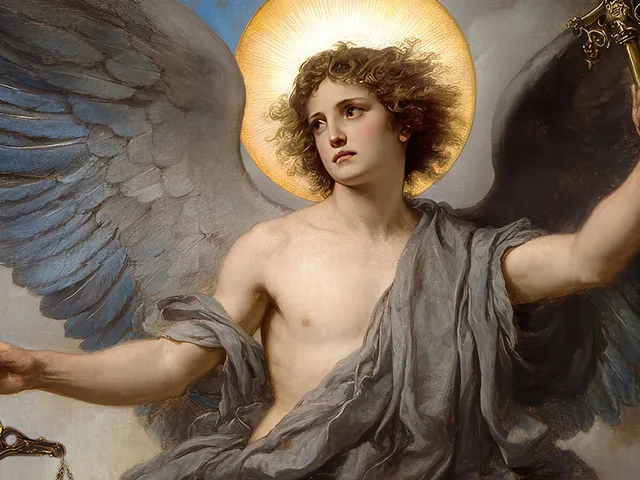
Pietro Lorenzetti: Sacred Altarpieces and Most Beautiful Paintings
The sacred altarpieces and most beautiful paintings of Pietro Lorenzetti represent one of the most powerful and emotionally direct contributions to Trecento art. Older brother of Ambrogio Lorenzetti, Pietro was born in Siena around 1280 and remained active until his death in the plague of 1348. He worked in Siena, Florence, Cortona, Arezzo, and above all in Assisi, where the fresco cycle he painted in the Lower Basilica of San Francesco stands among the greatest achievements of medieval painting. His figures carry weight, his architectural spaces have depth, and his depictions of grief and suffering reach a pitch of emotional intensity that no Italian painter had matched before him.

Pietro Lorenzetti and the Sienese Trecento
Pietro Lorenzetti worked in the same decades as Duccio, Simone Martini, and Giotto, absorbing the innovations of all three and forging from them something unmistakably his own. From Duccio he inherited the Sienese gift for refined line and luminous color. From Giotto he took the ambition to paint figures with three-dimensional weight and emotional depth. From Giovanni Pisano, the great Pisan sculptor, he derived a sense of dramatic force in the human figure that goes beyond anything in his immediate painterly tradition.
He was not a gentle artist. Where his brother Ambrogio tended toward intellectual refinement, Pietro was drawn to raw emotional states: grief, anguish, tenderness, awe. His Crucifixions are among the most harrowing images in medieval art. His Birth of the Virgin is one of the most radically spatial and intimate domestic interiors produced before the fifteenth century. He was, in the words of Britannica, the more passionate of the two brothers, and his passion is never merely decorative.
For context on the wider tradition from which Pietro emerged, our article on christian medieval painters traces the full development of Trecento sacred art.
The Sacred Paintings of Pietro Lorenzetti
Maestà di Cortona (c. 1315-1320)
This signed panel painting, now in the Museo Diocesano of Cortona, is one of Pietro’s earliest surviving works and one of the most revealing of his artistic formation. Originally in Cortona Cathedral, it shows the Virgin enthroned in majesty with the Christ Child, in a format directly descended from Duccio’s great Maestà panels. The debt to Duccio is visible in the figure types and the arrangement of the angels. But something harder and more insistent is already present in Pietro’s treatment: the Virgin’s gaze is direct and slightly severe, the spatial organization of the throne more architectural than decorative.

The panel is modest in scale, 126 by 83 centimeters, but it carries more weight than its dimensions suggest. It established Pietro’s reputation in the diocese of Arezzo and Cortona, a region that would remain central to his career for the following decade. Vasari, who noted Pietro’s work in Cortona without identifying specific paintings, was recognizing a genuine concentration of activity in this part of Tuscany.
Tarlati Polyptych (1320)
This is Pietro’s first documented and dated work, commissioned by Bishop Guido Tarlati of Arezzo in 1320 for the high altar of the Pieve di Santa Maria in Arezzo. It remains in situ, one of the rare examples of a major Trecento altarpiece that has never left the church for which it was made. The polyptych shows the Virgin and Child at the center, flanked by Saints John the Evangelist, Donatus, John the Baptist, and Matthew, with smaller figures in the upper pinnacles.

The Tarlati Polyptych is a work of considerable ambition for an artist still establishing himself. The figures are taller and more assertive than those in the Maestà di Cortona, the drapery more volumetrically handled, the facial expressions more individualized. It already shows the influence of Giovanni Pisano’s carved figures at the Pisa Cathedral pulpit, which Pietro would have known, and it places Pietro firmly in the tradition of those Sienese painters who were engaging seriously with Florentine three-dimensionality without abandoning the characteristic grace of their own school.
The Passion Cycle at Assisi (c. 1315-1320)
Pietro’s greatest work, and the work that secures his place among the most important painters of the entire Middle Ages, is the fresco cycle he painted in the south transept of the Lower Church of the Basilica of San Francesco in Assisi. The cycle covers the entire transept from the barrel vault to the floor, depicting scenes from the Passion of Christ: the Entry into Jerusalem, the Last Supper, the Washing of Feet, the Capture of Christ, the Flagellation, the Road to Calvary, the Crucifixion, the Deposition from the Cross, and the Entombment. These are not small panels. They are monumental frescoes covering the full walls of a chapel space, and their ambition is commensurate with their scale.
Crucifixion
The Crucifixion fresco on the curved wall below the vault is described by scholars as one of the most ambitious crowd compositions in all pre-Renaissance painting. The cross stands at the center of a scene containing dozens of figures, each responding individually to the death of Christ. The Roman soldiers divide his garments at the lower right. The mourning group around the Virgin presses in from the left. Angels circle in the upper field, their distress visible in gesture and posture. What makes this Crucifixion extraordinary is not any single element but the management of the whole: Pietro holds together a composition of extraordinary complexity without losing the emotional focus at the center. For a broader survey of how the Crucifixion was treated across the centuries, our article on famous Crucifixion paintings provides essential context.

Deposition from the Cross
The Deposition shows the body of Christ being lowered from the cross into the arms of the waiting mourners. The composition is organized around the diagonal of the body itself, descending from upper right to lower left, a trajectory that carries the eye directly to the Virgin’s face as she receives her son. The physical weight of the dead Christ is rendered with a convincing heaviness, and the grief of the surrounding figures ranges from the controlled anguish of the men handling the body to the barely contained collapse of the women at the base of the cross. Pietro had absorbed Giotto’s lesson about emotional expression in the figures, and here he brings it to one of its most intense and concentrated applications.

Entombment
The Entombment brings the Passion Cycle to its close with a scene of quiet devastation. The body of Christ is being laid in the tomb, and the simplicity of the action throws into relief the grief of the faces around it. The Virgin bends over her son in a final embrace. The disciples stand or kneel, their postures expressing different registers of loss. Pietro frames the scene with an architectural clarity that gives the mourning a stage rather than simply a setting, and the result is an image that is both formally composed and emotionally unbearable. Together, these three scenes constitute a meditation on the death of Christ of extraordinary depth and consistency.

Carmine Altarpiece (1329)
Signed and dated 1329, the Carmine Altarpiece was painted for the Carmelite church of Santa Maria del Carmine in Siena and is one of the most ambitious polyptych altarpieces of the Trecento. The main panels, now in the Pinacoteca Nazionale in Siena (with subsidiary panels dispersed to the Norton Simon Museum in Pasadena and the Yale University Art Gallery), show the Virgin and Child at the center with Saint Nicholas of Bari and the Prophet Elijah, the Carmelite order’s Old Testament patron, flanking them. The predella below contains five scenes of remarkable spatial and narrative complexity, including a depiction of the ancient city of Acre that has been praised for its attention to contemporary architecture.

The Carmine Altarpiece represents Pietro at the height of his mature style, before the later influence of his brother Ambrogio softened some of the harder edges of his approach. The figures have physical presence and dramatic energy. The throne is genuinely architectural. The spatial recession of the predella scenes anticipates the kind of interior space that Ambrogio would develop in the 1340s and that would not become commonplace until the fifteenth century.
Altarpiece of the Blessed Humility (c. 1340-1341)
This is one of the most unusual works in Pietro’s output and one of the most devotionally moving. The altarpiece, painted for the Vallombrosan convent of San Giovanni Evangelista in Florence and now in the Uffizi Gallery, depicts scenes from the life of Blessed Humility of Faenza, the thirteenth-century mystic who founded the Vallombrosan order for women. The central panel shows the Blessed Humility enthroned, with a series of narrative scenes arranged around her in smaller panels showing episodes from her life and miracles.

This format, a large standing or enthroned figure of a blessed or saint surrounded by narrative scenes, was unusual in Italian panel painting of the period, and Pietro handles it with characteristic inventiveness. Each narrative panel is a small but complete compositional statement, and several of them, particularly the scenes showing miraculous events in interior architectural spaces, display the spatial ambition that makes Pietro so important to the development of painting in the generation before the Renaissance.
Birth of the Virgin (1342)
Signed and dated 1342, this is Pietro’s last major documented work and by most accounts his finest panel painting. It was made for the altar of Saint Sabinus in Siena Cathedral and is now in the Museo dell’Opera del Duomo in Siena, where it hangs in the same room as Duccio’s great Maestà. The subject is the birth of the Virgin Mary, shown in a domestic interior of striking spatial coherence: the room is divided into three bays by a pointed arcade, and the action is distributed across them as in a triptych, but the space reads as continuous, unified, real.

In the central bay, Saint Anne reclines on a bed after the labor, attended by two women. In the right bay, the midwives bathe the newborn Mary. In the left bay, Joachim, excluded by custom from the women’s chamber, receives the news of the birth from a servant girl, his expression mixing relief with the joy of a father who has longed for a child. The ordinariness of the scene is the point: this is what the birth of the Mother of God looked like, in a real room, with real people doing ordinary things in an extraordinary moment. No painter before Pietro had rendered domestic interior space with this kind of logic and conviction.
Pietro’s Legacy
Pietro Lorenzetti died in the plague of 1348, along with his brother Ambrogio and, in all probability, many of the painters of their generation. His influence had already been considerable during his lifetime. The emotional intensity of his Passion Cycle at Assisi contributed directly to the development of narrative fresco painting in central Italy. His spatial innovations in the Birth of the Virgin point forward toward the domestic interiors of Fra Angelico and beyond.
He is less famous today than Giotto, less elegant than Simone Martini, and less intellectually ambitious than his own brother. None of that diminishes what he achieved. His frescoes at Assisi remain among the most powerful depictions of the Passion in the entire Christian artistic tradition, and his panel paintings, from the first signed Maestà at Cortona to the remarkable spatial drama of the Birth of the Virgin, show a painter who took the full measure of his moment and responded to it with everything he had.
Conclusion
Pietro Lorenzetti is not a painter you can admire at a comfortable distance. His work demands to be felt. The Deposition at Assisi is grief at its most physical. The Birth of the Virgin in Siena is domestic space handled with a precision that feels almost architectural. The Carmine Altarpiece in the Pinacoteca of Siena is ambition organized into something both rigorous and alive. There are painters who please and painters who move. Pietro Lorenzetti belongs unambiguously to the second kind.
Summary of the Pietro Lorenzetti Paintings feautured in this article
| Work | Date | Medium | Location |
|---|---|---|---|
| Maestà di Cortona | c. 1315-1320 | Tempera on panel | Museo Diocesano, Cortona |
| Tarlati Polyptych | 1320 | Tempera and gold on panel | Pieve di Santa Maria, Arezzo |
| Passion Cycle: Crucifixion, Deposition, Entombment | c. 1315-1320 | Fresco | Lower Basilica of San Francesco, Assisi |
| Carmine Altarpiece (main panels) | 1329 | Tempera and gold on panel | Pinacoteca Nazionale, Siena |
| Altarpiece of the Blessed Humility | c. 1340-1341 | Tempera on panel | Uffizi Gallery, Florence |
| Birth of the Virgin | 1342 | Tempera on panel | Museo dell’Opera del Duomo, Siena |
Key Facts About Pietro Lorenzetti
- Pietro Lorenzetti was born in Siena around 1280 and died in 1348, almost certainly a victim of the Black Death, along with his brother Ambrogio.
- He was the older brother of Ambrogio Lorenzetti. Together, the two brothers are the most significant Sienese painters of the first half of the fourteenth century after Duccio and Simone Martini.
- His first documented and dated work is the Tarlati Polyptych (1320), commissioned by Bishop Guido Tarlati for the Pieve di Santa Maria in Arezzo, where it still hangs today.
- His masterwork is the Passion Cycle in the south transept of the Lower Basilica of San Francesco in Assisi (c. 1315-1320), which includes the Crucifixion, Deposition, and Entombment. These frescoes are among the most emotionally powerful paintings of the entire Middle Ages.
- The Carmine Altarpiece (1329), signed and dated, was painted for the Carmelite church in Siena. The main panels are in the Pinacoteca Nazionale di Siena; subsidiary panels are in the Norton Simon Museum in Pasadena and Yale University Art Gallery.
- The Birth of the Virgin (1342), his last major work, is a panel painting of extraordinary spatial sophistication now in the Museo dell’Opera del Duomo in Siena. It is considered one of the earliest convincing depictions of a continuous domestic interior in Italian painting.
- Pietro was deeply influenced by Giotto’s spatial innovations, by Giovanni Pisano’s sculptural dynamism, and by the coloristic tradition of Duccio, whose probable pupil he was.
- He was a more passionate and emotionally intense painter than his brother Ambrogio, drawn particularly to scenes of suffering, grief, and physical drama in the Passion narrative.
- His work at Assisi links him directly to the Franciscan tradition of devotional art, which sought to make the Passion feel personal and physically present for ordinary worshippers.
- His influence extended to the generation after him, contributing to the development of spatial and narrative painting in Tuscany in the period leading up to the early Renaissance.
Questions and Answers
Who was Pietro Lorenzetti?
Pietro Lorenzetti (c. 1280-1348) was a Sienese painter and one of the most powerful and emotionally intense artists of the Trecento. The older brother of Ambrogio Lorenzetti, he worked primarily in Siena, Arezzo, Cortona, and Assisi. His masterwork is the Passion Cycle in the Lower Basilica of San Francesco in Assisi, considered one of the greatest fresco cycles of the Middle Ages. He is traditionally believed to have been a pupil of Duccio, and his work shows strong influence from both Giotto and the sculptor Giovanni Pisano.
What are Pietro Lorenzetti’s most important paintings?
His most important works are: the Passion Cycle at the Lower Basilica of San Francesco in Assisi (c. 1315-1320), which includes the Crucifixion, Deposition from the Cross, and Entombment; the Tarlati Polyptych (1320) in the Pieve di Santa Maria in Arezzo; the Carmine Altarpiece (1329) in the Pinacoteca Nazionale di Siena; and the Birth of the Virgin (1342) in the Museo dell’Opera del Duomo in Siena. The Maestà di Cortona (c. 1315-1320) and the Altarpiece of the Blessed Humility (c. 1340-1341, Uffizi) are also significant.
Where can you see Pietro Lorenzetti’s paintings today?
The Passion Cycle frescoes are in the Lower Basilica of San Francesco in Assisi, in the south transept. The Birth of the Virgin is in the Museo dell’Opera del Duomo in Siena. The Carmine Altarpiece’s main panels are in the Pinacoteca Nazionale in Siena. The Altarpiece of the Blessed Humility is in the Uffizi Gallery in Florence. The Tarlati Polyptych remains in situ at the Pieve di Santa Maria in Arezzo. The Maestà di Cortona is in the Museo Diocesano di Cortona.
What makes the Passion Cycle at Assisi so significant?
Pietro Lorenzetti’s Passion Cycle in the south transept of the Lower Basilica of San Francesco in Assisi is significant for several reasons. It is one of the largest and most ambitious fresco programs in Italian medieval painting. The Crucifixion is described by scholars as the most ambitious crowd composition produced before the Renaissance. The spatial organization of the scenes, particularly the Deposition and Entombment, shows a level of architectural thinking and emotional intensity that directly anticipates the developments of the following century. Together, the scenes form the most sustained visual meditation on the Passion produced by any Italian painter of the Trecento.
Where can I buy a canvas reproduction of a Pietro Lorenzetti painting?
You can buy a canvas reproduction of a Pietro Lorenzetti painting at jesuschrist.pictures, in our shop. Our shop carries a carefully selected collection of canvas reproductions of medieval and Renaissance sacred works from the Sienese and Florentine traditions.