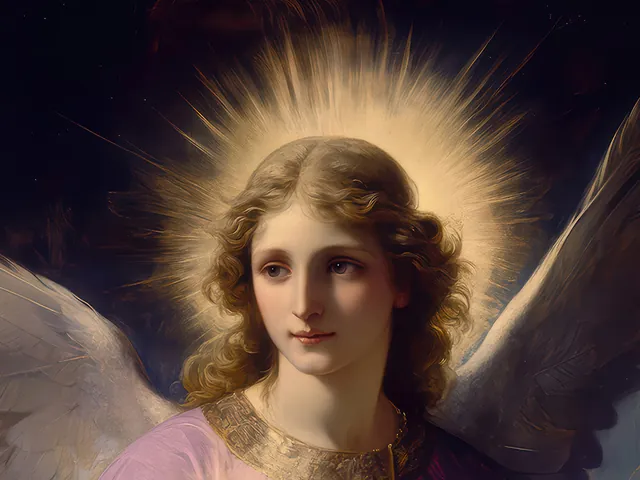
Stefan Lochner Paintings and the Tender Beauty of Late Gothic Art
Stefan Lochner is the supreme master of late Gothic Cologne painting. The Stefan Lochner paintings that survive today carry the gold ground, the elongated Gothic grace, and the soft tender colour of the great Cologne school to its highest pitch. He stood at the meeting point of the international Gothic and the new Flemish realism, and his Dombild Altarpiece, still preserved on the high altar of Cologne Cathedral, is one of the founding masterpieces of mid-fifteenth century German religious art.
This article gathers ten of his finest religious works, the panels and altarpieces that fill Cologne Cathedral, the Alte Pinakothek, and the great German museums with his Rhineland devotion.

From Meersburg to the Cologne Guild
Stefan Lochner was born around 1410, probably in Meersburg on Lake Constance, the son of a townsman of modest background. His early training is undocumented, but his mature style shows close affinity with the international Gothic of the upper Rhine and with the new Flemish manner of Robert Campin and the young Jan van Eyck. By 1442 he was a master painter in Cologne, where he was elected to the city council in 1447 and again in 1450, the highest honour for a craftsman of the Rhineland city.
His career covers the great years of mid-fifteenth century Cologne, then the largest and richest city in Germany. He died in 1451 in Cologne during one of the recurrent plague epidemics that struck the Rhineland in those years. Albrecht Dürer travelled to Cologne in 1520 specifically to see his Dombild Altarpiece and paid an attendant to open the wings for him, recording the encounter in his travel diary as one of the most memorable artistic experiences of his life.
The Dombild Altarpiece
Painted around 1440 to 1445 for the chapel of the Cologne city council, this great triptych is the founding masterpiece of late Gothic German painting. The central panel shows the Adoration of the Magi, with the Virgin and Christ child enthroned in the centre and the three Magi adoring at her feet. The wings show the patron saints of Cologne: Saint Ursula and her companions on one side, and Saint Gereon and his Theban Legion on the other. The composition is built on gold ground in the international Gothic manner, with the figures arranged in a calm static hierarchy.

The altarpiece still stands in the Marienkapelle of Cologne Cathedral, where it was transferred from the city hall chapel in 1810. Dürer saw it there in 1520 and called it the most extraordinary painting he had seen on his entire Low Countries voyage.
Madonna with the Violet
One of Lochner’s most lyrical Marian devotional panels, this picture shows the Virgin holding the Christ child who reaches for a small violet flower in her hand. The violet was a medieval symbol of the Virgin’s humility, the small purple flower that grows close to the ground. Lochner paints the figures with the soft modelling of his mature manner, against a gold ground in the international Gothic style.

The painting is at the Kolumba Museum in Cologne, the cathedral art museum.
Adoration of the Christ Child
This small panel shows the Virgin kneeling in adoration before the newborn Christ child in the Bethlehem stable, with Saint Joseph and the angels gathered around. Lochner paints the scene with the same gold ground and elongated Gothic grace as his Dombild Altarpiece, with the figures arranged in a calm hierarchical composition.

The painting is at the Alte Pinakothek in Munich.
The Last Judgement Altarpiece (Saints Catherine, Hubert and Quirinus)
From a great altarpiece originally dedicated to the Last Judgement, this panel shows three saints standing in a calm classical composition: Saint Catherine of Alexandria with the wheel of her martyrdom, Saint Hubert with the stag and the cross of his conversion, and Saint Quirinus of Neuss in armour with his lance. Lochner paints the three figures with the soft modelling and the gold ground of his mature manner.

The panel is at the Alte Pinakothek in Munich.
The Martyrdom of the Apostles
Painted around 1435 to 1440 for the Cologne carthusian monastery of Saint Barbara, this great altarpiece shows scenes from the martyrdoms of the twelve apostles arranged on its wings. The central panel of the composition has been lost. The surviving wings give us some of Lochner’s most concentrated narrative compositions.

The panels are at the Städel Museum in Frankfurt.
The Martyrdom of Saint Bartholomew
From the same Apostles altarpiece, this panel shows the apostle Bartholomew being flayed alive in Armenia. Lochner paints the scene with the tight horizontal composition that he used for all the apostle martyrdoms, with the saint at the centre and the executioners arranged around him.

The painting is also at the Städel Museum.
The Martyrdom of Saint James the Less
The third panel from the Apostles altarpiece shows the death of Saint James the Less, the brother of Jesus and the first bishop of Jerusalem, who was according to medieval tradition thrown from the pinnacle of the Temple and then clubbed to death. Lochner paints the moment with the same tight composition as his Bartholomew panel.

The painting is at the Städel Museum.
The Martyrdom of Saint Matthias
The fourth panel from the Apostles cycle shows the death of Saint Matthias, the apostle elected to replace Judas, who was beheaded or stoned in Jerusalem according to varying medieval traditions. Lochner paints the scene with the same compositional formula as the others.

The painting is at the Städel Museum.
The Virgin Crowned by Angels
This intimate Marian devotional panel shows the Virgin enthroned in glory while two small angels descend to place a crown of golden lilies on her head. Lochner paints the figures with the soft modelling and the gold ground of his mature manner, in a calm hierarchical composition against the celestial background.

The painting is now in a private collection.
Three Saints
A panel of three saints standing side by side, this picture shows Lochner’s mature ability to compose calm hierarchical compositions of standing figures against the gold ground of the international Gothic. The saints are shown in three-quarter view, each with the attribute of his or her iconography.

The painting is at the National Gallery in London.
For more context on Lochner’s late Gothic German world, see our articles on the upper Rhine masters Konrad Witz, on the Swabian master Hans Multscher, on the Tyrolean Michael Pacher, and on the great Colmar engraver-painter Martin Schongauer.
Summary Table of Stefan Lochner’s Religious Paintings
| Name | Artist | Date | Medium | Museum |
|---|---|---|---|---|
| The Dombild Altarpiece | Stefan Lochner | c. 1440 to 1445 | Oil and gold on panel | Cologne Cathedral |
| Madonna with the Violet | Stefan Lochner | c. 1443 | Oil and gold on panel | Kolumba Museum, Cologne |
| Adoration of the Christ Child | Stefan Lochner | c. 1445 | Oil and gold on panel | Alte Pinakothek, Munich |
| Saints Catherine, Hubert and Quirinus (Last Judgement Altarpiece) | Stefan Lochner | c. 1445 to 1450 | Oil and gold on panel | Alte Pinakothek, Munich |
| The Martyrdom of the Apostles | Stefan Lochner | c. 1435 to 1440 | Oil and gold on panel | Städel Museum, Frankfurt |
| The Martyrdom of Saint Bartholomew | Stefan Lochner | c. 1435 to 1440 | Oil and gold on panel | Städel Museum, Frankfurt |
| The Martyrdom of Saint James the Less | Stefan Lochner | c. 1435 to 1440 | Oil and gold on panel | Städel Museum, Frankfurt |
| The Martyrdom of Saint Matthias | Stefan Lochner | c. 1435 to 1440 | Oil and gold on panel | Städel Museum, Frankfurt |
| The Virgin Crowned by Angels | Stefan Lochner | c. 1445 | Oil and gold on panel | Private collection |
| Three Saints | Stefan Lochner | c. 1445 | Oil and gold on panel | National Gallery, London |
Conclusion
Lochner is the great master of late Gothic Cologne. His Dombild Altarpiece, still preserved on the high altar of Cologne Cathedral, is one of the founding masterpieces of mid-fifteenth century German religious painting and the painting that Dürer travelled across the Low Countries to see in 1520. His Madonnas, with their soft modelling and their gold-ground tenderness, defined the visual world of Rhineland devotion for the next century. He died young, around 1451, but the body of work he left behind has placed him among the most important German painters of the entire late Gothic age.
Important Facts About Stefan Lochner
- Stefan Lochner was born around 1410, probably in Meersburg on Lake Constance, the son of a townsman of modest background.
- By 1442 he was a master painter in Cologne, where he was elected to the city council in 1447 and again in 1450, the highest honour for a craftsman of the great Rhineland city.
- Lochner is the supreme master of late Gothic Cologne painting and is celebrated for his Marian panels, his gold-ground altarpieces, and the great Dombild Altarpiece that still stands in Cologne Cathedral.
- His most famous religious work is the Dombild Altarpiece, painted around 1440 to 1445 for the chapel of the Cologne city council and still preserved on the high altar of Cologne Cathedral.
- He died in 1451 in Cologne, probably from the plague, and Albrecht Dürer travelled there in 1520 to see his Dombild Altarpiece and called it the most extraordinary painting he had seen on his Low Countries voyage.
Questions and Answers About Stefan Lochner Paintings
What is Stefan Lochner’s most famous painting?
By far the most famous is the great Dombild Altarpiece, painted around 1440 to 1445 and still preserved in the Marienkapelle of Cologne Cathedral. The Madonna with the Violet at the Kolumba Museum in Cologne and the Adoration of the Christ Child at the Alte Pinakothek in Munich are also widely studied.
Where can I see Stefan Lochner paintings today?
The Dombild Altarpiece is still in Cologne Cathedral, in the Marienkapelle. The Kolumba Museum in Cologne holds the Madonna with the Violet. The Alte Pinakothek in Munich holds the Adoration of the Christ Child and the Last Judgement panel. The Städel Museum in Frankfurt has the Apostles martyrdom cycle. The National Gallery in London holds the Three Saints.
What style is Stefan Lochner associated with?
Lochner is the supreme master of late Gothic Cologne painting. His mature style fuses the international Gothic gold-ground manner of his upper Rhine training with the new Flemish realism that was reaching the Rhineland through the work of Robert Campin and the young Jan van Eyck. His soft Marian modelling and his elongated Gothic grace remained the model for Rhineland religious painting for the rest of the fifteenth century.
Did Dürer admire Lochner?
Yes, very much. In 1520, on his Low Countries voyage, Dürer travelled to Cologne specifically to see the Dombild Altarpiece. He recorded in his travel diary that he paid two silver groschen to have the wings of the altarpiece opened for him by an attendant, and he called it the most extraordinary painting he had seen on the entire trip. The encounter is one of the most documented artist-to-artist tributes of the Northern Renaissance.
How did Lochner influence later art?
His Cologne workshop set the visual standard for Rhineland religious painting for the rest of the fifteenth century. The next generation of Cologne masters, including the so-called Master of the Life of the Virgin and the Master of the Holy Kinship, worked directly in the manner he had established. Through the Cologne school, his Madonnas and his gold-ground altarpieces shaped the wider German late Gothic tradition.
When did Stefan Lochner die?
He died in 1451 in Cologne, probably from the plague that struck the city in that year. He was buried in the cemetery of the Cologne brotherhood of Saint Luke. His death cut short what would have been one of the most important careers of mid-fifteenth century German painting, but the body of work he left behind has placed him among the great German masters of the late Gothic age.
Can you buy Stefan Lochner paintings as canvas prints?
The shop at jesuschrist.pictures offers museum-quality canvas reproductions of the great Christian paintings, and the collection keeps growing; it is the best place to look for Stefan Lochner paintings as canvas prints.