John of the Cross: The Poet Who Wrote His Masterpiece in a Prison Cell
On the night of 2 December 1577 a group of Carmelite friars broke into a small house in Avila and took away one of their own. They did not hand him to the state or to the Inquisition. They took him to their own priory in Toledo, put him in a room about ten feet by six that had been a closet for a latrine, and kept him there for nine months, bringing him out at intervals to be flogged in front of the community while he knelt. He was thirty-five, he weighed very little to begin with, and by the summer he was in a condition his rescuers described as barely alive. In that cell, with a lamp borrowed from the corridor and paper smuggled by a jailer who took pity on him, he composed the first thirty-one stanzas of the Spiritual Canticle and the poem that begins En una noche oscura. They are, by common consent among people who read Spanish, the finest lyric poems in the language.
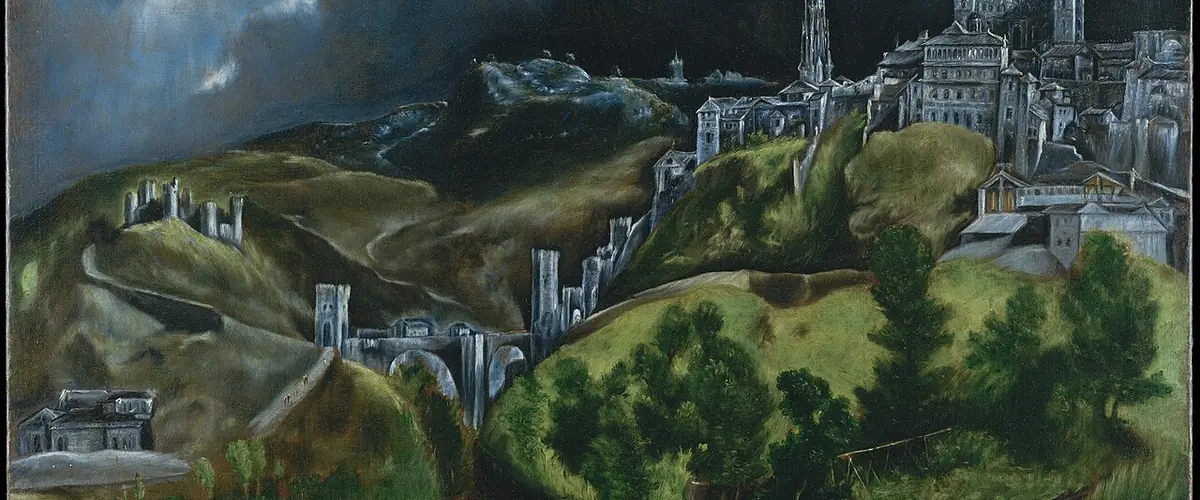
Fontiveros, 1542: Poverty That Was Not a Metaphor
Juan de Yepes Alvarez was born on 24 June 1542 at Fontiveros, on the Castilian plain north of Avila. His father Gonzalo came from a family of silk merchants in Toledo and was disinherited for marrying Catalina Alvarez, a poor weaver. He died a few years later. Catalina was left with three sons and no support, and the middle one, Luis, died of undernourishment while still a child. This matters because the poverty in John’s writing is not a literary device. He went out with his mother to look for work, was placed in a school for the destitute at Medina del Campo, and from about fourteen worked at the Hospital de la Concepcion, an institution for patients with syphilis and other incurable conditions, while attending the Jesuit college in the mornings. He spent his adolescence washing people who were dying badly.
The Carthusian Who Never Went
He joined the Carmelites at Medina in 1563 and studied at Salamanca, then the best university in Spain, from 1564. By 1567 he had been ordained and had concluded that the order was too lax for what he wanted. He intended to become a Carthusian, which would have meant silence, solitude and disappearance. That autumn, at Medina, a Carmelite nun of fifty-two who was going around Castile founding convents heard about him and asked to meet him. Teresa of Avila had permission to found houses for friars as well as nuns and no friars to put in them. She talked him out of the Charterhouse. She later wrote that she had got hold of a friar and a half for her reform, the half being John, who was very short. On 28 November 1568, in a farmhouse at Duruelo with a roof you could touch, three of them began the Discalced reform for men. Juan de Yepes became Juan de la Cruz, John of the Cross.
Avila, and a Drawing the Size of a Postcard
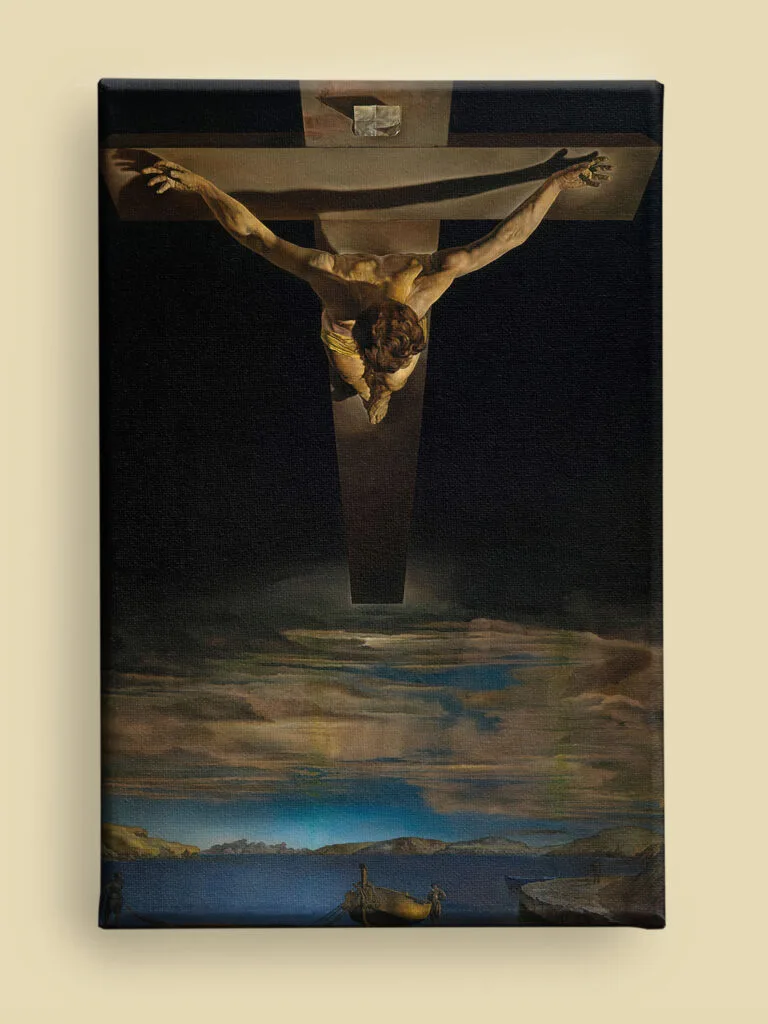
From 1572 to 1577 he was confessor at the Convent of the Incarnation at Avila, the large unreformed house where Teresa had been sent as prioress. Some time in those years he made a small pen drawing of Christ on the cross, seen from above and slightly behind, as if the viewer were suspended over the top of the cross looking down at the bowed head and the foreshortened body. It is a strange, dizzying little sketch and it is still kept at the Incarnation. In 1950 Salvador Dali saw a reproduction of it and built Christ of Saint John of the Cross around that viewpoint, which is why the most famous crucifixion of the twentieth century carries the name of a sixteenth century friar who never painted anything else. The painting is Dali’s. The angle is John’s.

Why His Own Order Imprisoned Him
The reform was not a friendly disagreement. The Carmelite order had two authorities issuing contradictory orders, the general in Rome and the papal nuncio in Spain, and the unreformed majority regarded the Discalced as rebels operating without valid permission. In 1575 the general chapter at Piacenza ordered the Discalced houses suppressed. John, who was living under Teresa’s authority at Avila, refused to move on the grounds that his obedience lay elsewhere. So they came for him at night, and the answer to the question people actually search for is this: John of the Cross was imprisoned not by heretics or by the Inquisition but by fellow Carmelites, in a jurisdictional dispute inside a religious order, for refusing to abandon a reform his superiors had authorised and their superiors had cancelled.
Nine Months in Toledo
The cell had one slit high in the wall, and for part of the year he could read only by standing on a bench at the hour the light reached it. He was fed bread, water and sardine scraps on the floor of the refectory. Discipline was administered publicly, weekly at first. His clothes rotted on him. He developed dysentery. Around the sixth month a new jailer, Fray Juan de Santa Maria, began bringing him clean paper and a lamp, and let him out briefly to empty his bucket, which is how he learned the geography of the building. What John did with the paper was not a complaint or a legal appeal. It was poetry, in the voice of a bride looking for her bridegroom in the mountains, borrowed straight from the Song of Songs and set to the metre of Garcilaso.

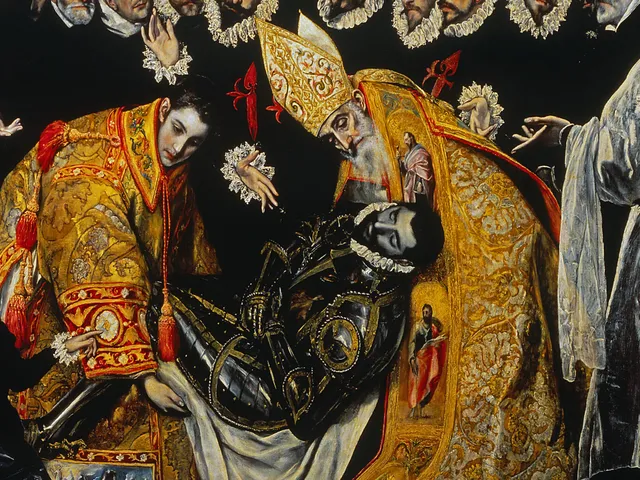
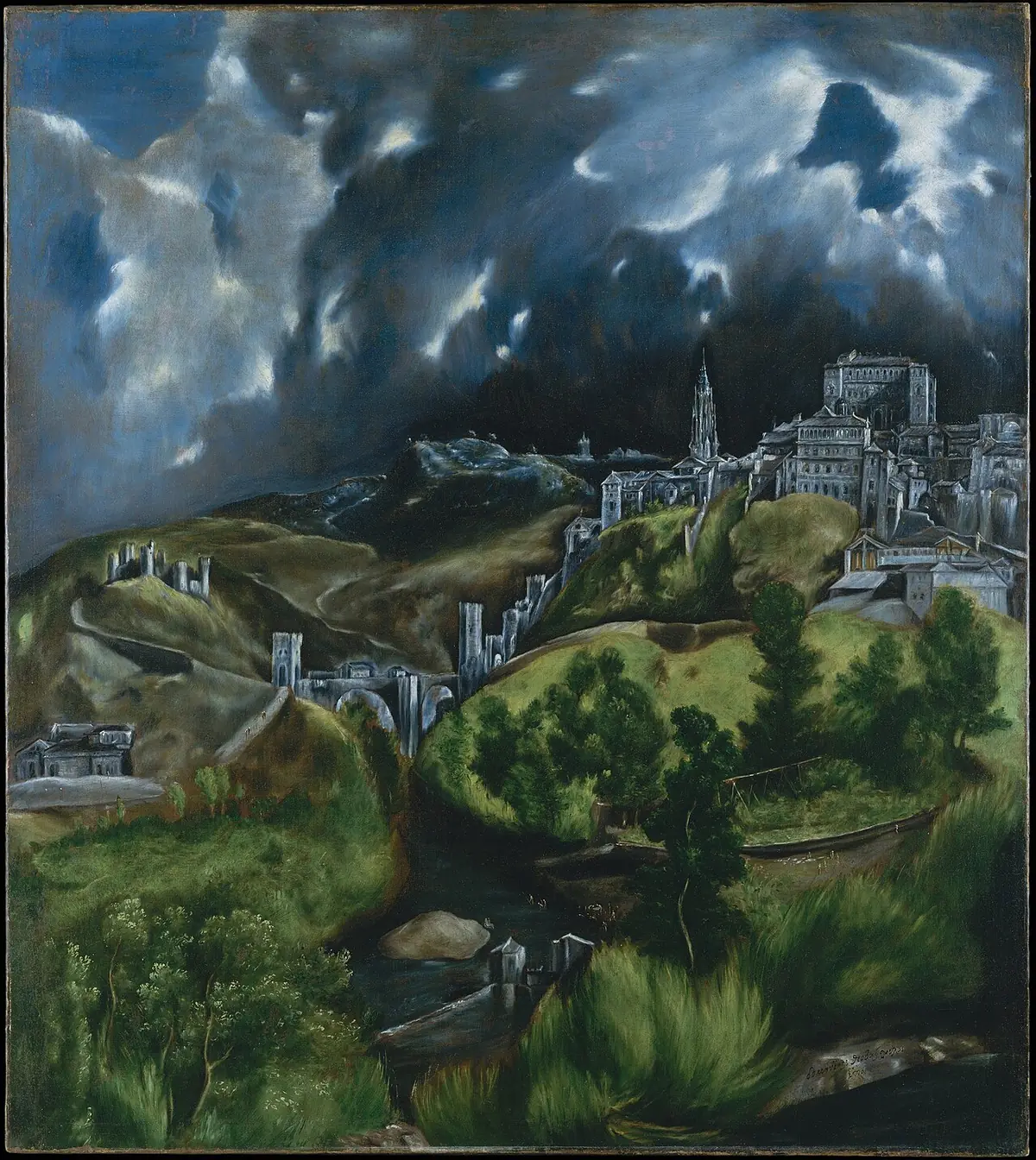
There is a coincidence here worth pausing on. In those same months, in the same city, a Greek painter from Crete who had settled in Toledo two years earlier was finishing an altarpiece for the cathedral sacristy. El Greco’s Espolio and John’s Spiritual Canticle were made a few streets apart, by two foreigners to Castile, in 1577 and 1578. Neither knew about the other.
The Escape
In August 1578 he worked the screws of the lock loose over several nights, tore blankets into strips, and let himself down from the outside wall in the dark. The drop landed him in the courtyard of an adjoining convent of Franciscan nuns, and from there he got into the street. He was hidden by sympathisers, then moved south into Andalusia, out of reach. He had almost nothing with him except a folded sheet of paper with the poems on it.
What the Dark Night Actually Means
The phrase has escaped into ordinary English, where it means a period of depression or a personal crisis. That is not what John meant, and the distinction is the centre of his theology. For John, the dark night is not a misfortune. It is a process, and God is the one running it. In the night of sense, the beginner who has enjoyed prayer stops enjoying it, and the consolations dry up. In the far more severe night of the spirit, the person’s own religious certainties, images and self understanding are stripped as well. In both cases the darkness is the effect of a light too strong for the eye, in the same way that a room seems black when you come in from full sun. The purpose is to detach the soul from its own satisfactions, including its satisfaction at being devout. That is why the poems are not sad. En una noche oscura is an escape narrative, and it is written in the voice of someone who got out. The house is still, everybody is asleep, and she goes down the secret stair into the dark, and the dark is the thing that saves her. He wrote it after climbing out of a window.
Ubeda, 1591
The last part is bleak in a way hagiography usually smooths over. By 1591 the Discalced had won their independence and had acquired their own internal politics, run by Nicolas Doria. John opposed him, defended nuns Doria wanted to bring to heel, and was stripped of every office at the chapter of Madrid. There was talk of expelling him from the order he had co-founded. He was sent to La Penuela in the Sierra Morena, and asked for it. He developed an infection in his leg and was moved to Ubeda for treatment, to a priory whose prior disliked him and made it known. He died there in the night between 13 and 14 December 1591, at forty-nine. Within days the same house was collecting his belongings as relics, and within two years two towns were in a legal dispute over the body.
Doctor of the Church, 1926
He was beatified in 1675 and canonised in 1726. On 24 August 1926, Pius XI declared him a Doctor of the Church with the title Doctor mysticus, the mystical doctor. The centenary of that declaration falls in 2026. He is the only Doctor of the Church whose principal works are commentaries on his own poems, which is an odd and rather beautiful arrangement: the argument is in the verse, and the prose exists to explain it.
John of the Cross Paintings Featured in This Article
| Painting | Artist | Date | Museum |
|---|---|---|---|
| View of Toledo | El Greco | about 1599-1600 | The Metropolitan Museum of Art, New York |
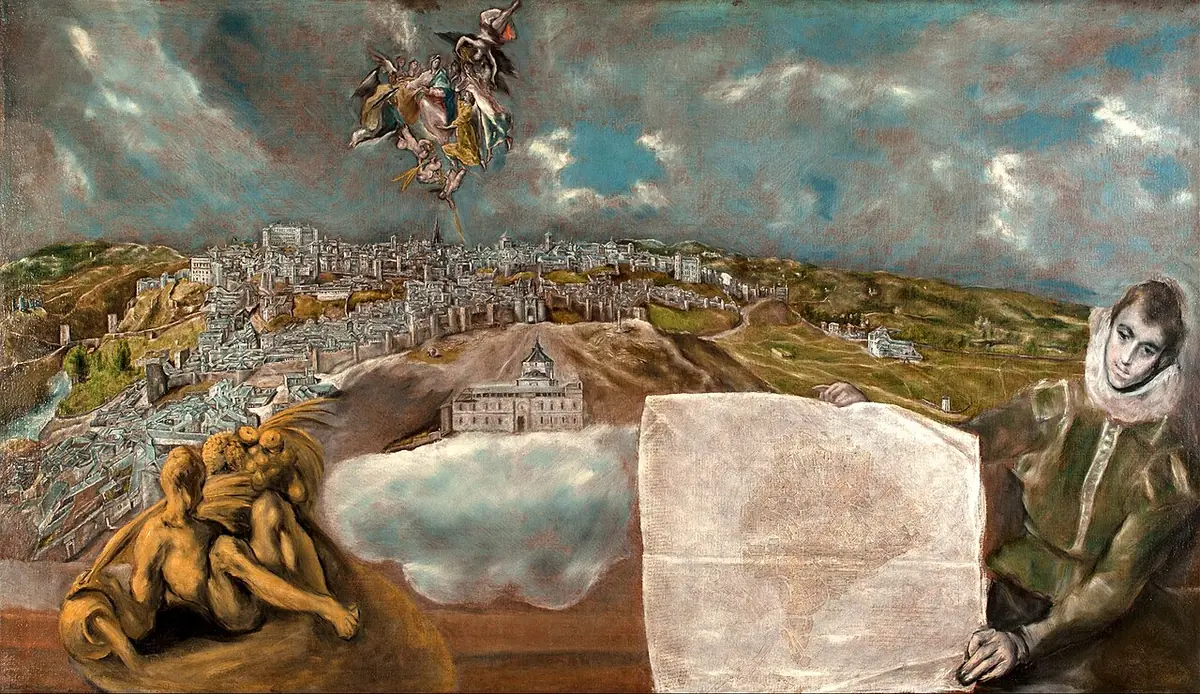
| View and Plan of Toledo | El Greco | about 1608-1614 | Museo del Greco, Toledo |
| The Disrobing of Christ (El Espolio) | El Greco | 1577-1579 | Toledo Cathedral |
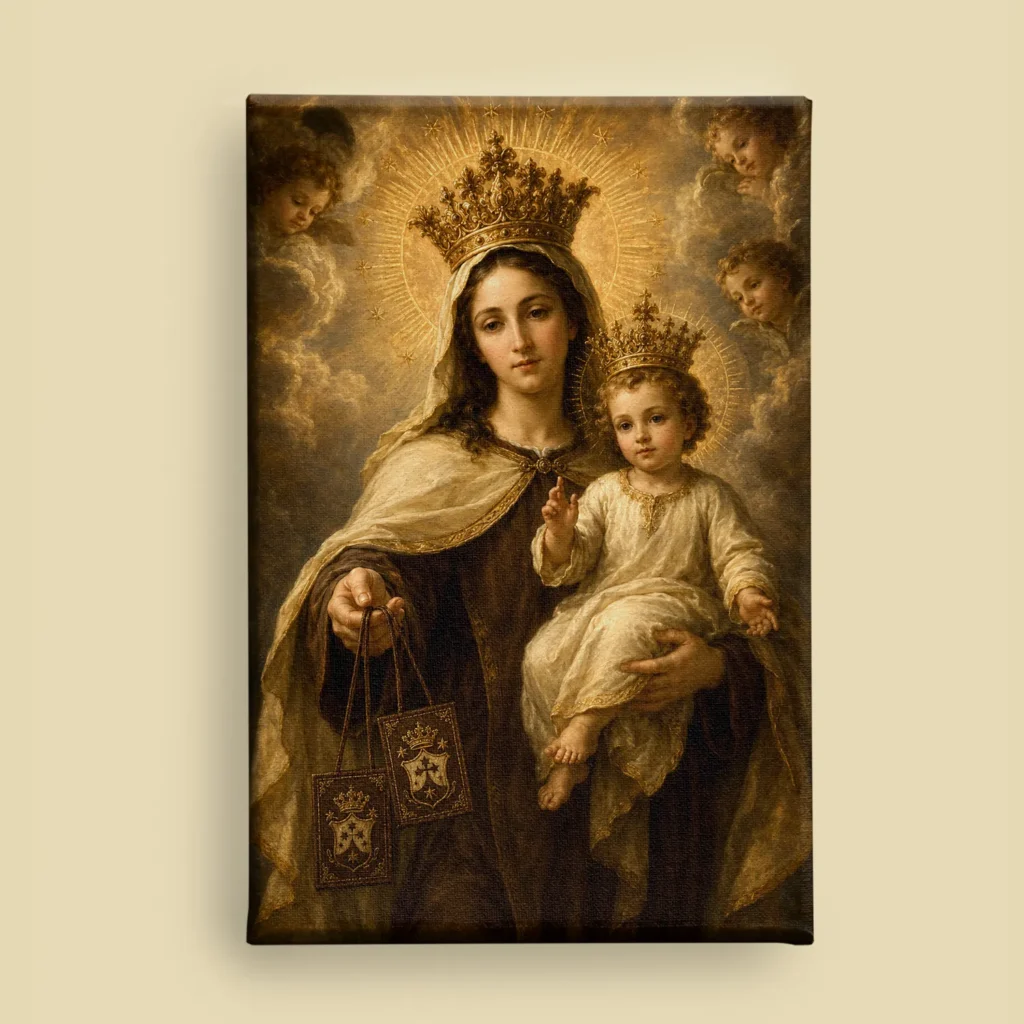
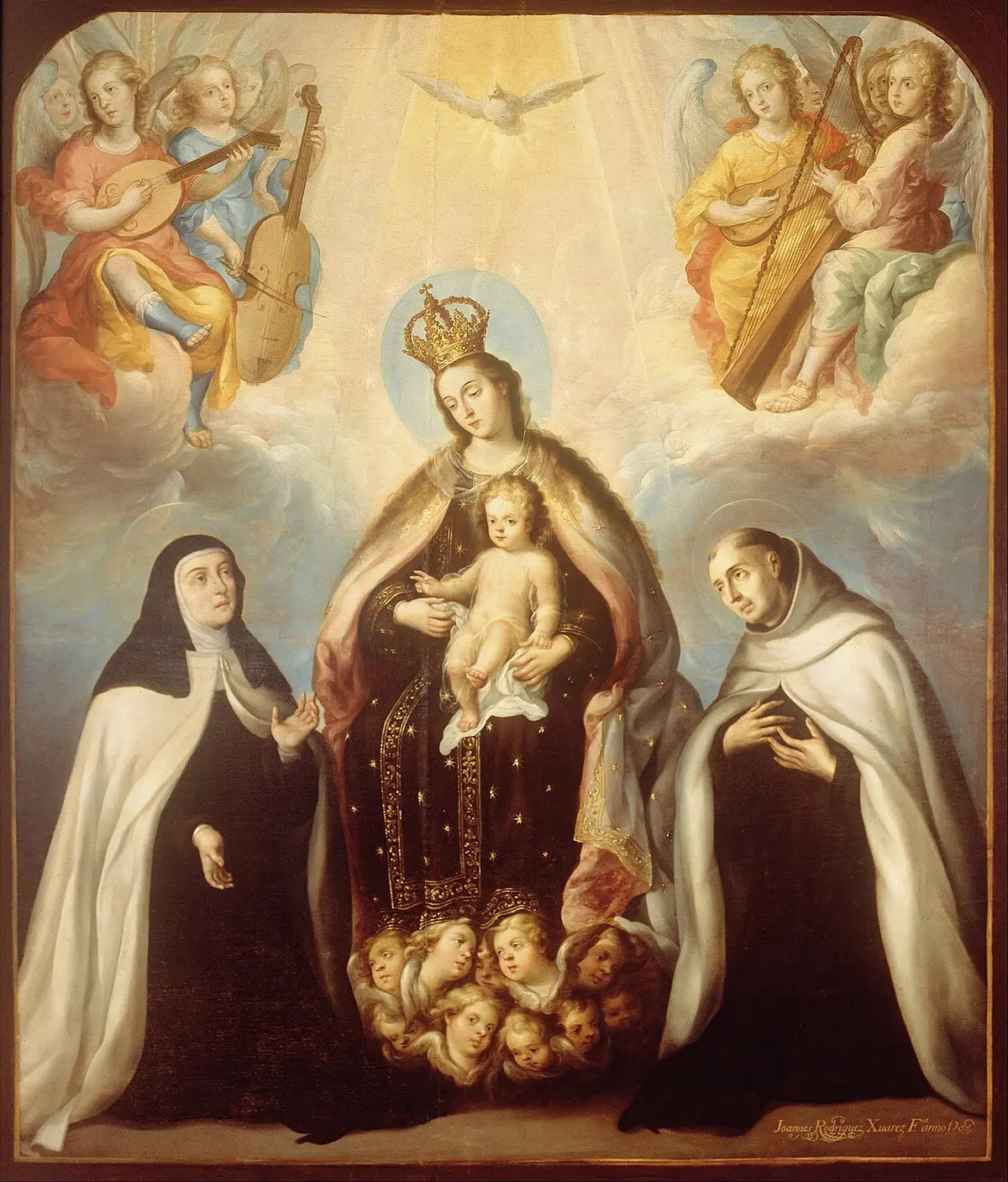
| The Virgin of Carmel with Saint Teresa and Saint John of the Cross | Juan Rodriguez Juarez | early 18th century | Museo Nacional de Arte, Mexico City |
| Christ of Saint John of the Cross | Salvador Dali | 1951 | Kelvingrove Art Gallery and Museum, Glasgow |
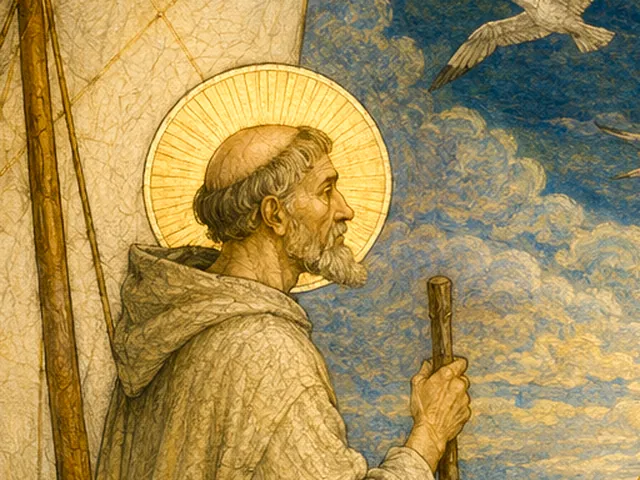
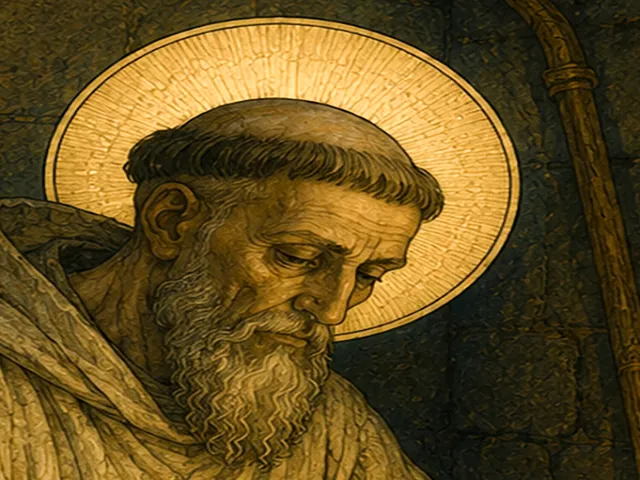
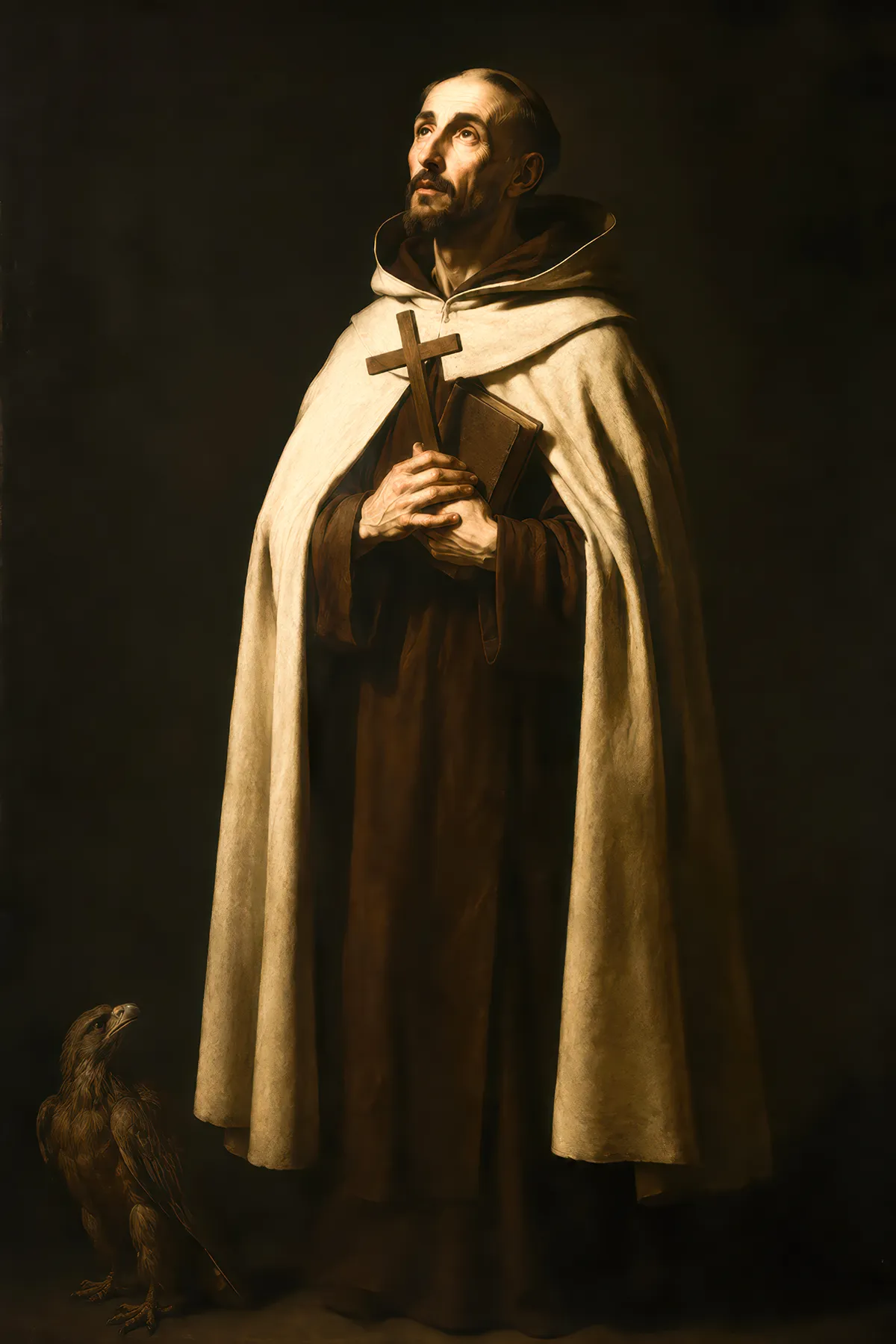
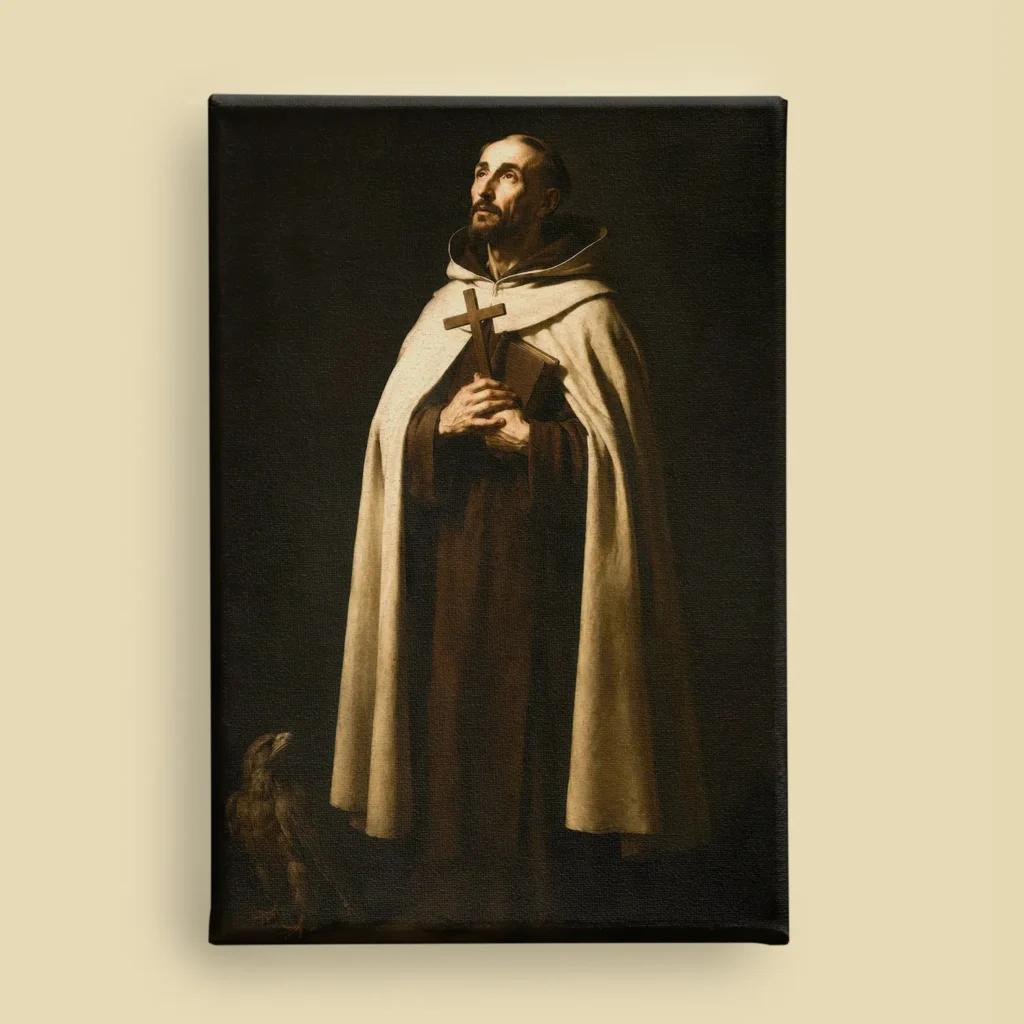
| Saint John of the Cross, devotional portrait | Painted for jesuschrist.pictures | contemporary | Original work, not a historical painting |
The Smallest Body of Work in the Canon
John of the Cross wrote three short poems that matter and three prose commentaries explaining them, and that is essentially all. The complete poetry runs to a few dozen pages. Against Teresa’s four books and thousands of letters it is nothing, and it has outlasted almost everything written in Spain in that century. The reason is probably that he had no audience in mind. Teresa wrote because confessors ordered her to and she knew the Inquisition would read it. John wrote in a locked room where nobody was going to read anything, in the only form that fits a situation with no exit, which is a song. Then he climbed out of the window and spent thirteen years explaining, in careful scholastic prose, what the song had meant.
Important Facts About John of the Cross
- Born: 24 June 1542, Fontiveros, Castile, as Juan de Yepes Alvarez. His father was disinherited for marrying a poor weaver and died young.
- Died: the night of 13 to 14 December 1591, Ubeda, Andalusia, aged 49.
- Feast day: 14 December.
- Co-founded: the Discalced Carmelite friars at Duruelo on 28 November 1568, after Teresa of Avila talked him out of joining the Carthusians.
- Imprisoned: by his own order, in Toledo, from December 1577 to August 1578, nine months in a cell about ten feet by six, with public floggings.
- Wrote in that cell: the first thirty-one stanzas of the Spiritual Canticle and the poem En una noche oscura.
- Major works: Ascent of Mount Carmel, Dark Night, Spiritual Canticle and Living Flame of Love, each a commentary on his own verse.
- Canonised: 1726. Declared a Doctor of the Church on 24 August 1926, with the title Doctor mysticus.
- Patron of: Spanish poets, contemplatives and mystics.
Frequently Asked Questions
What is Saint John of the Cross known for?
For being the greatest lyric poet in Spanish and the most rigorous writer on contemplative prayer in the Christian tradition. He co-founded the Discalced Carmelite friars with Teresa of Avila in 1568, wrote the Spiritual Canticle, the Dark Night, the Ascent of Mount Carmel and the Living Flame of Love, and was declared a Doctor of the Church in 1926. The phrase dark night of the soul is his.
Why was John of the Cross imprisoned?
By his own order, in a dispute over the Carmelite reform. The general chapter at Piacenza in 1575 ordered the Discalced houses suppressed, while the papal nuncio in Spain had authorised them. John refused to abandon his post at Avila. On 2 December 1577 Carmelites of the unreformed observance seized him and took him to their priory in Toledo, where he was held for nine months in a cell roughly ten feet by six and flogged in front of the community. Neither the Inquisition nor the civil authorities were involved.
What does the dark night of the soul actually mean?
Not depression, and not a crisis of faith, although the phrase is now used for both. In John it is a purification with a purpose. In the night of sense, the pleasure a beginner takes in prayer is withdrawn. In the night of the spirit, the person’s own religious ideas and self image are stripped as well. He compares the darkness to what happens when a light is too strong for the eye, so that the room goes black. The point is to detach the soul from its own consolations, including its pleasure in being devout.
How did John of the Cross escape from prison?
In August 1578, after about nine months, he worked the screws of the lock loose over several nights, tore blankets into strips to make a rope, and let himself down from the outer wall in the dark. He landed in the courtyard of an adjoining convent, got into the street, and was hidden by sympathisers before being moved south into Andalusia. He took the smuggled sheet of paper carrying his poems with him.
What is Saint John of the Cross’s most famous quote?
The best known is from his Sayings of Light and Love: A la tarde te examinaran en el amor, in the evening of life you will be examined on love. A close second comes from a letter: where there is no love, put love, and you will draw out love. Both are short enough to survive translation, which is part of why they travelled.
Did John of the Cross paint the Dali crucifixion?
No, but he supplied the idea. Some time between 1572 and 1577, at Avila, he made a small pen drawing of Christ on the cross seen from above and behind, in extreme foreshortening. It is still kept at the Convent of the Incarnation in Avila. Salvador Dali saw a reproduction of it around 1950 and built his Christ of Saint John of the Cross on that viewpoint, which is how a modern painting came to carry a sixteenth century friar’s name. The drawing is the saint’s, the painting is Dali’s.
What happened to John of the Cross at the end of his life?
He lost an internal political fight. By 1591 the Discalced had won independence and were run by Nicolas Doria, whom John opposed. He was stripped of all office at the chapter of Madrid and sent to La Penuela in the Sierra Morena. An infection in his leg took him to Ubeda for treatment, to a priory whose prior treated him coldly, and he died there in the night of 13 to 14 December 1591, aged forty-nine.
Can you buy John of the Cross paintings?
You can buy John of the Cross paintings at jesuschrist.pictures, in our shop, including a devotional portrait of the saint himself and the Dali that carries his name. Because no likeness of him was made from life, the images of John are mostly later devotional works, and the strongest visual companion to his story is El Greco, who was painting the Espolio in Toledo during the months John spent imprisoned there. See also Christ of Saint John of the Cross, the companion article on Teresa of Avila, the two Jesuits canonised alongside her, Ignatius of Loyola and Francis Xavier, the wider Spanish saints guide, and our Zurbaran collection, whose austere Carmelites are the closest painting comes to the world John lived in.