Black Madonna: Meaning, Secrets & Mysteries
The Black Madonna is one of the most arresting mysteries of Christian art: hundreds of images of the Virgin Mary, scattered across the churches of Europe, whose faces are not fair but deep brown or black. Kings have crawled to them on their knees, popes have crowned them, revolutions have burned them, and pilgrims still queue for hours to touch them. Estimates count four to five hundred of these dark Virgins, most of them medieval, and the highest concentration lies in France, Spain, Italy, Switzerland, Germany and Poland.
Why is she black? Is it smoke, or age, or intention? Does she hide an older, stranger past? This guide answers what can be answered, admits what remains mysterious, and introduces the most venerated Black Madonnas you can still see today, from the scarred icon of Częstochowa to the golden niche of Montserrat.
What Is a Black Madonna?
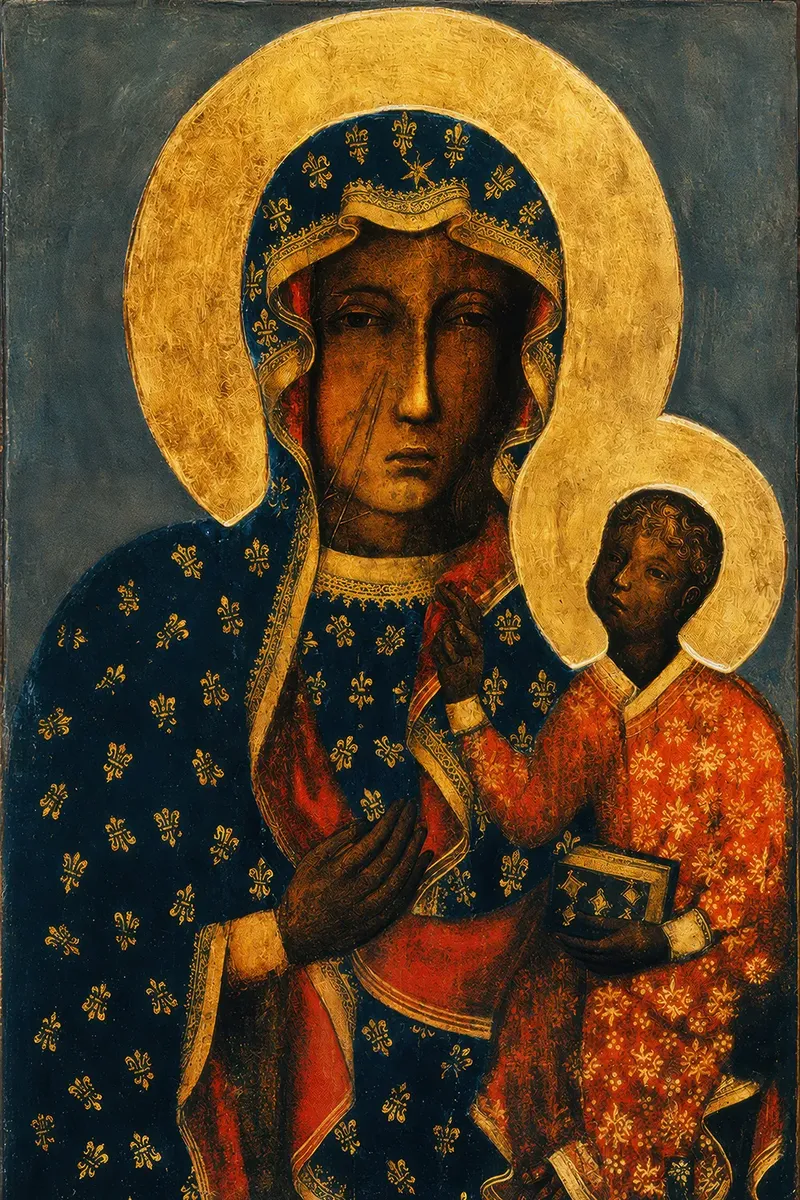
A Black Madonna is a statue or painting of the Virgin Mary, usually with the Child, in which Mary’s face and hands are dark brown or black, made by artists working in a culture that otherwise painted her fair. Most are Romanesque or Gothic wooden statues carved between the eleventh and the fourteenth centuries, seated Virgins holding the Child on their lap in the solemn frontal pose called the Throne of Wisdom. A smaller family are icons and panel paintings in the Byzantine manner, of which Our Lady of Częstochowa is the supreme example.
These images were not curiosities in a corner. Many of them were, and remain, the most venerated objects of their region: the patroness of Catalonia at Montserrat, the protectress of Bavaria at Altötting, the Queen of Poland at Jasna Góra. Whatever the Black Madonna is, she is not marginal. She sits at the centre of European devotion, as our guide to Marian iconography shows in a wider context.
Why Is She Black? Three Explanations
The first explanation is physical. Centuries of candle smoke, incense, oil lamps and darkening varnish will blacken any painted surface. Some dark Virgins are simply very old and very loved, their faces cured like wood above a hearth. When restorers cleaned the Madonna of Einsiedeln in 1803, they found pale flesh tones under the soot, and the monks had her repainted black: the pilgrims’ Madonna was black, and black she would remain.
The second explanation is intention. Many statues show dark faces but brightly preserved robes, which smoke alone does not explain, and some were carved in naturally dark woods or repainted black on purpose long before the modern era. For the medieval mind the key text was the Song of Songs, where the bride says “Nigra sum sed formosa”, I am black but beautiful. The dark Virgin was the bride of the Canticle, beauty that owes nothing to fairness, and her blackness was read as depth, fertility of the earth, and the humility of the servant whom God exalts.
The third explanation reaches further back. Some scholars have proposed that certain Black Madonnas inherited the sites, and perhaps the aura, of older mother goddesses venerated in dark stone, Isis nursing Horus being the favourite comparison. The theory is debated, and it is stated here as a hypothesis rather than a fact: the documented history of most statues begins firmly inside Christianity. What is certain is that the dark Virgins occupy some of the oldest holy places of Europe, caves, springs, hilltops, and that their strangeness has always been part of their power.
The Most Venerated Black Madonnas of Europe
Apart from Częstochowa, the great Black Madonnas are statues, not paintings, and each one anchors a pilgrimage that is centuries old. Here are the ones every lover of sacred art should know.
Our Lady of Montserrat, Catalonia
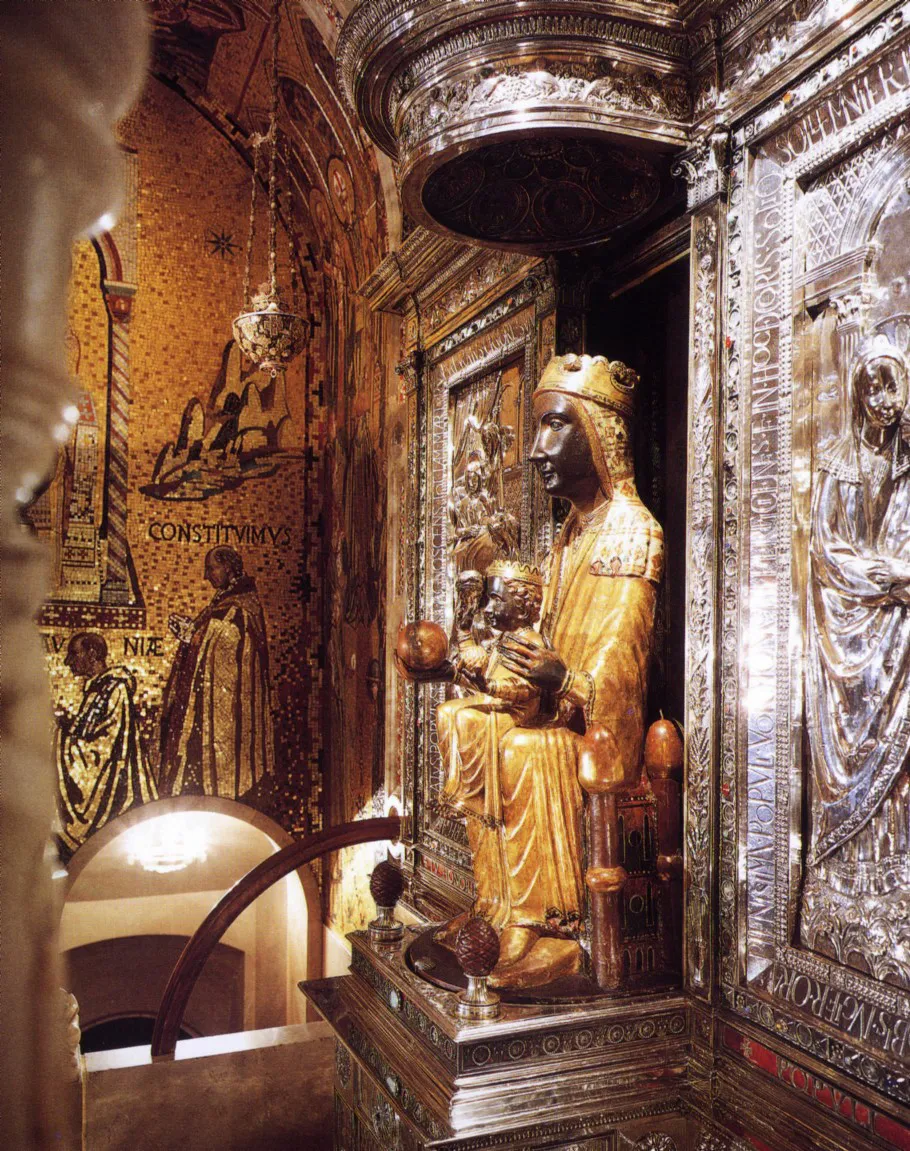
High on her serrated mountain above Barcelona, La Moreneta, “the little dark one”, is a twelfth century Romanesque carving and the patroness of Catalonia. She holds a golden orb in her right hand, and pilgrims queue along the alabaster passage above the high altar of the Abbey of Montserrat to kiss or touch it, one of the most beloved gestures in Spanish devotion. Legend says the image was found in the nearby Santa Cova, the Holy Grotto, guided by lights and song.
Our Lady of Rocamadour, France
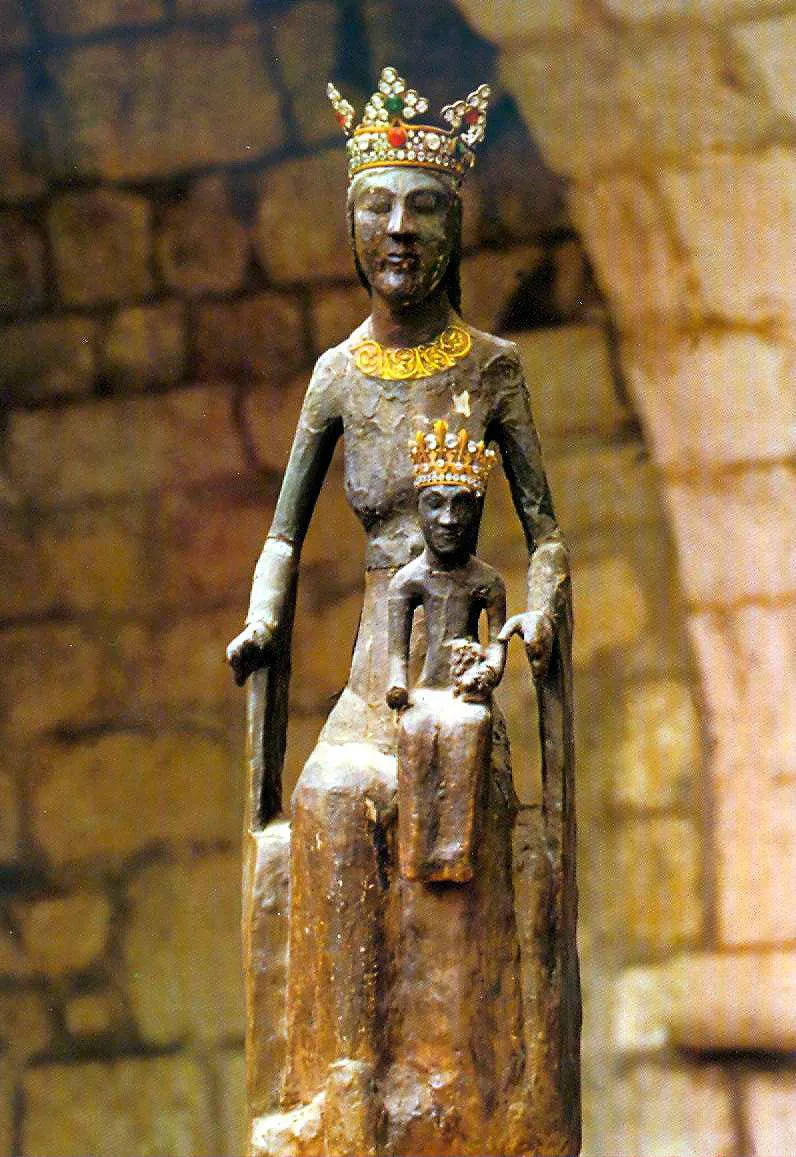
Halfway up a sheer cliff in the Lot, the rough walnut Virgin of Rocamadour has drawn pilgrims since the twelfth century, among them kings of France and England. She is slender, austere, almost abstract, the opposite of courtly prettiness, and her Book of Miracles, compiled in 1172, is one of the oldest of its kind. Sailors far away invoked her against shipwreck, and votive chains left by freed captives once hung in her chapel.
The Black Virgin of Le Puy-en-Velay, France
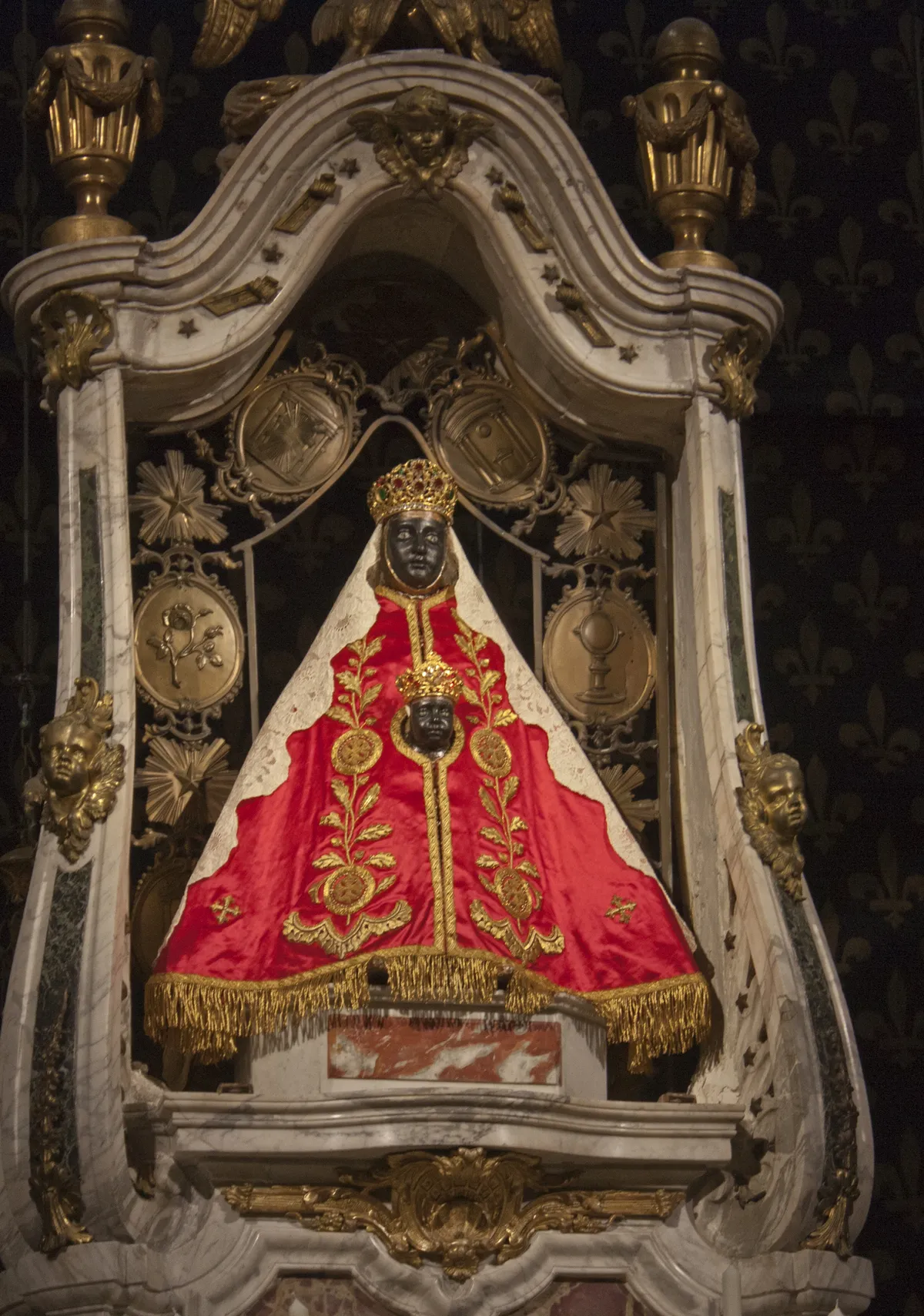
Le Puy was one of the four great gathering points of the medieval road to Compostela, and its dark Virgin was among the most famous in Christendom. The medieval statue was burned publicly on the town square in 1794, during the Revolution, and the image venerated today in the cathedral of Le Puy is a copy in her red mantle. The devotion did not burn: the annual Jubilee of Le Puy, held when the Annunciation falls on Good Friday, still fills the city.
Our Lady of Einsiedeln, Switzerland
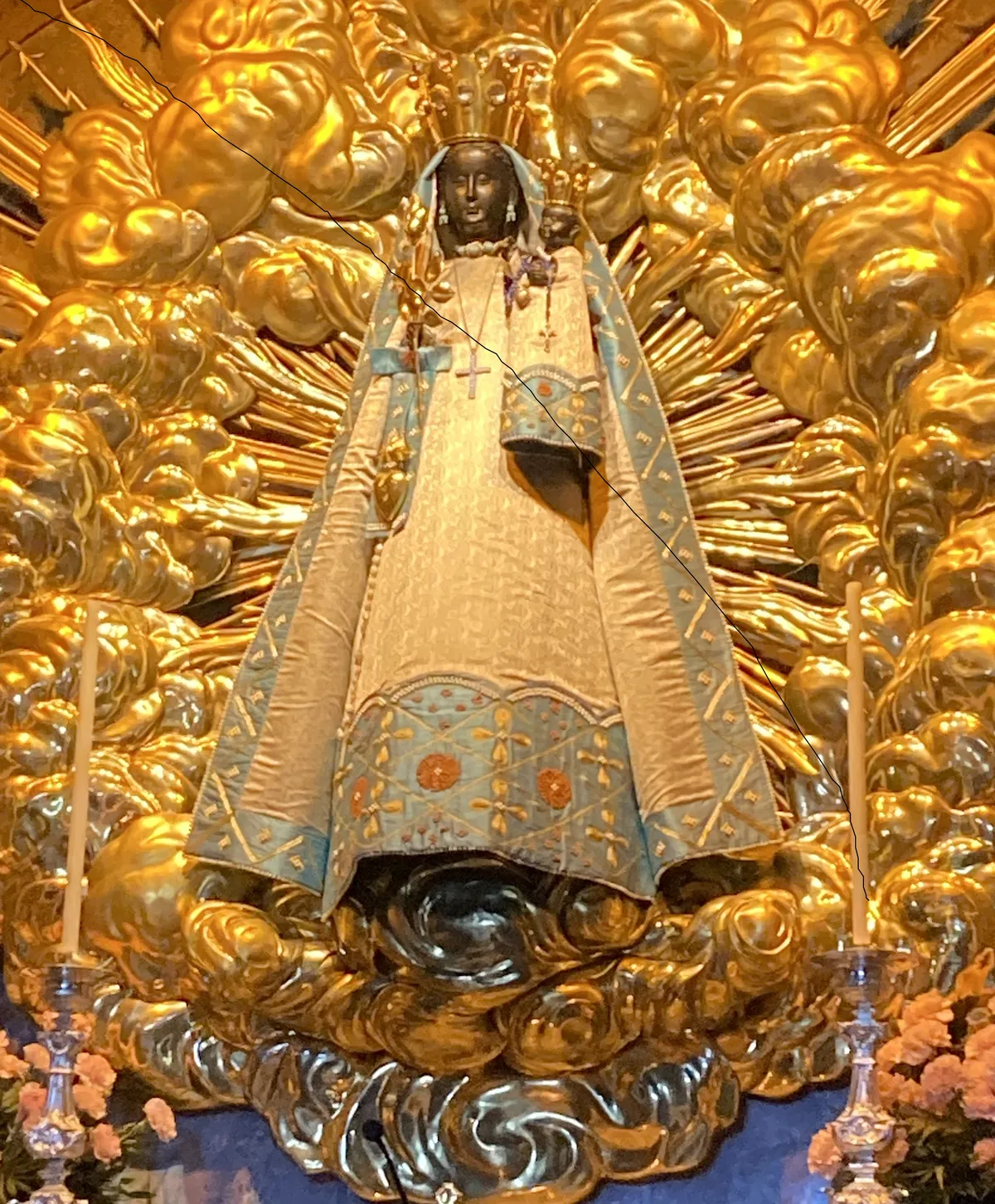
In the Chapel of Grace of the great Benedictine abbey of Einsiedeln, a late Gothic Madonna stands in a glory of golden clouds, dressed like a Spanish infanta in brocade. She is the Black Madonna whose cleaning in 1803 revealed pale wood beneath the centuries of candle soot, and who was deliberately repainted black at the monks’ request. Few stories say more clearly that the blackness itself had become sacred.
Our Lady of Loreto, Italy
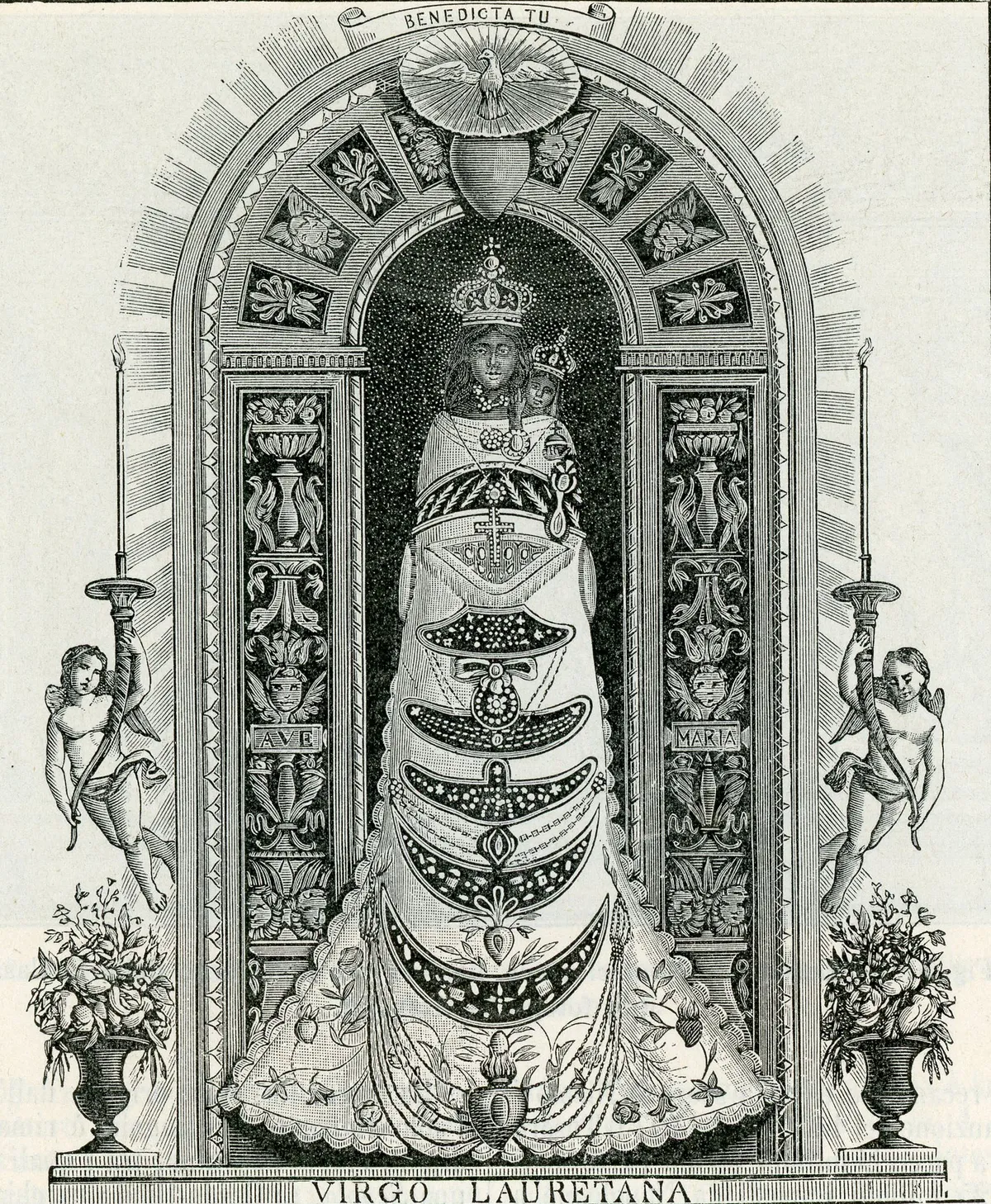
The Holy House of Loreto, which tradition says angels carried from Nazareth, sheltered a dark cedar Virgin dressed in a jewelled dalmatic, the Virgo Lauretana of countless engravings like the one above. The ancient statue was destroyed by fire in 1921, and the present image, carved in 1922 from a cedar of the Vatican gardens, was deliberately made black to continue her likeness. Our Lady of Loreto is the patroness of aviators, and her litany is prayed worldwide.
Our Lady of Altötting, Bavaria
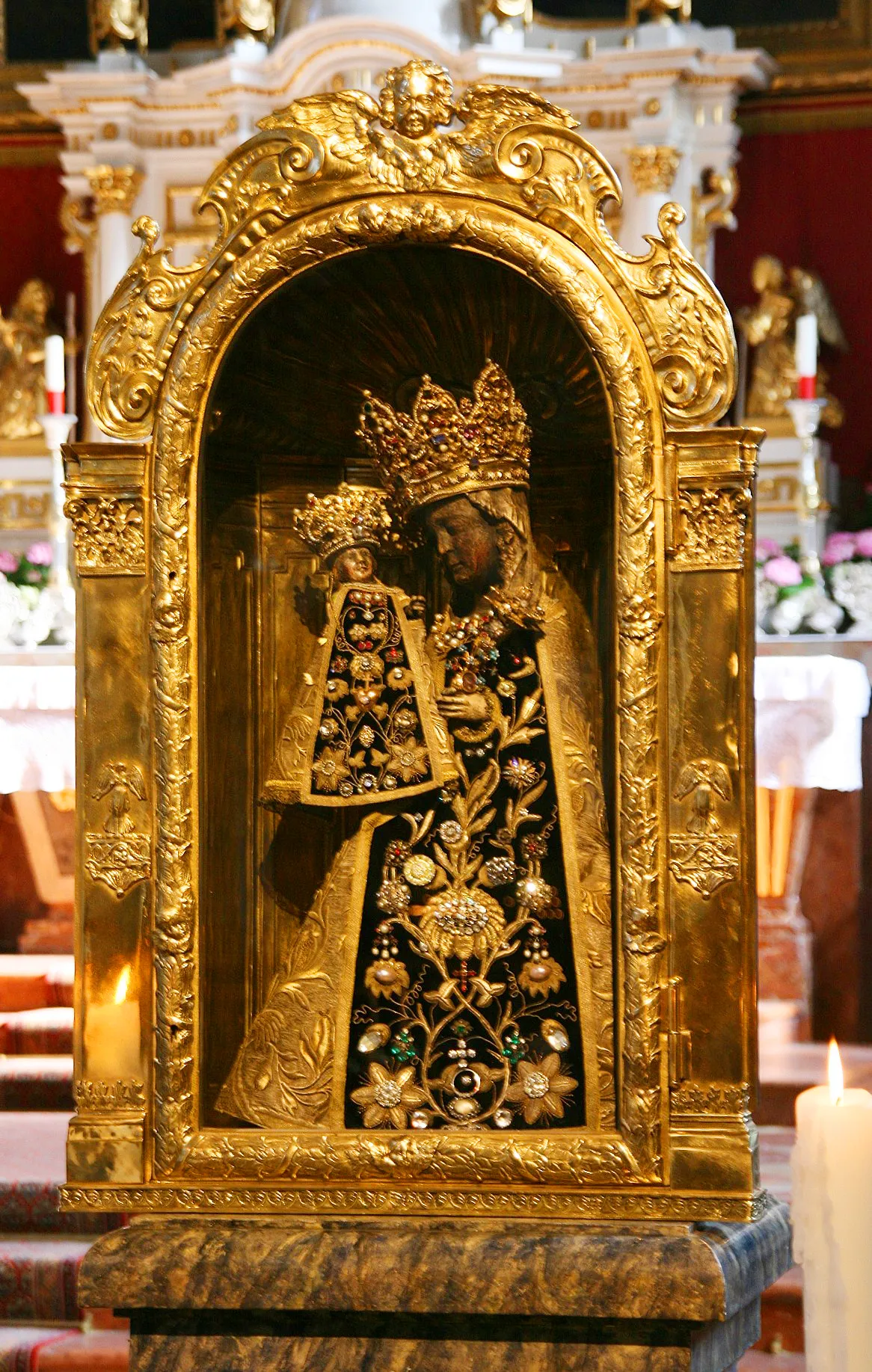
The Gnadenbild of Altötting, carved around 1330, stands in a silver and gold shrine in the ancient octagonal Chapel of Grace, the national sanctuary of Bavaria. The hearts of Bavarian kings and dukes are buried in silver urns around her, a dynasty literally leaving its heart with the dark Virgin. Pope Benedict XVI, born a few kilometres away, called her chapel the heart of Bavaria.
Our Lady of the Pillar, Chartres
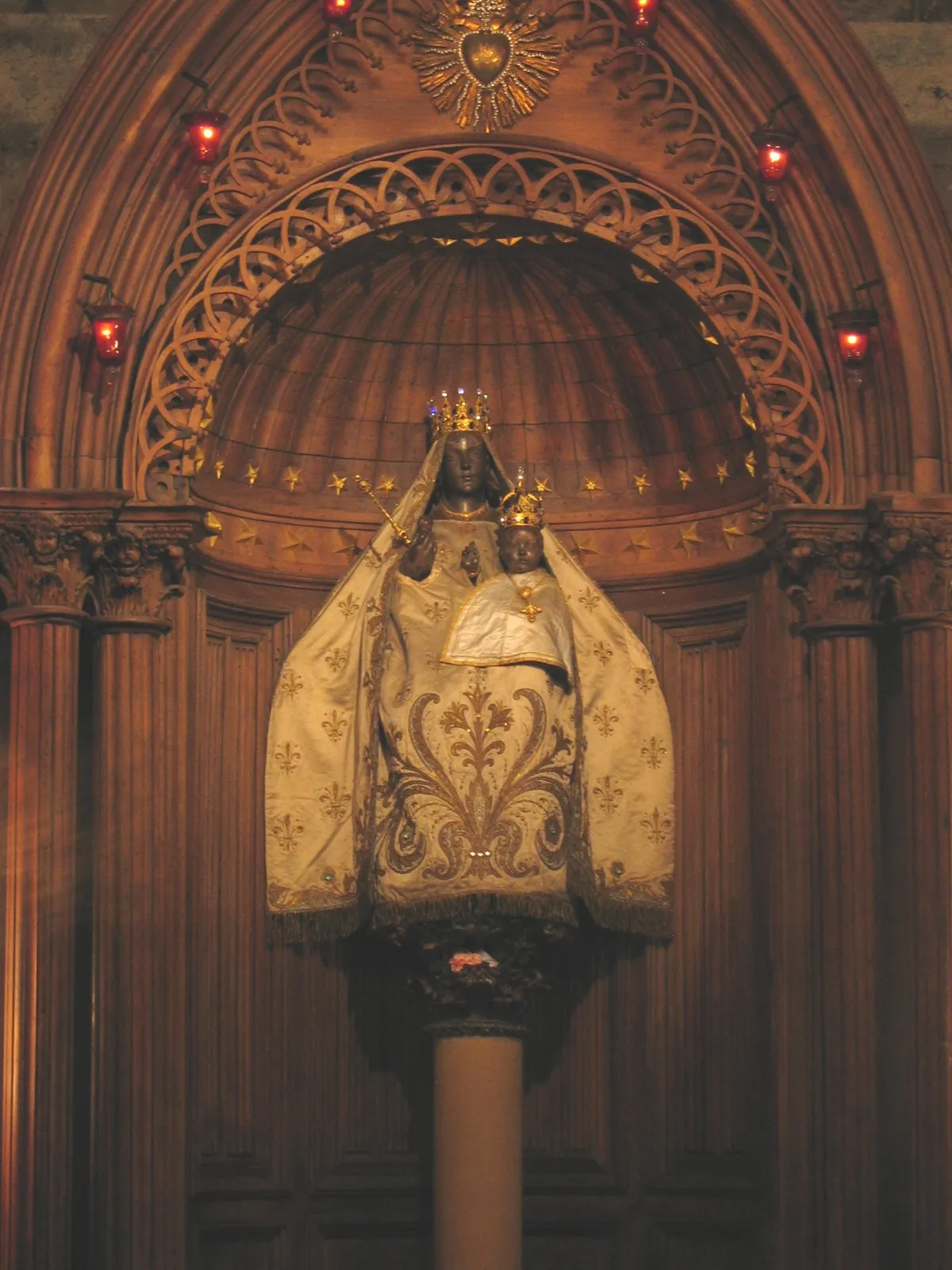
Chartres Cathedral, home of one of the greatest Marian shrines of the Middle Ages, venerates a pear wood Virgin carved around 1508 and long famous as a Black Madonna, standing on her column wrapped in a white and gold mantle. During the restoration of the cathedral between 2013 and 2017 she was repolychromed in light flesh tones, an intervention that divided art lovers sharply: admirers saw the original colours recovered, critics saw a Black Madonna erased. Our photograph shows her as generations of pilgrims knew her, before the restoration.
The Painted Black Madonna
Statues dominate the family, but the dark Virgin also lives in paint, and there the story leads to the two most venerated Marian images of Catholic Europe. The first is Our Lady of Częstochowa, the scarred Byzantine icon of Jasna Góra in Poland, slashed by raiders in 1430 and crowned Queen of Poland: her full story, and the prayer pilgrims say before her, are told in our dedicated article.
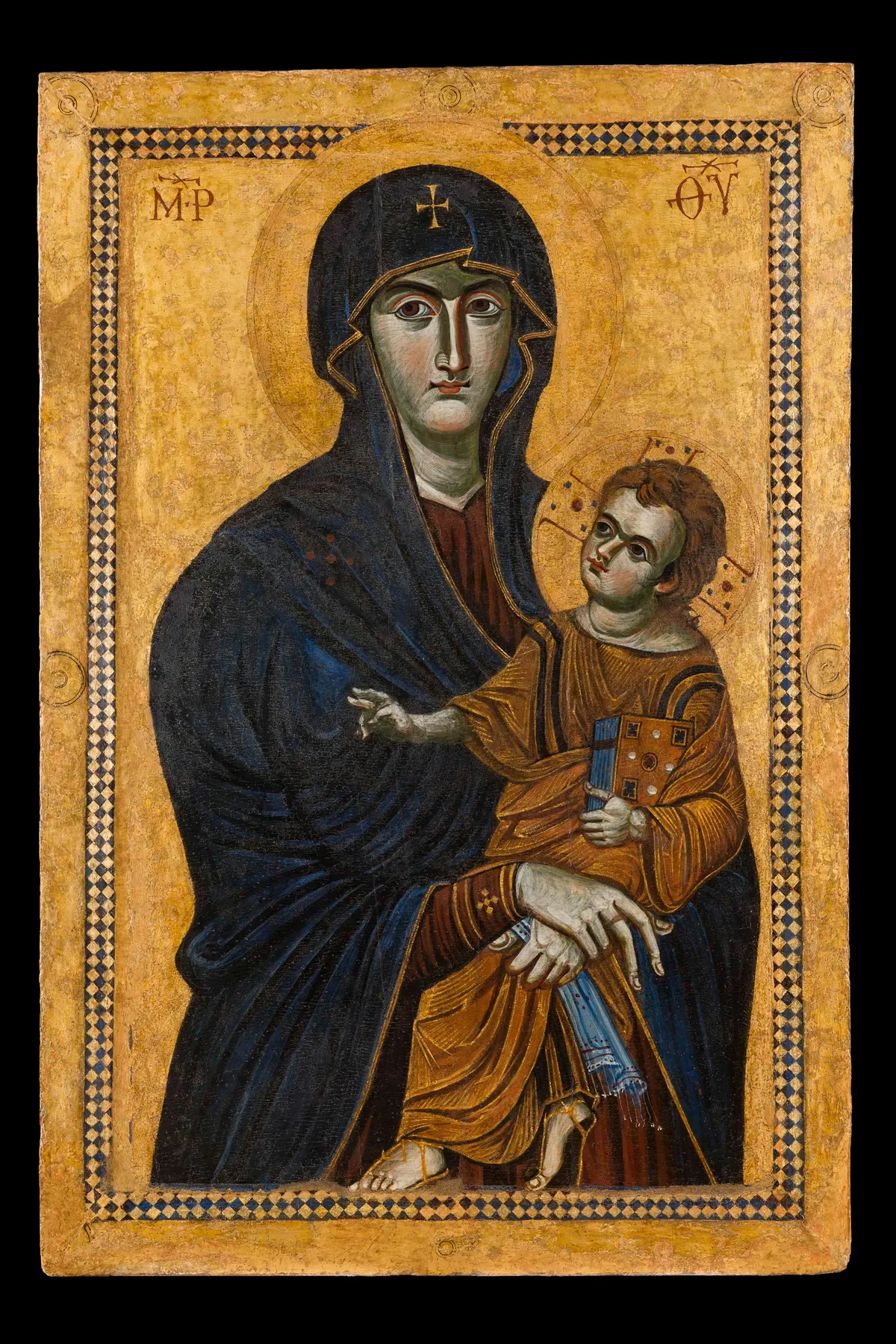
The second is the Salus Populi Romani, “Protectress of the Roman People”, the ancient icon of the Virgin and Child in the Basilica of Saint Mary Major in Rome, attributed by tradition to Saint Luke and restored by the Vatican Museums in 2018. Pope Francis prayed before her at the start and end of every apostolic journey, and entrusted the whole world to her during the pandemic. Her deep tones and gold ground belong to the same Byzantine current that shaped Częstochowa, a current the West absorbed through masters like Cimabue, and that runs through the whole history of Catholic icons.
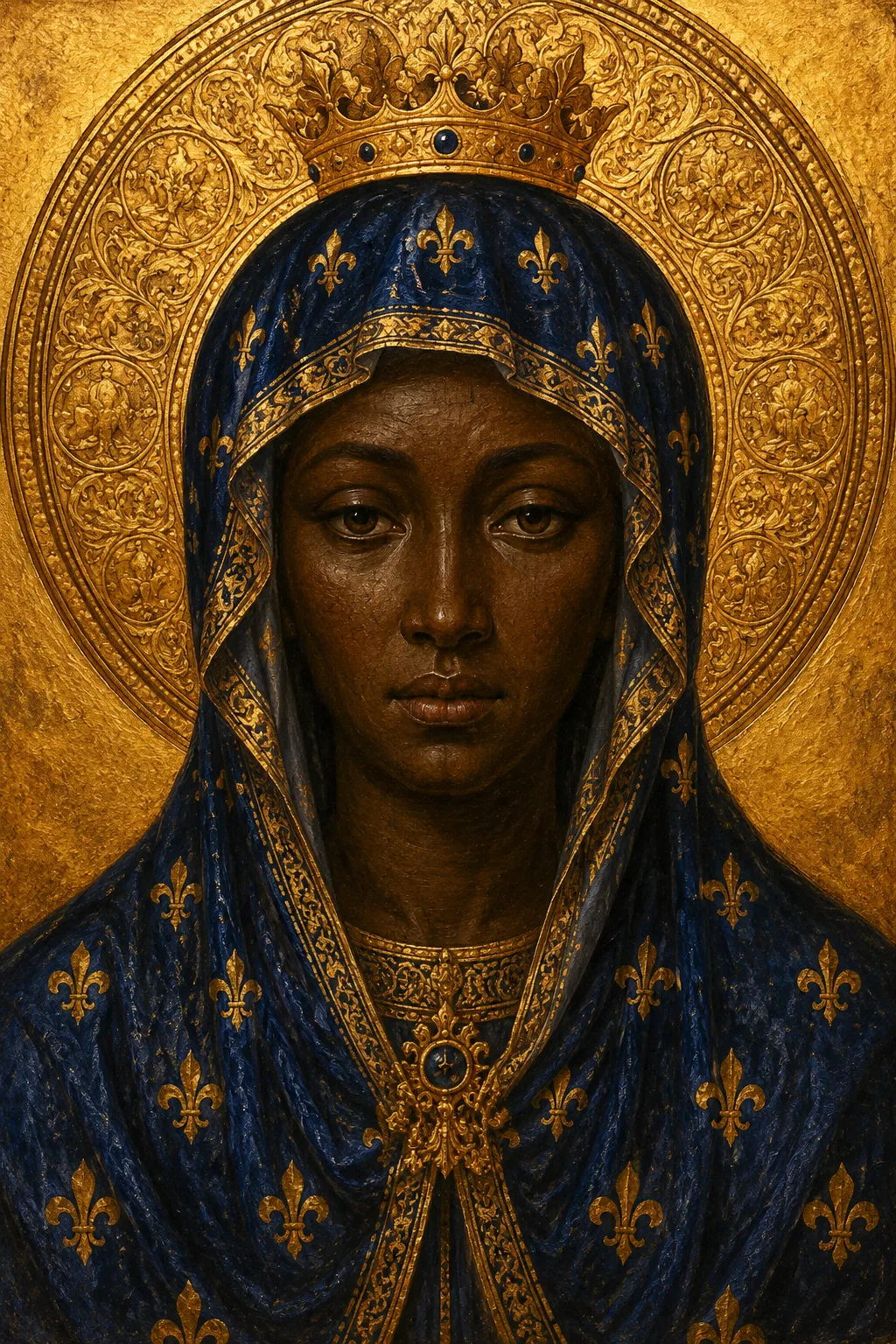
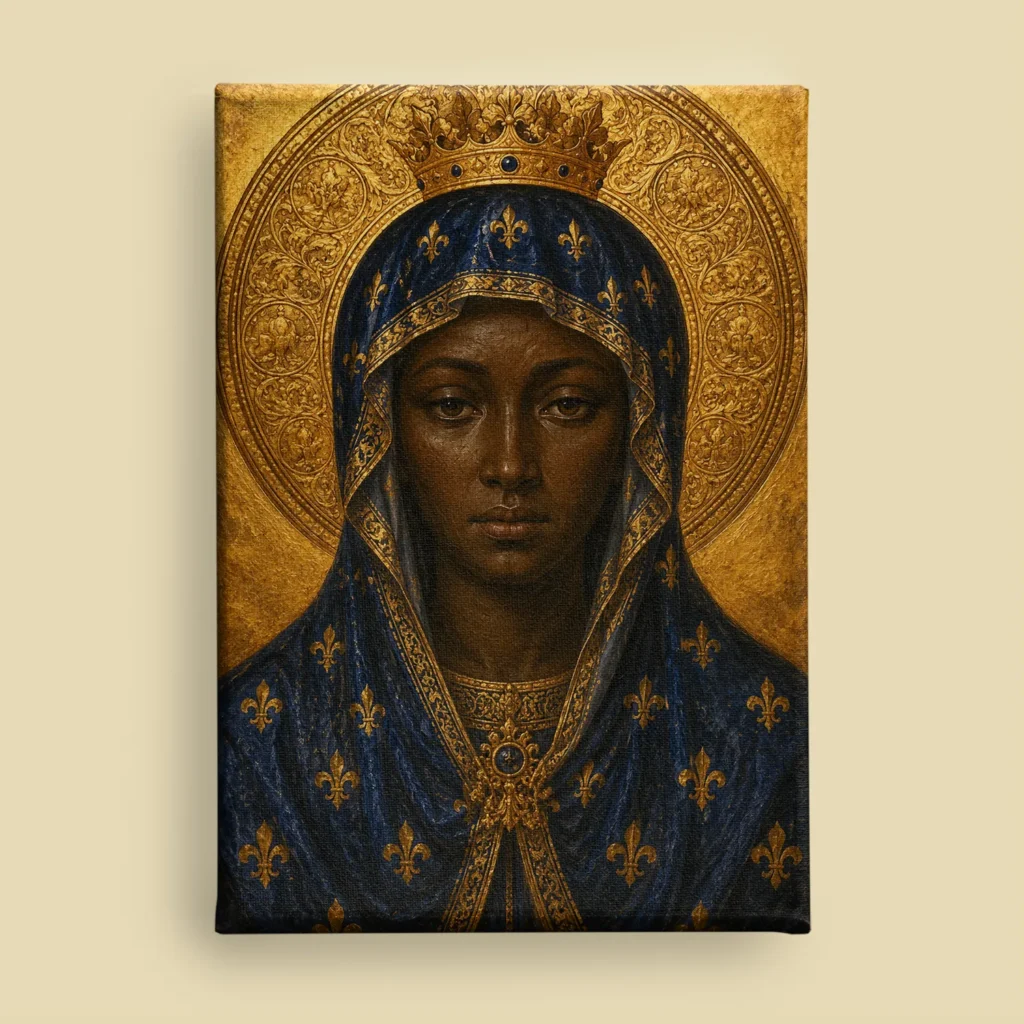
The tradition is not closed. Contemporary painters keep returning to the dark Virgin, and our own Black Madonna, Crowned Virgin continues the line: a dark Mary in a blue fleur-de-lis veil, crowned against an engraved golden halo, painted in homage to Częstochowa and her sisters. She is available as a gallery canvas in our shop.
Black Madonnas Featured in This Article
| Black Madonna | Type | Date | Where to See Her |
|---|---|---|---|
| Our Lady of Częstochowa | Icon, tempera on panel | Medieval, repainted after 1430 | Jasna Góra Monastery, Częstochowa |
| Our Lady of Montserrat (La Moreneta) | Romanesque carving | 12th century | Abbey of Montserrat, Catalonia |
| Our Lady of Rocamadour | Walnut carving | 12th century | Sanctuary of Rocamadour, France |
| The Black Virgin of Le Puy | Statue (copy of the lost original) | Original burned 1794 | Cathedral of Le Puy-en-Velay, France |
| Our Lady of Einsiedeln | Late Gothic carving | 15th century | Einsiedeln Abbey, Switzerland |
| Our Lady of Loreto | Cedar statue | 1922 (original lost 1921) | Holy House of Loreto, Italy |
| Our Lady of Altötting | Wood carving | c. 1330 | Chapel of Grace, Altötting, Bavaria |
| Our Lady of the Pillar, Chartres | Pear wood carving | c. 1508 | Chartres Cathedral, France |
| Salus Populi Romani | Icon, tempera on panel | Ancient, dating debated | Saint Mary Major, Rome |
| Black Madonna, Crowned Virgin | Contemporary painting | 2026 | jesuschrist.pictures |
Conclusion
The Black Madonna keeps her secret. Smoke explains some of her, symbolism explains more, and the rest is the mystery of why the strangest image in the church is so often the most loved. What the dark Virgins share is not a colour but a fate: they are the images people would not give up, through fires, revolutions, restorations and sieges, the Madonnas whose very wounds and shadows became holy.
If this guide has given you the taste for her, read the full story of the Black Madonna of Częstochowa, the one dark Virgin whose scarred face conquered the world, or widen the view with our list of beautiful Virgin Mary paintings.
Important Facts About the Black Madonna
- Estimates count four to five hundred Black Madonnas in Europe, most of them Romanesque or Gothic statues carved between the eleventh and fourteenth centuries.
- The darkness has several causes: centuries of candle smoke and darkened varnish, dark woods and deliberate repainting, and a symbolism rooted in the Song of Songs, “I am black but beautiful”.
- When the Black Madonna of Einsiedeln was cleaned in 1803 and pale wood appeared, she was repainted black at the monks’ request.
- The two most venerated painted Black Madonnas are Our Lady of Częstochowa in Poland and the Salus Populi Romani in Rome, both attributed by legend to Saint Luke.
- The Black Virgin of Le Puy was burned during the French Revolution in 1794, and the statue of Loreto was destroyed by fire in 1921 and replaced by a deliberately black copy.
Questions and Answers
What does the Black Madonna signify?
The Black Madonna is the Virgin Mary shown with a dark face, and her meaning gathers several threads: the bride of the Song of Songs who is “black but beautiful”, the humility and fruitfulness of the dark earth, and the Mother who has absorbed the smoke of centuries of prayer. For the regions that venerate her she is above all a protectress, patroness of Catalonia at Montserrat, of Bavaria at Altötting, of Poland at Częstochowa.
Why are Black Madonnas black?
There are three main explanations, and each is true of some images. Many darkened physically, through candle smoke, incense and ageing varnish. Others were carved in dark wood or deliberately painted black, and kept black on purpose, as at Einsiedeln in 1803, when a cleaned statue was repainted dark because the pilgrims’ Madonna was black. Finally, medieval devotion read the darkness through the Song of Songs, as beauty rather than accident.
What are some famous Black Madonna icons?
The most famous painted Black Madonna is Our Lady of Częstochowa at Jasna Góra in Poland, the scarred icon crowned Queen of Poland. Rome venerates the Salus Populi Romani in Saint Mary Major. Among statues, the most celebrated are Our Lady of Montserrat in Catalonia, Rocamadour and Le Puy-en-Velay in France, Einsiedeln in Switzerland, Loreto in Italy and Altötting in Bavaria.
Who is the Black Madonna in the Bible?
The Bible does not describe a Black Madonna as such. The text medieval Christians attached to her is the Song of Songs 1:5, “I am black but beautiful, O daughters of Jerusalem”, which the liturgy of many of her shrines applies to the Virgin. Since Mary was a Jewish woman of first century Galilee, her real complexion was in any case Middle Eastern rather than the pale European ideal of later painting.
Why do people touch the Black Madonna?
Touching or kissing a venerated image is one of the oldest gestures of pilgrimage, a way of making contact with the holiness the image carries. At Montserrat the custom is precise: pilgrims file past La Moreneta and touch or kiss the golden orb in her right hand, which is left outside her protective case for exactly that purpose, while at other shrines pilgrims touch the column, the shrine or the hem of the statue’s mantle.
What does the Black Madonna mean in Roma (Gypsy) tradition?
The Roma people venerate Saint Sara, called Sara-la-Kali, “Sara the Black”, whose dark statue stands in the crypt of the church of Saintes-Maries-de-la-Mer in the Camargue, in southern France. Every May, Roma pilgrims from across Europe gather there and carry her statue in procession to the sea. She is not strictly a Madonna, but her devotion belongs to the same world of beloved dark images, and the shrine also honours the two Marys of the Gospel.
Can you buy Black Madonna wall art?
You can buy Black Madonna wall art at jesuschrist.pictures, in our shop: our original Black Madonna, Crowned Virgin canvas is a contemporary painting in the tradition of the dark Virgins, and our Our Lady of Częstochowa poster reproduces the most famous Black Madonna icon of all. Both are printed to gallery standard and ship ready to hang or frame.