The Lord Bless You and Keep You: Numbers 6 in Art
“The Lord bless thee, and keep thee.” These are among the oldest and most beloved words in the Bible, the blessing that priests have spoken over the people of God for three thousand years. Taken from Numbers 6:24, the threefold benediction is still pronounced at the close of worship, sung in great choral settings, and kept close as The Lord Bless You and Keep You wall art in homes that want to send and receive a blessing every day. It is not a prayer we offer up to God. It is a blessing God gives us the words to speak over one another, a rare moment in scripture where heaven hands us its own language of grace. Christian and Jewish art gave it a face above all in one figure, Aaron the high priest, the first man ever commanded to say these words aloud.
The blessing Aaron was given to speak
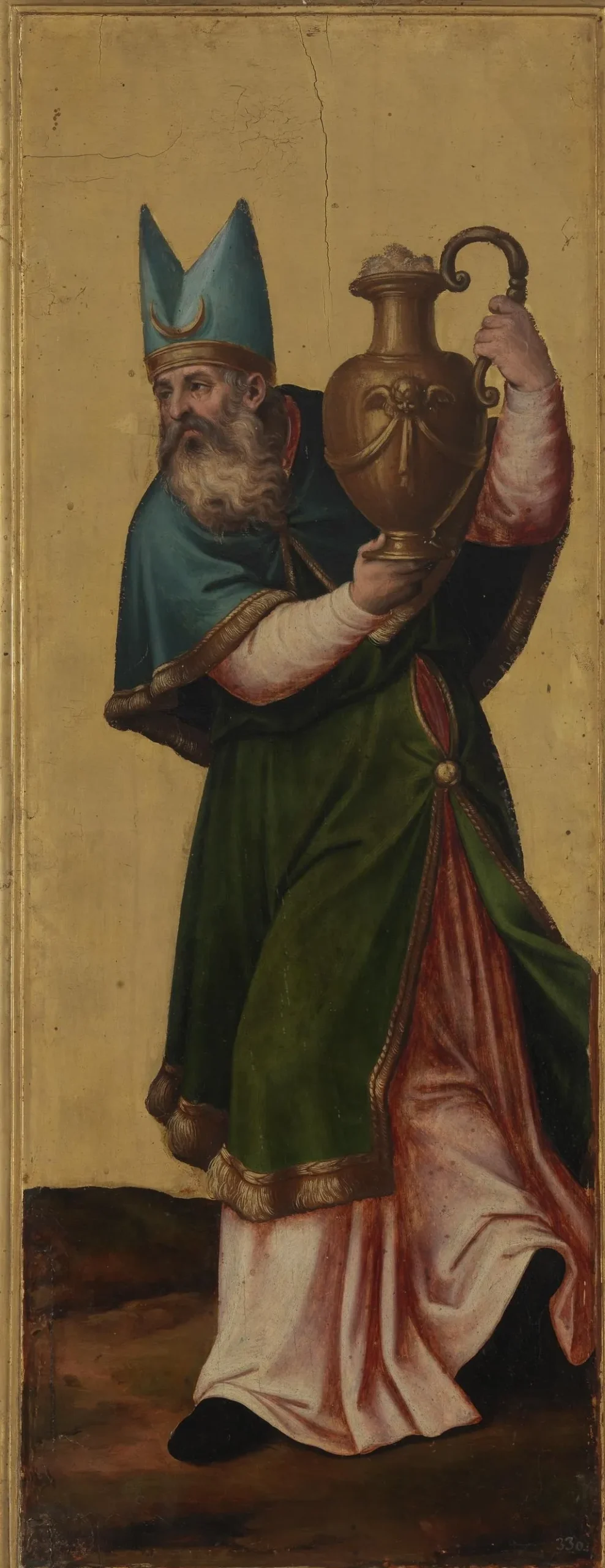
The words did not begin with Aaron. In the Book of Numbers, God speaks to Moses and tells him to give the blessing to his brother Aaron and to Aaron’s sons, the priests, so that they might lay it on the people of Israel. “On this wise ye shall bless the children of Israel,” the Lord says, and then he dictates the three lines word for word. To pronounce the blessing was the high calling of the priesthood, and so the figure who carries it in art is Aaron in his sacred vestments. The Spanish Renaissance master Juan de Juanes painted him around 1545 as a dignified old man in a bishop’s mitre and rich robes, cradling a golden vessel for the Temple service. It is a serene, almost gentle portrait of the office whose duty was to bless.
The Lord bless thee, and keep thee:
The Lord make his face shine upon thee, and be gracious unto thee:
The Lord lift up his countenance upon thee, and give thee peace.
The oldest words of scripture ever found
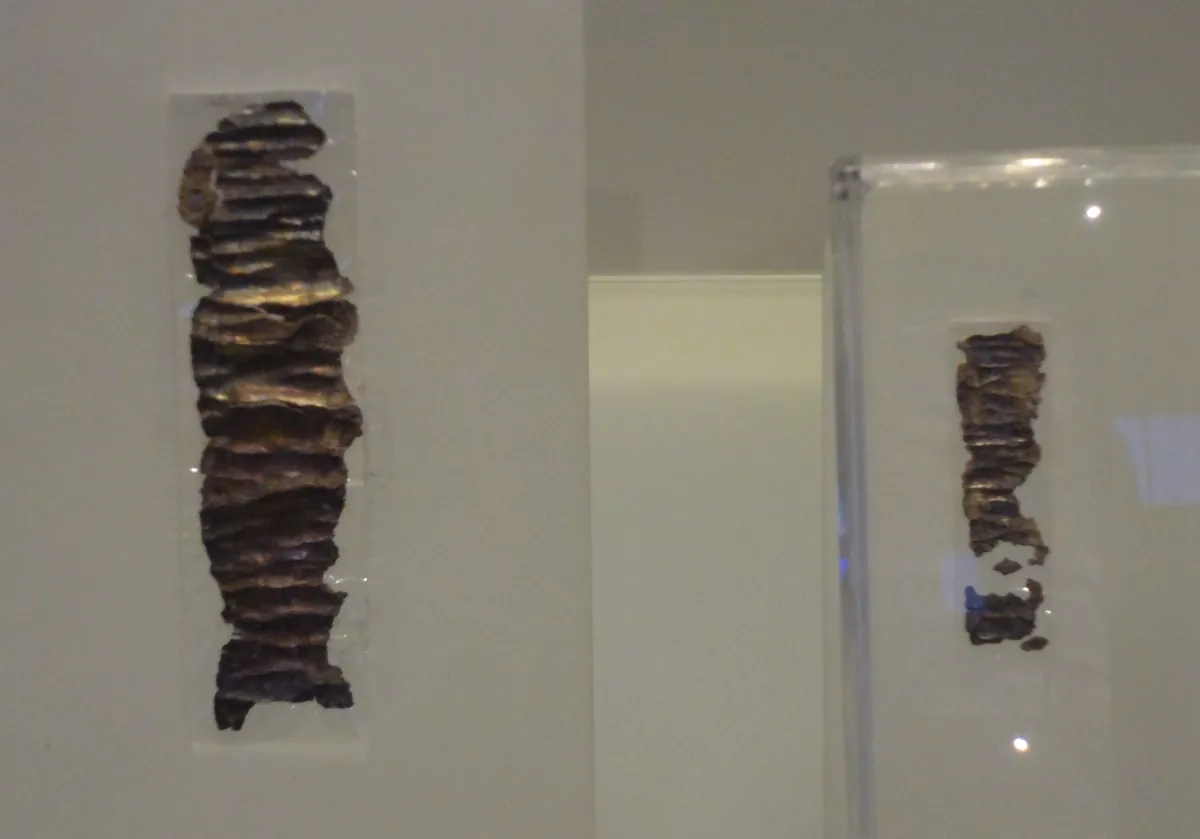
This blessing holds a remarkable record. In 1979, archaeologists digging in a burial cave at Ketef Hinnom, on a slope overlooking the old city of Jerusalem, found two tiny rolled strips of silver. When they were carefully unrolled, the silver turned out to be inscribed with the words of the priestly blessing, “The Lord bless you and keep you.” They date to around 600 BC, before the Babylonian exile, which makes them the oldest fragment of any biblical text ever discovered, older than the Dead Sea Scrolls by centuries. People wore these little scrolls as amulets, a blessing carried against the skin. Long before the verse became calligraphy on a wall, it was already being kept close as something precious, hammered into silver and worn like armour.
A blessing in three rising lines
Part of the power of Numbers 6:24-26 is its shape. In the original Hebrew the blessing rises in three lines that grow steadily longer, three words, then five, then seven, like a gift opening wider with each phrase. The first line asks for protection, that the Lord would bless and keep you, guard you and hold you safe. The second asks for grace, that his face would shine upon you, the warmth of a smile turned in your direction. The third asks for the deepest gift of all, that he would lift up his countenance upon you, give you his full and undivided attention, and grant you peace.
That final word is the heart of it. The Hebrew is shalom, which means far more than the absence of conflict. It is wholeness, completeness, the deep wellbeing of a life set right with God and with others. The whole blessing builds toward it. To be blessed and kept, to have God’s face shine on you, is to arrive at last at peace. It is worth noticing too how personal the language is. Twice it speaks of God’s face, his countenance, turned toward you. The blessing is not a vague good wish. It is the promise that the maker of heaven and earth will look at you, and not look away.
The priestly blessing in Jewish tradition
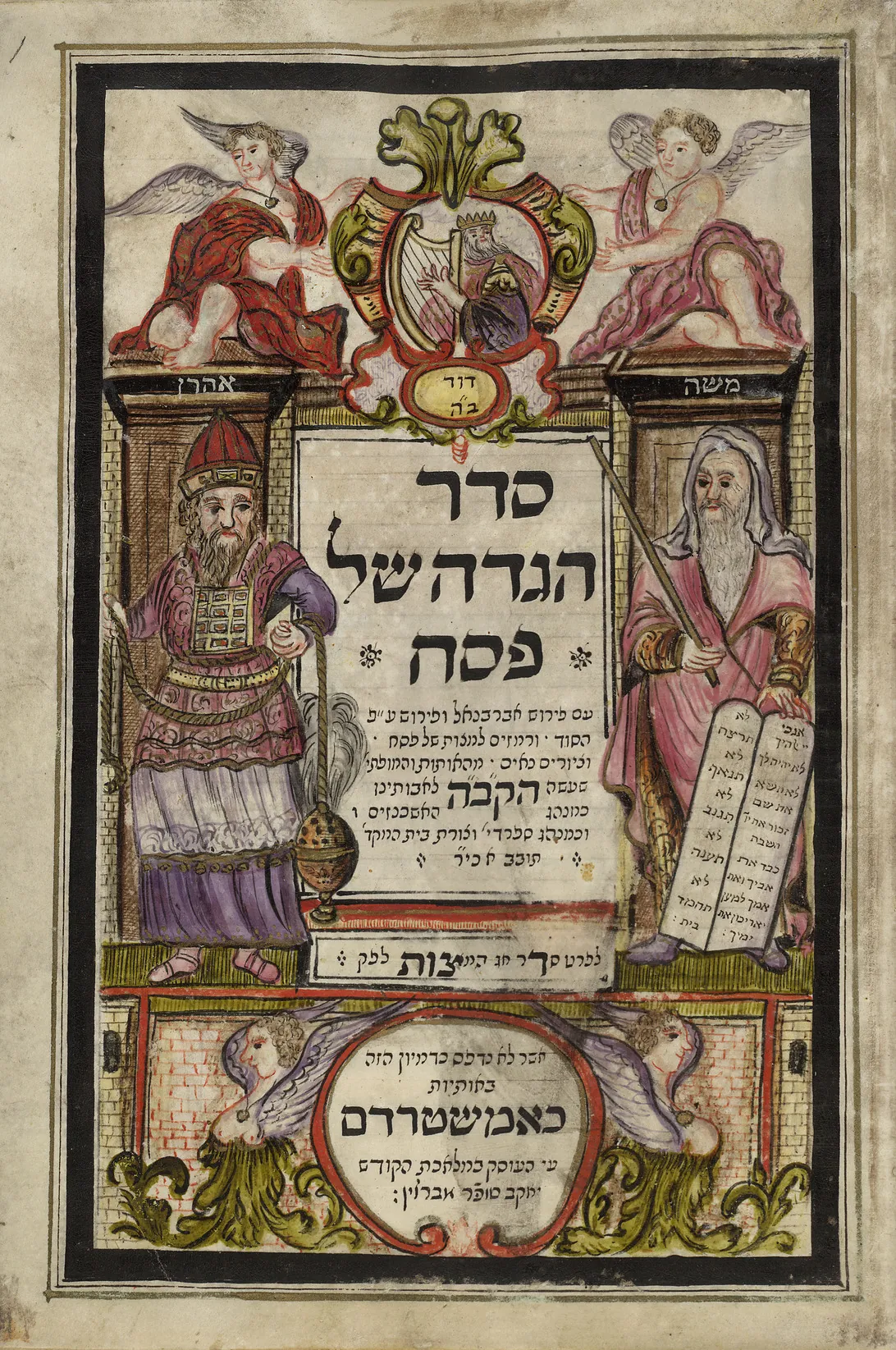
In Jewish life the blessing never became a museum piece. It is the Birkat Kohanim, the blessing of the priests, still recited in synagogues today by men descended from the priestly line of Aaron. As they speak it, the kohanim raise their hands with the fingers spread in a distinctive way, sending the blessing out over the congregation. That gesture is older than anyone can trace, and it became famous far beyond the synagogue in the twentieth century when it was borrowed for a well known science fiction salute. The illuminated page shown here, from a Passover Haggadah lettered by Jacob ben Judah Leib in 1740, places Aaron the high priest beside Moses and King David, honouring him as the founder of the priesthood whose first task was to bless. Aaron stands robed for the sanctuary, the man through whom these words first reached the people.
From the Temple to the church
Christians inherited the blessing and never let it go. From the earliest centuries it was used to send congregations out at the end of worship, and it remains one of the most common benedictions in churches of every tradition. There is a beautiful echo of it in the Gospel of Luke, where the risen Christ leads his disciples out as far as Bethany, lifts up his hands, and blesses them, the priestly gesture of Aaron now made by the great High Priest himself. The words have also inspired some of the most loved sacred music ever written, from Peter Lutkin’s gentle sevenfold amen to John Rutter’s setting that is sung at weddings and funerals around the world. Spoken, sung, or written, the blessing keeps doing the one thing it was given to do, sending grace from one person to another in God’s own words.
“The Lord Bless You and Keep You” as wall art
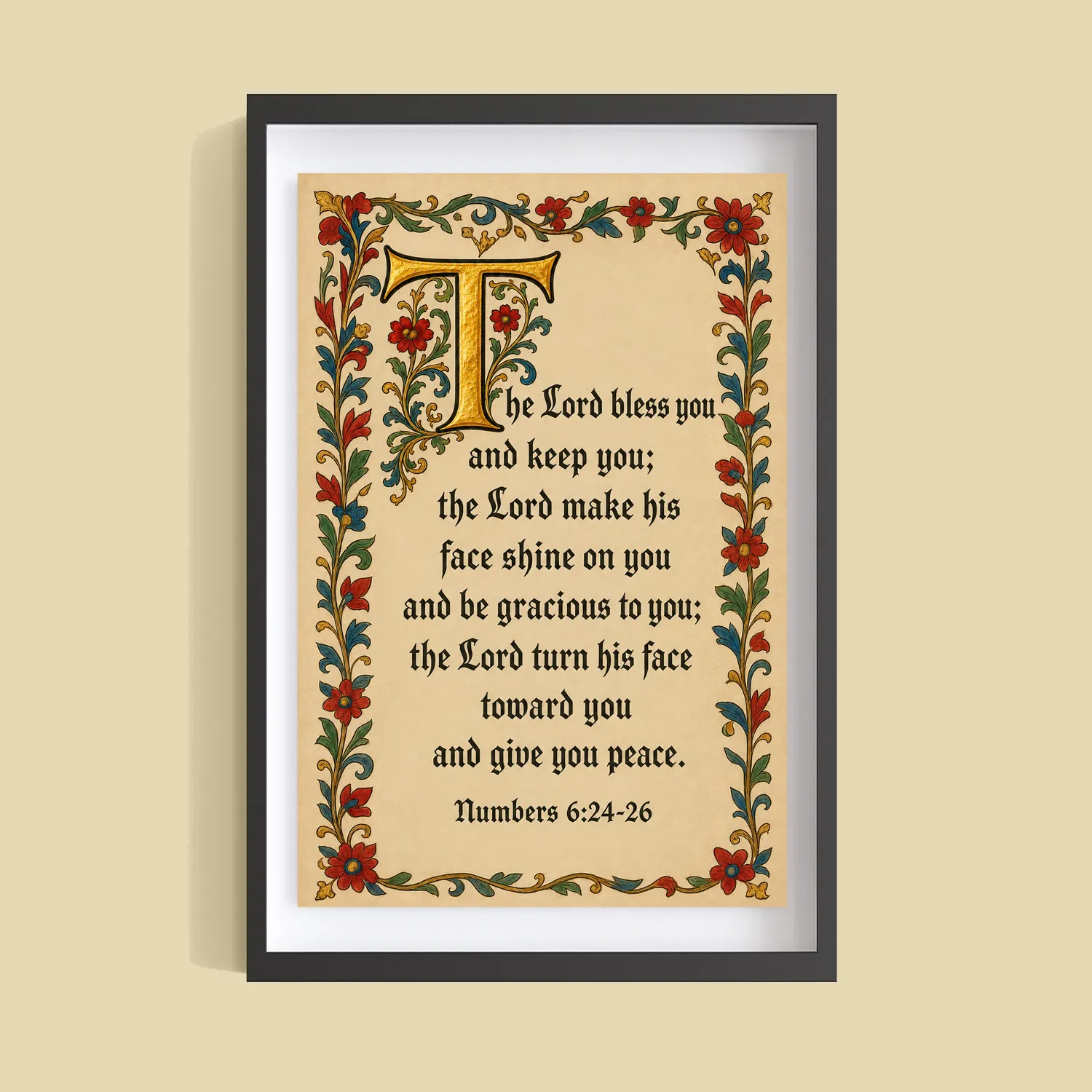
A blessing is meant to be given and to be kept, and there is no better place to keep it than where it can be seen and read each day. That is the idea behind our own Numbers 6:24-26 poster. The three rising lines are set with care, from “The Lord bless you and keep you” to the final promise of peace, so the whole benediction stays in view over a doorway, a nursery, or a family table. It turns the wall itself into a quiet blessing spoken over everyone who passes beneath it.
Summary table of the works
| Work | Artist | Date | Medium | Location |
|---|---|---|---|---|
| The Ketef Hinnom Silver Scrolls | Judahite scribe | around 600 BC | Inscribed silver | Israel Museum, Jerusalem |
| The High Priest Aaron | Juan de Juanes | around 1545 to 1550 | Oil on panel | Museo del Prado, Madrid |
| Moses, Aaron and King David (Passover Haggadah) | Jacob ben Judah Leib | 1740 | Manuscript illumination | British Library, London |
Conclusion
The priestly blessing has outlasted the Temple, the kingdoms, and the empires that surrounded it, because it carries something that never goes out of date, the longing to be blessed, kept, and given peace. Artists honoured it through the figure of Aaron, the silver of the oldest scripture we possess, and the illuminated pages of those who kept it sacred. To send and keep that blessing in your own home you can choose our The Lord Bless You and Keep You poster, or follow the verse through the wider cluster on Psalm 23, Psalm 46, and Psalm 121, alongside our Moses paintings and the wider collection of Christian wall art.
Important Facts About the Priestly Blessing
- The blessing appears in Numbers 6:24-26, where God instructs Moses to give the words to Aaron and his sons to bless the people of Israel.
- It is known as the Priestly Blessing, the Aaronic Blessing, or in Hebrew the Birkat Kohanim, the blessing of the priests.
- In the Hebrew text the blessing is built of three lines that grow from three words to five to seven, rising toward the final word, shalom, meaning peace.
- The oldest known fragment of any biblical text is this blessing, inscribed on two small silver scrolls found at Ketef Hinnom near Jerusalem and dated to around 600 BC.
- The blessing is still recited in synagogues by descendants of the priestly line and is widely used as a benediction in Christian worship.
Questions and Answers
What does “The Lord bless you and keep you” mean?
It is a threefold blessing asking God to protect, favour, and give peace to the person it is spoken over. The first line asks for protection, that God would bless and keep you safe. The second asks for grace, that his face would shine on you. The third asks that he would turn his full attention to you and give you peace, the Hebrew shalom, which means wholeness and wellbeing rather than simply the absence of trouble.
Where in the Bible is “The Lord bless you and keep you”?
The blessing is found in the Old Testament, in Numbers 6:24-26. In the surrounding verses God tells Moses to give these exact words to Aaron and his sons so that the priests can bless the people of Israel. It is therefore a blessing that God himself dictates, which is part of why it has always been treated with such reverence. The three lines have been used in worship ever since.
Who is supposed to say the priestly blessing?
In the Old Testament the blessing was given specifically to Aaron and his descendants, the priests, to speak over the people. In Jewish tradition it is still pronounced by the kohanim, the men descended from that priestly line, who raise their hands as they recite it. In Christian worship the blessing is most often spoken by a minister or priest to send the congregation out at the end of a service. In all cases it is understood as a blessing passed from God through one person to many.
Why is it called the Aaronic blessing or Birkat Kohanim?
It is named after Aaron, the brother of Moses and the first high priest, because God gave the words to him and his sons to speak. The Hebrew name Birkat Kohanim means simply the blessing of the priests. Both names point to the same truth, that this was the special blessing entrusted to the priesthood. That is why artists who pictured the blessing painted Aaron in his sacred vestments.
Is the priestly blessing used in Christian worship?
Yes, very widely. From the early centuries Christians used Numbers 6:24-26 as a benediction to close worship, and it remains common across Catholic, Orthodox, Anglican, and Protestant traditions. Many see it foreshadowing the moment in Luke’s Gospel when the risen Christ lifts his hands and blesses his disciples. The words have also been set to music by composers such as Peter Lutkin and John Rutter, whose versions are sung at weddings and funerals around the world.
Can you buy The Lord Bless You and Keep You wall art?
You can buy The Lord Bless You and Keep You wall art at jesuschrist.pictures, in our shop. Our Numbers 6:24-26 poster sets the full priestly blessing as scripture wall art, made to hang over a doorway, a nursery, or a family table. The same collection includes companion verses such as Psalm 23, Psalm 46, and Psalm 121, so a quiet corner can hold a small family of related prayers. Each piece is printed for the wall, ready to frame and live with.
✦ Free Christian & Catholic Printables
Looking for free Christian & Catholic printables? Our complete collection of illuminated prayer cards & Scripture verses — the Memorare, Psalm 23, Psalm 91 and more — is ready to print, free, in one place.
Browse all free printables →