Saint Brendan the Navigator: Did an Irish Monk Reach America?
In the winter of 1976 a leather boat left Kerry, and eleven months later it reached Newfoundland. It had an oak frame, forty-nine ox hides stitched together with flax thread and dressed with wool grease, and two square sails. It was built to the description contained in a Latin text written around the ninth or tenth century, which claims that a sixth century Irish abbot had done the same thing. That is the shape of the Brendan question, and it is not going away. Saint Brendan of Clonfert is a real historical figure, an abbot who founded monasteries in the west of Ireland and died around 577. He is also the hero of the Navigatio Sancti Brendani, one of the genuine bestsellers of medieval Europe, in which he sails west for seven years and finds an island that may or may not be America. This page separates the two, as far as they can be separated.
The abbot of Clonfert
Brendan was born around 484 near Fenit in County Kerry, on the north shore of the bay that carries his name to this day. The tradition says he was baptised by Bishop Erc and fostered for five years by Saint Ita of Killeedy, the woman the Irish called the foster mother of the saints. He was ordained around 512. He belongs to the group traditionally called the Twelve Apostles of Ireland, the students of Finnian of Clonard, alongside Columba of Iona and Ciaran of Clonmacnoise. He founded monastic houses at Ardfert, at Inishdadroum, at Annaghdown, and around the year 559 the great one: Clonfert in County Galway, which by the tradition held three thousand monks. Clonfert is still there. The cathedral that stands on the site was rebuilt in the twelfth century, and its west doorway is the finest piece of Hiberno-Romanesque carving in Ireland: six orders of arch under a steep triangular pediment filled with rows of human heads in stone niches, each one different. Nobody knows who they represent.
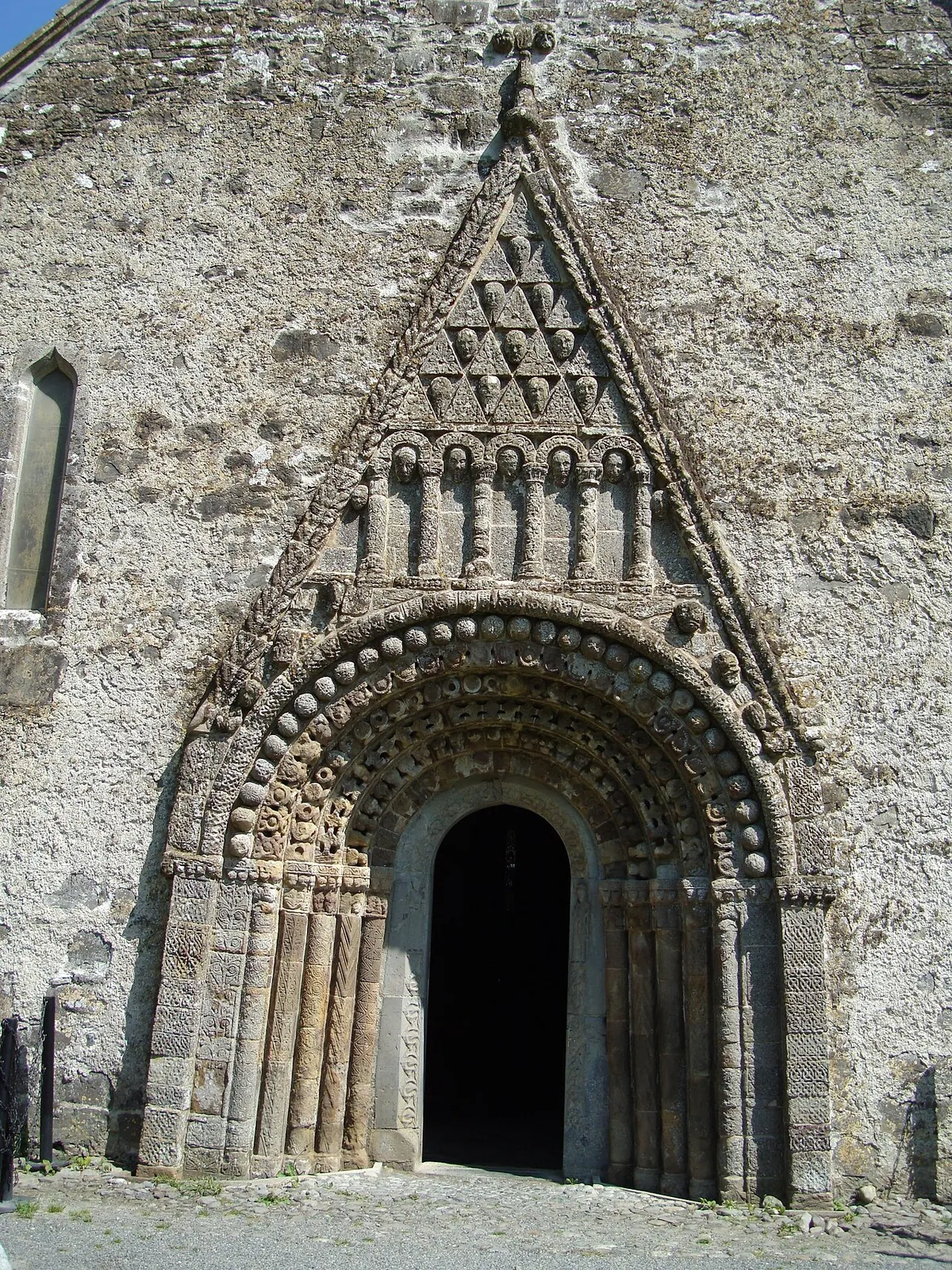
The voyage
The Navigatio Sancti Brendani Abbatis was written down some three or four centuries after Brendan’s death, probably in Ireland, probably in the ninth or tenth century. It is not a saint’s life. It is a sea narrative, and a very good one. Brendan hears from a monk named Barinthus about a land in the west, builds a boat of oak and hide, and sails with fourteen companions. The voyage takes seven years and is organised around the liturgical calendar: each year they return to the same places to keep Maundy Thursday, Easter and Pentecost, in a cycle that repeats until their penance is complete. The islands they visit are the reason people still read it. There is an island of enormous sheep, and one inhabited entirely by white birds who turn out to be neutral angels, fallen but not damned, who sing the hours. There is a column of crystal in the open sea, rising out of sight, so clear that they sail through an opening in it. There is an island of smiths, black and hairy, who throw burning slag at them from a forge, and beyond it a mountain that roars and vomits fire. There is Judas Iscariot, sitting on a rock in the middle of the ocean, granted respite from hell on Sundays and feast days. And there is the whale. On the first Easter they land on a bare, treeless island, build a fire, and put a pot on it. The island begins to move. It is Jasconius, a sea beast so long that it can never catch its own tail, and they return to say Mass on its back every Easter for seven years.
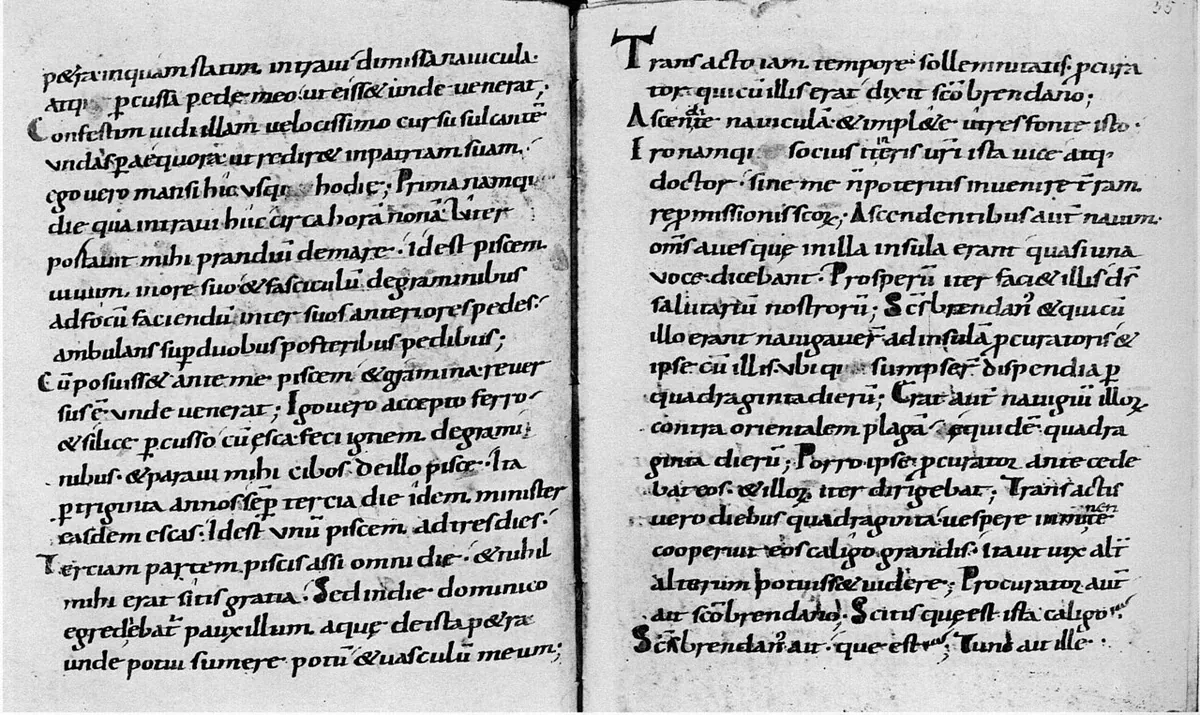
At the end they reach the Land of Promise of the Saints, a country of perpetual light and abundant fruit, and are told to take some of it and go home. Brendan returns to Ireland and dies not long after, at Annaghdown, in the house of his sister Briga.
Did he reach America?
The honest answer has three parts. First, the text is not a ship’s log. It is a work of literature in the genre the Irish called the immram, the voyage tale, and it is organised theologically, not geographically. Its islands are stations in a liturgical year, and Judas on his rock is not a navigational fix. Second, several of its details fit the North Atlantic uncomfortably well. The column of crystal in the open sea is a plausible description of an iceberg, seen by men who had no word for one. The island of smiths throwing burning slag, and the roaring mountain that vomits fire, fit Icelandic volcanic activity closely enough that the correspondence is hard to dismiss. Irish monks were certainly in Iceland before the Norse arrived: the Icelandic Landnamabok says the Norse found Irish monks already there and that they left. Third, in 1976 Tim Severin built the boat. Two years of research into medieval leatherwork produced a hull of forty-nine ox hides on an ash and oak frame, and he sailed it from Brandon Creek in Kerry to Peckford Island, Newfoundland, wintering in Iceland on the way. It took thirteen months in total. The hull survived being holed by pack ice off Greenland and was repaired at sea with a leather patch.
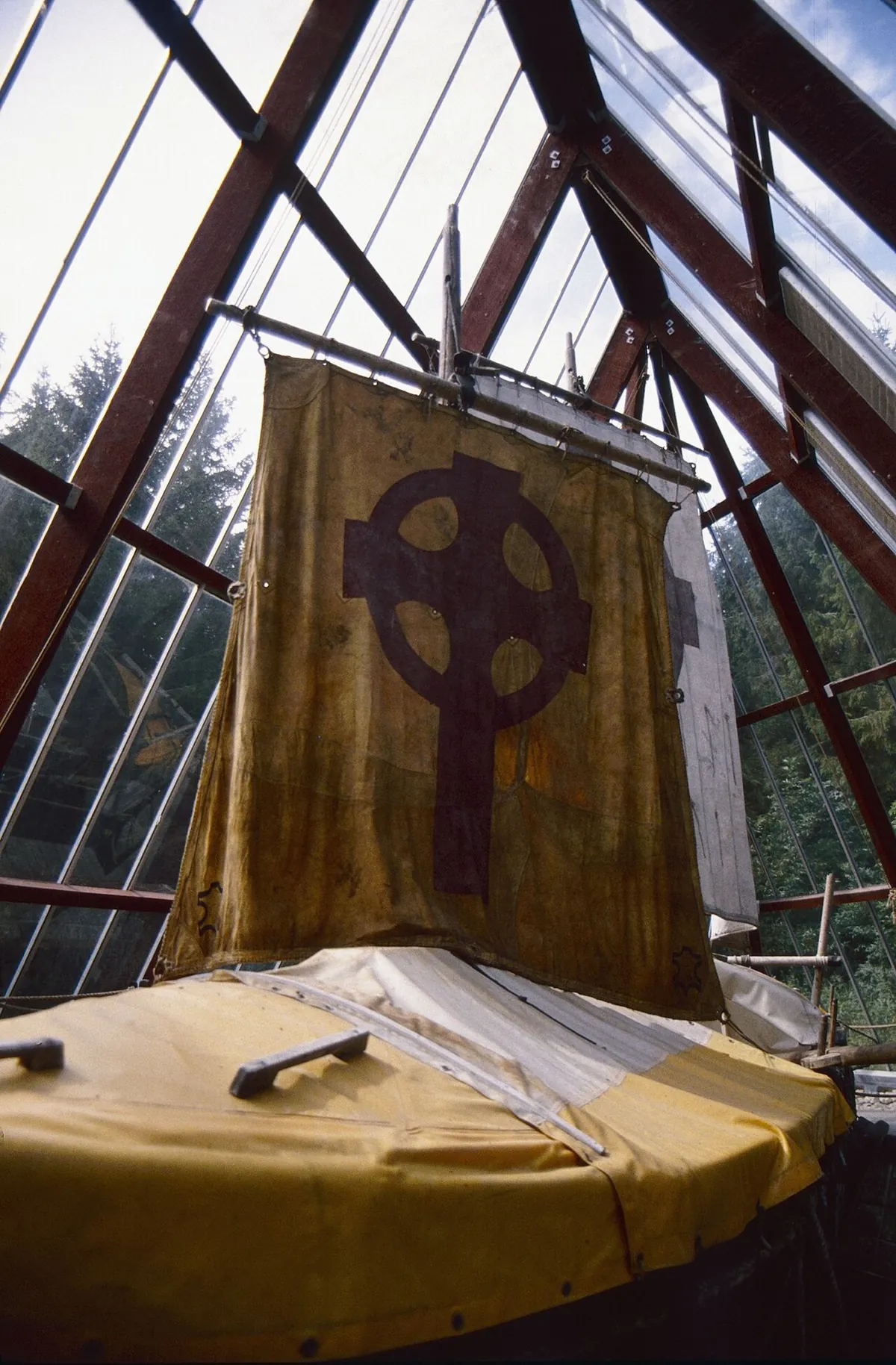
What Severin proved is precise, and worth stating precisely: a boat of that construction can make that crossing. He did not prove that Brendan did. No archaeological trace of a sixth century Irish presence in North America has ever been found. The most that can be said is that the story is not impossible, which for a medieval sea legend is a remarkably strong result.
The island that was on the maps
There is one more consequence, and it is the strangest. Saint Brendan’s Isle went onto the charts and stayed there. Cartographers placed it in the Atlantic, moving it west and south as each expedition failed to find it, for the better part of six hundred years. It appears on the Ebstorf and Hereford world maps in the thirteenth century, on the Pizzigano chart, on Martin Behaim’s globe of 1492. Portuguese expeditions sailed from the Azores to look for it in 1526 and 1570. It survived on charts into the eighteenth century before it was finally struck off. Columbus knew the Navigatio. Whether it encouraged him is a matter of argument, but the existence of land in the western ocean was, thanks in part to an Irish monastic sea story, a European commonplace long before 1492.
What Brendan looks like
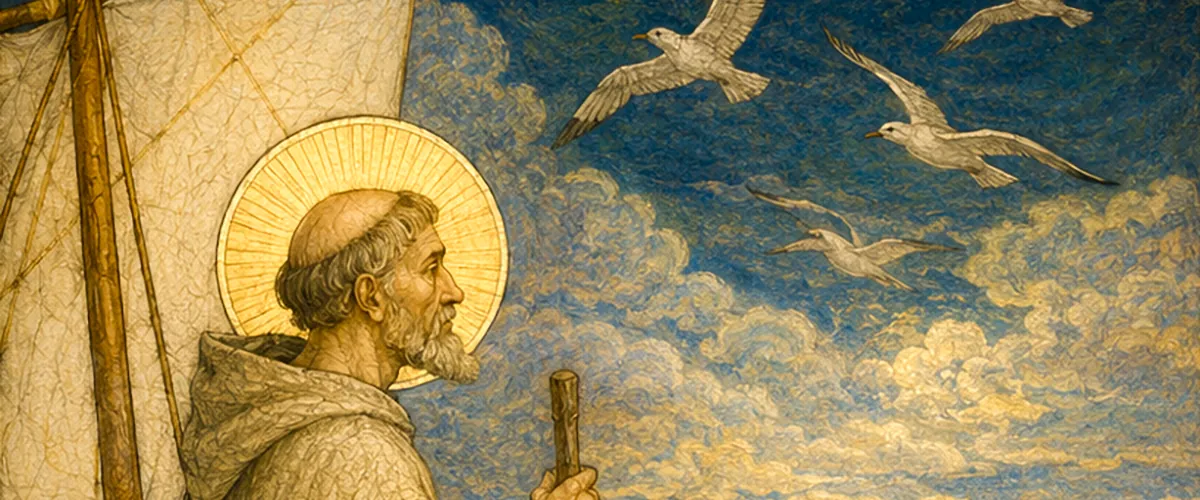
There is no old image of Brendan of any quality. The Commons category holds a folio of the Navigatio, a chapel on an island off Saint-Malo, and five road signs in County Kerry. The continent, which gave Patrick a baroque engraving and Kilian a Veit Stoss altarpiece, never took him up, because his cult stayed local and his fame was carried by a text rather than by relics. So the images that go with him are the places and the objects: the doorway at Clonfert, the manuscript, and a leather boat in a field in County Clare that has actually done the thing. The panel below was made for this article to fill the gap, in the Celtic Revival manner of John Duncan and Harry Clarke: the abbot at the prow of a hide boat under a single square sail, gulls overhead, and the golden island on the horizon that he spent seven years looking for. It is a new work rather than a historical one, and it is offered as such.
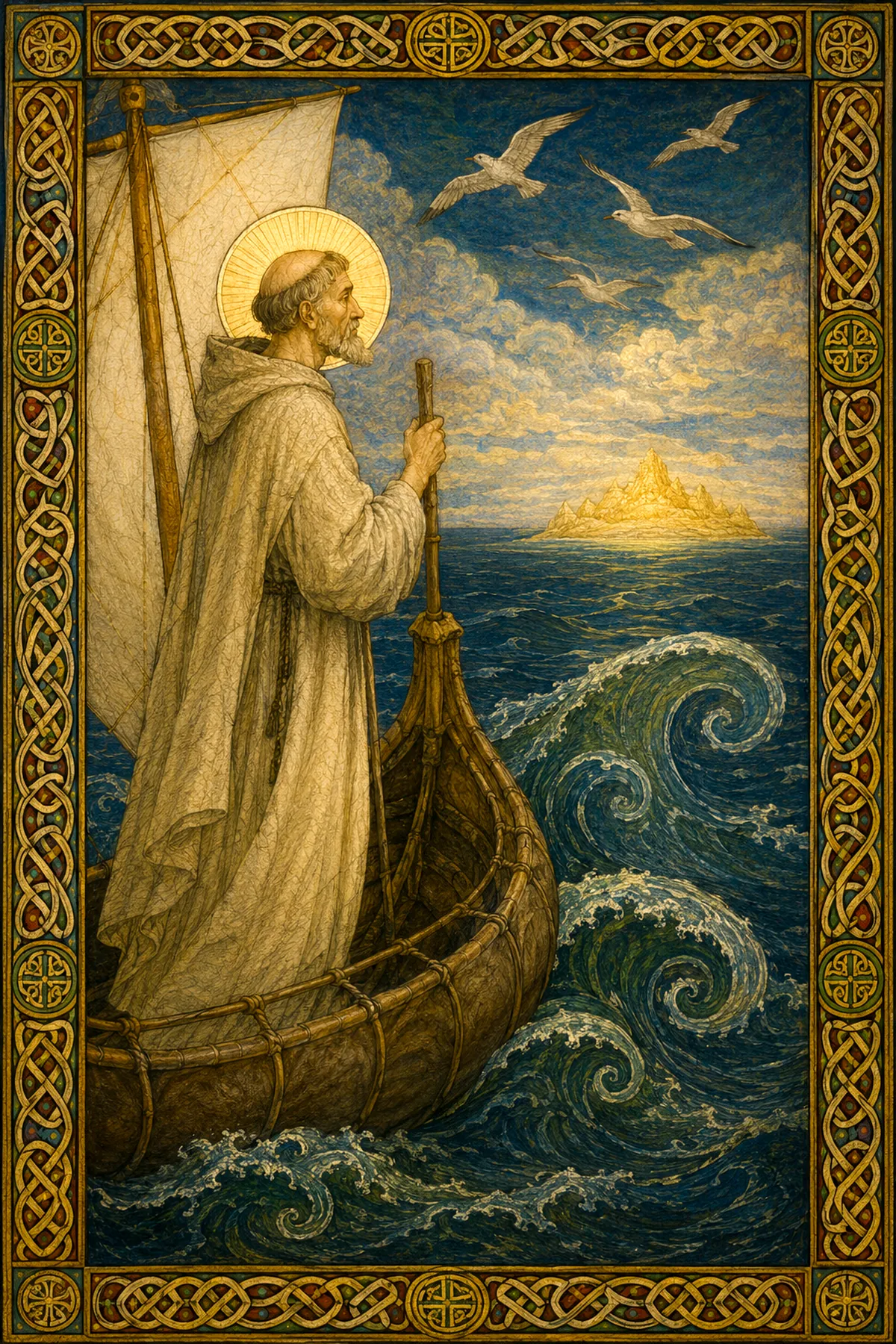
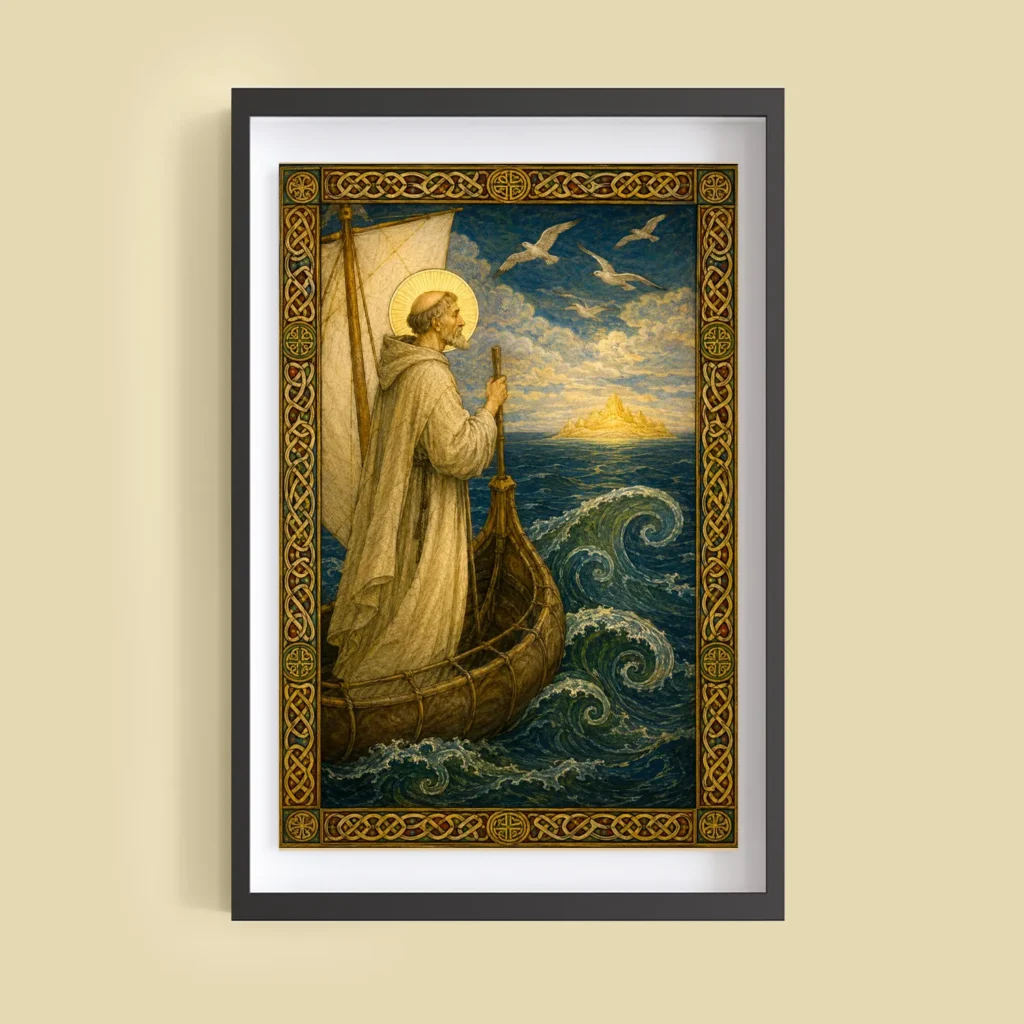
Saint Brendan Paintings Featured in This Article
| Work | Maker | Date | Location |
|---|---|---|---|
| Navigatio Sancti Brendani, folios 34v and 35r | Unknown scribe | medieval | Manuscript, no single holding museum |
| Clonfert Cathedral, west doorway | Hiberno-Romanesque workshop | 12th century | Clonfert Cathedral, County Galway |
| The leather boat Brendan | Tim Severin and John O’Connell | 1976 | Craggaunowen, County Clare |
Important facts about Saint Brendan
- He was a real abbot. Born around 484 near Fenit in Kerry, founder of Clonfert around 559, died around 577.
- The voyage was written down centuries later. The Navigatio dates from around the ninth or tenth century, three hundred years after his death.
- It was a bestseller. Over one hundred and twenty five manuscripts survive, in Latin and in several vernaculars.
- A leather boat did make the crossing. Tim Severin sailed from Kerry to Newfoundland in 1976 and 1977, wintering in Iceland.
- His island stayed on the maps for six centuries. Saint Brendan’s Isle was searched for by Portuguese expeditions as late as 1570.
- He is the patron saint of sailors and mariners, and of the United States Navy. His feast day is 16 May.
Brendan trained in the same school as Columba of Iona, and the two belong to the same generation of Irish monks who left the island and changed the map of Christian Europe, gathered here in 12 Irish Saints and the Art They Left Behind. For the manuscript tradition that carried their story, see The Great Medieval Painters of Catholic Art. For a country whose saints had the whole Baroque to paint them, see our 15 Spanish Saints and the Painters Who Gave Them Their Faces.
Frequently asked questions about Saint Brendan
What is Saint Brendan known for?
Saint Brendan of Clonfert is known for the seven year Atlantic voyage described in the Navigatio Sancti Brendani, in which he and fourteen monks sail west in a leather boat, celebrate Easter on the back of a whale, and reach a promised land beyond the ocean. He was also a real monastic founder, one of the Twelve Apostles of Ireland, who established the great house at Clonfert in County Galway around 559. He is the patron saint of sailors, mariners and travellers.
Did Saint Brendan discover America?
There is no evidence that he did, and no archaeological trace of a sixth century Irish presence in North America has ever been found. What is established is that the voyage described in the Navigatio is physically possible: in 1976 and 1977 Tim Severin built a boat of ox hides on an oak frame to the specification in the text and sailed it from Kerry to Newfoundland by way of Iceland. Some details in the text, a column of crystal in the open sea and an island of smiths throwing burning slag, match icebergs and Icelandic volcanic activity closely enough to suggest real North Atlantic experience behind the legend.
What is the prayer of Saint Brendan?
The prayer usually printed under his name is a modern composition rather than a medieval text, and it begins by asking whether the traveller should leave the familiar shore at all: shall I abandon, O King of mysteries, the soft comforts of home. It has become popular with sailors, with people facing a change of life, and with those who are afraid, on the grounds that Brendan is the patron of anyone setting out without knowing where they will land.
When was Saint Brendan born?
Around 484, near Fenit in County Kerry, on the shore of what is now Tralee Bay. Some sources give 486 or 489. He died around 577 at Annaghdown in County Galway, in the house of his sister Briga, and was buried at Clonfert. His feast day is 16 May.
Is Brendan a Catholic name?
Brendan is an Irish name, from the Old Irish Brenainn, which is thought to derive from a Welsh word meaning prince. It is a saint’s name and therefore acceptable as a baptismal name in the Catholic Church, but it is not biblical: it comes from the Irish tradition rather than from Scripture, like Kevin, Brigid and Columba.
Can you buy Saint Brendan art?
You can buy Saint Brendan art at jesuschrist.pictures, in our shop, as museum quality canvases and posters. Our catalogue covers the works reproduced on this page and the wider world of Christian painting they belong to, printed on demand and shipped worldwide. The shop is organised by subject and by period, and the saints have a section of their own.