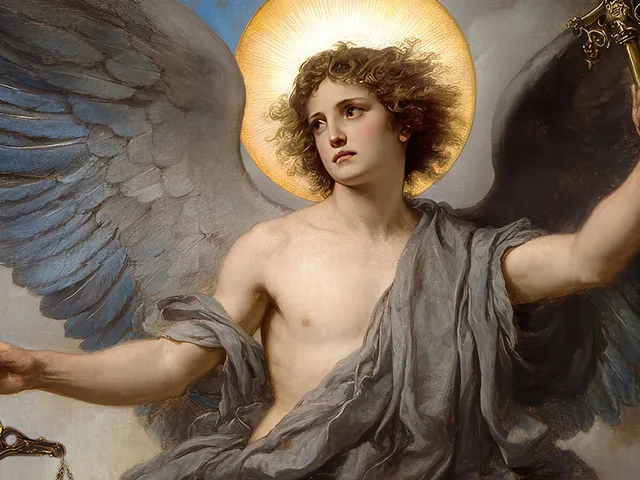
Cima da Conegliano: Venice’s Serene Sacred Master
Cima da Conegliano (c. 1459/60–c. 1517/18) was one of the most beautiful and serene painters of the Venetian Renaissance, a master of Madonnas, altarpieces, and sacred narratives whose work filled the churches and scuole of Venice and the Veneto with images of luminous, gentle devotion. Born in Conegliano, a small city north of Venice at the foot of the Dolomites, he trained in Venice in the orbit of Giovanni Bellini and Alvise Vivarini, absorbing the Bellini tradition of warm color, serene figure style, and richly observed landscape backgrounds.

Cima was never as formally innovative as Bellini or as psychologically intense as Giorgione, but within the tradition he inherited he achieved a consistent quality of piety and beauty that made him among the most sought-after painters of his generation. His sacred figures, Madonnas, saints, archangels, possess a quality of calm spiritual attentiveness: they inhabit their devotional moments with complete ease, surrounded by landscapes of Alpine clarity that are among the most beautiful in Venetian painting. His work represents the devotional culture of the Venetian terraferma at its most refined and accessible.
Annunciation

Cima’s Annunciation in the Hermitage deploys his characteristic spatial intelligence: the angel and the Virgin are separated by the space of a room or loggia, their exchange mediated by the architecture that surrounds them. The composition has the clarity and balance of the Bellini school, but the landscape visible through the windows or arches behind the figures gives the scene a quality of Alpine spaciousness that is distinctly Cima’s own. The figures’ serenity, Gabriel composed in his message, Mary composed in her reception, creates an atmosphere of quiet certainty rather than dramatic surprise.
Baptism of Christ

The Baptism of Christ in the church of San Giovanni in Bragora in Venice is Cima’s masterpiece and one of the most beautiful altarpieces in the city. Painted around 1492–94, it shows Christ standing in the Jordan while John baptizes him, the Holy Spirit descending as a dove against a sky of luminous blue. The landscape behind the figures opens into a vast panorama of mountains and water that draws on Cima’s direct knowledge of the Alpine scenery around Conegliano. The picture’s combination of formal dignity, gentle color, and meditative stillness represents the high point of the Venetian devotional altarpiece tradition that Bellini had established.
Dragan Altarpiece

The Dragan Altarpiece in the Gallerie dell’Accademia in Venice is one of Cima’s most important large-scale commissions. Composed as a sacra conversazione, the Virgin enthroned with saints gathered around her, it shows Cima’s mastery of the monumental altarpiece format: the figures are arranged with clear compositional logic, each saint individually characterized, the architecture behind them giving the scene spatial depth and ceremonial gravity. The altarpiece takes its name from the Dragan family who commissioned it and reflects the high quality of patronage that Cima attracted in Venice and the surrounding region.
Madonna and Child

This Madonna and Child panel in the Los Angeles County Museum of Art shows Cima’s devotional style at its most concentrated and intimate. The Virgin holds the Child with the warm physical naturalness that the Bellini school had made the norm for Venetian Madonnas, and the landscape behind them, a precise, luminous Veneto countryside, gives the image a quality of serene, specific beauty. Cima painted this type of small devotional Madonna many times, each version bringing slight variations of pose, expression, and background setting; together they form the most complete record of Venetian domestic piety in the late fifteenth and early sixteenth centuries.
Madonna and Child with Saints Michael the Archangel and Andrew

In this altarpiece from the Galleria nazionale di Parma, Cima groups the Madonna and Child with the Archangel Michael, armored, holding his scales, and Saint Andrew with his diagonal cross. The juxtaposition of the warlike archangel and the apostolic saint flanking the gentle Madonna and Child creates a devotional image of considerable richness: protection and apostolic witness on either side of the divine center. Cima renders each figure with individuality and calm authority, the landscape behind them glowing with that characteristic light he had absorbed from the Venetian terraferma.
Madonna of the Orange Tree

The Madonna of the Orange Tree in the Gallerie dell’Accademia is one of Cima’s most poetic and symbolically rich paintings. The orange tree, a traditional symbol of virtue, purity, and paradise, shelters the Madonna and Child as they receive the veneration of Saints Michael and John the Baptist. The tree’s fruit and foliage form a natural architectural canopy that unites the celestial and earthly zones of the composition, and the precise rendering of its leaves and oranges against the luminous sky is among the finest passages of botanical observation in Venetian painting. The work’s combination of symbolic richness and visual serenity is quintessential Cima.
Presentation of the Virgin Mary at the Temple

The Presentation of the Virgin at the Temple in the Gemaldegalerie Alte Meister in Dresden is a large narrative composition that shows the young Mary ascending the steps of the Temple of Jerusalem, witnessed by her parents Joachim and Anna and a gathered crowd. Cima organizes the scene with the clarity and spatial intelligence that his best narrative paintings share with the finest work of the Bellini school: the architecture gives the composition depth and order, the figures are distributed across the space with a natural variety of gesture and attitude, and the whole scene is bathed in the warm, even light characteristic of his mature work.
The Archangel Raphael with Saints James the Great and Nicholas

This altarpiece in the Gallerie dell’Accademia shows the Archangel Raphael in his role as the divine guide and guardian, the angel who accompanied Tobias on his journey, flanked by Saint James the Great, pilgrim staff in hand, and Saint Nicholas of Bari. The three figures stand in a landscape of Cima’s characteristic beauty: clear Alpine distance, luminous sky, precisely observed trees. The archangel’s central position and his gaze, calm, alert, directed slightly beyond the picture plane, give the image a quality of protective presence that explains its devotional appeal. It is a work of complete formal serenity.
Summary Table
| Name | Date | Medium | Location |
|---|---|---|---|
| Annunciation | c. 1495 | Oil on canvas | Hermitage Museum, St. Petersburg |
| Baptism of Christ | c. 1492–1494 | Oil on panel | San Giovanni in Bragora, Venice |
| Dragan Altarpiece | c. 1497–1498 | Oil on panel | Gallerie dell’Accademia, Venice |
| Madonna and Child | c. 1495–1500 | Oil on panel | Los Angeles County Museum of Art |
| Madonna and Child with Saints Michael the Archangel and Andrew | c. 1496 | Oil on panel | Galleria nazionale di Parma |
| Madonna of the Orange Tree | c. 1495–1498 | Oil on panel | Gallerie dell’Accademia, Venice |
| Presentation of the Virgin Mary at the Temple | c. 1496–1497 | Oil on canvas | Gemaldegalerie Alte Meister, Dresden |
| The Archangel Raphael with Saints James the Great and Nicholas | c. 1519 | Oil on panel | Gallerie dell’Accademia, Venice |
Important Facts About Cima da Conegliano
- Cima da Conegliano (c. 1459/60–c. 1517/18) was born in Conegliano, a small city north of Venice, and trained in the Venetian tradition of Giovanni Bellini and Alvise Vivarini.
- His Baptism of Christ in San Giovanni in Bragora in Venice, painted around 1492–94, is considered his masterpiece and one of the most beautiful altarpieces in the city.
- His work is distinguished by landscape backgrounds of extraordinary quality, precise, luminous panoramas of the Alpine and Veneto countryside that rank among the finest landscape painting of the Italian Renaissance.
- He was one of the most prolific painters of Venetian Madonnas, producing numerous devotional panels for private and institutional patrons throughout the Veneto region.
- Unlike many of his Venetian contemporaries, Cima remained largely outside Venice for much of his career, working primarily for churches and institutions in the smaller cities of the terraferma.
Frequently Asked Questions
Who was Cima da Conegliano?
Cima da Conegliano (c. 1459/60–c. 1517/18) was a Venetian Renaissance painter born in the small city of Conegliano north of Venice. Trained in the circle of Giovanni Bellini and Alvise Vivarini, he became one of the most prolific and admired painters of Venetian devotional altarpieces and Madonnas in the late fifteenth and early sixteenth centuries.
What is Cima da Conegliano known for?
He is known for his serene, harmonious sacred paintings and for the exceptional quality of the landscape backgrounds that enrich them, precise, luminous panoramas of Alpine and Veneto scenery that rank among the finest landscape painting of the Italian Renaissance. His Baptism of Christ in San Giovanni in Bragora, Venice, is regarded as his masterpiece.
Where is the Baptism of Christ by Cima da Conegliano?
Cima’s Baptism of Christ, painted around 1492–94, remains in its original location in the church of San Giovanni in Bragora in Venice, where it was commissioned. It is one of the few major Renaissance altarpieces still in the Venetian church for which it was made.
How is Cima da Conegliano different from Giovanni Bellini?
Cima worked firmly within the tradition Bellini established but without Bellini’s formal innovation or psychological depth. His paintings are more consistent in quality, his style more formulaic in the best sense: he perfected the devotional Madonna and the sacred conversazione rather than constantly reinventing them. His landscape backgrounds are often more precisely detailed than Bellini’s, reflecting his direct knowledge of the Alpine scenery of the Veneto.
Where can I see Cima da Conegliano’s paintings?
His major works are in the Gallerie dell’Accademia in Venice (Dragan Altarpiece, Madonna of the Orange Tree, Archangel Raphael), the Hermitage in St. Petersburg (Annunciation), the Los Angeles County Museum of Art (Madonna and Child), the Galleria nazionale di Parma (Madonna with Saints Michael and Andrew), and the Gemaldegalerie Alte Meister in Dresden (Presentation of the Virgin). His Baptism of Christ remains in San Giovanni in Bragora, Venice.
Where can I buy a Cima da Conegliano painting reproduction?
The shop at jesuschrist.pictures offers museum-quality canvas reproductions of the great Christian paintings, and the collection keeps growing; it is the best place to look for a Cima da Conegliano painting reproduction.