The Infant of Prague: Story and Meaning
The Infant of Prague is one of the most beloved images in the Catholic world, a small statue of the Child Jesus dressed as a king, crowned with gold and holding the globe of the world in his hand. From a single church in Prague, devotion to this little figure has spread to homes, parishes, and shrines on every continent. Millions pray before it, asking the favour of a God who chose to come among us not as a distant ruler but as a child.
This guide tells the story of the Infant of Prague, where the statue came from and how it survived war and ruin, what its royal robes and crown mean, the famous prayer attached to it, and where it can be seen today. For a related devotion to the love of Christ, see our article on the Sacred Heart of Jesus.
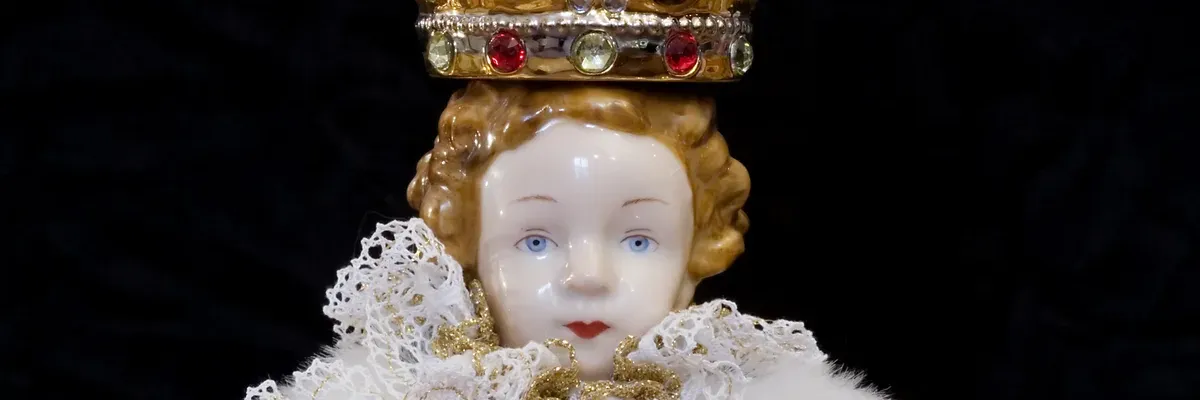
What Is the Infant of Prague?
The Infant of Prague, in Czech the Prazske Jezulatko, is a small wax-coated wooden statue of the Child Jesus, about nineteen inches tall. The Child stands with his right hand raised in blessing and his left hand holding a globe topped by a cross, a sign that the whole world belongs to him. On his head sits a jewelled royal crown, and his body is wrapped in rich embroidered robes.
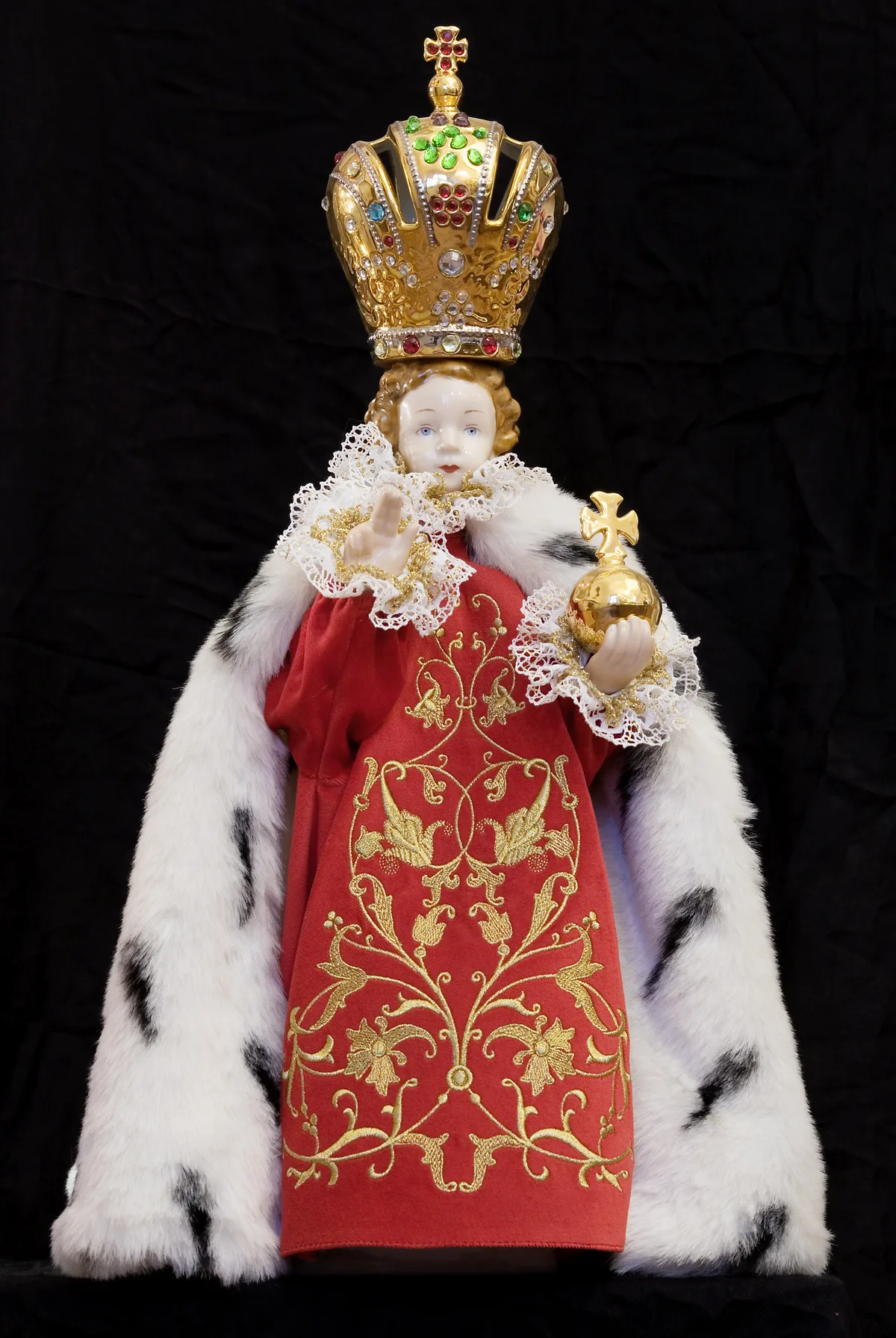
The image presents a striking truth of the faith: that the King of the universe came into the world as a baby. It is at once tender and majestic, a child small enough to hold and a sovereign clothed in gold. The original is kept and venerated in the Church of Our Lady Victorious in Prague, in the care of the Discalced Carmelites.
The History and Origin of the Infant of Prague
The statue is believed to have come from Spain in the sixteenth century, and old traditions link its making to a vision of the Child Jesus. It travelled to Bohemia as a treasured family possession, and in 1628 a noblewoman, Princess Polyxena of Lobkowicz, gave it to the Carmelite friars of Our Lady Victorious in Prague with the words, “I am giving you what I prize most highly in the world.”
For a few years the friars prospered, but during the upheavals of the Thirty Years’ War the monastery was plundered and the statue was thrown aside, its hands broken off. Years later a young priest, Father Cyril of the Mother of God, found it again in the rubble. As he restored it to honour, he is said to have heard the words, “Have mercy on me, and I will have mercy on you. Give me my hands, and I will give you peace.” Once the hands were repaired, the devotion revived and never looked back.
The Royal Robes of the Infant of Prague
One of the most distinctive features of the Infant of Prague is that the statue is dressed in real clothes. Over the centuries the faithful have given it dozens of robes, many of them gifts from kings, queens, and ordinary devotees, embroidered in silk and gold thread.
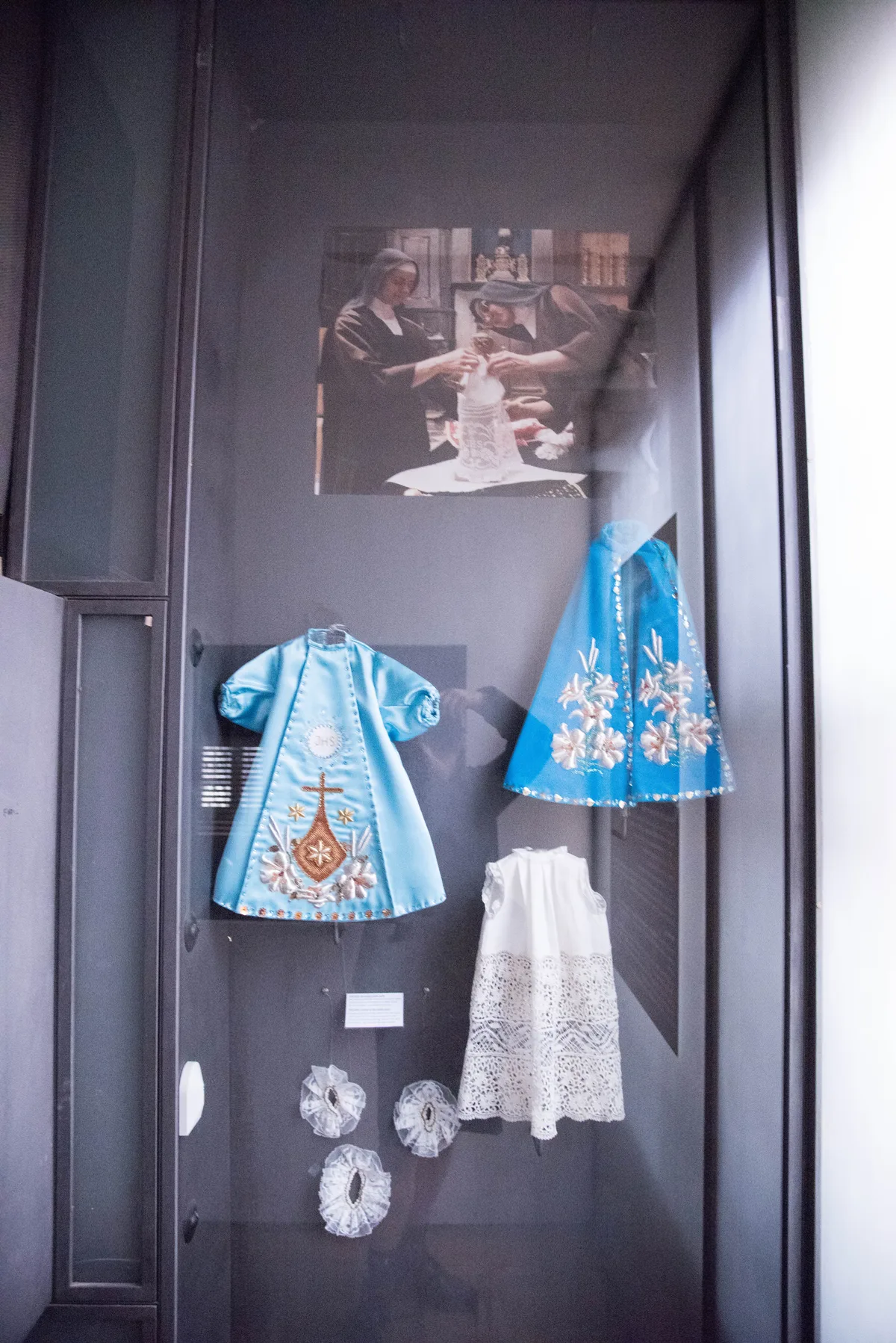
The Carmelite sisters change the Infant’s vestments throughout the year, following the colours of the liturgical calendar: white for the great feasts and Easter, red for Pentecost and the Holy Cross, green through Ordinary Time, and violet in Advent and Lent. The statue was solemnly crowned in 1655, and the small crown it wears recalls that Christ reigns even as a child. Dressing the Infant has become an act of love, a way of honouring the King who became poor for our sake.
The Meaning of the Image
Every part of the Infant of Prague carries meaning. The crown and the royal robes proclaim that this child is truly a king, the Lord of all creation. The globe in his left hand, crowned by a cross, shows that his kingdom is the whole world and that it is won through the cross. His right hand is raised in blessing, two fingers extended, the same gesture Christ makes in the great icons.
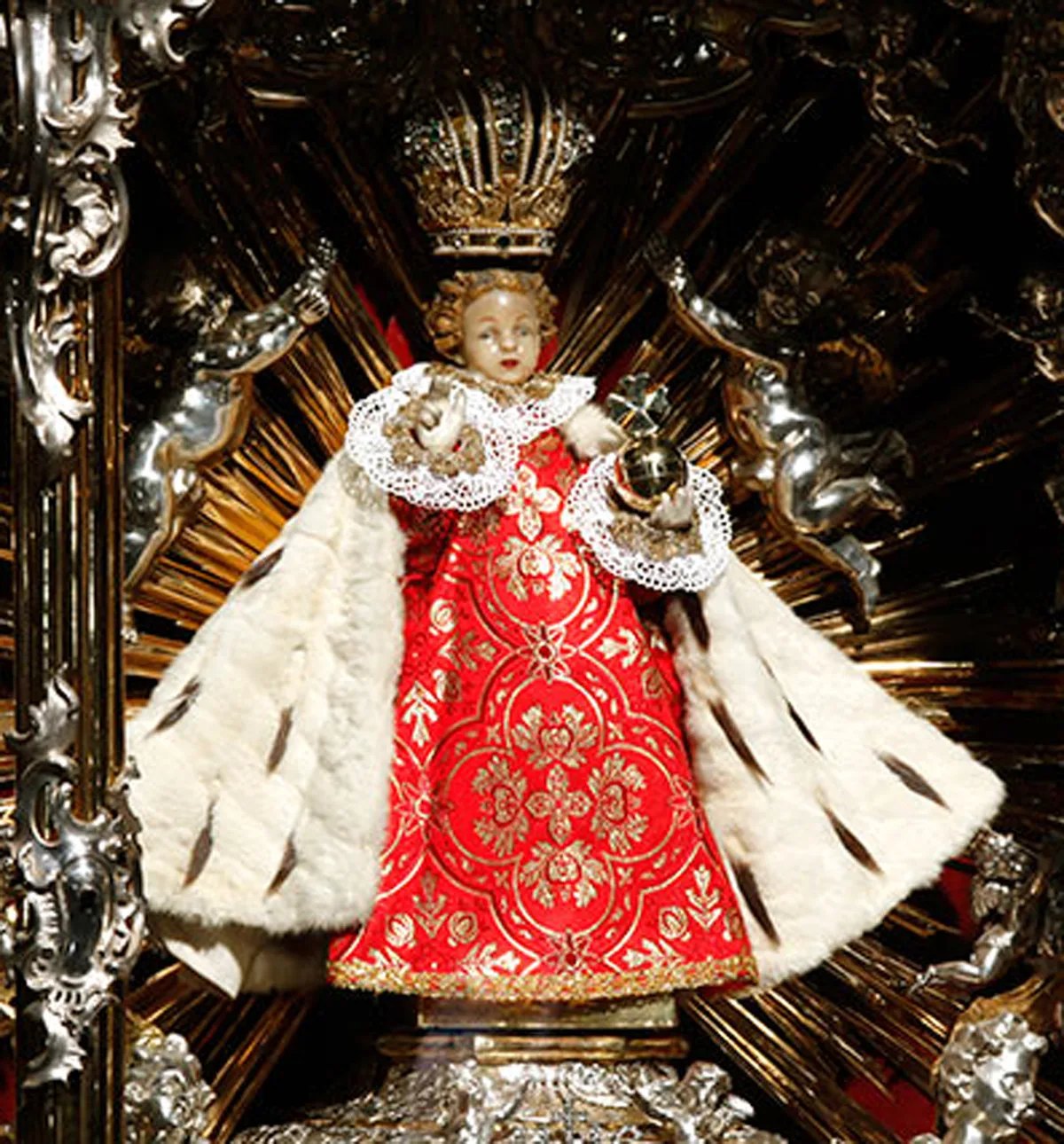
Yet the figure is a child, small and approachable. That is the heart of the devotion. The Infant of Prague invites the faithful to come to God with the trust of children, certain that the King who holds the world also bends down to bless them. It is the mystery of Christmas, God made small, kept before the eyes all year round.
Devotion and the Powerful Prayer
Devotion to the Infant of Prague is famous for its boldness and its promises. The best known words associated with the image are, “The more you honour me, the more I will bless you.” Many pray a novena to the Infant in urgent need, and the devotion is especially loved by families, by those hoping for children, and by mothers praying for a safe delivery.
The devotion has taken on local life around the world. In Ireland, for example, a “Child of Prague” statue is often kept in the home and placed outside the night before a wedding in the hope of good weather. Beneath such customs lies a simple, childlike confidence that the Christ Child hears and answers those who turn to him.
Where Is the Infant of Prague Today?
The original statue stands today where it has stood for centuries, in the Church of Our Lady Victorious, the Kostel Panny Marie Vitezne, in the Mala Strana district of Prague. It rests on a richly decorated altar, crowned and robed, and pilgrims come from across the world to pray before it. The church keeps a small museum of the Infant’s robes and crowns, gifts from many lands and many ages.
The Infant of Prague in Brief
| Detail | Description |
|---|---|
| What it is | A wax-coated wooden statue of the Child Jesus as king |
| Height | About 19 inches (48 cm) |
| Origin | Spain, 16th century; given to the Carmelites of Prague in 1628 |
| Location | Church of Our Lady Victorious, Prague |
| Patronage | Families, children, mothers, and those in urgent need |
Conclusion
The Infant of Prague has lasted for four centuries because it holds a great truth in a small and tender form. The crowned child with the globe in his hand is the King of the universe, and he is also a baby small enough to come to without fear. War broke the statue and time has dressed it in the gifts of countless hands, but the message has never changed: the more you honour him, the more he will bless you.
That is why the little King of Prague is still loved from Bohemia to Ireland to the Americas. He keeps the wonder of Christmas alive all year, the day the Lord of all became a child. To follow the Christ Child and his mother through the great paintings, see our gallery of famous Virgin Mary paintings and our guide to famous Christian paintings.
Key Facts About the Infant of Prague
- It is a small wax-coated wooden statue of the Child Jesus dressed as a king, about nineteen inches tall.
- It came from Spain in the sixteenth century and was given to the Carmelites of Prague in 1628 by Princess Polyxena of Lobkowicz.
- Its hands were broken during the Thirty Years’ War and later restored, after which the devotion revived.
- Its robes are changed through the year to match the colours of the liturgical seasons, and it was crowned in 1655.
- The original is kept in the Church of Our Lady Victorious in Prague and is venerated around the world.
Frequently Asked Questions
What is the history of the Infant of Prague?
The statue is believed to have come from Spain in the sixteenth century and was given to the Discalced Carmelites of Our Lady Victorious in Prague in 1628 by Princess Polyxena of Lobkowicz. It was damaged during the Thirty Years’ War, its hands broken off, and later found and restored by Father Cyril of the Mother of God, after which devotion to it spread.
What is the significance of the Infant of Prague?
The Infant of Prague shows that Christ, the King of the universe, came into the world as a child. The crown and globe proclaim his kingship, while the small childlike figure invites the faithful to approach God with trust. It keeps the mystery of Christmas, God made small, before the eyes all year round.
Who created the Infant of Prague statue?
The maker is unknown. The statue is thought to have been carved in Spain in the sixteenth century, and old traditions connect its origin to a vision of the Child Jesus. What is certain is that it reached Prague as a treasured possession of the Lobkowicz family before being entrusted to the Carmelites.
What is the powerful prayer to the Infant of Prague?
The devotion is best known for the promise, “The more you honour me, the more I will bless you.” The faithful often pray a novena to the Infant in times of urgent need, trusting in the words attributed to the Child Jesus and approaching him with the confidence of children.
Where is the Infant of Prague statue located?
The original statue is kept in the Church of Our Lady Victorious, the Kostel Panny Marie Vitezne, in the Mala Strana district of Prague, in the care of the Discalced Carmelites. It stands crowned and robed on a decorated altar, and pilgrims come from around the world to pray before it.
Can you buy an Infant of Prague image or print?
You can buy Catholic art at jesuschrist.pictures, in our shop, where images of the Christ Child, the Virgin Mary, and the saints are offered as canvas reproductions and posters. A devotional image of the Child Jesus is a fitting way to bring this tender mystery into a home or a place of prayer.


