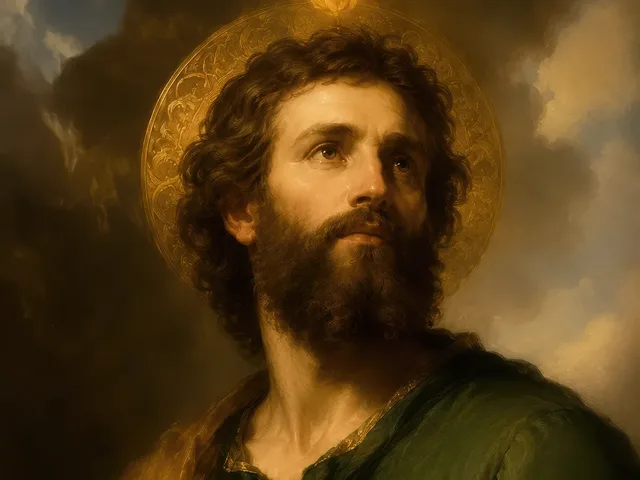
Rembrandt Paintings and the Sacred Light of the Dutch Golden Age
Rembrandt is the greatest religious painter of the Dutch Golden Age and one of the most original Christian artists in the entire history of Western painting. The Rembrandt paintings that survive today, more than three hundred securely attributed canvases and several hundred etchings, illuminate the gospel with a psychological intensity, an emotional honesty, and a tenebrist light that no other painter of the seventeenth century quite matched. He worked in a Protestant Republic that had officially renounced religious altarpieces, yet he produced one of the most concentrated bodies of Christian art ever made.
This article gathers twelve of his most important religious works, the panels and canvases that fill the great Dutch, German, French, and American museums with his unmistakable Amsterdam devotion.

From Leiden to Amsterdam
Rembrandt Harmenszoon van Rijn was born on 15 July 1606 in Leiden, the ninth child of Harmen Gerritszoon van Rijn, a Leiden miller, and Neeltgen Willemsdochter van Zuytbroeck, a baker’s daughter. He briefly attended the University of Leiden in 1620 before abandoning his studies to train as a painter, first with Jacob van Swanenburgh in Leiden and then briefly with Pieter Lastman in Amsterdam in 1624. By 1625 he had returned to Leiden and was running his own workshop with Jan Lievens.
In 1631 he moved permanently to Amsterdam, where he spent the rest of his life. His early years in the great Dutch commercial capital brought him wealth and fame, but the death of his wife Saskia in 1642 and the financial troubles of his later years cast a long shadow over the second half of his career. He died in poverty on 4 October 1669 in Amsterdam, leaving the most extraordinary body of religious painting that the Protestant North ever produced.
Head of Christ
Around 1648 to 1656, Rembrandt produced a small group of devotional panels of the head of Christ, painted from a young Jewish neighbour of his Amsterdam house. The pictures broke with the entire Western tradition of idealised Byzantine-Italian Christ types and gave the saviour the features of a specific human individual, observed from life. The example at the Philadelphia Museum of Art is one of the most concentrated of the series.


The painting is at the Philadelphia Museum of Art.
The Storm on the Sea of Galilee
Painted in 1633, this is Rembrandt’s only known seascape. The Gospel scene from Mark 4 shows the apostles’ fishing boat caught in a sudden tempest on the Sea of Galilee while Christ, awakened by the disciples, rebukes the wind and the waves. Rembrandt himself appears among the apostles, looking directly out at the viewer. The composition is one of the most dramatic of his early Amsterdam years.


The painting was stolen from the Isabella Stewart Gardner Museum in Boston in March 1990 and has never been recovered. The empty frame still hangs in its original Dutch Room.
The Supper at Emmaus
Painted in 1648, this small panel is one of Rembrandt’s most concentrated religious compositions. The risen Christ breaks bread with the two disciples at the inn at Emmaus, the moment when they recognise him. Rembrandt paints the scene with a single source of light falling on the face of Christ, who looks upward in calm transfiguration while the disciples react with extreme astonishment. The composition is reduced to its essential mystery.


The painting is at the Louvre Museum in Paris. For a wider survey of the subject, see our article on iconic Supper at Emmaus paintings.
The Return of the Prodigal Son
Painted around 1663 to 1669, in the very last years of his life, this great canvas is the supreme religious masterpiece of Rembrandt’s late style. The Gospel parable from Luke 15 is presented with extreme emotional concentration. The kneeling son in his ragged shoes is welcomed by the standing father in his deep red robe, with their hands meeting in a gesture of total reconciliation. Around them, the elder son and other figures watch in silence. The composition is reduced to the essential meaning of the parable, and the tonality is dominated by the warm golden brown that defines all of Rembrandt’s late work.

The painting is at the Hermitage Museum in Saint Petersburg.
The Raising of Lazarus
Painted around 1630 to 1632 during the Leiden years, this dramatic composition shows the moment when Christ raises Lazarus from the tomb at the village of Bethany. The figure of Christ stands in the centre of the picture, his arm raised in command, while Lazarus rises from the open sepulchre below and the witnesses react with shock. The composition is built on the dramatic tenebrist contrasts that Rembrandt had absorbed from the Utrecht Caravaggesque painters of his Leiden youth.

The painting is at the Los Angeles County Museum of Art.
Belshazzar’s Feast
Painted around 1635 to 1638, this great canvas illustrates the Old Testament scene from Daniel 5 in which the Babylonian king Belshazzar, feasting from the sacred vessels stolen from the Temple of Jerusalem, sees the mysterious words MENE MENE TEKEL UPHARSIN written on the wall by a divine hand. Rembrandt paints the moment with the dramatic Hebrew text rendered in vertical columns, and the king turning back in extreme shock as he sees the writing.

The painting is at the National Gallery in London.
The Denial of Saint Peter
Painted in 1660, this concentrated late composition shows the moment when Peter, warming himself by the fire in the high priest’s courtyard, is recognised by the maidservant as one of Christ’s disciples and denies him for the third time. Rembrandt paints the scene with the single source of candlelight that defines his late tenebrism, with Peter’s anguished face lit by the small flame held by the maidservant, while the figure of Christ being led away appears in the upper right.

The painting is at the Rijksmuseum in Amsterdam.
The Holy Family with Angels
Painted in 1645, this intimate panel shows the Virgin reading by the cradle of the sleeping Christ child while Joseph works at his carpentry in the background and a flight of angels descends from above to bless the household. Rembrandt paints the scene with the warm interior light and the tender domestic intimacy that distinguish his Marian devotional paintings of the 1640s.

The painting is at the Hermitage Museum in Saint Petersburg.
Susanna and the Elders
The Old Testament story from the Book of Daniel shows the chaste Susanna bathing in her garden when two elderly judges spy on her and threaten to falsely accuse her of adultery unless she yields to them. Rembrandt paints the moment of confrontation with extreme psychological intensity, with the figure of Susanna shrinking back from the touch of the older man while the second elder watches in the shadow.

The painting is at the Gemäldegalerie in Berlin.
Judith at the Banquet of Holofernes
The Old Testament heroine Judith is shown at the banquet of the Assyrian general Holofernes, the night before she will behead him to save her people. Rembrandt paints the scene with the warm interior light of his Amsterdam style, with the figure of Judith caught between the two glances of the general and the viewer.

The painting is at the Museo del Prado in Madrid.
Moses Smashing the Tablets of the Law
Painted in 1659, this single figure of Moses returning from Mount Sinai with the two tablets of the Law captures the moment when the prophet sees the Israelites worshipping the Golden Calf and lifts the tablets to dash them on the ground in anger. Rembrandt paints the prophet with the same warm tenebrist light as his late Apostle figures, the white beard and the grave eyes filling the composition.

The painting is at the Gemäldegalerie in Berlin.
Rembrandt and Saskia as the Prodigal Son in the Tavern
Painted around 1635 to 1636 during the happiest years of his Amsterdam life, this self-portrait shows Rembrandt and his young wife Saskia van Uylenburgh in the costumes of the prodigal son and his courtesan, set in the tavern scene of Luke 15. The painting is half a celebration of married life and half a religious meditation on the parable of the prodigal son.

The painting is at the Gemäldegalerie Alte Meister in Dresden.
For more context on Rembrandt’s seventeenth century Dutch world, see our articles on the older Flemish Baroque master Peter Paul Rubens, on his French classical contemporary Nicolas Poussin, and on the wider tradition of Baroque Jesus paintings.
Summary Table of Rembrandt’s Religious Paintings
| Name | Artist | Date | Medium | Museum |
|---|---|---|---|---|
| Head of Christ | Rembrandt | c. 1648 to 1656 | Oil on panel | Philadelphia Museum of Art |
| The Storm on the Sea of Galilee | Rembrandt | 1633 | Oil on canvas | Isabella Stewart Gardner Museum (stolen 1990) |
| The Supper at Emmaus | Rembrandt | 1648 | Oil on panel | Louvre Museum, Paris |
| The Return of the Prodigal Son | Rembrandt | c. 1663 to 1669 | Oil on canvas | Hermitage Museum, Saint Petersburg |
| The Raising of Lazarus | Rembrandt | c. 1630 to 1632 | Oil on panel | Los Angeles County Museum of Art |
| Belshazzar’s Feast | Rembrandt | c. 1635 to 1638 | Oil on canvas | National Gallery, London |
| The Denial of Saint Peter | Rembrandt | 1660 | Oil on canvas | Rijksmuseum, Amsterdam |
| The Holy Family with Angels | Rembrandt | 1645 | Oil on canvas | Hermitage Museum, Saint Petersburg |
| Susanna and the Elders | Rembrandt | 1647 | Oil on panel | Gemäldegalerie, Berlin |
| Judith at the Banquet of Holofernes | Rembrandt | 1634 | Oil on canvas | Museo del Prado, Madrid |
| Moses Smashing the Tablets of the Law | Rembrandt | 1659 | Oil on canvas | Gemäldegalerie, Berlin |
| Rembrandt and Saskia in the Parable of the Prodigal Son | Rembrandt | c. 1635 to 1636 | Oil on canvas | Gemäldegalerie Alte Meister, Dresden |
Conclusion
Rembrandt’s religious painting is the supreme statement of seventeenth century Dutch Christian art. He worked in a Protestant Republic that had officially renounced religious altarpieces, yet he produced over a long career one of the most concentrated bodies of biblical and gospel painting in the entire history of Western art. His decision to give Christ the features of an observed Jewish neighbour, his late tenebrism of single warm interior light, and the unsparing psychological honesty of his apostles and biblical figures changed the way Catholic and Protestant Europe alike imagined the gospel. The great Return of the Prodigal Son, painted in the very last years of his life, remains one of the most moving Christian paintings ever produced.
Important Facts About Rembrandt
- Rembrandt Harmenszoon van Rijn was born on 15 July 1606 in Leiden, the ninth child of Harmen Gerritszoon van Rijn, a Leiden miller, and Neeltgen Willemsdochter van Zuytbroeck, a baker’s daughter.
- He briefly attended the University of Leiden in 1620 before abandoning his studies to train first with Jacob van Swanenburgh in Leiden and then briefly with Pieter Lastman in Amsterdam in 1624.
- Rembrandt is the supreme figure of Dutch Golden Age painting and is celebrated for his religious tenebrism, his concentrated psychological intensity, his loose late painterly technique, and his unprecedented honesty of self-portraiture across forty years.
- His most famous religious work is the great Return of the Prodigal Son, painted around 1663 to 1669 at the very end of his life and now displayed at the Hermitage Museum in Saint Petersburg.
- He died on 4 October 1669 in Amsterdam in financial poverty after declaring bankruptcy in 1656, having outlived his wife Saskia, his common-law partner Hendrickje, and his son Titus, and his late style shaped the entire subsequent history of European religious painting.
Questions and Answers About Rembrandt Paintings
What is Rembrandt’s most famous painting?
His best known secular work is The Night Watch of 1642 at the Rijksmuseum in Amsterdam. Among his religious paintings, the Return of the Prodigal Son at the Hermitage and the Supper at Emmaus at the Louvre are the most studied and most reproduced. The stolen Storm on the Sea of Galilee remains his only known seascape and the subject of the largest unsolved art theft in modern history.
Where can I see Rembrandt paintings today?
The Rijksmuseum in Amsterdam holds the largest single collection, including The Night Watch and The Denial of Saint Peter. The Hermitage in Saint Petersburg, the Mauritshuis in The Hague, the Gemäldegalerie in Berlin, the Louvre in Paris, the National Gallery in London, the Metropolitan Museum and the Frick Collection in New York, and the National Gallery of Art in Washington all hold major works.
What style is Rembrandt associated with?
Rembrandt is the supreme figure of Dutch Golden Age painting and one of the most distinctive masters of the European Baroque. His mature style is built on warm tenebrist light, loose painterly handling, deep psychological observation, and an unprecedented honesty about the human face. His late religious paintings reduce biblical scenes to their essential emotional core, with single sources of warm interior light defining figures against deep golden shadow.
Was Rembrandt Catholic or Protestant?
He was raised in a mixed religious household in Leiden. His father was a member of the Dutch Reformed Church and his mother retained Catholic sympathies. He himself attended both Calvinist and Mennonite circles in Amsterdam and never formally joined any denomination. His religious paintings cross confessional lines and were collected by both Catholic and Protestant patrons in the seventeenth century.
Why did Rembrandt give Christ Jewish features?
Around 1648 to 1656 he produced a small group of devotional panels of the head of Christ painted from a young Jewish neighbour of his Amsterdam house. The pictures broke with the entire Western tradition of idealised Byzantine-Italian Christ types and gave the saviour the features of a specific human individual, observed from life. The choice was a deliberate theological statement about the Incarnation as a real entry of the divine into the actual Jewish people of Galilee.
What happened to the Storm on the Sea of Galilee?
On the night of 18 March 1990, two thieves disguised as Boston policemen entered the Isabella Stewart Gardner Museum and stole thirteen works of art, including Rembrandt’s only known seascape. The paintings have never been recovered, and the empty frame still hangs in its original Dutch Room of the museum. The case remains the largest unsolved art theft in modern history.
Where can I buy a Rembrandt painting reproduction?
You can buy them at jesuschrist.pictures: browse all the Rembrandt canvas prints in our shop, printed on museum-grade canvas and available in several sizes.