The Divine Vision of Italian Renaissance Jesus Paintings
This article is accompanied by a short podcast episode that offers an audio overview of the main themes and artworks discussed below.
Introduction: Jesus Paintings in the Italian Renaissance
From the 14th to the 17th century, Italy became the heart of a profound artistic and intellectual revival that would forever change the course of Western art. Known as the Renaissance, this period marked a return to classical ideals of harmony, proportion, and human dignity, infused with renewed religious depth. Artists began to explore the beauty of the natural world, the complexity of human emotion, and the divine mysteries of Christian faith with unprecedented skill and innovation.
One of the most remarkable shifts during the Renaissance was how sacred subjects (particularly Jesus Christ) were reimagined with human tenderness, emotional realism, and technical brilliance. Innovations such as linear perspective, chiaroscuro (light and shadow), and anatomical accuracy allowed painters to portray biblical scenes with both spiritual reverence and human relatability. The result was a body of religious art that continues to move viewers centuries later.
The masterpieces below represent some of the most influential depictions of Christ from the Italian Renaissance.
For readers who wish to contemplate these masterpieces more closely, selected high-quality canvas reproductions are referenced alongside the artworks, offering a way to engage with them beyond the museum context.
Significance of Jesus Paintings in the Italian Renaissance
Jesus Christ remained the central figure in Italian Renaissance religious art, but how He was portrayed evolved dramatically. No longer confined to formal, iconic imagery, Jesus began to appear as both fully divine and deeply human. This shift reflected broader theological and philosophical currents of the time (particularly the emphasis on humanism, which saw the Incarnation not as abstract doctrine) but as the ultimate union of God and man.
Italian Renaissance artists used their mastery of technique and composition to communicate timeless truths about Christ’s compassion, sacrifice, and presence. Whether painted for grand cathedrals or private chapels, these works helped viewers reflect more deeply on the mysteries of the faith.
Three Defining Aspects of Renaissance Depictions of Jesus:
- Religious Devotion: These paintings were acts of devotion themselves, commissioned for worship spaces and created to guide prayer and contemplation.
- Incarnation of Humanity: Jesus was shown as approachable and human, expressing sorrow, serenity, and love in ways that invited empathy and reflection.
- Artistic Innovation: Techniques like perspective, anatomical precision, and the nuanced use of light brought biblical scenes to life, deepening their emotional and theological impact.
| Aspect | Description | Example Works |
|---|---|---|
| Themes | Humanity, divinity, compassion, sacrifice | The Last Supper by Leonardo da Vinci |
| Technique | Perspective, anatomical realism, chiaroscuro | The Transfiguration by Raphael |
| Spiritual Influence | Guided prayer, strengthened devotion, and enhanced liturgical experience | The Creation of Adam by Michelangelo |
These masterpieces not only showcase artistic genius, they remain enduring testimonies of faith. To explore how Renaissance ideals developed in other parts of Europe, see our articles on Northern Renaissance Jesus paintings and Spanish Renaissance Jesus paintings.
To discover the most celebrated masterpieces at a glance, explore our curated Famous Jesus Paintings gallery.
Religious Symbolism and Iconography
Italian Renaissance artists did not abandon the use of sacred symbols : they refined it. While moving toward naturalism, painters continued to embed spiritual meaning into gestures, objects, and composition. Symbols functioned as visual theology, helping viewers engage with the deeper truths of the Gospel.
| Symbol | Meaning |
|---|---|
| Cross | The sign of Christ’s Passion, representing sacrifice and redemption. |
| Lamb | Symbol of purity and Jesus as the Lamb of God. |
| Halo | Denotes sanctity, divinity, and the presence of the Holy Spirit. |
| Bread and Wine | Represent the Eucharist and the mystery of Christ’s body and blood. |
These symbols are not merely decorative, they invite the viewer into contemplation. Through them, the paintings became instruments of catechesis and spiritual reflection. To see how such iconography evolved in northern regions, visit our overview of Dutch Renaissance Jesus paintings.
Emphasis on Realism and Humanism
One of the most significant achievements of the Italian Renaissance was its embrace of humanism. The belief that the human person, made in God’s image, was worthy of deep artistic exploration. This principle dramatically shaped how Jesus was depicted. Artists moved away from abstract forms and instead painted Him with anatomical accuracy, emotional depth, and lifelike presence.
| Feature | Description |
|---|---|
| Anatomical Realism | Figures are rendered with accurate musculature and natural posture. |
| Emotional Expression | Faces and gestures communicate genuine human feeling : sorrow, serenity, love. |
| Perspective | Linear perspective creates spatial depth and invites the viewer into the sacred scene. |
This realism did more than enhance visual beauty, it brought sacred stories closer to the faithful. Jesus became someone both divine and near, someone whose humanity mirrored our own. For a Northern interpretation of this realism, explore Northern Renaissance Jesus paintings.
Use of Light and Shadow
Italian Renaissance artists revolutionized the use of light to emphasize form, space, and spiritual symbolism. Techniques like chiaroscuro (the contrast of light and shadow) and sfumato (subtle gradations of tone) allowed painters to model figures with realism and grace. Light was no longer simply an element of nature, it became a metaphor for divinity.
| Technique | Description |
|---|---|
| Chiaroscuro | Contrasting light and dark to create three-dimensional form and spiritual tension. |
| Sfumato | Soft transitions between colors and tones, creating a dreamlike and natural atmosphere. |
These techniques allowed artists to direct the viewer’s attention, highlight theological focal points, and evoke a profound sense of sacred presence. For another vision of dramatic sacred light, explore Spanish Renaissance Jesus paintings, where mysticism and shadow often go hand in hand.
Famous Italian Renaissance Jesus Paintings
Some of the most celebrated masterpieces in Christian art were created during the Italian Renaissance. These works not only showcase extraordinary technical skill but also embody profound theological insight. From depictions of the Last Supper to the Resurrection, each painting presents Jesus Christ with both divine majesty and human tenderness. The following highlights seven essential works that continue to inspire spiritual reflection and artistic admiration.
For a broader visual overview, explore our Renaissance Jesus Paintings gallery.
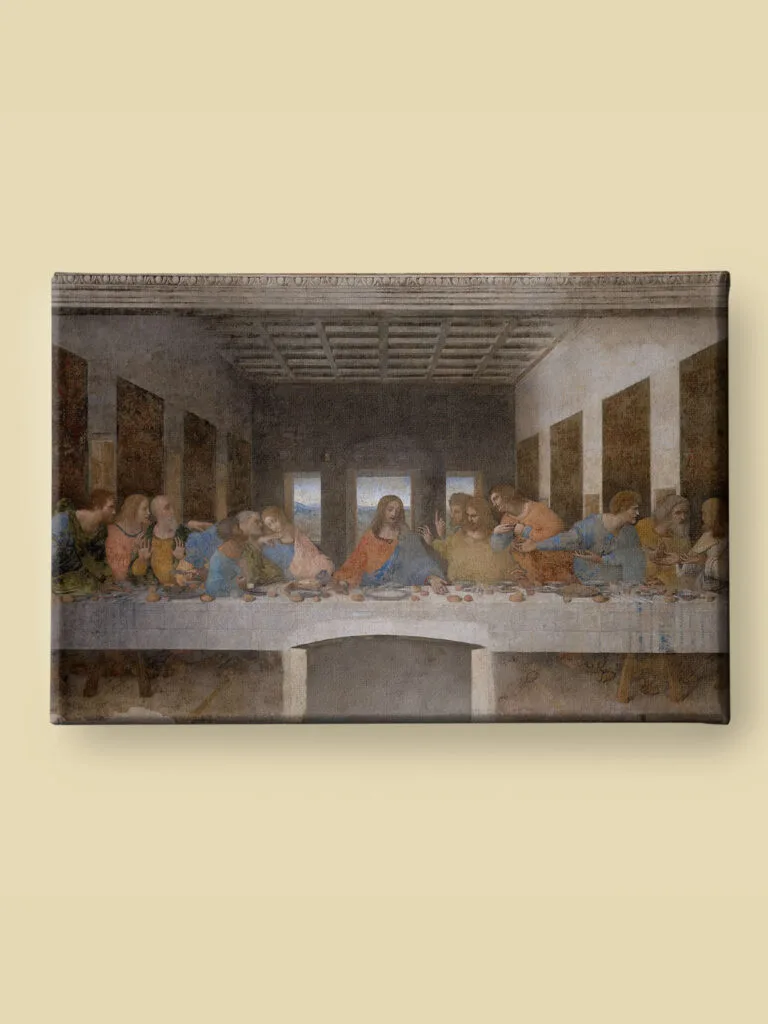
Leonardo da Vinci – The Last Supper
| Aspect | Details |
|---|---|
| Year Completed | 1498 |
| Location | Santa Maria delle Grazie, Milan |
| Medium | Tempera and oil on plaster |
| Dimensions | 460 × 880 cm |
Leonardo’s The Last Supper is one of the most iconic depictions of Christ in Western art. The painting captures the dramatic moment Jesus reveals His impending betrayal. Through composition, expression, and masterful use of perspective, Leonardo creates a deeply emotional and spiritually charged scene. Christ is calm at the center, a visual anchor amidst the turmoil of the disciples.

For collectors and interior decor, reproductions can bring this masterpiece into modern spaces.
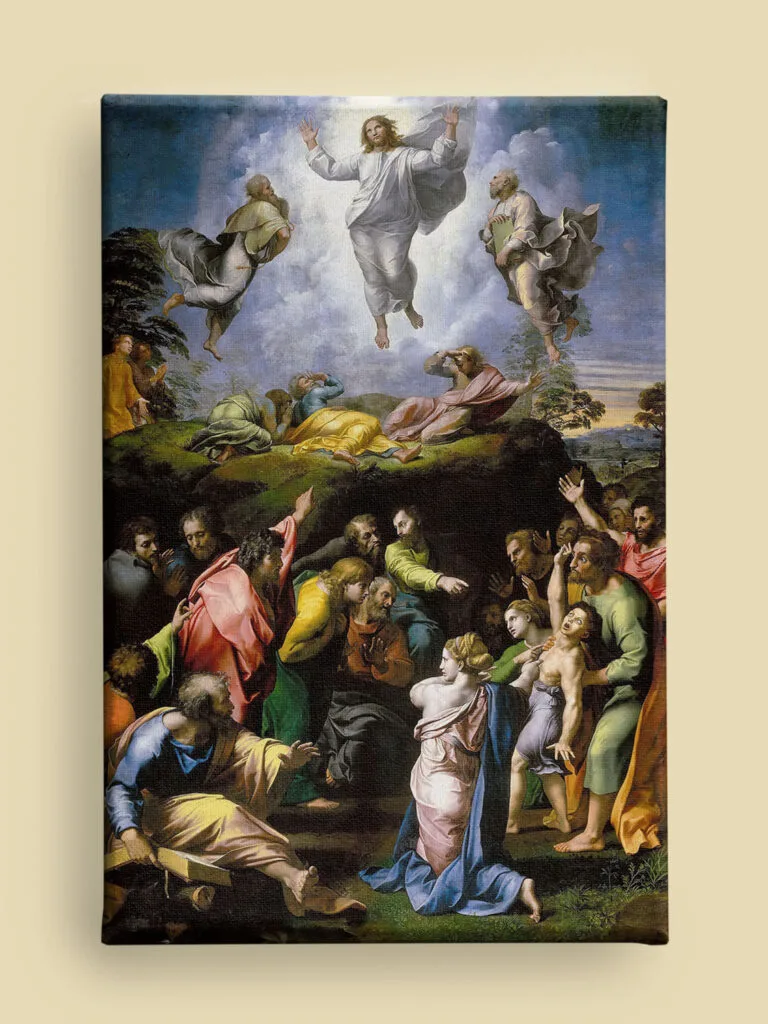
Raphael – The Transfiguration
| Aspect | Details |
|---|---|
| Year Completed | 1520 |
| Location | Vatican Museums, Vatican City |
| Medium | Oil on wood |
| Dimensions | 405 × 278 cm |
Raphael’s final masterpiece, The Transfiguration, combines two episodes: Christ transfigured in radiant light above, and the healing of a possessed boy below. The contrast between divine glory and human suffering creates a powerful theological message : a reflection on faith, doubt, and redemption. The painting remains one of the most spiritually ambitious works of the High Renaissance.

For collectors and interior decor, reproductions can bring this masterpiece into modern spaces.
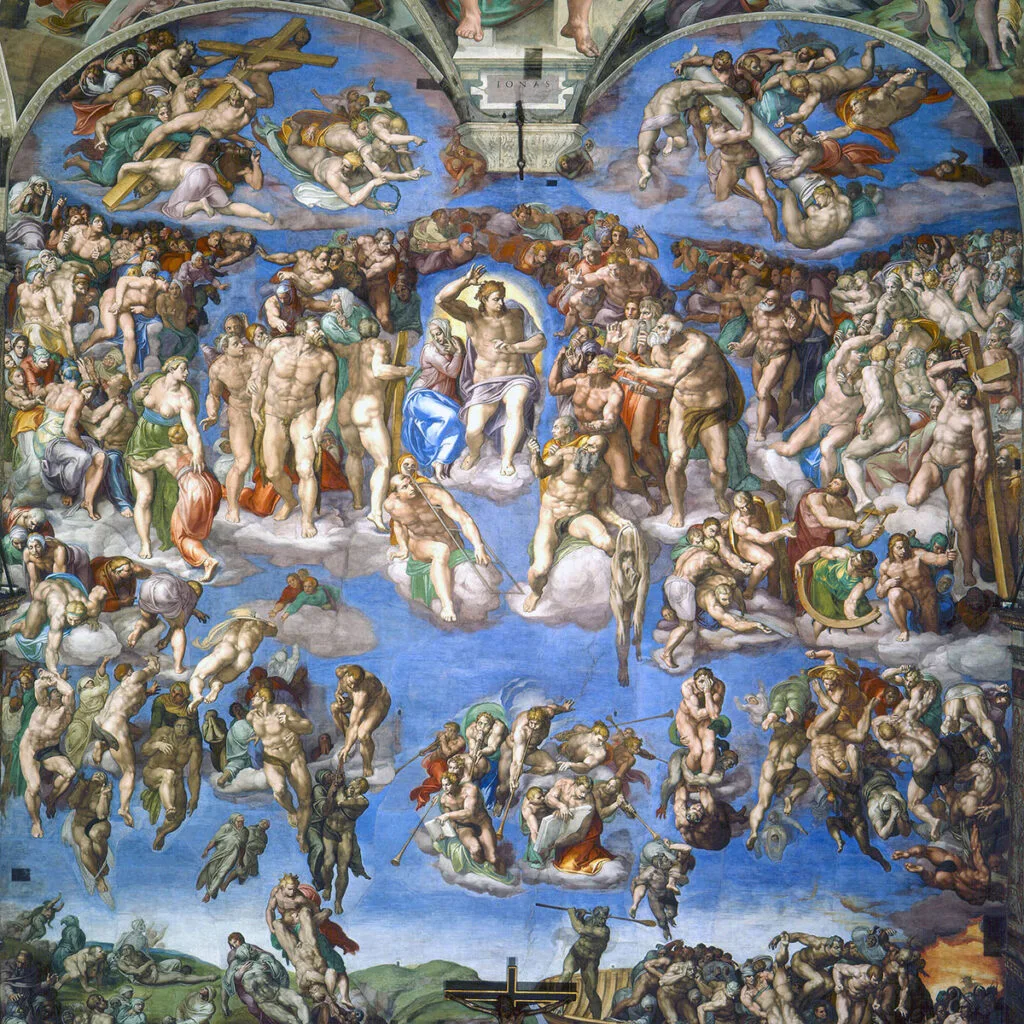
Michelangelo – The Last Judgment
| Aspect | Details |
|---|---|
| Year Completed | 1536-1541 |
| Location | Sistine Chapel, Vatican City |
| Medium | Fresco |
| Dimensions | Approx. 1370 × 1200 cm |
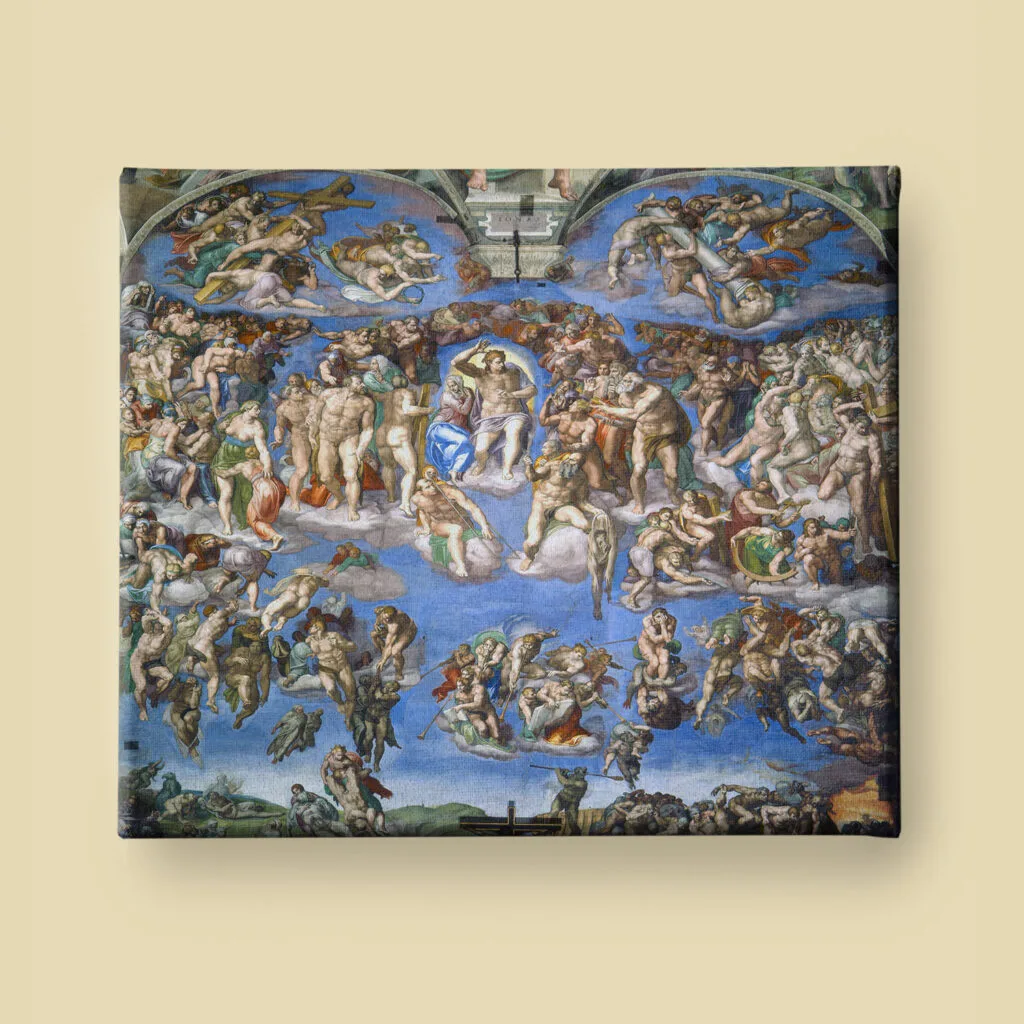
Michelangelo’s The Last Judgment presents Christ as the supreme judge of humanity, commanding the dramatic scene of salvation and damnation that unfolds across the Sistine Chapel altar wall. Unlike earlier serene depictions, Jesus appears powerful and authoritative, embodying divine justice rather than gentle mediation. The monumental scale, dynamic anatomy, and intense emotional force of the fresco mark a turning point in Renaissance religious art and anticipate the expressive drama of the Baroque period.
For collectors and interior decor, reproductions can bring this masterpiece into modern spaces.
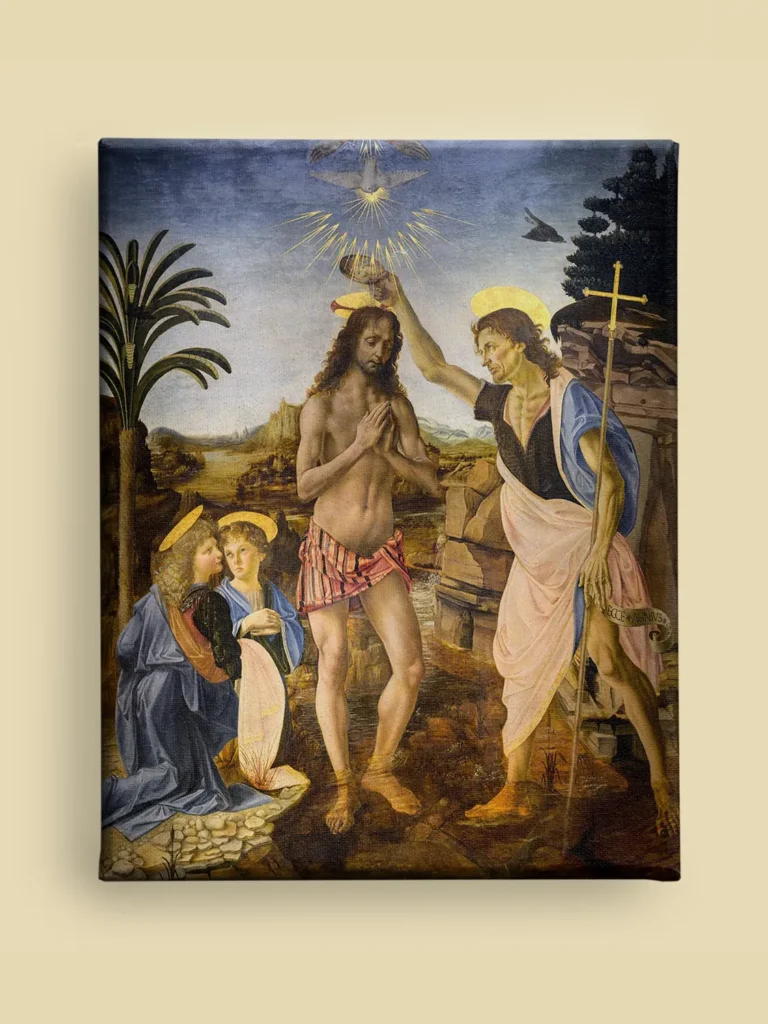
Andrea del Verrocchio and Leonardo da Vinci – The Baptism of Christ
| Aspect | Details |
|---|---|
| Year Completed | c. 1472-1475 |
| Location | Uffizi Gallery, Florence |
| Medium | Tempera and oil on panel |
| Dimensions | 177 × 151 cm |
The Baptism of Christ marks a pivotal moment in Renaissance art and in Leonardo da Vinci’s early career. Painted in Verrocchio’s workshop, the composition depicts the baptism of Jesus by John the Baptist in the Jordan River, with angels witnessing the sacred event. Leonardo is traditionally credited with painting the angel on the left and parts of the landscape, introducing a new softness, naturalism, and atmospheric depth that surpass the surrounding figures. This collaboration symbolizes the transition from Early Renaissance traditions toward the artistic revolution Leonardo would soon lead.

For collectors and interior decor, reproductions can bring this masterpiece into modern spaces.
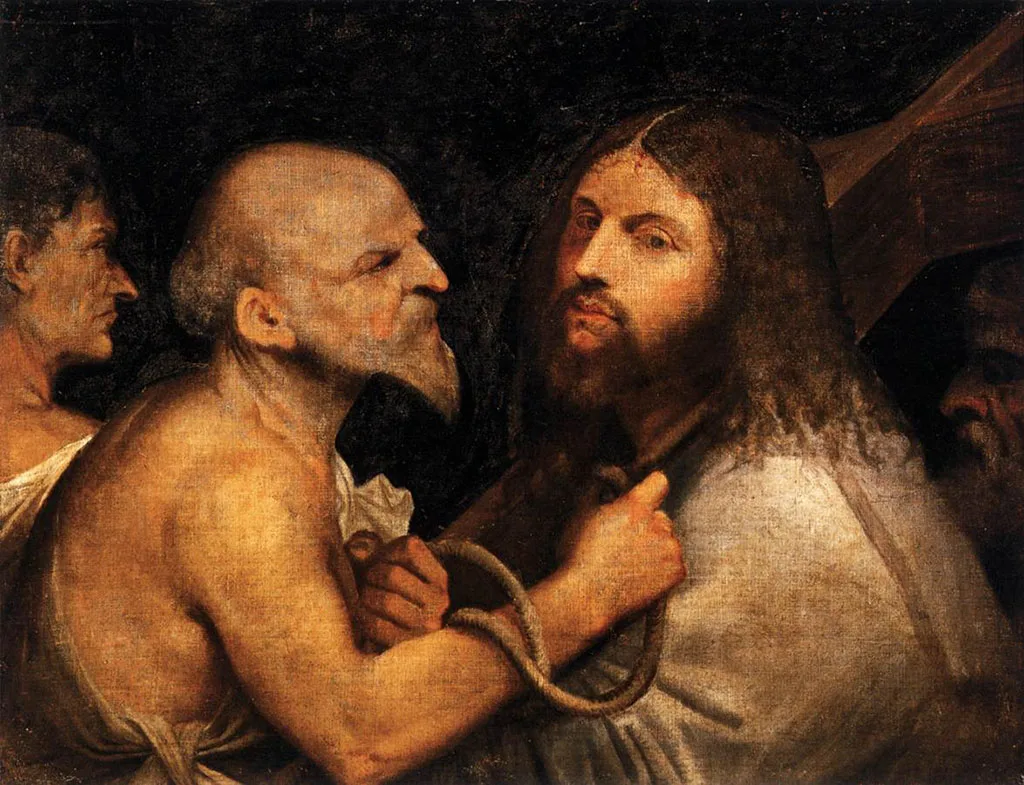
Titian – Christ Carrying the Cross
| Aspect | Details |
|---|---|
| Year Completed | c. 1565 |
| Location | Museo del Prado, Madrid |
| Medium | Oil on canvas |
| Dimensions | 116 × 100 cm |
In this emotionally charged work, Titian captures the sorrow and exhaustion of Christ on the road to Calvary. The dark background and focused illumination on Jesus’s face create a sense of spiritual isolation. Titian’s mastery of chiaroscuro enhances the drama, emphasizing Christ’s burden and quiet strength. This painting invites deep empathy and reflection on Christ’s sacrifice.
Andrea Mantegna – The Agony in the Garden
| Aspect | Details |
|---|---|
| Year Completed | 1459 |
| Location | National Gallery, London |
| Medium | Tempera on panel |
| Dimensions | 63 × 80 cm |
Mantegna’s Agony in the Garden is a dramatic portrayal of Jesus in prayer before His arrest. The rocky landscape and distant approach of soldiers create a tense atmosphere. The angel above offers consolation, while the disciples sleep below, unaware. Mantegna’s use of perspective and detail draws the viewer into Christ’s moment of solitude and surrender to the Father’s will.

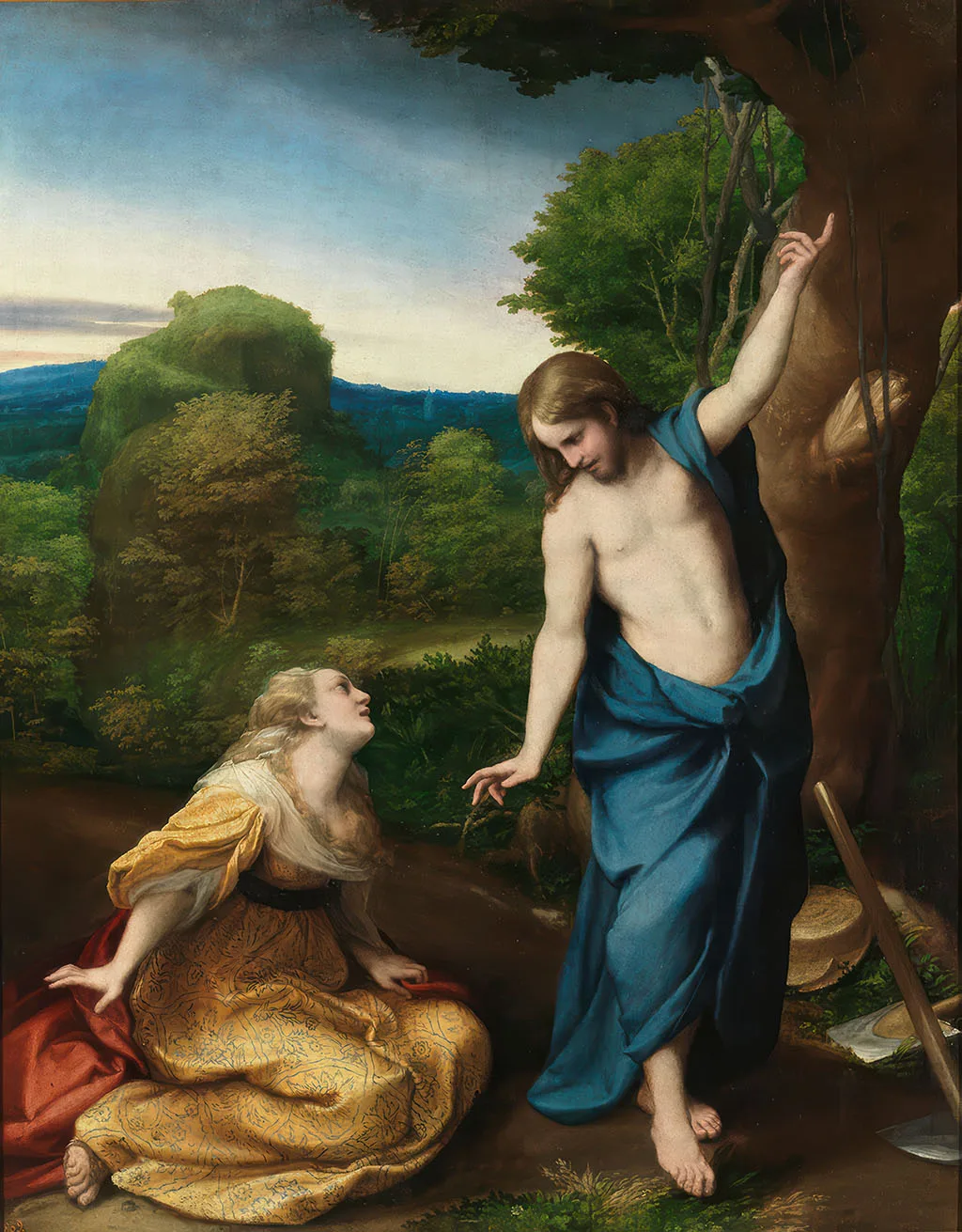
Correggio – Noli Me Tangere
| Aspect | Details |
|---|---|
| Year Completed | c. 1525 |
| Location | Museo del Prado, Madrid |
| Medium | Oil on canvas |
| Dimensions | 130 × 103 cm |
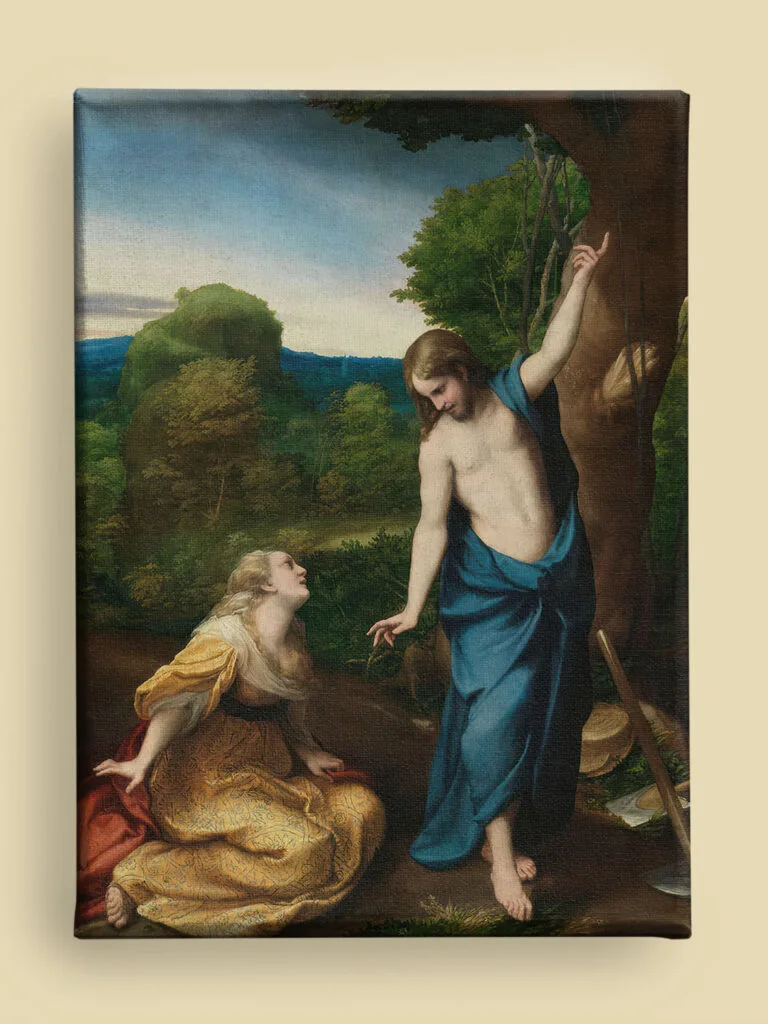
Correggio’s Noli Me Tangere depicts the poignant moment when the risen Christ appears to Mary Magdalene and gently tells her not to touch Him. The composition radiates intimacy and grace. With soft light and flowing movement, Correggio balances sacred distance with human closeness, a theme central to Resurrection imagery. His use of space and naturalism marks a turning point toward early Baroque sensibilities.
For collectors and interior decor, reproductions can bring this masterpiece into modern spaces.
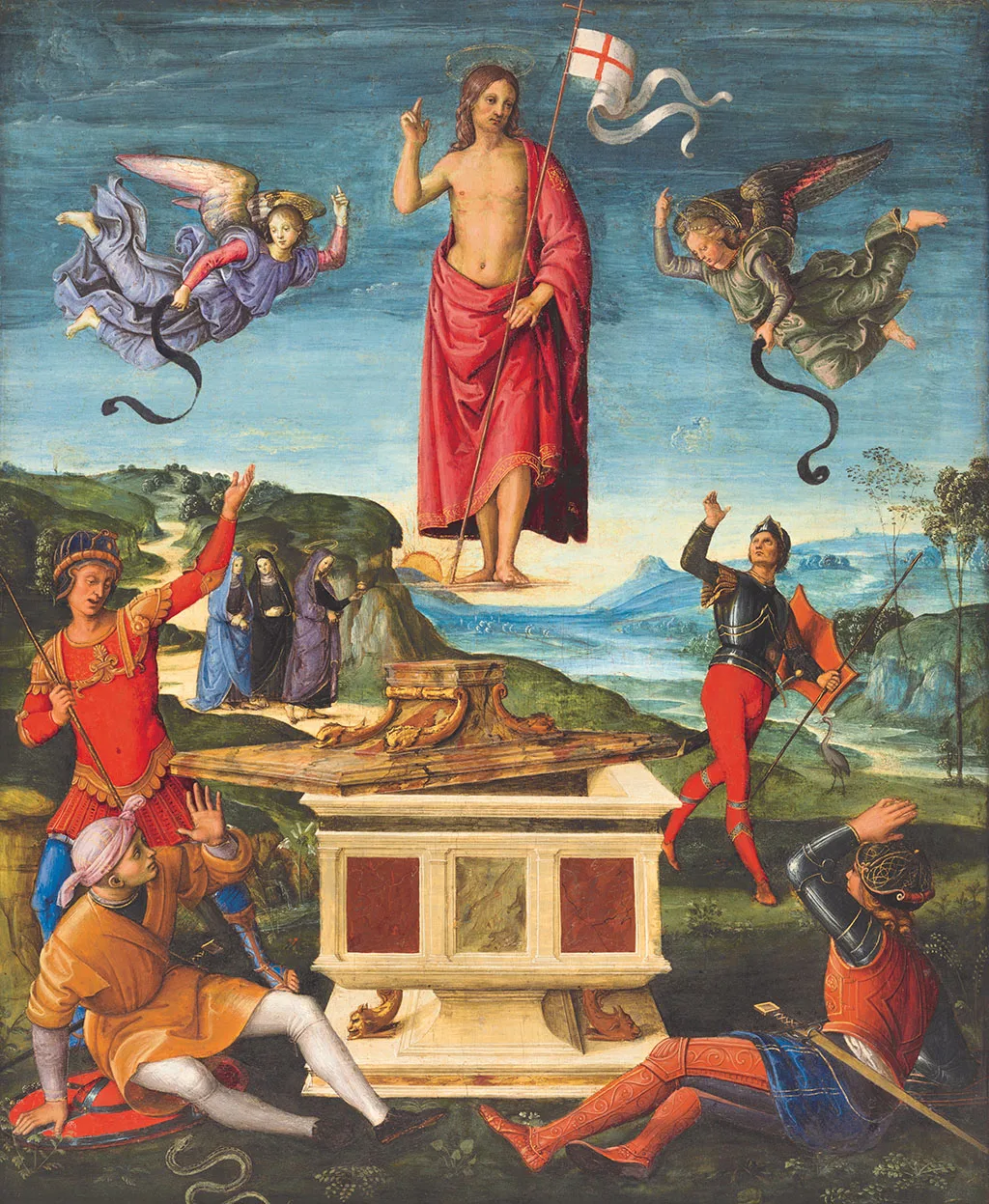
Raphael – The Resurrection of Christ
| Aspect | Details |
|---|---|
| Year Completed | 1499-1502 |
| Location | São Paulo Museum of Art, Brazil |
| Medium | Oil on panel |
| Dimensions | 52 × 44 cm |
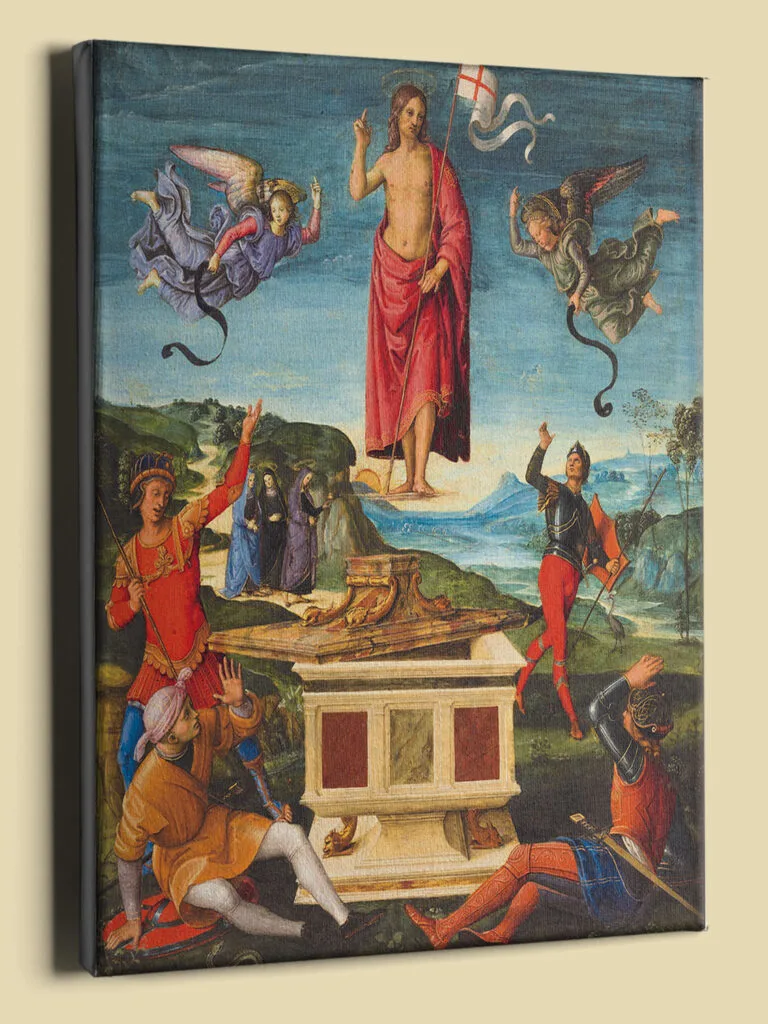
This early work by Raphael captures the triumphant moment of Christ’s resurrection. Jesus rises above the tomb in radiant light, with guards falling back in awe. The bold composition and vibrant palette already reveal the clarity and spiritual elegance that would define Raphael’s later works. This image celebrates victory over death, central to the Christian message.
For collectors and interior decor, reproductions can bring this masterpiece into modern spaces.
Influential Italian Renaissance Artists
The Italian Renaissance produced a constellation of visionary artists whose work redefined religious painting for centuries. Their portrayals of Jesus were not only technically groundbreaking but spiritually profound. Figures such as Leonardo da Vinci, Raphael, and Michelangelo each contributed a distinctive voice to the sacred visual language of Christianity. Below, we explore how these masters shaped the way Christ was seen (and felt) through their art.
Leonardo da Vinci
Leonardo da Vinci (1452-1519) stands as one of the most celebrated figures in the history of art. A master of observation, anatomy, and composition, Leonardo infused his religious works with psychological realism and theological depth. His depiction of Jesus in The Last Supper captures a moment of divine revelation while highlighting the emotional tension among the apostles.
| Attribute | Details |
|---|---|
| Famous Work | The Last Supper (1495-1498) |
| Key Techniques | Perspective, sfumato, anatomical realism |
| Spiritual Focus | Inner emotion, human expression, sacramental presence |
Leonardo’s ability to portray sacred figures with authenticity and empathy made his work both spiritually impactful and artistically timeless. For his theological roots, revisit our study of Medieval Jesus paintings.
Raphael
Raphael (1483-1520) brought serenity, grace, and classical balance to religious painting. His depictions of Jesus often emphasize divine radiance and human tenderness. In works such as The Transfiguration and The Resurrection of Christ, Raphael creates sacred compositions that feel both majestic and intimate, filled with luminous color and expressive beauty.
| Attribute | Details |
|---|---|
| Famous Works | The Transfiguration, The Resurrection of Christ |
| Key Traits | Harmony, balance, radiant color |
| Spiritual Tone | Unity of heaven and earth, divine light |
Raphael’s works served as visual meditations, bridging theology and aesthetics. His ability to elevate sacred narratives influenced generations of artists. For complementary emotional expression, see our coverage of Gothic Jesus paintings.
Michelangelo
Michelangelo (1475-1564) brought unmatched drama, power, and reverence to the representation of Christ. Though primarily known for his sculpture, his painted works (especially in the Sistine Chapel) express both theological grandeur and physical realism. His monumental fresco The Last Judgment presents Christ with unprecedented power and dramatic intensity.
| Attribute | Details |
|---|---|
| Famous Work | The Last Judgement (1536-1541) |
| Known For | Fresco, muscular anatomy, spiritual drama |
| Spiritual Message | Creation, divine spark, dignity of man |
Michelangelo’s depictions of Christ and biblical scenes are monumental in both scale and impact. His artistic language bridges heaven and earth, emphasizing the grandeur of God’s plan. For the next phase of dramatic sacred art, explore Baroque Jesus paintings.
Impact of Italian Renaissance Jesus Paintings
Italian Renaissance Jesus paintings profoundly reshaped Christian visual culture, bridging theology, aesthetics, and human experience. These works did not simply decorate churches, they educated the faithful, deepened devotion, and transformed how sacred stories were told through art. Their influence continues to resonate through later artistic movements, inspiring both religious and secular artists to pursue the beautiful, the meaningful, and the eternal.
Influence on Future Art Movements
The innovations of the Renaissance (particularly in realism, emotional depth, and theological symbolism) laid a foundation for multiple movements that followed. Artists across Europe adopted and adapted these approaches, giving rise to new styles that continued to explore sacred themes with fresh energy and vision.
| Art Movement | Characteristics |
|---|---|
| Baroque | Heightened emotion, dynamic composition, intense chiaroscuro. See Baroque Jesus paintings. |
| Rococo | Delicate elegance and ornate detail with spiritual and pastoral themes. See Rococo Jesus paintings. |
| Neoclassicism | Return to order, simplicity, and classical harmony. See Neoclassical Jesus paintings. |
| Romanticism | Emotional expression, drama, and the mystery of the divine. See Romantic Jesus paintings. |
| Realism | Focus on everyday truth and the sacred within ordinary life. See Realist Jesus paintings. |
These movements show how the Renaissance transformed sacred art into a living tradition, one that could evolve while still bearing the imprint of its spiritual roots.
Contribution to Religious Art Historically
Italian Renaissance Jesus paintings helped redefine the role of art in the Church. Moving beyond decorative function, they became a form of visual theology, accessible to all, yet rich with meaning. By portraying Jesus with realism, emotion, and grace, artists fostered a deeper devotional encounter and inspired new ways of thinking about the Incarnation.
| Contribution | Description |
|---|---|
| Enhanced Realism | Figures like Christ were portrayed with lifelike expression and natural form. |
| Emotional Engagement | Paintings invited viewers into the scene through pathos and intimacy. |
| Liturgical Significance | Altarpieces and frescoes shaped the experience of worship and reflection. |
| Foundation for Visual Catechesis | Paintings taught doctrine to those who could not read. Art became a sacred language. |
Even today, these masterpieces remain sources of inspiration, devotion, and theological reflection. To better understand the transition from earlier iconographic traditions, explore Byzantine Jesus paintings and Medieval Jesus paintings.
Conclusion
Italian Renaissance Jesus paintings represent far more than a stylistic evolution. They reflect a profound theological and cultural renewal that sought to unite classical beauty with Christian truth. By portraying Christ with anatomical precision, emotional depth, and luminous harmony, Renaissance artists offered believers a vision of the Incarnation that was both majestic and deeply human.
Through perspective, light, and balanced composition, painters such as Leonardo, Raphael, Michelangelo, Titian, Mantegna, and Correggio reshaped sacred imagery into a language that could move the heart as well as instruct the mind. Their works transformed churches into spaces of visual catechesis and contemplation, allowing the faithful to encounter the Gospel not only through words, but through form and color.
Even centuries later, these masterpieces continue to guide devotion and artistic inspiration. They remind us that beauty can serve truth, that realism can deepen faith, and that the face of Christ, rendered with care and reverence, remains central to Christian art across time.

Jesus Italian Renaissance Paintings Featured in This Article
| Painting | Artist | Date | Size | Location |
|---|---|---|---|---|
| The Last Supper | Leonardo da Vinci | 1495-1498 | 460 × 880 cm | Santa Maria delle Grazie, Milan |
| The Transfiguration | Raphael | 1516-1520 | 405 × 278 cm | Vatican Museums, Vatican City |
| The Last Judgement | Michelangelo | 1536-1541 | Approx. 1370 × 1200 cm | Sistine Chapel, Vatican City |
| The Baptism of Christ | Andrea del Verrocchio & Leonardo da Vinci | 1472-1475 | 177 × 151 cm | Uffizi Gallery, Florence |
| Christ Carrying the Cross | Titian | c. 1565 | 98 × 116 cm | Museo del Prado, Madrid |
| The Agony in the Garden | Andrea Mantegna | c. 1458-1460 | 63 × 80 cm | National Gallery, London |
| Noli Me Tangere | Correggio | c. 1525 | 130 × 103 cm | Museo del Prado, Madrid |
| The Resurrection of Christ | Raphael | 1499-1502 | 52 × 44 cm | São Paulo Museum of Art, Brazil |
FAQ
- What makes Italian Renaissance Jesus paintings unique compared to other periods? Renaissance Jesus paintings are characterized by their humanistic approach, realistic depiction, use of perspective, and intricate details. Artists focused on conveying the divinity and humanity of Jesus through lifelike portrayals and balanced compositions.
- Who are some of the most famous artists known for Italian Renaissance Jesus paintings? Notable artists include Leonardo da Vinci, Michelangelo, Raphael, and Titian. Their works are celebrated for their mastery of form, light, and expression, depicting Jesus with both spiritual significance and human realism.
- What are the common themes depicted in these paintings? Common themes include the Nativity, Crucifixion, Resurrection, and other biblical events, often emphasizing Jesus’ suffering, divinity, and human experience.
- Where can I view Italian Renaissance Jesus paintings today? Many masterpieces are housed in renowned museums such as the Louvre in Paris, the Vatican Museums in Rome, and the Uffizi Gallery in Florence. Some are also found in historic churches and cathedrals across Europe.
- Why do Italian Renaissance paintings of Jesus emphasize realism and emotion? The Renaissance was a period of renewed interest in humanism and classical antiquity. Artists aimed to make religious figures more relatable to viewers, emphasizing emotion and realism to convey the human aspect of Jesus.
- How did Italian Renaissance art influence later depictions of Jesus? Renaissance art established a lasting visual vocabulary for depicting Jesus, blending classical idealism with human emotion. This style influenced Baroque art and even modern interpretations by grounding sacred imagery in human experience.
- Can I find reproductions or prints of Italian Renaissance Jesus paintings? Yes, reproductions are available through museum shops, online art stores, and print-on-demand services. You can find high-quality replicas of famous works in our shop.
- Where can I buy Italian Renaissance Jesus paintings prints?
You can buy Italian Renaissance Jesus paintings prints at jesuschrist.pictures. The canvas reproduction is in our shop, printed on premium canvas and shipped worldwide.