“I will lift up mine eyes unto the hills, from whence cometh my help.” With these words Psalm 121 opens one of the most comforting prayers in scripture, the song of a traveler who looks up at the long road ahead and remembers who is watching over the way. My help comes from the Lord, it answers, the maker of heaven and earth. For pilgrims climbing toward Jerusalem, for the sick, for the dying, and for anyone setting out on an uncertain road, this short psalm has been a companion for three thousand years. Its pictures in Christian art are quieter than those of the great narrative psalms, but its promise is among the most beloved, and it lives on today in the Psalm 121 wall art that keeps the words of the Keeper of Israel in view.
Psalm 121, King James Version (Full Text)
Here is the whole psalm, in the King James Version.
I will lift up mine eyes unto the hills, from whence cometh my help.
My help cometh from the Lord, which made heaven and earth.
He will not suffer thy foot to be moved: he that keepeth thee will not slumber.
Behold, he that keepeth Israel shall neither slumber nor sleep.
The Lord is thy keeper: the Lord is thy shade upon thy right hand.
The sun shall not smite thee by day, nor the moon by night.
The Lord shall preserve thee from all evil: he shall preserve thy soul.
The Lord shall preserve thy going out and thy coming in from this time forth, and even for evermore.
A Free Printable Psalm 121 Prayer Card
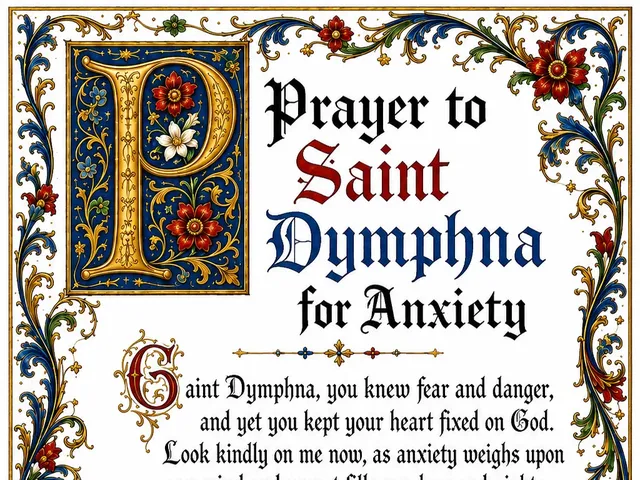
The pilgrims who first sang this psalm carried it in memory, and the medieval scribes who copied it believed it deserved to be written in gold. That conviction is the spirit behind this Psalm 121 prayer card. The full psalm is set in a careful calligraphic hand, opened by a gilded initial and framed by the flowering border of a Gothic prayer book. It keeps the whole prayer in view, from “I will lift up mine eyes” to the promise that endures for evermore, in the visual language that first carried it through the Middle Ages.
The Psalm 121 prayer card, free to print.Free printable prayer card:
Tobias and the Angel, Workshop of Andrea del Verrocchio, around 1470 to 1475, National Gallery, London.
A Song of Ascents: the pilgrim’s psalm
Psalm 121 belongs to a small group of fifteen psalms, numbers 120 to 134, known as the Songs of Ascents. They were sung by pilgrims as they made the long climb up to Jerusalem for the great feasts, and you can hear the rhythm of the road in them. The hills in the first verse are the rough, bandit-haunted hills around the holy city, and lifting one’s eyes to them is both a real glance at the dangerous way ahead and an act of trust that help will come from beyond them.
Because the psalm is a prayer of trust rather than a story with a single scene, it was rarely given one fixed image in the way the shepherd psalm or the penitent David were. Instead, artists pictured its promise through related subjects, above all the figure of the angel who guards the traveler on the road. The panel from the workshop of Andrea del Verrocchio, painted in Florence around 1470, captures that idea perfectly. The young Tobias walks hand in hand with the archangel Raphael, kept safe at every step, exactly as the psalm promises the Lord will preserve our going out and our coming in.
The Keeper who never sleeps
The heart of Psalm 121 is one word, repeated again and again, the keeper. “He that keepeth thee will not slumber. Behold, he that keepeth Israel shall neither slumber nor sleep. The Lord is thy keeper.” In a world that feared the night and the unseen dangers of the dark, the promise of a guardian who never closes his eyes was profound comfort. The same promise lies behind the Christian devotion to guardian angels, who keep watch when we cannot.
Guardian Angel, our canvas reproduction in the Baroque style.
Our own Guardian Angel, painted in the warm Baroque manner, holds that idea in a single serene face. Crowned with flowers and framed by wide wings against an open sky, the angel keeps a calm and steady watch, the very picture of the keeper who neither slumbers nor sleeps. It is the spirit of Psalm 121 made visible, a quiet companion for the going out and the coming in of an ordinary day.
The Meaning of Psalm 121: Lift Up Your Eyes to the Hills
The opening image of the psalm has a beauty all its own. To lift up the eyes is to stop staring at the road beneath your feet and look instead to the heights, away from the immediate fear and toward the source of help. The hills can frighten, but above and beyond them is the God who made heaven and earth. It is a small movement of the body that stands for a great movement of the soul, the turn from anxiety to trust. That is why the psalm has been read so often at funerals and at the outset of travels, and why its closing words, preserving our going out and our coming in, have comforted so many at the threshold of the unknown.
Psalm 121 does not shout. It speaks the quiet confidence of someone who has handed the road over to God and can look up at the hills without fear. Artists honoured it not with a single dramatic scene but with images of the guarding angel and the protected traveler, and the medieval scribes set its eight verses in gold. To keep its promise of safe keeping close, you can choose our illuminated Psalm 121 poster, or explore the companion pieces on Psalm 23 and Psalm 91, and the wider collection of Christian wall art.
Important Facts About Psalm 121
Psalm 121 is one of the fifteen Songs of Ascents, Psalms 120 to 134, sung by pilgrims traveling up to Jerusalem.
It is known by its opening line, “I will lift up mine eyes unto the hills, from whence cometh my help.”
In the Latin Vulgate and most medieval manuscripts it is numbered Psalm 120 rather than Psalm 121.
The psalm calls God the keeper of Israel and insists that he neither slumbers nor sleeps.
Its closing promise, to preserve “thy going out and thy coming in,” has long made it a favourite blessing for travelers and for the dying.
Questions and Answers
What does “I will lift up mine eyes unto the hills” mean?
The line pictures a traveler looking up at the hills around Jerusalem, which were both a sign of the road’s dangers and the direction from which help would come. To lift up the eyes is to turn away from immediate fear and look toward God. The psalm answers its own question at once, saying that help comes from the Lord who made heaven and earth. It is a movement from anxiety to trust, expressed in a simple physical gesture.
What does “my help comes from the Lord” mean?
It is the heart of the psalm’s confidence. After looking to the hills, the pilgrim declares that true help does not come from the mountains themselves but from their Creator. The God who made heaven and earth is the same God who watches over each step of the road. The line affirms that no power in creation is greater than the One who keeps us.
What are the Songs of Ascents?
The Songs of Ascents are fifteen psalms, numbers 120 to 134, grouped together in the Book of Psalms. They were sung by pilgrims as they made the climb up to Jerusalem for the great festivals, which is why the city sits so high in the imagination of these psalms. Psalm 121 is among the best loved of the group. Their short, steady lines echo the rhythm of the upward road.
Why is Psalm 121 read at funerals and for travelers?
Its final verse promises that the Lord will preserve “thy going out and thy coming in from this time forth, and even for evermore.” Those words speak naturally to anyone setting out on a road, and just as naturally to the soul setting out from this life. For centuries the psalm has been recited as a blessing over travelers and as a comfort for the dying and the bereaved. It frames every departure as something God still watches over.
Does Psalm 121 speak of guardian angels?
The psalm does not mention angels directly, but its picture of an unsleeping keeper who guards every step shaped the Christian devotion to guardian angels. The promise that God neither slumbers nor sleeps was naturally joined to the belief, drawn from other psalms and the Gospels, that he sends angels to watch over us. This is why paintings of guardian angels capture the spirit of Psalm 121 so well. They give a face to the keeper who never looks away.
Why are there few paintings made specifically of Psalm 121?
Unlike the shepherd psalm or the story of the penitent David, Psalm 121 is a prayer of trust without a single dramatic event to depict. There is no fixed scene, only a mood of confidence on the open road. Artists therefore expressed its promise through related images, especially the guarding angel and the protected traveler such as Tobias. The psalm lived most fully in music, in prayer, and in the illuminated word rather than in narrative painting.
Who wrote Psalm 121?
Like most of the Songs of Ascents, Psalm 121 names no author. It belongs to the anonymous pilgrim songs gathered for the journey up to Jerusalem, and the text itself makes no claim for David or anyone else. Its voice is simply that of a pilgrim on the road, which is exactly why every traveler since has been able to pray it as their own.
Where can I buy a Psalm 121 print?
The illuminated design shown on this page is available as a large poster, printed on high quality matte paper, from our own shop, jesuschrist.pictures: see the Psalm 121 medieval wall art. The shop also offers Psalm 23, Psalm 91, the Hail Mary and the Prayer of St. Francis in the same illuminated style.
✦ Free Christian & Catholic Printables
Love this one? Find it — and our complete collection of illuminated prayer cards & Scripture printables — ready to print, free, in one place.
Create in me a clean heart, O God. Follow Psalm 51 and the penitent King David through Christian art, from the Stuttgart Psalter and Books of Hours to Honthorst, de Grebber and Guercino.
The Lord is my shepherd has shaped Christian art for eighteen centuries. Follow Psalm 23 from the Roman catacombs to Ravenna, the medieval psalters, and the great devotional painters.